On This Page
Description
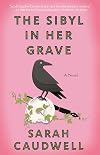
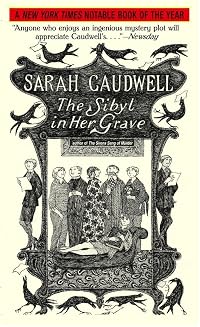
Follow the money in this gripping literary puzzle—the fourth and final installment of Sarah Caudwell’s brilliant Hilary Tamar mystery series.“Sarah Caudwell is one of my very favorite mystery writers.”—A. J. Finn, New York Times bestselling author of The Woman in the Window
Julia Larwood’s Aunt Regina needs help. She and two friends pooled their modest resources and invested in equities. Now the tax man demands his due, but they’ve already spent the money. How can they dig show more themselves out of the tax hole? Even more to the point: Can the sin of capital gains trigger corporeal loss?
That’s a question for the sibyl, psychic counselor Isabella del Comino, who has offended Aunt Regina and her friends by moving into the rectory, plowing under a cherished garden, and establishing an aviary of ravens. When Isabella is found dead, all clues point to death by fiscal misadventure.
So Julia calls in an old friend and Oxford fellow, Professor Hilary Tamar, to follow a money trail that connects Aunt Regina to what appears to be capital fraud—and capital crime. The two women couldn’t have a better champion than the erudite Hilary. Once again Sarah Caudwell sweeps us into the scene of the crime, leaving us to ponder the greatest mystery of all: Hilary themself.
Don’t miss any of Sarah Caudwell’s riveting Hilary Tamar mysteries:
THUS WAS ADONIS MURDERED • THE SHORTEST WAY TO HADES • THE SIRENS SANG OF MURDER • THE SIBYL IN HER GRAVE. show less
Tags
Recommendations



















Member Reviews
My epic journey back to stay with my family for Christmas descended into chaos this year, as two trains were cancelled, then a rail replacement bus dumped me at the wrong station in the arse end of nowhere. Moreover, someone very nearly crushed me while trying fruitlessly to cram a vast suitcase into overhead storage. All this took nine hours and was deeply enraging, but reading this utterly charming novel was a balm throughout. Of the Hilary Tamar mysteries, this has the most interesting twists and probably the least important role for Hilary. She spends her time drinking with her barrister friends, feuding with the Bursar of her college, and being fooled by red herrings. I adore her, and of course the rest of the cast too. Serena, my show more favourite, devotes most of the book to dealing with the vicissitudes of building works:
The works take such a long time in part because the carpenter gets distracted by having a passionate love affair with a vicar! As I've found with all the books in the series, everything up to and including death is treated in a remarkably offhand manner. I've become accustomed to this and now find Caudwell's tone thoroughly delightful. The epistolary element in this case comes largely from Julia's inimitable Aunt Regina and her circle of rural friends. Pleasing details include a vulture, a convincingly unbearable character in the form of Daphne, Ragwort's awkward encounter with a dominatrix, John Soane's Museum (a place I love), and mysterious shenanigans galore. The solution is ingenious and satisfying, albeit with some rather morbid details. Those suited my mood while waiting in a bleak and deserted railway station and cursing the ineptitude of Greater Anglia, though. I wish there were more than four Hilary Tamar books, as each is an utter joy. show less
"My dear Serena," I said, "you sound as if you thought that once the builders arrive your troubles will be over. This is not the universal experience."
"Well, there'll obviously be a certain amount of noise and mess while they're actually there. But they've promised to finish by the Long Vacation, so it shouldn't be too disruptive."
She leant back and drank her wine, with the serene contentment of a young woman who has agreed a satisfactory estimate and a convenient timetable, and has never had builders in before.
[...]
[During the Long Vacation] My first impression was that a small civil war had broken out, the result, possibly, of some unhappy disagreement between the Bar and the Law Society, and that 62 New Square had been chosen a particular object of hostile bombardment. The air was heavy with the dust of shattered plaster; the walls and timbers shuddered at the pounding of hammers and the pitiless reverberation of electric drills; muscular men in string vests were attacking the building with hammers. In short, the builders were in.
A brilliant ending to a brilliant series. I've been giving the books 4 stars out of some weird feeling that 5stars requires a "literaryness" but I felt that 5stars was deserved for a series that's been my most enjoyable reading in a long while. I'm just sad there's no more. The book is funny, has great dialogue and character writing, is tense, interesting references which aren't confusing if you don't know them, a well written gay relationship, has a bunch of twists but none which seem forced or completely unexpected - again i don't think you can work out the whole thing before the end but you can do a good job i think and there's some clever misdirection. The ending wraps this up nicely. A great, great book that I highly recommend if show more you enjoy mysteries, and the rest of the series too. show less
The late Sarah Caudwell wrote four novels featuring Hilary Tamar, Tutor in Legal History at St. George’s College, Oxford, as well as an amateur detective of some note. Professor Tamar worries out the nubs of cases while discussing them in assorted pubs with her barrister colleagues: Julia, Selena, Cantrip, and Ragwort.
This story involves Julia’s Aunt Regina and her group of friends: Maurice, her local vicar, Griselda, Regina’s neighbor who “does people’s gardens and has cats,” and Ricky, a retired investment advisor who had helped Regina, Maurice and Griselda get some financial benefit from insider trading tips. The story also includes some rather unsavory neighbors of Regina: Isabella, a “psychic counselor,” and her show more niece Daphne, an unfortunate acolyte to Isabella. When some unpleasant events and deaths occur in Regina’s small town of Parsons Haver in West Sussex, Regina appeals to Julia for help, and all of the legal colleagues get involved.
Most of the tale is told in an epistolary fashion, through letters passed back and forth between Regina and Julia, and between Julia and Ragwort, who also gets directly involved. Every so often Hilary addresses us directly (“you, dear reader”) in a hilarious explanation of why she is omitting some explanation. The plot itself almost doesn’t matter: the prose is so delightful, the low-key humor so wonderfully British, the language so elevated, that the book would be pleasing no matter what course of events drove it along.
(JAF) show less
This story involves Julia’s Aunt Regina and her group of friends: Maurice, her local vicar, Griselda, Regina’s neighbor who “does people’s gardens and has cats,” and Ricky, a retired investment advisor who had helped Regina, Maurice and Griselda get some financial benefit from insider trading tips. The story also includes some rather unsavory neighbors of Regina: Isabella, a “psychic counselor,” and her show more niece Daphne, an unfortunate acolyte to Isabella. When some unpleasant events and deaths occur in Regina’s small town of Parsons Haver in West Sussex, Regina appeals to Julia for help, and all of the legal colleagues get involved.
Most of the tale is told in an epistolary fashion, through letters passed back and forth between Regina and Julia, and between Julia and Ragwort, who also gets directly involved. Every so often Hilary addresses us directly (“you, dear reader”) in a hilarious explanation of why she is omitting some explanation. The plot itself almost doesn’t matter: the prose is so delightful, the low-key humor so wonderfully British, the language so elevated, that the book would be pleasing no matter what course of events drove it along.
(JAF) show less
When I was reading this I thought it was a perfect cozy mystery, ironic subgenre: lots of pleasant, mildly eccentric characters, amusing banter and byplay, most of the deaths not real tragedies for the viewpoint characters. But the ending shocked me, and gave me uneasy dreams that night. What Daphne was doing to that poor man was just utterly horrible, making his life isolated misery, all under her guise of stupid niceness. What a horrible girl.But then, murder mysteries do have murders in them, which should perhaps imply to the discerning reader that some of the characters maybe aren't so nice after all.
The final novel in the Hilary Tamar series takes place, once again, largely through letters - in this case, to Julia from her aunt Regina, who is living in a small village in Sussex. It seems that Regina and two of her friends have done very well financially by heeding tips to invest in specific companies at specific times; they are extremely pleased with their returns, and quickly spend the extra money on luxuries they can’t resist. Until, of course, they learn of a little thing called the capital gains tax. Could Julia, perhaps, help them handle this financial crisis? In the meantime, a relative newcomer to their village has had the effect of turning everything upside-down socially, and perhaps that newcomer’s death wasn’t quite show more as natural as it seemed…. I will miss the voices in these novels, particularly that of our narrator, Professor Hilary Tamar, who is mysterious about personal matters but quite eager to share opinions about the personal lives of others. Our intrepid barristers seem to dive headlong from one crisis to another, ranging from renovation work in their Chambers that seems never to be finished to dashing as speedily as London traffic on a Friday afternoon will allow them in order to prevent, well, something bad from happening in Parsons Haver. Again, reading all four books in order is the best way to approach these tales, although reading any one of them should provide the reader with a goodly number of laughs; recommended! show less
It took me some time (living as I do in seclusion) to realise this book existed, it having been some ten years since the author's previous work, and, having found it, I then put off reading it, knowing that there will be no more from this writer. Even though she wrote only four novels, her death was a profound loss, not only in itself but also in that it deprives us forever of learning more of Julia, Selina, Ragwort, Cantrip, Timothy and the eternally mysterious and genderless Professor Hilary Tamar.
The book itself? Lovely, cosy, funny, clever, erudite, and ultimately deeply satisfying. It is the way of the world, I suppose, that an author like this should have written so little, when others ... well.
The book itself? Lovely, cosy, funny, clever, erudite, and ultimately deeply satisfying. It is the way of the world, I suppose, that an author like this should have written so little, when others ... well.
Delightful; Hilary Tamar is a fantastic narrator, the epistolary touch is fantastic, and while I lost track of the plot about two-thirds of the way through, I think that's my fault, not the author's. Any book with a gay unskeevy cleric, a dominatrix, academic infighting, and references to classical poisoning tracts has to be awesome.
Members
- Recently Added By
Lists

Edward Gorey Covers
150 works; 8 members

Books Read in 2014
2,344 works; 89 members

Books Read in 2018
4,360 works; 110 members

Books Read in 2026
2,161 works; 70 members
Author Information

8+ Works 3,718 Members
Some Editions
Awards and Honors
Awards
Series

Work Relationships
Common Knowledge
- Canonical title
- The Sibyl in Her Grave
- Original publication date
- 2000
- People/Characters
- Hilary Tamar; Michael Cantrip; Selena Jardine; Julia Larwood; Desmond Ragwort; Edgar Albany (Renfrews' Bank) (show all 15); Geoffrey Boulton (Renfrews' Bank); Griselda Carstairs; Terry Carver (carpenter); Isabella Del Comino (Daphne's aunt); Maurice Dulcimer (Reverend); Ricky Farnham; Sir Robert Renfrew (Renfrews' Bank); Regina Sheldon (Julia's aunt); Katharine Tavistock (Renfrews' Bank)
- Important places
- Parsons Haver, West Sussex, England, UK; West Sussex, England, UK; Cannes, Alpes-Maritimes, Provence-Alpes-Côte d'Azur, France
- Dedication
- To Anne, who stands between me and chaos
- First words
- FOR CERTAIN OF MY academic colleagues - I resist the temptation to refer in this context to the Bursar - the chief purpose of publication appears to be self-advertisement.
- Last words
- (Click to show. Warning: May contain spoilers.)I do not attempt, however, to read the future in them.
- Blurbers
- Kellerman, Faye; Peters, Elizabeth
- Original language
- English UK
Classifications
Statistics
- Members
- 827
- Popularity
- 33,457
- Reviews
- 23
- Rating
- (4.08)
- Languages
- English, French, German, Portuguese (Portugal)
- Media
- Paper, Audiobook, Ebook
- ISBNs
- 14
- ASINs
- 6