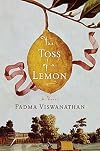
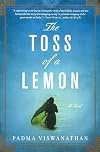
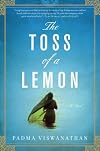
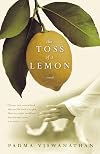
The Toss of a Lemon
by Padma Viswanathan
On This Page
Description
Spanning the lifetime of one woman (1896-1962), The Toss of a Lemon brings readers intimately into a Brahmin household, into an India in the midst of social and political upheaval. Married at ten, widowed at eighteen, left with two children, Sivakami must wear widow's whites, shave her head, and touch no one from dawn to dusk. She is not allowed to remarry, and in the next sixty years she ventures outside her family compound only three times. She is extremely orthodox in her behavior except show more for one defiant act: She moves back to her dead husband's house and village to raise her children. That decision sets the course of her children's and grandchildren's lives, twisting their fates in surprising, sometimes heartbreaking ways. show lessTags
Recommendations






























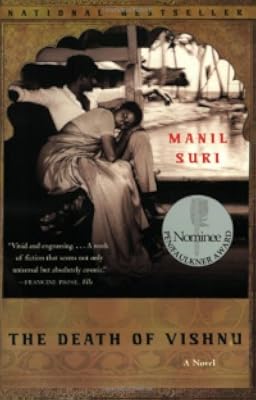





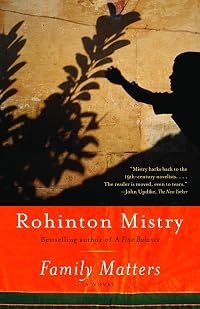




Member Recommendations
kjuliff Caste system, rural India
Member Reviews
Padma Viswanathan's novel spans three generations of a Brahmin family, headed by orthodox widow Sivakami, from the beginning of the 20th century until around 1966. Sivakami's story is ultimately defined by caste, which at turns defines and splinters her family.
I wish I could write this review without using the word "sweeping," but, well, I'm afraid the novel is sweeping -- at around 600 pages, it had better be. And Viswanathan doesn't let the narrative or the characterizations flag -- the plot, while not especially flashy, flows much like the river Kaveri (which Viswanathan occasionally treats, successfully, as a character), and the characters become people you come to know as you would your neighbors and colleagues.
If I had one show more complaint about the book, it's that some of the prose can get thuddingly expository. Because Viswanathan is presenting the readers with a bygone and unfamiliar world, she tends to devolve into explaining. For example, when recounting a letter from one of Sivakami's brothers, she notes that the letter begins with the word "Safe," and notes in parentheses, "One always puts this assurance of well-being at the top of a letter, to avoid causing undue alarm." These sorts of expository notes are probably necessary, but tend to pop a reader abruptly out of the narrative.
Still, although the book occasionally comes to the ground with a bit of a thump, Viswanathan is a formidably talented writer, and I looked forward to the time each day I could start reading again. Well worth picking up, and I'm looking forward to reading Viswannathan's next novel. show less
I wish I could write this review without using the word "sweeping," but, well, I'm afraid the novel is sweeping -- at around 600 pages, it had better be. And Viswanathan doesn't let the narrative or the characterizations flag -- the plot, while not especially flashy, flows much like the river Kaveri (which Viswanathan occasionally treats, successfully, as a character), and the characters become people you come to know as you would your neighbors and colleagues.
If I had one show more complaint about the book, it's that some of the prose can get thuddingly expository. Because Viswanathan is presenting the readers with a bygone and unfamiliar world, she tends to devolve into explaining. For example, when recounting a letter from one of Sivakami's brothers, she notes that the letter begins with the word "Safe," and notes in parentheses, "One always puts this assurance of well-being at the top of a letter, to avoid causing undue alarm." These sorts of expository notes are probably necessary, but tend to pop a reader abruptly out of the narrative.
Still, although the book occasionally comes to the ground with a bit of a thump, Viswanathan is a formidably talented writer, and I looked forward to the time each day I could start reading again. Well worth picking up, and I'm looking forward to reading Viswannathan's next novel. show less
The Toss of a Lemon opens up in India at the turn of the nineteenth century, when Sivakami, the youngest daughter of a Brahmin family, is ten. Married to Hanumarathnam, a healer, she learns that, upon the birth of a son, he will die two years after. Sivakami has two children: Thangam, the beloved “golden child,” whose life follows a more traditional path, and Vairum, who embraces the traditions of the west as he grows older. As the twentieth century progresses, the two children have families of their own, and Sivakami becomes a respected matriarch in their village. Attached to this family is their servant, Muchami, who comes to them at age 13 and becomes almost a part of the family—even though he is from a different caste. This show more book is very much about the power that family plays in each character’s life.
The underlying theme of this book, however, is fate, and the title reflects this: lemons are seen as an innocuous instrument of a person's fate (I'm paraphrasing the author here). So many of these characters live their lives according to what is preordained for them in their horoscopes--which aren't always accurate, as it turns out. Each of these characters’ fates is unique, and these are people you come to care about as they grow and develop.
It’s a long novel; at over 600 pages, this book took me a while to read. But that’s not to say that this novel is cumbersome; rather, the opposite. A family saga needs to be this long at least, in order to tell the story properly. And in the end, the effort is worthwhile. The India that Viswanathan describes here is not the India that we’re used to reading about; even the British, whose presence in India was so pervasive, are nearly absent here. Like the little bits of gold that Thangam leaves in her wake, this book is truly magical. Viswanathan is an excellent writer. show less
The underlying theme of this book, however, is fate, and the title reflects this: lemons are seen as an innocuous instrument of a person's fate (I'm paraphrasing the author here). So many of these characters live their lives according to what is preordained for them in their horoscopes--which aren't always accurate, as it turns out. Each of these characters’ fates is unique, and these are people you come to care about as they grow and develop.
It’s a long novel; at over 600 pages, this book took me a while to read. But that’s not to say that this novel is cumbersome; rather, the opposite. A family saga needs to be this long at least, in order to tell the story properly. And in the end, the effort is worthwhile. The India that Viswanathan describes here is not the India that we’re used to reading about; even the British, whose presence in India was so pervasive, are nearly absent here. Like the little bits of gold that Thangam leaves in her wake, this book is truly magical. Viswanathan is an excellent writer. show less
This is one of those instances where you finish a book and are left feeling that a more exacting editor might have turned a diverting book into a truly good one. I don't mean that The Toss of a Lemon could have been shorter—at 600+ pages, there's certainly plenty that could have been trimmed, but I do like a sprawling family epic every now and then—but that the structure and the narrative arcs could have been made a lot stronger. There's little sense of a cohesive story, little sense that Viswanathan is trying to use the history of several generations of this family to tell us something about the birth of modern India—though that's a narrative possibility which always remains tantalisingly in view through the engaging anecdotes show more which she presents. I think if she'd chosen to focus in a little more closely on fewer of her characters, she'd have made this a stronger book, and perhaps also crafted for herself a stronger ending. The Toss of a Lemon starts out strong, but fizzles to a close, and I felt that the tale of Sivakami and her family deserved more. show less
I really enjoyed this epic novel, the story of an Indian family during the first half of the 20th century. It’s very much a domestic drama, lightly spiced by the political happenings of the period. But what’s fascinating is how the people lived their caste privileges and responsibilities, on an intimate level. The protagonists here are Brahmin, and the main character is a woman, Sivakami, who is widowed at a young age, and has to raise her children and most of her grandchildren alone.
Sivakami does this in spite of the very rigid behavioral rules for Brahmin widows. And then after she has sacrificed herself in order to maintain respectability – and, as she sees it, to uphold the honor of her family - her family tests the rules she show more has lived by. She’s a really interesting and well-drawn character – both fragile and strong, conservative but courageous.
There are a lot of people in this family, and sometimes the reader loses sight of some of them. But most of the characters come strongly to life. And the story as a whole feels very real. show less
Sivakami does this in spite of the very rigid behavioral rules for Brahmin widows. And then after she has sacrificed herself in order to maintain respectability – and, as she sees it, to uphold the honor of her family - her family tests the rules she show more has lived by. She’s a really interesting and well-drawn character – both fragile and strong, conservative but courageous.
There are a lot of people in this family, and sometimes the reader loses sight of some of them. But most of the characters come strongly to life. And the story as a whole feels very real. show less
I really enjoyed this epic novel, the story of an Indian family during the first half of the 20th century. It’s very much a domestic drama, lightly spiced by the political happenings of the period. But what’s fascinating is how the people lived their caste privileges and responsibilities, on an intimate level. The protagonists here are Brahmin, and the main character is a woman, Sivakami, who is widowed at a young age, and has to raise her children and most of her grandchildren alone.
Sivakami does this in spite of the very rigid behavioral rules for Brahmin widows. And then after she has sacrificed herself in order to maintain respectability – and, as she sees it, to uphold the honor of her family - her family tests the rules she show more has lived by. She’s a really interesting and well-drawn character – both fragile and strong, conservative but courageous.
There are a lot of people in this family, and sometimes the reader loses sight of some of them. But most of the characters come strongly to life. And the story as a whole feels very real. show less
Sivakami does this in spite of the very rigid behavioral rules for Brahmin widows. And then after she has sacrificed herself in order to maintain respectability – and, as she sees it, to uphold the honor of her family - her family tests the rules she show more has lived by. She’s a really interesting and well-drawn character – both fragile and strong, conservative but courageous.
There are a lot of people in this family, and sometimes the reader loses sight of some of them. But most of the characters come strongly to life. And the story as a whole feels very real. show less
Surrounded by the despicable recent rape and murder of an innocent in Delhi and charmed by the wonderful women I met on a visit to South India, I read books by Indian authors to learn more of what makes up the psyche of this country. How much damage did colonialism do? Why are women so little valued? Why the ban on dating and on what we would consider typical intercations of people - falling in love, dating, having friends of the opposite sex? This is a sprawling family saga where women are essential but the fueding of men steers the destiny of all. Long but well written and heartfelt.
I loved this novel! It's a lengthy one - and it kept me company for two weeks. During that time I felt part of the extended Brahman family, experiencing the joys and sadness that were theirs spanning Indian life from the late 19th to the latter part of the 20th century.
a Passage Through India
The image of Sivakami walking along the railway track will stay with me forever I think. It is one of the many evocative images penned so well by the author's hand.
a Passage Through India
The image of Sivakami walking along the railway track will stay with me forever I think. It is one of the many evocative images penned so well by the author's hand.
Members
- Recently Added By
Published Reviews
ThingScore 83
Padma Viswanathan has real talent, but before she can take full advantage of it, she’ll need to find a compass.
added by kathrynnd
The brilliance of The Toss of a Lemon rests not so much in its intricate plotting as in the compressed, poetic precision with which Viswanathan depicts a lost world.
added by kathrynnd
Of a piece with the recent works of Vikram Seth, and reminiscent at times of García Márquez—altogether a pleasure.
added by Jaelle
Author Information

4+ Works 687 Members
Awards and Honors
Common Knowledge
- Canonical title*
- Een huis zonder spiegels
- Original title
- The Toss of a Lemon
- Original publication date
- 2008-04-01
- People/Characters
- Sivakami; Hanumarathnam; Thangam; Varium; Goli; Vani (show all 22); Saradha; Visalam; Laddu; Sita; Janaki; Kamalam; Radhajan; Krishnan; Raghavan; Muchami; Murthy; Rukmini; Bharati; "Minister"; Gayatri; Baskarsan
- Important places
- Cholapatti, India; Madras, India; Samanthibakkam, India
- Epigraph
- Most of what matters in our lives takes place in our absence: but I seem to have found from somewhere the trick of filling in the gaps in my knowledge...
Salman Rushdie, Midnight's Children - Dedication
- For
Bhuvana and S.P. Viswanathan
and for
Dhanam Kochoi - First words
- The year of the marriage proposal, Sivakami is ten.
- Last words
- (Click to show. Warning: May contain spoilers.)So it is that I sit here with you, the book of our lives between us, telling my story, and my people's, in lands and languages I know but that are not my own.
*Some information comes from Common Knowledge in other languages. Click "Edit" for more information.
Classifications
Statistics
- Members
- 614
- Popularity
- 47,782
- Reviews
- 28
- Rating
- (3.85)
- Languages
- Dutch, English, Italian, Spanish
- Media
- Paper, Ebook
- ISBNs
- 14
- ASINs
- 6