On This Page
Description
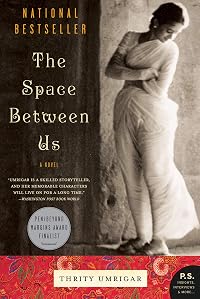
The author of Bombay Time, If Today Be Sweet, and The Weight of Heaven, Thirty Umrigar is as adept and compelling in The Space Between Us-vividly capturing the social struggles of modern India in a luminous, addictively readable novel of honor, tradition, class, gender, and family. A portrayal of two women discovering an emotional rapport as they struggle against the confines of a rigid caste system, Umrigar's captivating second novel echoes the timeless intensity of Zora Neale Hurston's show more Their Eyes Were Watching God, Betty Smith's A Tree Grows in Brooklyn, and Barbara Kingsolver's The Poisonwood Bible-a quintessential triumph of modern literary fiction. show lessTags
Recommendations














































Member Recommendations

ashmolean1 These both compare and contrast the lives of the employer and employee in India in well written highly readable styles.

by mcenroeucsb



Member Reviews
This book has a solid feel of realism, and gives us women to care about while reading, but in total didn't quite sustain whole personalities for me. And it is pretty relentlessly misery porn. This is not a highlights tour of Bombay*, it is a rub your face in it immersion.
I had come across Thrity Umrigar’s name a few times and so decided to choose this book as my audio companion on morning walks. I was a tad disappointed.
The book focuses on two women from different backgrounds living in Bombay. Sera Dubash is an upper-middle class Parsi widow. Bhima, an illiterate Hindu, has worked for Sera for twenty years. Bhima is heartbroken that her granddaughter Maya, whom she has been raising since the death of Maya’s parents, has left college because she is pregnant. Meanwhile, Sera’s daughter Dinaz and her son-in-law Viraf are happily awaiting the arrival of their first child. From the beginning it is obvious that very different fates await the two unborn children because of the economic classes to which show more their mothers belong.
The title clearly suggests that a space divides Sera and Bhima, a space that is not bridged. Though Sera has been paying for Maya’s education, Sera does not see Bhima as an equal. For instance, Bhima must sit on the floor to have her tea and she is not allowed to use the family’s dishes. The two women have both had hardships, both having suffered at the hands of their husbands, yet that is not enough to bring them together. Sera’s choice when faced with a devastating truth is very telling.
One of the themes is that women suffer unfairly in a society dominated by men. Sera’s husband was physically and emotionally abusive, and Bhima’s husband abandoned her because he blamed her for actions she took during a crisis. Maya becomes pregnant because she is coerced into having sex and is left to deal with the pregnancy while the man escapes any consequences for his behaviour. Even when the truth is known about a man’s egregious behaviour, women accept it.
What bothered me is the piling on of tragedies. Every conceivable wrong is experienced by the women: domestic abuse, sexual abuse, a domineering mother-in-law, abject poverty, abandonment, loss of children, illness, economic exploitation, and prejudice. It almost felt like the author had a list which she checked off once she’d included that trauma in the narrative.
The ending is emotionally manipulative. Bhima’s actions at the end are supposed to suggest that she has an epiphany, but it seems trite and artificial. Given what awaits her in her future, her spending money as she does makes absolutely no sense and is totally out of character. The author obviously wanted to end on a hopeful note, but the reality of Bhima’s situation offers little hope.
This is not a bad book, but it doesn’t offer much that is original or exceptional. The plot is predictable and the growth supposedly experienced by Bhima is unconvincing. There is a sequel, The Secrets Between Us, and I’m torn as to whether I will add it to my iPod.
Note: Please check out my reader's blog (https://schatjesshelves.blogspot.com/) and follow me on Twitter (@DCYakabuski). show less
The book focuses on two women from different backgrounds living in Bombay. Sera Dubash is an upper-middle class Parsi widow. Bhima, an illiterate Hindu, has worked for Sera for twenty years. Bhima is heartbroken that her granddaughter Maya, whom she has been raising since the death of Maya’s parents, has left college because she is pregnant. Meanwhile, Sera’s daughter Dinaz and her son-in-law Viraf are happily awaiting the arrival of their first child. From the beginning it is obvious that very different fates await the two unborn children because of the economic classes to which show more their mothers belong.
The title clearly suggests that a space divides Sera and Bhima, a space that is not bridged. Though Sera has been paying for Maya’s education, Sera does not see Bhima as an equal. For instance, Bhima must sit on the floor to have her tea and she is not allowed to use the family’s dishes. The two women have both had hardships, both having suffered at the hands of their husbands, yet that is not enough to bring them together. Sera’s choice when faced with a devastating truth is very telling.
One of the themes is that women suffer unfairly in a society dominated by men. Sera’s husband was physically and emotionally abusive, and Bhima’s husband abandoned her because he blamed her for actions she took during a crisis. Maya becomes pregnant because she is coerced into having sex and is left to deal with the pregnancy while the man escapes any consequences for his behaviour. Even when the truth is known about a man’s egregious behaviour, women accept it.
What bothered me is the piling on of tragedies. Every conceivable wrong is experienced by the women: domestic abuse, sexual abuse, a domineering mother-in-law, abject poverty, abandonment, loss of children, illness, economic exploitation, and prejudice. It almost felt like the author had a list which she checked off once she’d included that trauma in the narrative.
The ending is emotionally manipulative. Bhima’s actions at the end are supposed to suggest that she has an epiphany, but it seems trite and artificial. Given what awaits her in her future, her spending money as she does makes absolutely no sense and is totally out of character. The author obviously wanted to end on a hopeful note, but the reality of Bhima’s situation offers little hope.
This is not a bad book, but it doesn’t offer much that is original or exceptional. The plot is predictable and the growth supposedly experienced by Bhima is unconvincing. There is a sequel, The Secrets Between Us, and I’m torn as to whether I will add it to my iPod.
Note: Please check out my reader's blog (https://schatjesshelves.blogspot.com/) and follow me on Twitter (@DCYakabuski). show less
I'm fortunate to live in a city that was recently named one of the "Top 10 Most Literary" (an honor having something to do with bookstores, libraries, online book sales, and e-reader ownership) so it's not surprising there's a decent selection of book clubs specializing in various genres and topics. One club I recently joined exclusively reads fiction from, or about, India. Being a part of this group has exposed me to books and authors I never would have picked up otherwise!
Last month's selection was Thrity Umrigar's The Space Between Us and despite its frequently uncomfortable moments, I could not put it down. The story shows us the lives of two women with painful marriages, destroyed dreams, and personal hardships from two very show more different castes. Sera is the wealthy housewife and Bhima is her maid. Their working relationship spans decades and through that time a reliance and closeness forms. Despite appearances, this is never a friendship between equals and when tragedy strikes Bhima's granddaughter, Sera's view of the underclass is challenged and she must make a decision about her allegiances.
Which of the two women has the greater integrity? Who is right and who is wrong? Our lives and relationships are fragile and full of inconsistencies. Answers are never definitive and subjective at best. What you bring to the story will be mirrored in what you take away from it. show less
Last month's selection was Thrity Umrigar's The Space Between Us and despite its frequently uncomfortable moments, I could not put it down. The story shows us the lives of two women with painful marriages, destroyed dreams, and personal hardships from two very show more different castes. Sera is the wealthy housewife and Bhima is her maid. Their working relationship spans decades and through that time a reliance and closeness forms. Despite appearances, this is never a friendship between equals and when tragedy strikes Bhima's granddaughter, Sera's view of the underclass is challenged and she must make a decision about her allegiances.
Which of the two women has the greater integrity? Who is right and who is wrong? Our lives and relationships are fragile and full of inconsistencies. Answers are never definitive and subjective at best. What you bring to the story will be mirrored in what you take away from it. show less
However close we may feel we are to another person, there will always be space between us, sometimes seemingly space enough for stars and planets to move. And so we have the theme of Thrity Umrigar's magnificent 2007 novel “The Space Between Us.”
Umrigar, who grew up in a middle-class home in Bombay where servants did most of the housework, returns to such a home in her story. Bhima, modeled after a woman who worked for the author's parents, is a 65-year-old servant who has worked for Sera Dubash for many years. At one time Bhima had middle-class aspirations of her own, but her husband was maimed in an industrial accident, turned to drink and then abandoned her, taking their son with him. Now she lives in a slum with her show more granddaughter, whom she has raised since the death of her daughter from AIDS.
Bhima still hopes for a better life for Mina, the granddaughter, who attends college thanks to Sera's generosity. When the girl becomes pregnant, unwilling to reveal who the father is, Sera offers to arrange for an abortion before the pregnancy shows and brings shame on Mina and Bhima.
All this helps illustrate how close Sera and Bhima have grown over the years and how much they depend upon each other. Yet because of class and religious differences, a vast space still separates them. Bhima, for example, may not sit on Sera's fine furniture or drink out of any of her cups. However close they may be in some ways, it always remains clear they can never be equals. Sera's kindness to Mina, which might help narrow that gap, leads instead to a crisis with the opposite effect.
Umrigar, now an Ohioan, writes with grace and power, qualities she bestows on Bhima, as memorable a character as you will find. show less
Umrigar, who grew up in a middle-class home in Bombay where servants did most of the housework, returns to such a home in her story. Bhima, modeled after a woman who worked for the author's parents, is a 65-year-old servant who has worked for Sera Dubash for many years. At one time Bhima had middle-class aspirations of her own, but her husband was maimed in an industrial accident, turned to drink and then abandoned her, taking their son with him. Now she lives in a slum with her show more granddaughter, whom she has raised since the death of her daughter from AIDS.
Bhima still hopes for a better life for Mina, the granddaughter, who attends college thanks to Sera's generosity. When the girl becomes pregnant, unwilling to reveal who the father is, Sera offers to arrange for an abortion before the pregnancy shows and brings shame on Mina and Bhima.
All this helps illustrate how close Sera and Bhima have grown over the years and how much they depend upon each other. Yet because of class and religious differences, a vast space still separates them. Bhima, for example, may not sit on Sera's fine furniture or drink out of any of her cups. However close they may be in some ways, it always remains clear they can never be equals. Sera's kindness to Mina, which might help narrow that gap, leads instead to a crisis with the opposite effect.
Umrigar, now an Ohioan, writes with grace and power, qualities she bestows on Bhima, as memorable a character as you will find. show less
In the first part of the book, Urmigar sets up each character giving the reader a picture of who they are today while providing brief glimpses into the pasts that created them. We meet Bhima, see hardships she endures daily and feel her disappointment and frustration with her granddaughter Maya who has dropped out of university due to an unexpected pregnancy. We also meet Sera, for whom Bhima serves as a housekeeper and cook; she is a proud, self-contained woman but it is clear there is much beneath the surface. In addition to presenting these two characters, Urmigar begins to demonstrate the "space" between them - both literal (floor versus chair; slum versus highrise) and metaphorical (high versus low class, educated vs. show more uneducated).
In the last half of the book, the pasts of each of these characters unfold and we learn how they have been shaped by their experiences as young women. Their stories unfold rather quickly in the last half of the book and we learn that although these women are at very different stations in society they have both suffered in their own ways and been deeply hurt by those they most love. Loss and betrayal is the great equalizer for these women. I did feel, however, that Bhima's losses were more tragic. With limited resources, she seemed less equipped to recover from what befalls her. In addition, she was betrayed by her husband but also by society when she was taken advantage of due to her lack of education. The deck seemed so stacked against her and I found the inevitability of her fate due to the class into which she was born very grim.
Urmigar is a talented writer - this book was beautifully written with excellent character development - while still being easy to read. I will certainly be reading more by this author! show less
In the last half of the book, the pasts of each of these characters unfold and we learn how they have been shaped by their experiences as young women. Their stories unfold rather quickly in the last half of the book and we learn that although these women are at very different stations in society they have both suffered in their own ways and been deeply hurt by those they most love. Loss and betrayal is the great equalizer for these women. I did feel, however, that Bhima's losses were more tragic. With limited resources, she seemed less equipped to recover from what befalls her. In addition, she was betrayed by her husband but also by society when she was taken advantage of due to her lack of education. The deck seemed so stacked against her and I found the inevitability of her fate due to the class into which she was born very grim.
Urmigar is a talented writer - this book was beautifully written with excellent character development - while still being easy to read. I will certainly be reading more by this author! show less
This novel about a wealthy woman and her impoverished servant offers a revealing look at class and gender roles in modern day India. It is alternately told through the eyes of Sera, a Parsi widow living with her daughter and son-in-law, and Bhima, her 65 year old housekeeper who working to support her 17 year old orphaned granddaughter Maya.
Bhima had high hopes for Maya, wanting her to have a better life than the other women in her family before her, but those dreams are shattered when Maya becomes pregnant.
We also learn that Sera's privileged life is not as it appears; she faced years of cruelty living under her mother-in-law's roof, and later, abuse at the hands of her husband, a secret that only Bhima knew about. Though Sera and show more Bhima share a bond, social restrictions also put space between them; for example, when they are sharing tea, Bhima sits on the floor because servants are not to sit on their employers furniture. In spite of that, Bhima is fiercely loyal to Sera and her family, something for which she may end up paying a bitter price for.
This book was very hard to put down once I started reading it. There is a lot of sadness in it, but it really makes you think. A beautifully written story. show less
Bhima had high hopes for Maya, wanting her to have a better life than the other women in her family before her, but those dreams are shattered when Maya becomes pregnant.
We also learn that Sera's privileged life is not as it appears; she faced years of cruelty living under her mother-in-law's roof, and later, abuse at the hands of her husband, a secret that only Bhima knew about. Though Sera and show more Bhima share a bond, social restrictions also put space between them; for example, when they are sharing tea, Bhima sits on the floor because servants are not to sit on their employers furniture. In spite of that, Bhima is fiercely loyal to Sera and her family, something for which she may end up paying a bitter price for.
This book was very hard to put down once I started reading it. There is a lot of sadness in it, but it really makes you think. A beautifully written story. show less
In present-day Bombay, Bhima leaves her slum each day to work as a domestic in a wealthy widow’s home. She has faithfully served this woman, Sera Dubash, for decades and prides herself on caring for the family. Sera is an upper-middle-class Parsi, but her social status has not protected her from an abusive husband and mother-in-law. In Sera’s home Bhima has witnessed the intimate details of the family’s life, and cared for Sera’s injuries; in return Sera has helped Bhima deal with the hospital when her husband was injured, and is paying for Bhima’s granddaughter, Maya, to attend college. What Bhima doesn’t fully realize, however, is that she remains an outsider to the Dubash family. An unplanned pregnancy will shatter the show more illusions of both women.
The two women at the core of the novel share one very important characteristic – blindness. The beautifully dressed, elegant and graceful Sera does not want to see the truth of her husband’s cruelty or the despair of Bhima’s life. Bhima, a stoic illiterate, does not see that her blind faith in this family she “loves” is not returned. Time and again she fails to recognize the reality of her situation until it is too late. Intimately connected over time with one another, neither one of them truly sees the yawning chasm that separates them.
There are scenes of tenderness, love, joy and happiness which give the reader occasional relief, but the novel is at times emotionally difficult to read. I am appalled at the treatment both these women endure: Sera because she cannot face the shame and humiliation of admitting to anyone that her husband beats her; Bhima because her lack of education and status make her such an easy target for anyone more powerful (and virtually everyone she encounters is more powerful than she). My heart breaks for both these women, and at the end I am not sure which I am more worried about. show less
The two women at the core of the novel share one very important characteristic – blindness. The beautifully dressed, elegant and graceful Sera does not want to see the truth of her husband’s cruelty or the despair of Bhima’s life. Bhima, a stoic illiterate, does not see that her blind faith in this family she “loves” is not returned. Time and again she fails to recognize the reality of her situation until it is too late. Intimately connected over time with one another, neither one of them truly sees the yawning chasm that separates them.
There are scenes of tenderness, love, joy and happiness which give the reader occasional relief, but the novel is at times emotionally difficult to read. I am appalled at the treatment both these women endure: Sera because she cannot face the shame and humiliation of admitting to anyone that her husband beats her; Bhima because her lack of education and status make her such an easy target for anyone more powerful (and virtually everyone she encounters is more powerful than she). My heart breaks for both these women, and at the end I am not sure which I am more worried about. show less
Members
- Recently Added By
Lists

Recommend the 20 best books you've read in the last five years
2,168 works; 606 members

All Things India
95 works; 21 members

Five star books
1,757 works; 108 members

A's favorite novels
100 works; 3 members

Most Popular Books Tagged India
36 works; 5 members

To Read
617 works; 7 members

42 Books Every Clevelander Should Read
42 works; 3 members
Author Information

17+ Works 6,654 Members
Thrity Umrigar is an Indian-American writer, who was born in Mumbai. She received her Bachelors of Science from Bombay University. She immigrated to the United States when she was 21.She then went on to earn her M.A. From Ohio State and her Phd from Kent State University. She is a journalist and the author of the novels Bombay Time, The Space show more Between Us and The Weight of Heaven. She has written for the Washington Post, Cleveland Plain Dealer, among other newspapers, and regularly writes for The Boston Globe 's book pages. She is currently assistant professor of English at Case Western Reserve University where she teaches creative writing and literature. She was a winner of the Nieman Fellowship to Harvard University. She has a Ph.D. in English and lives in Cleveland, Ohio. Her title Space Between Us made The New York Times Best Seller List for 2011. (Bowker Author Biography) show less
Awards and Honors
Distinctions
Notable Lists
RUSA CODES Listen List (Listen-Alike – Listen-Alike to “A Burning: A Novel” by Megha Majumdar – 2021)
Series

Belongs to Publisher Series
Common Knowledge
- Canonical title
- The Space Between Us
- Original publication date
- 2006
- Important places
- India; Bombay, India
- Dedication
- For the real Bhima and the millions like her.
- First words
- Although it is dawn, inside Bhima's heart it is dusk.
[Prologue] The thin woman in the green sari stood on the slippery rocks and gazed at the dark waters around her. - Quotations
- Black smoke the color of despair rose from those pyres.
Does she miss Feroz? She is unsure of the answer. She does not miss the shame-inducing beatings, his clenched anger, her own cowering servility, and the hypocrisy of pretending that all is well in her marriage. No, that sh... (show all)e does not miss. In fact, what she misses is not the marriage but the dream of the marriage. Even now, after all the intervening years, she misses the man she had thought she was marrying.
I carried you in my stomach for nine months. I know every inch of your skin. If a mosquito lands on you, I feel the sting.
One way or the other, they would’ve tricked us. Because they own the world, you see. They have the machines and the money and the factories and the education. We are just the tools they use to get all those things. You ... (show all)know how I use a hammer to pound a nail? Well, they use me like a hammer to get what they want. That’s all I am to them, a hammer. And what happens to a hammer once its teeth break off? You throw it away and get a new hammer. All they did was use you to buy themselves a new hammer.
Sera went through the purse of her memory, hunting for gold coins. - Last words
- (Click to show. Warning: May contain spoilers.)It is dark, but inside Bhima’s heart it is dawn.
Classifications
Statistics
- Members
- 2,681
- Popularity
- 6,919
- Reviews
- 115
- Rating
- (3.93)
- Languages
- 7 — Dutch, English, French, German, Italian, Portuguese, Spanish
- Media
- Paper, Audiobook, Ebook
- ISBNs
- 35
- ASINs
- 14