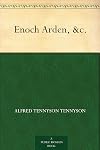
Enoch Arden
by Alfred Tennyson
On This Page
Description
HTML:Enoch ArdenBy Alfred Lord Tennyson
Narrated by Denis Daly
Enoch Arden is a long narrative poem which is built on a theme which has been widely explored in literature and on film. A man is separated from his family due to shipwreck, and marooned on an island. After several years of absence from his home it is assumed that he has died, and his wife remarries and starts a new family. After ten years the man finally makes his way home and has to deal with the trauma of discovering his wife show more and family happily established in a new relationship.
Production copyright 2021 Voices of Today. Fiction. Poetry. show less
Tags
Recommendations










Member Reviews
"Le héros du poème, un pêcheur devenu armateur, Enoch Arden, quitte sa femme et leurs trois enfants pour partir en mer avec son vieux capitaine, qui lui propose une mission. Enoch vient de perdre son travail, victime d'un accident. Ainsi, de son point de vue masculin, il s'en va pour le profit de sa famille. Mais le bateau fait naufrage et il est porté disparu pendant dix ans.
L'intrigue du poème peut être considérée comme une variation et une antithèse du mythe d'Ulysse, qui retrouve sa patiente épouse après vingt ans d'absence." Wiki
L'intrigue du poème peut être considérée comme une variation et une antithèse du mythe d'Ulysse, qui retrouve sa patiente épouse après vingt ans d'absence." Wiki
8479693045
Jubilæumsbog nummer 2 er Alfred Tennysons digtsamling Enoch Arden fra 1864. Den består af fire-fem langdigte, der kan læses som noveller på vers, og en blandet opsamling af bl.a. et hyldestdigt til prinsesse Alexandrine, da hun kom til England, og en ode fremført ved åbningen af verdensudstillingen i Crystal Palace.
Bedst er titeldigtet, men Sea Dreams og The Grand Mother var også interessante. Det centrale tema er kærligheden og dens genvordigheder. Enoch Arden vokser op sammen med pigen Annie og vennen Philip. Da Enoch og Annie bliver gift, lever de først et lykkeligt liv, men efter en ulykke må han opgive sin båd og tage hyre på et handelsskib, der sejler langfart til østen. Da skibet går ned, er Annie og børnene alene, show more men den velstående Philip kan endelig træde til og sikre deres fremtid. Han har nemlig hele tiden elsket Annie – men hvor sikre kan de være på, at Enoch faktisk er død og borte?
I andre digte står sociale konventioner i vejen for kærligheden. I Aylmer’s Field driver en adelsmand sin datter i døden, fordi han ikke vil anerkende hendes kærlighed. Til sidst er der intet tilbage. Slægten dør ud, og naturen tager sit tilbage:
”And where the two contrived their daughter’s good,
Lies the hawk’s cast, the mole has made his run,
The hedgebog underneath the plaintain bores,
The rabbit fondles his own harmless face,
The slow-worm creeps, an the thin weasel there
Follows the mouse, and all is open field.”
De bedste digte i samlingen handler om universelle temaer, mens andre tydeligt er præget af deres tid. Tennyson formår at fortælle historier på vers, og det er svært ikke at beundre håndværket. Det giver en anden rytme i læsningen end prosa. Jeg er bare mere til noveller og romaner, så der står ikke umiddelbart mere Tennyson på min læseliste. show less
Bedst er titeldigtet, men Sea Dreams og The Grand Mother var også interessante. Det centrale tema er kærligheden og dens genvordigheder. Enoch Arden vokser op sammen med pigen Annie og vennen Philip. Da Enoch og Annie bliver gift, lever de først et lykkeligt liv, men efter en ulykke må han opgive sin båd og tage hyre på et handelsskib, der sejler langfart til østen. Da skibet går ned, er Annie og børnene alene, show more men den velstående Philip kan endelig træde til og sikre deres fremtid. Han har nemlig hele tiden elsket Annie – men hvor sikre kan de være på, at Enoch faktisk er død og borte?
I andre digte står sociale konventioner i vejen for kærligheden. I Aylmer’s Field driver en adelsmand sin datter i døden, fordi han ikke vil anerkende hendes kærlighed. Til sidst er der intet tilbage. Slægten dør ud, og naturen tager sit tilbage:
”And where the two contrived their daughter’s good,
Lies the hawk’s cast, the mole has made his run,
The hedgebog underneath the plaintain bores,
The rabbit fondles his own harmless face,
The slow-worm creeps, an the thin weasel there
Follows the mouse, and all is open field.”
De bedste digte i samlingen handler om universelle temaer, mens andre tydeligt er præget af deres tid. Tennyson formår at fortælle historier på vers, og det er svært ikke at beundre håndværket. Det giver en anden rytme i læsningen end prosa. Jeg er bare mere til noveller og romaner, så der står ikke umiddelbart mere Tennyson på min læseliste. show less
May 16, 2014Danish
Ratings
Members
- Recently Added By
Author Information

Alfred Tennyson was born on August 6, 1809 in Somersby, England. He attended Trinity College in Cambridge. Tennyson is chiefly known for his poetry, an art form that had interested him since the age of six. His best known work is the Idylls of the King. Tennyson was appointed Poet Laureate of England in 1850 and became the Baron of Aldworth and show more Farrington in 1883. Tennyson was still writing his his 80s, and died on October 6, 1892 near Haslemere, England. (Bowker Author Biography) If there were a contest for the title "greatest Victorian poet," Tennyson would in death, as in life, obtain the prize. He had the finest ear of any English poet, admitting to know the metrical value of every word in the English language except "scissors." In addition, his ability to evoke a closely rendered scene was unsurpassed. Therefore, although those who sought to attack Tennyson called him "the stupidest of the English poets," he remains the only one ennobled for his poetry. Tennyson was born at Somersby rectory in Lincolnshire, the son of the rector there, and was educated at Louth Grammar School and Trinity College, Cambridge. His earliest published verse, Poems Chiefly Lyrical (1830) and Poems (1833), were considered too sentimental by many critics. Signs of future greatness could be detected in some of the poems in these collections, however. In 1842, a new volume entitled Poems was published. This work, consisting of heavily revised poems from the two earlier collections as well as many new poems, helped to establish Tennyson's fame. His masterpiece, In Memoriam (1850), crowned his fame. The work is a tribute to his close friend Arthur Henry Hallam, whose sudden death in 1833 was a crucial event in the poet's life. The year it was published he succeeded Wordsworth as poet laureate of England. Thereafter, he became tremendously popular and held the respect and admiration of the nation, including Queen Victoria and Prince Albert. From that point, Tennyson also became the poet of the establishment, and for the next 40 years he was the Parnassian idol whom younger poets would vainly seek to topple. In many of his poems, including "Ulysses," "The Princess," and "Idylls of the King" (1859--1885), Tennyson trumpeted the creed of the benevolent tyrant. It was this embrace of an authoritarian universe that, as much as his versecraft, had earned him the respect of the British monarchs. His lifelong fascination with King Arthur was the inspiration for Idylls of the King, a series of 12 narrative poems published over a period of 26 years. In 1888, Tennyson chronologically arranged these 12 poems, thus depicting the full story of Arthur and his vision of the perfect state. Tennyson's last poem, "Crossing the Bar," was a 16-line lyric written while crossing from Lymington to the Isle of Wight. It was included in a collection entitled Demeter and Other Poems published in 1889. Tennyson's most characteristic form of poetry was the idyl, a poem of country life. These poems frequently take the form of dramatic reveries that tell a story. Mood is often created through the power of richly described settings. All of Tennyson's work reflects his talent for achieving fine shades of poetic expression, and his lyrics express the emotions and experiences shared by all people. His work is also notable for its heroic quality. In 1883, Tennyson was awarded the title of Baron Tennyson by Queen Victoria; his full title was Baron of Aldworth and Farringford. When he died in 1892, he was buried in the Poet's Corner of Westminster Abbey. Tennyson's letters show almost nothing of the vividness and brilliance of his poetry, but Cecil Y. Lang and Edgar F. Shannon have been publishing them for their sidelights. More important for an understanding of Tennyson's poetry, the century-long ban on publishing the contents of Tennyson's notebooks, held by Trinity College in Cambridge, was lifted not long ago; an edition of In Memoriam, incorporating these variants, was brought out by Susan Shatto and Marion Shaw in 1982. (Bowker Author Biography) show less
Some Editions
Series
Belongs to Publisher Series
Little Blue Books (79.1)
Sammlung Hofenberg (Tennyson)
Work Relationships
Is contained in
Has the adaptation
Common Knowledge
- Canonical title
- Enoch Arden
- Original title
- Enoch Arden
- Original publication date
- 1864
- First words
- Long lines of cliff breaking have left a chasm;
And in the chasm are foam and yellow sands;
Long lines of cliff breaking have left a chasm;and in the chasm are foam and yellow sands; beyond, red roofs about a narrow wharf in cluster; then a moulder'd church; and higher a long street climbs to one tall-tower'd mill; ... (show all)a high in heaven behind it a gray down with Danish barrows; and a hazelwood, by autumn nutters haunted, flourishes green in a cuplike hollow of the down.
Long lines of cliff breaking have left a chasm; - Last words
- (Click to show. Warning: May contain spoilers.)And when they buried him the little port
Had seldom seen a costlier funeral.
(Click to show. Warning: May contain spoilers.)And in the lighted palace near died the sound of royal cheer; and they cross'd themselves for fear, all the knights at Camelot: but Lancelot mused a little space; God in His mercy lend her grace, The Lady of Shalott.
Classifications
Statistics
- Members
- 119
- Popularity
- 274,507
- Reviews
- 3
- Rating
- (4.00)
- Languages
- 5 — English, French, German, Polish, Spanish
- Media
- Paper, Audiobook, Ebook
- ISBNs
- 19
- UPCs
- 1
- ASINs
- 21