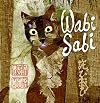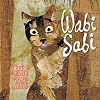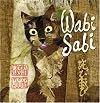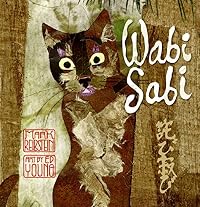
Wabi Sabi
by Mark Reibstein
On This Page
Description
Wabi Sabi, a cat living in the city of Kyoto, learns about the Japanese concept of beauty through simplicity as she asks various animals she meets about the meaning of her name.Tags
Recommendations


Member Reviews
Wabi Sabi, a little cat living just outside Kyoto, sets out to discover the meaning of her name - something that everyone seems to find "hard to explain" - in this gorgeous picture-book. When Snowball the cat and Rascal the dog have no answers for her, our feline heroine sets off for Mt. Hiei, to see the wise old monkey Kosho. It is here, holding Kosho's simple tea-cup, gazing at the woods around, and coming upon Ginkakuji - the "Silver Temple" - that she finally understands: Wabi Sabi is the feeling that beauty is to be found in the simple, the small, and the imperfect...
A thoughtful, contemplative narrative, incorporating haiku poetry with prose, Wabi Sabi is also a visually arresting book, with stunning collage-art by Ed Young, who show more won a Caldecott Medal for his work on Lon Po Po. I know very little of the art form of haiku, and had never before encountered the term Wabi Sabi, but this idea of the beauty to be found in imperfection is one I have often pondered, and I was reminded of the poetry of William Carlos Williams while reading this. It somehow seems appropriate that my introduction to Wabi Sabi came in a book meant for children - those "small" people amongst us. Thank you, Chandra, for recommending this one! show less
A thoughtful, contemplative narrative, incorporating haiku poetry with prose, Wabi Sabi is also a visually arresting book, with stunning collage-art by Ed Young, who show more won a Caldecott Medal for his work on Lon Po Po. I know very little of the art form of haiku, and had never before encountered the term Wabi Sabi, but this idea of the beauty to be found in imperfection is one I have often pondered, and I was reminded of the poetry of William Carlos Williams while reading this. It somehow seems appropriate that my introduction to Wabi Sabi came in a book meant for children - those "small" people amongst us. Thank you, Chandra, for recommending this one! show less
Thanks to cat-sitting this weekend I am enjoying an absolute orgy of reading - cats bring out all my natural inclinations towards curling up with a book (preferably with a cat as a hot water bottle!). And this was the perfect book to read on such an occasion.
Barbara very, very kindly bought Mum and I each a copy of this spectacular book which has only just made it onto the bookshop shelves. I would be extremely surprised if it isn't a huge success. The only thing that's strange about it is that it's shelved with the children's picture books. It may be a picture book but I think it takes an adult to truly appreciate it. The artwork is breathtakingly astonishing - I spend much of my time simply wanting to touch it - it has such a look of show more beautiful texture about it. It is truly like entering a new universe.
The text is conceptually complex, mysterious and satisfying, combining "spare text" with haiku. Neither author nor illustrator is Japanese, but the setting and concept are Japanese, and Japanese haiku form part of the artwork. The whole work is a feast of beauty that can be read again and again and again, simply to appreciate the beauty of the poetry, the glory of the astonishing artwork and the satisfaction of the concept.
What a gift. show less
Barbara very, very kindly bought Mum and I each a copy of this spectacular book which has only just made it onto the bookshop shelves. I would be extremely surprised if it isn't a huge success. The only thing that's strange about it is that it's shelved with the children's picture books. It may be a picture book but I think it takes an adult to truly appreciate it. The artwork is breathtakingly astonishing - I spend much of my time simply wanting to touch it - it has such a look of show more beautiful texture about it. It is truly like entering a new universe.
The text is conceptually complex, mysterious and satisfying, combining "spare text" with haiku. Neither author nor illustrator is Japanese, but the setting and concept are Japanese, and Japanese haiku form part of the artwork. The whole work is a feast of beauty that can be read again and again and again, simply to appreciate the beauty of the poetry, the glory of the astonishing artwork and the satisfaction of the concept.
What a gift. show less
The act of juxtaposition is a common literary motif, but Reibstein and Young go outside of simple in-text contrast to empahsize the diffrnces and similarities between the textual and artistic themes of their story. Wabi wabi, a Japanese artistic style meaning beauty in simplicity, is sharply contrasted at first glance by the craft-like style of Young's collages. Yet, as the story progresses alongside its feline protagonist's journey to self-discovery we come to realize that the seeming rough edges and haphazard arrangement of materials is actually quite simplistic. The medium and lines are quite rudimentary, so the eye naturally picks up the more complex textures and patterns within shapes to perfectly exemplify the meaning of wabi sabi.
This is a different kind of book. It focuses mostly on a cat, Wabi Sabi, who goes out to learn the significance of her name. The Japanese identify Wabi Sabi as accepting yourself based on three concepts: imperfections, incompleteness, and impermanence. These three concepts create the theme or main point of the book.
I like the book. It is mixed media in two different methods: writing style and illustrations. For example the author switched from prose to haikus. I find this an interesting way to introduce poetry. Traditional books are usually either prose or poetry not both. I also like how the cat is unsure about what wabi sabi means, and searches until she grasps the concept.
I really enjoyed the illustrations. The collage method really show more added to the story. For example, each image of the cat had texture that made it almost like you could feel the cat. The other cat and the dog Wabi Sabi comes across have similar details. The colors were mostly earth tones, which I felt were good additions to the mood of the story. show less
I like the book. It is mixed media in two different methods: writing style and illustrations. For example the author switched from prose to haikus. I find this an interesting way to introduce poetry. Traditional books are usually either prose or poetry not both. I also like how the cat is unsure about what wabi sabi means, and searches until she grasps the concept.
I really enjoyed the illustrations. The collage method really show more added to the story. For example, each image of the cat had texture that made it almost like you could feel the cat. The other cat and the dog Wabi Sabi comes across have similar details. The colors were mostly earth tones, which I felt were good additions to the mood of the story. show less
This is a beautiful book. The bare story is that of a cat in Japan who sets out to find the meaning of his name, Wabi Sabi. We are brought into the beuatiful world of Japanese aethetics, where you have to sit with art to probe into its meaning or significance. The art work by Ed Young, composed of painterly looking collages, is striking. The story by Mark Reibstein is charming, and although intended for a juvenile audience can be absorbed equally by adults.
A different kind of picture book as it has carries Japanese themes and illustrations. A cat, Wabi Sabi, wants to find out what its name is. The search takes the cat to all its friends, through the city, and to a mountain. Animal friends of the cat offer conflicting meanings of the cat's name but the cat finally learns how simple things are often most beautiful. The book is filled with many examples of haiku as well as Japanese writings. The pictures are also fascinating and even appear almost three-dimensional on some of the pages. I will use this book to encourage discussions about simple pleasures and the beauty we can find in simple living. It would also inspire students to find out about the origins and meanings of their own names.
In this beautiful and unique picture book, a cat named Wabi Sabi questions his name, asking his owner the meaning. Wabi Sabi is a traditional Japanese idea about finding beauty in simple, ordinary things. Wabi Sabi the cat asks others around him and is eventually directed to a wise monkey who leads the perplexed kitty to the realization. The much wiser cat eventually gets back home to his owner. Each page of this lovely book has a haiku to complement the ideas and lead the reader to appreciate the simple verses.
This book opens up like a tablet (not left to right like an ordinary book), to further allow the reader to appreciate the Japanese reading style. The artwork by Ed Young depicts the animals and nature scenes simply, using show more multimedia. Each page has unique textures and colors, sometimes using photographs and painted canvas as the medium. It is hard to explain; one really has to see the art to understand the technique. At the end of the story, there are thorough explanations of wabi sabi and haiku, and each haiku from the story is repeated with the Japanese characters.
This book is a gem, and it provides numerous learning opportunities and an appreciation of Japanese culture. This book could easily be used in the classroom to show kids haiku as a form of poetry, but also as a way to find beauty in ordinary things. As a classroom activity, kids could write their own haikus about ordinary everyday things in their lives. As far as the artwork, kids could experiment with their own multimedia artwork using things they find around their home. Perhaps they could create a piece of artwork around a given theme, like items all a certain color. I think the mixed media artwork in this book is really pretty fun and interesting, and I think kids would appreciate putting found objects together in new ways. show less
This book opens up like a tablet (not left to right like an ordinary book), to further allow the reader to appreciate the Japanese reading style. The artwork by Ed Young depicts the animals and nature scenes simply, using show more multimedia. Each page has unique textures and colors, sometimes using photographs and painted canvas as the medium. It is hard to explain; one really has to see the art to understand the technique. At the end of the story, there are thorough explanations of wabi sabi and haiku, and each haiku from the story is repeated with the Japanese characters.
This book is a gem, and it provides numerous learning opportunities and an appreciation of Japanese culture. This book could easily be used in the classroom to show kids haiku as a form of poetry, but also as a way to find beauty in ordinary things. As a classroom activity, kids could write their own haikus about ordinary everyday things in their lives. As far as the artwork, kids could experiment with their own multimedia artwork using things they find around their home. Perhaps they could create a piece of artwork around a given theme, like items all a certain color. I think the mixed media artwork in this book is really pretty fun and interesting, and I think kids would appreciate putting found objects together in new ways. show less
Members
- Recently Added By
Lists

A Child's Book Tour of Japan
58 works; 4 members

Cats in Fiction
209 works; 9 members

Youth: Reading, Writing, Humor, Satire
63 works; 1 member

Children's Picture Books
188 works; 1 member
Author Information
2 Works 714 Members
All Editions
Awards and Honors
Awards
Common Knowledge
- Canonical title
- Wabi Sabi
- Original title
- Wabi Sabi
- Original publication date
- 2008
- People/Characters
- Wabi Sabi; Snowball; Rascal; bird; Kosho, a wise old monkey
- Important places
- Kyoto, Japan; Mount Hiet; Honshū, Japan; Japan
- Epigraph
- Kosho Hannya Wo Danzu
An old pine tree can teach you the sacred truths.
-- Zen Proverb
Wabi Sabi is a way of seeing the world that is at the heart of Japanese culture. It finds beauty and harmony in what is simple, imperfect, natural, modest, and mysterious. It can be a little dark, but it is also warm... (show all) and comfortable. It may best be understood as a feeling, rather than as an idea. - Dedication
- For Lauren and Lena
-- M.R.
To providence hidden in tragic circumstances.
It points to yet another opportunity to fully realize this book.
-- E.Y. - First words
- Wabi Sabi was a cat who lived in Kyoto, Japan.
- Quotations
- "That's hard to explain."
- Last words
- (Click to show. Warning: May contain spoilers.)"Wabi Sabi!" cried her master, seeing her. "Where have you been?"
"That's hard to explain," she purred, feeling simply and beautifully at home."
Classifications
Statistics
- Members
- 708
- Popularity
- 39,981
- Reviews
- 85
- Rating
- (4.27)
- Languages
- English, Portuguese
- Media
- Paper, Audiobook, Ebook
- ISBNs
- 11
- ASINs
- 3