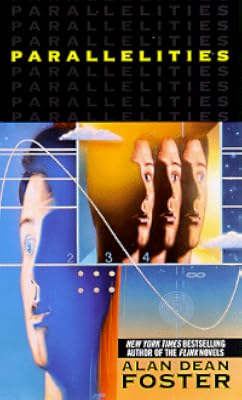
Parallelities
by Alan Dean Foster
On This Page
Description
“It seems you have acquired about you a field that affects the links between multiple parallel worlds, causing objects and individuals from these worlds to slip into yours . . . or you to slip into theirs . . .” It was just an average day for tabloid reporter Max Parker when he arrived in Malibu for a demonstration of a brand new parallel-universe machine. But everything changed in an instant when inventor Barrington Boles succeeded in making Max the human gate to numerous parallelities. show more Now Max was lost in a virtual sea of collateral worlds, confronting man-eating aliens, dinosaurs, talking frogs, dead Maxes, girl Maxes, old Maxes, even ghost Maxes. His only chance to escape the space-time continuum was to find Boles and hope the loony genius could rescue him. But how could he be sure which world was real, which Max was Max, and which Boles was the Boles who could stop the madness—or trap Max in the wrong world forever. . . ? show lessTags
Recommendations
















Member Reviews
Substance: A rather leisurely stroll through the paradoxes of parallel universes, in the form of anecdota travel experiences (cf the original "Wizard of Oz") with some unconvincing philosophical meandering.
Best viewed as a narrative of an unrealized screenplay for a summer flick.
Style: Topical and somewhat lame humor, but Foster is always good for a beach read (not much more).
NOTES:
p. 22: how to fake a séance with magnets and mini-speakers;
p. 230: para ghosts were the most interesting exploration;
p. 296: bottom line - you can never tell if you are in your own world or a para in some other world (who is the original anyway?), and there's no place like home.
Personal Peeve: as with almost all parallel universe books (with the exception of show more Zahn's "Deadman Switch") there is never a convincing explanation of why some worlds differ in only trivial details for the protagonist and his personal cohort, at the same time as major historical differences abound. show less
Best viewed as a narrative of an unrealized screenplay for a summer flick.
Style: Topical and somewhat lame humor, but Foster is always good for a beach read (not much more).
NOTES:
p. 22: how to fake a séance with magnets and mini-speakers;
p. 230: para ghosts were the most interesting exploration;
p. 296: bottom line - you can never tell if you are in your own world or a para in some other world (who is the original anyway?), and there's no place like home.
Personal Peeve: as with almost all parallel universe books (with the exception of show more Zahn's "Deadman Switch") there is never a convincing explanation of why some worlds differ in only trivial details for the protagonist and his personal cohort, at the same time as major historical differences abound. show less
Parallelities
Author: Alan Dean Foster
Publisher: Del Rey / Ballantine Publishing Group
Published In: New York City, NY
Date: 1998
Pgs: 314
REVIEW MAY CONTAIN SPOILERS
Summary:
Go see the alternate universe experiment in Malibu, they said. It’ll be fun they said. Hang out in Malibu. Watch the experiment. Write your story. Maybe get a Sharkboy of Malibu for the back pages before you come home. Tabloid reporter Max Parker showed up...and got more than he bargained for. The experiment worked all too well. Max has been shot across a virtual sea, across distant Earths. All he has to do is find the scientist who developed the experiment on his world...his scientist, his world...while dodging man-eating aliens, dinosaurs, talking frogs, etc. No show more problem, right. And he’ll have to deal with his other selfs; the dead hims, the girl hims, the old hims, the ghost hims. What could possibly go wrong?
Genre:
Adventure
Alternate History
Fiction
Multiverse
Science fiction
Why this book:
Love a good parallel Earth story. Love a good Alan Dean Foster story.
______________________________________________________________________________
Character I Most Identified With:
As the story goes forward, despite Max’s moral and likeability shortcomings, I start to root for the guy. He’s just a jackass lost in circumstance and worlds beyond his wanting to get home.
The Feel:
Gave me the up close feel, like I was in the room with Max as this was happening to him.
Favorite Scene / Quote:
The bighorn sheep and condor moment did flip the story. I was concerned that it was going to be hard sledding to get from the “he draws parallels to him” paradigm to something like a satisfying story when the shift occurred and he started flipping into other worlds, which was what I expected from the story when I picked it up. The main character travelling to alternate worlds is a necessary trope for this genre of story.
A world where Lovecraft’s Cthulhu mythos came to be and humanity adapted to the yoke. Micromanaging Cthulhi in offices across the world, leaving slime trails, and making sure you file your TPS reports.
Pacing:
Foster is a master of flow and pace. The story moves through it’s waypoints with great fluidity.
Word Choice / Usage:
The word propitious used twice in the first 34 pages stands out glaringly. The word is uncommon enough that twice is noticeable. Make that three times in the 50 opening pages.
Love the tornado analogy used by one of Max’s paras, Mitch.
Plot Holes/Out of Character:
Max’s ability to compartmentalize his worry, fear, and anger through the medium of his lust hints at a much shallower character than the man who ran from the alternate counterpart foursome that he almost triggered on the beach. It is a helluva character swing from where he is when he leaves the beach, to where he is when he arrives back at Boles, and, subsequently, where he is after Boles talks to him.
A Jack Palance reference describing his face when Max meets Maxine, a female parallelite, dates the book. Through that point, the novel could have been taking place in any timeframe.
The first Max Parker we met, Alpha Max Parker, Max Parker Prime, Max Parker One, etc spins from existential crisis to existential crisis as we progress through the story. This begins to wear thin after he spends a significant bit of time in the “Everyone is a version of Max” para.
Hmm Moments:
Max isn’t just morally ambiguous. He’s morally bankrupt. He is an epitome of the tabloid reporter, though storyteller may be a better label for him. Truth is relative, but not necessary when the result is his living in a beachfront condo and making a healthy living. He’s unlikable, almost from the get-go. Wonder how this will play with his alternate universe selves that are coming up in the story.
The medium, Tarashikov-Heppleworth, neither may be her real name, is another great character, but not morally handcuffed in the least.
The identical triplet home invaders/robbers who don’t know each other. Does this mean that the alternate worlds are coming to him instead of him going to them? That could be an interesting twist on the tropes of the genre.
The omnipresent Max reality is an alt world version that I’ve never seen before. That’s a good nod to alienness and hell. Hell is other people, but what if they are all versions of you.
WTF Moments:
After the Mitch alternate disappears, hopefully, back to where he belongs and Max finds himself in company with a Maxine para of himself, what they do tweaks my oogie meter. That’s just not right.
When he thinks he’s home and grabs a hot dog from a street vendor near his home as he starts to relax and...the hot dogs opens a green eye and winks at him through wiggling sauerkraut.
Casting call:
Keanu Reeves as Max, Reeves can play ambiguous well. Maybe Ryan Reynolds as Max.
Sam Neill as Barrington Boles. He could definitely do the mad/not mad scientist part, but I’m just not sure if he could come across as a part time surfer at this point in his career. Sam Elliott could do wonders with the part as well.
______________________________________________________________________________
Last Page Sound:
Dammit. Hitting us with the twist is unfortunate, since there won’t be a part 2 to this. I’m certain that I wouldn’t invest my time in a sequel. Glad I read it. I just wish that twist hadn’t happened or was less ambiguous.
Author Assessment:
It’s Alan Dean Foster. I’ll always read something else by Alan Dean Foster.
Editorial Assessment:
Wish someone would have said, “are you sure about this last paragraph?”
Knee Jerk Reaction:
glad I read it
Disposition of Book:
Moore Memorial Public Library
Texas City, TX
Dewey Decimal System:
SF
FOSTER
Would recommend to:
friends, colleagues, genre fans
______________________________________________________________________________ show less
Author: Alan Dean Foster
Publisher: Del Rey / Ballantine Publishing Group
Published In: New York City, NY
Date: 1998
Pgs: 314
REVIEW MAY CONTAIN SPOILERS
Summary:
Go see the alternate universe experiment in Malibu, they said. It’ll be fun they said. Hang out in Malibu. Watch the experiment. Write your story. Maybe get a Sharkboy of Malibu for the back pages before you come home. Tabloid reporter Max Parker showed up...and got more than he bargained for. The experiment worked all too well. Max has been shot across a virtual sea, across distant Earths. All he has to do is find the scientist who developed the experiment on his world...his scientist, his world...while dodging man-eating aliens, dinosaurs, talking frogs, etc. No show more problem, right. And he’ll have to deal with his other selfs; the dead hims, the girl hims, the old hims, the ghost hims. What could possibly go wrong?
Genre:
Adventure
Alternate History
Fiction
Multiverse
Science fiction
Why this book:
Love a good parallel Earth story. Love a good Alan Dean Foster story.
______________________________________________________________________________
Character I Most Identified With:
As the story goes forward, despite Max’s moral and likeability shortcomings, I start to root for the guy. He’s just a jackass lost in circumstance and worlds beyond his wanting to get home.
The Feel:
Gave me the up close feel, like I was in the room with Max as this was happening to him.
Favorite Scene / Quote:
The bighorn sheep and condor moment did flip the story. I was concerned that it was going to be hard sledding to get from the “he draws parallels to him” paradigm to something like a satisfying story when the shift occurred and he started flipping into other worlds, which was what I expected from the story when I picked it up. The main character travelling to alternate worlds is a necessary trope for this genre of story.
A world where Lovecraft’s Cthulhu mythos came to be and humanity adapted to the yoke. Micromanaging Cthulhi in offices across the world, leaving slime trails, and making sure you file your TPS reports.
Pacing:
Foster is a master of flow and pace. The story moves through it’s waypoints with great fluidity.
Word Choice / Usage:
The word propitious used twice in the first 34 pages stands out glaringly. The word is uncommon enough that twice is noticeable. Make that three times in the 50 opening pages.
Love the tornado analogy used by one of Max’s paras, Mitch.
Plot Holes/Out of Character:
Max’s ability to compartmentalize his worry, fear, and anger through the medium of his lust hints at a much shallower character than the man who ran from the alternate counterpart foursome that he almost triggered on the beach. It is a helluva character swing from where he is when he leaves the beach, to where he is when he arrives back at Boles, and, subsequently, where he is after Boles talks to him.
A Jack Palance reference describing his face when Max meets Maxine, a female parallelite, dates the book. Through that point, the novel could have been taking place in any timeframe.
The first Max Parker we met, Alpha Max Parker, Max Parker Prime, Max Parker One, etc spins from existential crisis to existential crisis as we progress through the story. This begins to wear thin after he spends a significant bit of time in the “Everyone is a version of Max” para.
Hmm Moments:
Max isn’t just morally ambiguous. He’s morally bankrupt. He is an epitome of the tabloid reporter, though storyteller may be a better label for him. Truth is relative, but not necessary when the result is his living in a beachfront condo and making a healthy living. He’s unlikable, almost from the get-go. Wonder how this will play with his alternate universe selves that are coming up in the story.
The medium, Tarashikov-Heppleworth, neither may be her real name, is another great character, but not morally handcuffed in the least.
The identical triplet home invaders/robbers who don’t know each other. Does this mean that the alternate worlds are coming to him instead of him going to them? That could be an interesting twist on the tropes of the genre.
The omnipresent Max reality is an alt world version that I’ve never seen before. That’s a good nod to alienness and hell. Hell is other people, but what if they are all versions of you.
WTF Moments:
After the Mitch alternate disappears, hopefully, back to where he belongs and Max finds himself in company with a Maxine para of himself, what they do tweaks my oogie meter. That’s just not right.
When he thinks he’s home and grabs a hot dog from a street vendor near his home as he starts to relax and...the hot dogs opens a green eye and winks at him through wiggling sauerkraut.
Casting call:
Keanu Reeves as Max, Reeves can play ambiguous well. Maybe Ryan Reynolds as Max.
Sam Neill as Barrington Boles. He could definitely do the mad/not mad scientist part, but I’m just not sure if he could come across as a part time surfer at this point in his career. Sam Elliott could do wonders with the part as well.
______________________________________________________________________________
Last Page Sound:
Dammit. Hitting us with the twist is unfortunate, since there won’t be a part 2 to this. I’m certain that I wouldn’t invest my time in a sequel. Glad I read it. I just wish that twist hadn’t happened or was less ambiguous.
Author Assessment:
It’s Alan Dean Foster. I’ll always read something else by Alan Dean Foster.
Editorial Assessment:
Wish someone would have said, “are you sure about this last paragraph?”
Knee Jerk Reaction:
glad I read it
Disposition of Book:
Moore Memorial Public Library
Texas City, TX
Dewey Decimal System:
SF
FOSTER
Would recommend to:
friends, colleagues, genre fans
______________________________________________________________________________ show less
What a dumb book. The parallel worlds that appeared around the protagonist became awfully extreme: including aliens and ghosts and their alternate counterparts, as well as Cthulhu (no, I'm not kidding). None of the alternates was deeply explored; their purpose was only to distress the protagonist. Dialogue repeated itself within pages, giving me the impression of a book dictated at high speed.
The prose? Allow me to quote from page one: "… the current condition of the metastasizing megalopolis's vaunted but frequently arterioscleriotic freeway system." And from page two: "… the haggard homeless hawkers of makework newspapers who crowded the median … and haunted the street signals … Maneuvering skillfully around a shambling, show more shaggy, vaguely anthropoid figure fervently hoping to force his energies upone the … already speckless windshield…" I have to assume that Alan Dean Foster's brain naturally runs to the prolix, because I can't imagine any hack investing effort on that kind of thing. show less
The prose? Allow me to quote from page one: "… the current condition of the metastasizing megalopolis's vaunted but frequently arterioscleriotic freeway system." And from page two: "… the haggard homeless hawkers of makework newspapers who crowded the median … and haunted the street signals … Maneuvering skillfully around a shambling, show more shaggy, vaguely anthropoid figure fervently hoping to force his energies upone the … already speckless windshield…" I have to assume that Alan Dean Foster's brain naturally runs to the prolix, because I can't imagine any hack investing effort on that kind of thing. show less
Max Parker is an investigative reporter for a tabloid and is therefore always suspicious of the claims he investigates. But Barrington Boles is different, his invention just might be legitimate. Max is about to find out what happens when different realities collide.
A fairly imaginative and intriguing story about the events that ensue when a reporter observes an experiment in parallel realities, unwittingly becoming a magnet for parallelities from other-dimensional Earths, particularly varying versions of his own self. The dimensional conundrums become more and more fantastic and off-the-wall, until finally, just before a cosmic breaking point, the mad scientist cures him... apparently. The expected final twist is well-handled.
Not very scientific, and not the most fun I've ever had either - but a nice light read, especially for fans of Foster.
Members
- Recently Added By
Author Information

363+ Works 74,123 Members
Bestselling science fiction writer Alan Dean Foster was born in New York City in 1946, but raised mainly in California. He received a B.A. in Political Science from UCLA in 1968, and a M.F.A. in 1969. Foster enjoys traveling because it gives him opportunities to meet new people and explore new places and cultures. This interest is carried over to show more his writing, but with a twist: the new places encountered in his books are likely to be on another planet, and the people may belong to an alien race. Foster began his career as an author when a letter he sent to Arkham Collection was purchased by the editor and published in the magazine in 1968. His first novel, The Tar-Aiym Krang, introduced the Humanx Commonwealth, a galactic alliance between humans and an insectlike race called Thranx. Several other novels, including the Icerigger trilogy, are also set in the world of the Commonwealth. The Tar-Aiym Krang also marked the first appearance of Flinx, a young man with paranormal abilities, who reappears in other books, including Orphan Star, For Love of Mother-Not, and Flinx in Flux. Foster has also written The Damned series and the Spellsinger series, which includes The Hour of the Gate, The Moment of the Magician, The Paths of the Perambulator, and Son of Spellsinger, among others. Other books include novelizations of science fiction movies and television shows such as Star Trek, The Black Hole, Starman, Star Wars, and the Alien movies. Splinter of the Mind's Eye, a bestselling novel based on the Star Wars movies, received the Galaxy Award in 1979. The book Cyber Way won the Southwest Book Award for Fiction in 1990. His novel Our Lady of the Machine won him the UPC Award (Spain) in 1993. He also won the Ignotus Award (Spain) in 1994 and the Stannik Award (Russia) in 2000. He is the recipient of the Faust, the IAMTW Lifetime achievement award. Alan Dean Foster's Star Wars: The Force Awakens, was a 2015 New York Times bestseller. (Bowker Author Biography) show less
Common Knowledge
- Original publication date
- 1995
Classifications
Statistics
- Members
- 239
- Popularity
- 136,877
- Reviews
- 7
- Rating
- (3.08)
- Languages
- English
- Media
- Paper, Ebook
- ISBNs
- 5
- ASINs
- 1