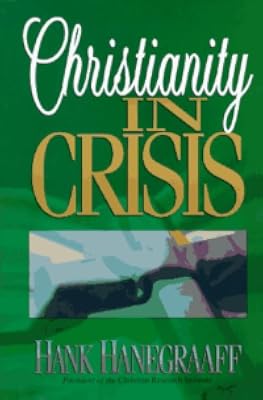
Christianity in Crisis
by Hank Hanegraaff
On This Page
Description
Nearly two decades ago Hank Hanegraaff's award-winning Christianity in Crisis alerted the world to the dangers of a cultic movement within Christianity that threatened to undermine the very foundation of biblical faith. But in the 21st century, there are new dangers-new teachers who threaten to do more damage than the last. These are not obscure teachers that Hanegraaff unmasks. We know their names. We have seen their faces, sat in their churches, and heard them shamelessly preach and show more promote the false pretexts of a give-to-get gospel. They are virtual rock stars who command the attention of presidential candidates and media moguls. Through make-believe miracles, urban legends, counterfeit Christs, and twisted theological reasoning, they peddle an occult brand of metaphysics that continues to shipwreck the faith of millions around the globe: "God cannot do anything in this earthly realm unless we give Him permission. "Keep saying it-'I have equality with God'-talk yourself into it." "Being poor is a sin." "The Jews were not rejecting Jesus as Messiah; it was Jesus who was refusing to be the Messiah to the Jews!" "You create your own world the same way God creates His. He speaks, and things happen; you speak, and they happen." Christianity in Crisis: 21st Century exposes darkness to light, pointing us back to a Christianity centered in Christ. From the Preface: "Having lost the ability to think biblically, postmodern Christians are being transformed from cultural change agents and initiators into cultural conformists and imitators. Pop culture beckons, and postmodern Christians have taken the bait. As a result, the biblical model of faith has given way to an increasingly bizarre array of fads and formulas." show lessTags
Recommendations
















Member Reviews
The body of Christ has suffered tremendously at the hands of a group of "leaders" who peddle faith as a commodity, preach a "name-it-and-claim-it" gospel, and otherwise wreak havoc on sound doctrine.
In writing Christianity in Crisis: The 21st Century (2009, Thomas Nelson), Hank Hanegraaff has provided the body of Christ with a biblical antidote for this infection. His withering analysis of the Faith movement--covering the span from "old timers" like Kenneth Hagin to current celebrities such as Joel Osteen--shows it for what it is: a doctrinal house of cards that crumbles at the slightest investigative touch.
Christianity in Crisis is written in such a way as to be valuable to three major groups of people. Serious pastors who struggle to show more compete with the slick TV performances of the Faith "ministers" will find ample material with which to better inform their congregations. Laymen will be brought face-to-face with clear comparisons between what these charlatans claim and what the Scripture teaches. Missionaries will also be given amunition with which to combat the influence of these "faith mongers" in foreign lands.
In the first part of his book, Hanegraaff defines the problem in basic terms, and introduces us to the cadre of shady characters that make up the Faith movement. There are easily recognized names like Kenneth Hagin, Kenneth Copeland and Benny Hinn. This update version also targets new kids on the block like Joel Osteen and Joyce Meyer.
After introducing the "plot" and the cast of characters (would to God that this were fiction), he spends the bulk of the book elaborating the main points of the Faith movement. These are, in order, a misguided concept of faith, the idea that men are/can become gods, a twisting of the atonement, an emphasis on material prosperity, and denial of God's purpose in suffering.
Hanegraaff is very concerned that his readers understand what it is he is saying. The chapters of his book are filled with mnemonic devices to insure easy memory. For example, the above list is given as F.L.A.W.S. (Faith in faith, Little gods, Atonement atrocities, Wealth and want, and Sickness and suffering). At first I found these to be cumbersome, but as I continued reading, they began to be helpful to me. Almost every chapter is divided into its own neat little acrostic.
After dealing at length with the problems of the Faith movement, Hanegraaff spends the last part of his book sharing basic tools to help his readers gain a biblical worldview. Here I sensed his genuine desire to rescue lay-people from the clutches of these unscrupulous prevaricators.
I recommend this book in the highest possible terms. It should be in every church library, and in the personal study of every pastor, missionary, and lay leader.
On a personal note, I know that the original version of this was published in Portuguese here in Brazil. I should like to see this new version published also. It would be nice if Hanegraaff could collaborate with someone here in Brazil and add some chapters dealing with our own homegrown and wildly successful "Faith preachers"--Edir Macedo, R.R. Soares, and others of their ilk.
www.comingstobrazil.com show less
In writing Christianity in Crisis: The 21st Century (2009, Thomas Nelson), Hank Hanegraaff has provided the body of Christ with a biblical antidote for this infection. His withering analysis of the Faith movement--covering the span from "old timers" like Kenneth Hagin to current celebrities such as Joel Osteen--shows it for what it is: a doctrinal house of cards that crumbles at the slightest investigative touch.
Christianity in Crisis is written in such a way as to be valuable to three major groups of people. Serious pastors who struggle to show more compete with the slick TV performances of the Faith "ministers" will find ample material with which to better inform their congregations. Laymen will be brought face-to-face with clear comparisons between what these charlatans claim and what the Scripture teaches. Missionaries will also be given amunition with which to combat the influence of these "faith mongers" in foreign lands.
In the first part of his book, Hanegraaff defines the problem in basic terms, and introduces us to the cadre of shady characters that make up the Faith movement. There are easily recognized names like Kenneth Hagin, Kenneth Copeland and Benny Hinn. This update version also targets new kids on the block like Joel Osteen and Joyce Meyer.
After introducing the "plot" and the cast of characters (would to God that this were fiction), he spends the bulk of the book elaborating the main points of the Faith movement. These are, in order, a misguided concept of faith, the idea that men are/can become gods, a twisting of the atonement, an emphasis on material prosperity, and denial of God's purpose in suffering.
Hanegraaff is very concerned that his readers understand what it is he is saying. The chapters of his book are filled with mnemonic devices to insure easy memory. For example, the above list is given as F.L.A.W.S. (Faith in faith, Little gods, Atonement atrocities, Wealth and want, and Sickness and suffering). At first I found these to be cumbersome, but as I continued reading, they began to be helpful to me. Almost every chapter is divided into its own neat little acrostic.
After dealing at length with the problems of the Faith movement, Hanegraaff spends the last part of his book sharing basic tools to help his readers gain a biblical worldview. Here I sensed his genuine desire to rescue lay-people from the clutches of these unscrupulous prevaricators.
I recommend this book in the highest possible terms. It should be in every church library, and in the personal study of every pastor, missionary, and lay leader.
On a personal note, I know that the original version of this was published in Portuguese here in Brazil. I should like to see this new version published also. It would be nice if Hanegraaff could collaborate with someone here in Brazil and add some chapters dealing with our own homegrown and wildly successful "Faith preachers"--Edir Macedo, R.R. Soares, and others of their ilk.
www.comingstobrazil.com show less
There were two specific things I disliked about the execution of this book, which I believe makes it less useful than it otherwise could be. (Perhaps this can serve as constructive criticism if the book is ever revised again.) The first is the attitude with which specific examples are addressed and the second is the limited explanation for why particular Word-Faith teachings are said to be unbiblical.
While I completely agree with the author that sound doctrine is essential and must be defended, and I agree that heretical teachings are to be examined and firmly denied, it is also true that many of the Word-Faith teachings contain a kernel of truth. (This is the case with most cultic teachings; it is rare that large numbers of people will show more jump on the bandwagon of something entirely fabricated.) Rather than acknowledge these kernels and demonstrate how they are twisted or taken out of balance, the author simply writes them off as ridiculous and moves on.
At the same time, he does not do nearly as much as he could to demonstrate why a particular teaching is anti-biblical - how it falls short of lining up with Scripture.
While the first issue is likely to turn off any readers who currently follow these teachings, before the warnings in the book have an opportunity to make an impact, the second is likely to leave already-deceived readers still wondering about what to believe and why.
One other minor annoyance I personally found was that acronyms were far overused for my taste. This is purely a style issue, however, and I'm sure many readers will find the acronyms useful.
Despite my objections to these specifics, I appreciated the book as a whole. It is a fairly lengthy read, incorporating a lot of information. Even the appendices and indeces are pretty hefty. Examples given are word-for-word quotes from the Word-Faith speakers themselves, which leave little or no room for wondering what their true intentions and teachings are. There were one or two examples (of supposed error) that I did not find any Scriptural issue with but, as a rule, Hanegraaff's examples are clear and his arguments strong. Most importantly, he grasps the importance of standing on the foundation of Scripture and upholding doctrinal orthodoxy. show less
While I completely agree with the author that sound doctrine is essential and must be defended, and I agree that heretical teachings are to be examined and firmly denied, it is also true that many of the Word-Faith teachings contain a kernel of truth. (This is the case with most cultic teachings; it is rare that large numbers of people will show more jump on the bandwagon of something entirely fabricated.) Rather than acknowledge these kernels and demonstrate how they are twisted or taken out of balance, the author simply writes them off as ridiculous and moves on.
At the same time, he does not do nearly as much as he could to demonstrate why a particular teaching is anti-biblical - how it falls short of lining up with Scripture.
While the first issue is likely to turn off any readers who currently follow these teachings, before the warnings in the book have an opportunity to make an impact, the second is likely to leave already-deceived readers still wondering about what to believe and why.
One other minor annoyance I personally found was that acronyms were far overused for my taste. This is purely a style issue, however, and I'm sure many readers will find the acronyms useful.
Despite my objections to these specifics, I appreciated the book as a whole. It is a fairly lengthy read, incorporating a lot of information. Even the appendices and indeces are pretty hefty. Examples given are word-for-word quotes from the Word-Faith speakers themselves, which leave little or no room for wondering what their true intentions and teachings are. There were one or two examples (of supposed error) that I did not find any Scriptural issue with but, as a rule, Hanegraaff's examples are clear and his arguments strong. Most importantly, he grasps the importance of standing on the foundation of Scripture and upholding doctrinal orthodoxy. show less
If you are a follower of a Word of Faith teacher or prosperity preacher, read this book with caution. Christianity In Crisis: The 21st Century will make you very unhappy with your current situation. This book counters many of the false teachers in the Word of Faith movement. This book looks at the false teachings of a huge cast of characters including: Joel Osteen, Joyce Meyer, Benny Hinn and many of the familiar faces on TBN television network. It looks at some hilarious claims such as the teaching that Adam was the first Superman, who could do such things as fly to the moon. This book also looks at more dangerous heresies including the one that Christ's work on the cross was not enough for salvation. Hank Hanegraaf has produced a show more wonderful resource with this book. If you are intrigued by Christian apologetics, this is an excellent book for you. It is also a great book for any Christian whose discernment skills are not yet the greatest. Hank does an excellent job of showing readers how to discern these false teachers. He also gives straight forward ways to approach reading the Bible and doing basic apologetics work. I would recommend this book to anyone at any level of Christian maturity. show less
Wow.
Hank Hanegraaff has brought his book up to date. 20 years have gone by since he first wrote Christianity in Crisis, and the crisis has only intensified!
“The tragedy is that too often we look for God in all the wrong places. The real experience is found not in counterfeit formulas but in Christian fundamentals.”
Although I have come to disagree with Hank on many theological issues, this book doesn’t go into what I might consider questionable areas of his theology. As such, I feel comfortable recommending it to others.
If you are familiar with the original book, you are probably wondering what is new, and if it is worth purchasing. Let me assure you it is worth it! There are many new faces on the scene, and those who distort the show more gospel by preaching a false “health and wealth” gospel are only gaining momentum.
One of the key additions to the book is the “Cast of Characters” section. Hanegraff takes an in-depth look at each of the major players in the Word of Faith movement, and analyzes where they distort the message of the Bible for their own gain, and to the detriment of others.
One of the great strengths of this book is the endnotes. You aren’t reading Hanegraff’s opinion about these men and women - he has detailed notes with references of what book, magazine or television program they said these things. This is a solid, well researched critique of this false teaching. In addition to the “name it and claim it” heresies, we see the atonement under attack by people like Benny Hinn, the sovereignty of God under attack by Joel Osteen and the Trinity under attack by Bishop T.D. Jakes.
The one weakness of the book is in his synthesis of all the different beliefs of these individuals into a kind of fairy-tale. He includes this as an introduction to Part One. By including this, he creates a view that none of these men and women would ascribe to, and I feel weakens his overall argument. That said, after he delivers this fairy-tale, he then goes into detailed specifics of what each individual believes, and redeems the book as credible.
Through Christianity in Crisis, Hank Hanegraff does a thorough job of exposing the truth behind the lies, and pointing us back to what God’s Word has to say.
In the first several parts of the book, the author lays out what this movement teaches, and then goes into deep detail into the errors behind their teaching. Ranging from the idea that we are all gods to the horrible twisting of the doctrine of the atonement, Hanegraff explores them all in depth.
He closes the book by bringing us back to the basics. What does the Bible say? What do we know is true? How do their arguments stand up to the tested, timeless truths of God’s Word?
I strongly recommend this book. Excellent research, and delivered at a time when Christianity is truly in Crisis.
There are wolves among us. It is time we see them for who they are. show less
Hank Hanegraaff has brought his book up to date. 20 years have gone by since he first wrote Christianity in Crisis, and the crisis has only intensified!
“The tragedy is that too often we look for God in all the wrong places. The real experience is found not in counterfeit formulas but in Christian fundamentals.”
Although I have come to disagree with Hank on many theological issues, this book doesn’t go into what I might consider questionable areas of his theology. As such, I feel comfortable recommending it to others.
If you are familiar with the original book, you are probably wondering what is new, and if it is worth purchasing. Let me assure you it is worth it! There are many new faces on the scene, and those who distort the show more gospel by preaching a false “health and wealth” gospel are only gaining momentum.
One of the key additions to the book is the “Cast of Characters” section. Hanegraff takes an in-depth look at each of the major players in the Word of Faith movement, and analyzes where they distort the message of the Bible for their own gain, and to the detriment of others.
One of the great strengths of this book is the endnotes. You aren’t reading Hanegraff’s opinion about these men and women - he has detailed notes with references of what book, magazine or television program they said these things. This is a solid, well researched critique of this false teaching. In addition to the “name it and claim it” heresies, we see the atonement under attack by people like Benny Hinn, the sovereignty of God under attack by Joel Osteen and the Trinity under attack by Bishop T.D. Jakes.
The one weakness of the book is in his synthesis of all the different beliefs of these individuals into a kind of fairy-tale. He includes this as an introduction to Part One. By including this, he creates a view that none of these men and women would ascribe to, and I feel weakens his overall argument. That said, after he delivers this fairy-tale, he then goes into detailed specifics of what each individual believes, and redeems the book as credible.
Through Christianity in Crisis, Hank Hanegraff does a thorough job of exposing the truth behind the lies, and pointing us back to what God’s Word has to say.
In the first several parts of the book, the author lays out what this movement teaches, and then goes into deep detail into the errors behind their teaching. Ranging from the idea that we are all gods to the horrible twisting of the doctrine of the atonement, Hanegraff explores them all in depth.
He closes the book by bringing us back to the basics. What does the Bible say? What do we know is true? How do their arguments stand up to the tested, timeless truths of God’s Word?
I strongly recommend this book. Excellent research, and delivered at a time when Christianity is truly in Crisis.
There are wolves among us. It is time we see them for who they are. show less
The title speaks volumes; "Christianity In Crises: The 21st Century". It's quite possible that we who make up Christianity in the 21st century are in a major crises and are not even aware of it. The greatest truth that stands out to me after reading this book is the evidence of ignorance. Hank Hanegraaf does a marvelous job of pointing out the issues that plague our culture. The greatest two plagues among our camp are ignorance and lies. As a culture we are becoming biblically ignorant and in turn we are becoming more vulnerable to the lies propagated by those who follow after filthy lucre and prey upon the physically needy and biblically ignorant. It's difficult to sum up this book because it is so packed with powerful truth while show more pointing out the terrible lie of the "faith movement". I hope this book finds its way into the hands of many readers. Anyone who is serious about their faith, serious about understanding Christianity in our culture, and/or serious about those within their sphere of influence should read "Christianity In Crises: 21st Century". Of course the Bible is our greatest weapon against spiritual ignorance. But this book contains enough of the bible to equip you well in this spiritual warfare against false prophecy/false gospel. Hank Hanegraaf did a great job in researching the faith movement, comparing it to the truth of scripture, and shines a bright light into darkness with this wonderful work. I will admit that the book seems repetitive at times. However, there's really no way around that if the author is going to shed light on his subject and those who bring relevance to it. The only reason the story seams to repeat itself is because the research is so great. And in doing that research the author simply found that all these men and women who are propagating a harlot gospel are following a unified movement. Therefore they are doing the same things. Hank Hanegraaf did a marvelous job with "Christianity In Crises: 21st Century". Well done!
show less
show less
It is a discussion of (really an expose of) the Faith movement, the many preachers and authors who belong, and why what they preach and teach isn’t biblical. Here is a comment from his equip.org website: “Hanegraaff is deeply committed to equipping Christians to be so familiar with truth that when counterfeits loom on the horizon they recognize them instantaneously.” He has three goals stated in the introduction: 1. bring the truth to current people who have joined the Faith movement, 2. Clarify the position of the Faith movement for committed Christians, 3. show outside observers how the Faith movement is not biblical.
The book has extensive notes and quotes in the back and these make some of the most interesting reading. It is show more one thing to see what Hanegraaff describes as the beliefs of the Faith movement, and at times I don’t agree with his interpretation based on a single comment, but the collection of quotes from the cast of characters provide a very good picture of what these people believe, or at least preach.
He identifies belief such as denying the deity of Christ, struggling with death and disease due to a lack of faith, and affirming that we are equal to God and Christ. One that keeps coming up is that God can’t act until we pray or command Him to do something. This is so contrary to the sovereignty of God that it is ludicrous. The positive spin is that this Faith movement puts the individual in charge of their own fate so they can’t sit down and claim victim status any more. The insidious side is that much of what happens in this world is not under our control so then the blame for an illness or setback or death is placed on the “lack of faith” of the individual.
After reviewing the cast of characters and providing an overview of what they believe, Hanegraaff takes each major point and shows how the major Faith movement preachers present their point of view and then contrasts that with the Bible to show how their teaching is unbiblical. He ends with a section reaffirming the way to equip ourselves to be able to discern the truth and a section stating what the Bible teaches are the true foundations of Christianity.
There is some repetition of stories and quotes, but there are enough of them that they seem to provide a good picture of each person’s belief-system. The author also deals with different aspects of some of the issues in different places, so the repetition provides a reminder of the text while he builds a different point. A very good book with a very timely point, drawing people back to true faith. show less
The book has extensive notes and quotes in the back and these make some of the most interesting reading. It is show more one thing to see what Hanegraaff describes as the beliefs of the Faith movement, and at times I don’t agree with his interpretation based on a single comment, but the collection of quotes from the cast of characters provide a very good picture of what these people believe, or at least preach.
He identifies belief such as denying the deity of Christ, struggling with death and disease due to a lack of faith, and affirming that we are equal to God and Christ. One that keeps coming up is that God can’t act until we pray or command Him to do something. This is so contrary to the sovereignty of God that it is ludicrous. The positive spin is that this Faith movement puts the individual in charge of their own fate so they can’t sit down and claim victim status any more. The insidious side is that much of what happens in this world is not under our control so then the blame for an illness or setback or death is placed on the “lack of faith” of the individual.
After reviewing the cast of characters and providing an overview of what they believe, Hanegraaff takes each major point and shows how the major Faith movement preachers present their point of view and then contrasts that with the Bible to show how their teaching is unbiblical. He ends with a section reaffirming the way to equip ourselves to be able to discern the truth and a section stating what the Bible teaches are the true foundations of Christianity.
There is some repetition of stories and quotes, but there are enough of them that they seem to provide a good picture of each person’s belief-system. The author also deals with different aspects of some of the issues in different places, so the repetition provides a reminder of the text while he builds a different point. A very good book with a very timely point, drawing people back to true faith. show less
Christianity In Crisis 21st Century
by Hank Hanegraaff
From the back cover: "Even from your own number men will arise and distort the truth." The Apostle Paul
In this updated edition of Christianity in Crisis, Hank Hanegraaff exposes those preachers who twist and misquote the Scriptures to fit their messages of a prosperity gospel. The author quotes some of the current, well-known “Name it and Claim it” preachers, such as Joel Olsteen, Mike Dooley, Joe Vitale and Joyce Meyer, then compares their statements with the Word of God.
One of the most shocking examples in the book is about the author and contributors of “The Secret” made popular by Oprah, which teaches that thoughts create our circumstances. When one of its contributors show more appeared on the Larry King show, King asked whether Jessica Lundsford, the child brutally abused and murdered, attracted this horror to herself. Joe Vitale responded, “We are attracting everything to ourselves and there is no exception”.
The author cuts away at the false doctrines with expert precision. Example after example shows the error of men and women claiming to be speaking the word of God, but in reality speaking from the pits of Hell.
The book is extensively footnoted and includes a scripture index, subject index, and a bibliography. I highly recommend this book for anyone who seeks truth. It could easily be used for a personal Bible study or small groups study. show less
by Hank Hanegraaff
From the back cover: "Even from your own number men will arise and distort the truth." The Apostle Paul
In this updated edition of Christianity in Crisis, Hank Hanegraaff exposes those preachers who twist and misquote the Scriptures to fit their messages of a prosperity gospel. The author quotes some of the current, well-known “Name it and Claim it” preachers, such as Joel Olsteen, Mike Dooley, Joe Vitale and Joyce Meyer, then compares their statements with the Word of God.
One of the most shocking examples in the book is about the author and contributors of “The Secret” made popular by Oprah, which teaches that thoughts create our circumstances. When one of its contributors show more appeared on the Larry King show, King asked whether Jessica Lundsford, the child brutally abused and murdered, attracted this horror to herself. Joe Vitale responded, “We are attracting everything to ourselves and there is no exception”.
The author cuts away at the false doctrines with expert precision. Example after example shows the error of men and women claiming to be speaking the word of God, but in reality speaking from the pits of Hell.
The book is extensively footnoted and includes a scripture index, subject index, and a bibliography. I highly recommend this book for anyone who seeks truth. It could easily be used for a personal Bible study or small groups study. show less
Members
- Recently Added By
Author Information

65 Works 6,345 Members
Hank Hanegraaff has been president of the California-based Christian Research Institute. He also worked as the host of the Bible Answer Man radio broadcast, which can be heard six days a week throughout the United States and Canada. With an audience of more than 120 million people, Hanegraaff urges his listeners to "contend for the faith that was show more once for all entrusted to the saints." Hanegraaff is the author of such books as Personal Witness Training: Your Handle on the Great Commission; Counterfeit Revival: Unmasking the Truth Behind the Worldwide Counterfeit Revival; and Memory Dynamics: Your Untapped Resource for Spiritual Growth. As the general editor in the updating of Dr. Walter Martin's classic The Kingdom of the Cults, Hanegraaff presented detailed ways to protect worried parties and their loved ones from cults. Also a regular contributor to the Christian Research Journal, Hanegraaff conducts seminars and lectures worldwide. (Bowker Author Biography) show less
Awards and Honors
Common Knowledge
- Canonical title
- Christianity in Crisis
- People/Characters
- Joel Osteen; Kenneth Hagin; Robert Tilton; Marilyn Hickey; John Avanzini; Morris Cerullo (show all 12); Creflo Dollar; Rod Parsley; Joyce Meyer; John Hagee; T.D. Jakes; Paula White
- Dedication
- To Erwin de Castro -- who continues to be an inspiration to my family as a faithful friend and co-laborer in Christ
- First words
- Everyone wants to know the secret -- you know, the secret to health; the secret to wealth; the secret to successful relationships; the secret to making a fortune on Wall Street; the secret to maintaining your perfect weight.
- Quotations
- For the most part, charismatics and noncharismatics are unified when it comes to the essentials of the historic Christian faith. Their primary differences involve nonessential Christian doctrine. Therefore, while we may vig... (show all)orously debate secondary matters within in the faith, we must never divide over them. Not so, however, when it comes to the Faith movement; there we must draw the line. (12)
- Last words
- (Click to show. Warning: May contain spoilers.)It is only that kind of return that will avert the current crisis in Christianity.
Classifications
Statistics
- Members
- 1,073
- Popularity
- 23,833
- Reviews
- 15
- Rating
- (3.97)
- Languages
- English, Portuguese, Spanish
- Media
- Paper, Ebook
- ISBNs
- 12
- UPCs
- 1
- ASINs
- 3