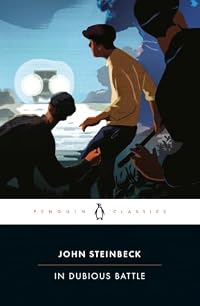
In Dubious Battle
by John Steinbeck
On This Page
Description
Set in the California apple country this novel portrays a strike by migrant workers that metamorphoses from principled defiance into blind fanaticism.Tags
Recommendations

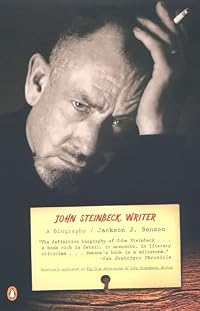
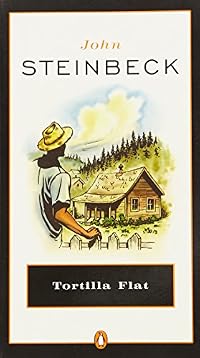
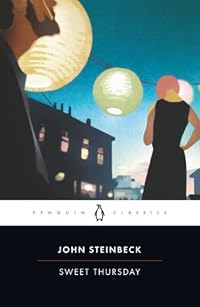


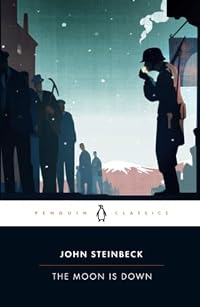



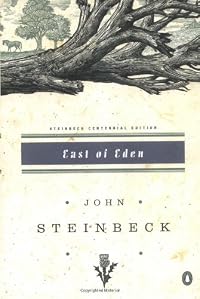
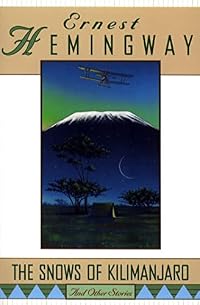

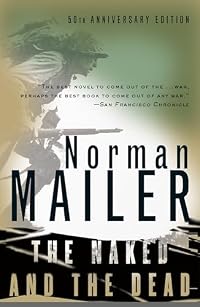
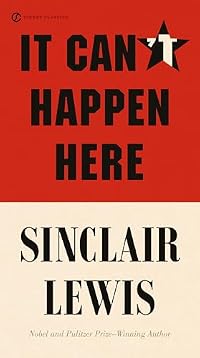

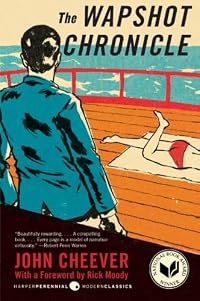

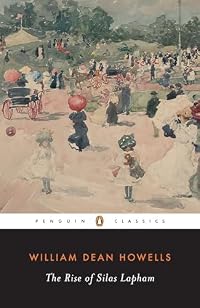
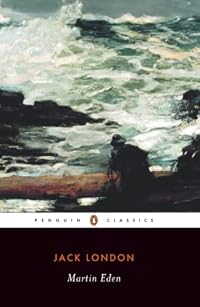

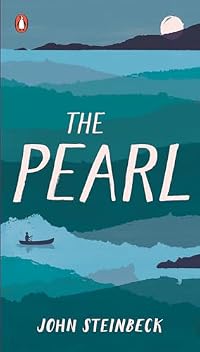

Member Recommendations
Les "Raisins de la colere" de John Steinbeck (Foliotheque) (French Edition) by Marie-Christine Lemardeley-Cunci
Babou_wk L'exploitation des travailleurs agricoles aux Etats-Unis.
La lutte des classes, l'organisation d'une grève.
Les pratiques anti-communistes aux Etats-Unis dans la premiere moitié du XXè siècle.
Babou_wk La lutte des classes, l'organisation d'une grève.
Les pratiques anti-communistes aux États-Unis dans la première moitié du XXè siècle.

Babou_wk La lutte des classes, l'organisation d'une grève.
La répression des grévistes par la troupe.
Member Reviews
Certainly not a book to read for entertainment, "In Dubious Battle" is a terrifyingly relevant novel about disaffection, polarized groups, manipulation, mob mentality, and the brutality that lies just under America's veneer. Brutality is the core of this novel, and Steinbeck does not hesitate to lay it bare. Again, Steinbeck's portrayal of individuals in speech and behavior is pitch-perfect, but the rub is how they work as mobs:
"It's different from the men in it. And it's stronger than all the men put together. It doesn't want the same things men want-"
While no "side" has clean hands here, and only a few more innocent characters (like the young mother, Lisa) stand apart from the conflict, the bosses and vigilantes take initiative and show more act while the disenfranchised and unarmed strikers react. What goes on between these groups is identical to race and ideological group behavior in the USA of 2021. And as for the vigilantes -- the empowered, armed, white, paranoid, xenophobic heavies -- well, Steinbeck calls them out by name.
“Why, they're the dirtiest guys in any town. They're the same ones that burned the houses of old German people during the war. They're the same ones that lynch Negroes. They like to be cruel. They like to hurt people, and they always give it a nice name, patriotism or protecting the constitution.”
Plus ça change, plus c'est la même chose. show less
"It's different from the men in it. And it's stronger than all the men put together. It doesn't want the same things men want-"
While no "side" has clean hands here, and only a few more innocent characters (like the young mother, Lisa) stand apart from the conflict, the bosses and vigilantes take initiative and show more act while the disenfranchised and unarmed strikers react. What goes on between these groups is identical to race and ideological group behavior in the USA of 2021. And as for the vigilantes -- the empowered, armed, white, paranoid, xenophobic heavies -- well, Steinbeck calls them out by name.
“Why, they're the dirtiest guys in any town. They're the same ones that burned the houses of old German people during the war. They're the same ones that lynch Negroes. They like to be cruel. They like to hurt people, and they always give it a nice name, patriotism or protecting the constitution.”
Plus ça change, plus c'est la même chose. show less
I have a book buying addiction, and one of the most annoying results of this is having a bunch of books (especially fiction) that I own but haven't read. After watching a Reel of someone who was in the same predicament, I decided that I would only allow myself to buy a new book after reading three that I already own but haven't read. I don't even remember buying In Dubious Battle, especially since I thought I had read—or at least heard of—all of John Steinbeck's books. Turns out I hadn't.
In my younger days I devoured Steinbeck; I liked his style of writing and the stories he told, but I loved the hidden radicalness in his books. I figured this book would be good, but would pale in comparison to his better-known books; I was wrong. show more In Dubious Battle is by far my favorite Steinbeck novel. Maybe take that with a grain of salt, since I barely remember reading his most popular books, but I don't remember ever being as hooked on one of his books as I was on this one.
In Dubious Battle tells the story of a bunch of communists organizing apple pickers in California. It's written very simply, but it says so much. We learn about the ins and outs of organizing strikes—from inspiring the workers to fighting the bosses to trying to control the media narrative—and get to know a lot of the people involved in this one. Of course this comes from a time when strikes were potentially deadly, but they still happened! There was no social media to spread the word, so these workers end up trapped in a company town, fighting the super rich people who control the government, the police, and the media. Still, they fight.
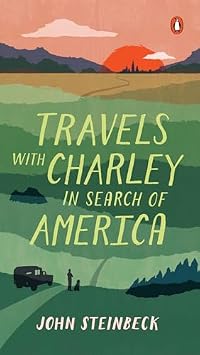
I appreciate that they teach Grapes of Wrath in school, and Travels With Charlie changed my life; but I don't understand how this book isn't everywhere. Friends who saw me reading it, also commented about how they never heard of it, and that's a damn shame. It was an impactful read at the age of 46; I can't imagine what it would have done to me if I read it when I was 20. show less
In my younger days I devoured Steinbeck; I liked his style of writing and the stories he told, but I loved the hidden radicalness in his books. I figured this book would be good, but would pale in comparison to his better-known books; I was wrong. show more In Dubious Battle is by far my favorite Steinbeck novel. Maybe take that with a grain of salt, since I barely remember reading his most popular books, but I don't remember ever being as hooked on one of his books as I was on this one.
In Dubious Battle tells the story of a bunch of communists organizing apple pickers in California. It's written very simply, but it says so much. We learn about the ins and outs of organizing strikes—from inspiring the workers to fighting the bosses to trying to control the media narrative—and get to know a lot of the people involved in this one. Of course this comes from a time when strikes were potentially deadly, but they still happened! There was no social media to spread the word, so these workers end up trapped in a company town, fighting the super rich people who control the government, the police, and the media. Still, they fight.
I appreciate that they teach Grapes of Wrath in school, and Travels With Charlie changed my life; but I don't understand how this book isn't everywhere. Friends who saw me reading it, also commented about how they never heard of it, and that's a damn shame. It was an impactful read at the age of 46; I can't imagine what it would have done to me if I read it when I was 20. show less
“I’ve heard he could lick five cops with his bare hands.”
Jim grinned. “I guess he could, but every time he went out he met six.”
Jim Nolan talking about his father Roy. Pretty much sums up this book - the working man being out muscled by the system. Jim joins up with the "reds" and a guy named Mac and they try to organize a group of apple pickers to strike for higher wages. The story unfolds slowly, but picks up steam at the end. And I felt anger and sorrow throughout, mostly because the plight of the working "stiff" seemed, and seems, unalterable. Even the "reds" seem to take advantage of them even as they fight for them. And the ending really ties the whole thing together - for both sides!
The book really resonates with the show more time, and with our time. Rich vs. poor. No one really helping the "little" guy. The cyclical sadness of poverty. Whether it be the orchard owner, the police, or Trump, the folks on the lower rung seem to be damned to that lower rung. Err....
On a softer note, it sure was cool to read this as a precursor to "Grapes of Wrath". I didn't even know that this was what it is, sort of the set up story that creates the situation that the Joads will find themselves in. I wish I had read them in order, but reading it now takes nothing away from it. Steinbeck is just that good! show less
Jim grinned. “I guess he could, but every time he went out he met six.”
Jim Nolan talking about his father Roy. Pretty much sums up this book - the working man being out muscled by the system. Jim joins up with the "reds" and a guy named Mac and they try to organize a group of apple pickers to strike for higher wages. The story unfolds slowly, but picks up steam at the end. And I felt anger and sorrow throughout, mostly because the plight of the working "stiff" seemed, and seems, unalterable. Even the "reds" seem to take advantage of them even as they fight for them. And the ending really ties the whole thing together - for both sides!
The book really resonates with the show more time, and with our time. Rich vs. poor. No one really helping the "little" guy. The cyclical sadness of poverty. Whether it be the orchard owner, the police, or Trump, the folks on the lower rung seem to be damned to that lower rung. Err....
On a softer note, it sure was cool to read this as a precursor to "Grapes of Wrath". I didn't even know that this was what it is, sort of the set up story that creates the situation that the Joads will find themselves in. I wish I had read them in order, but reading it now takes nothing away from it. Steinbeck is just that good! show less
Stirring account of a strike action in a Californian valley of apple orchards, it feels incredibly vital as the Party organisers scramble to mobilise the workers and are then relentlessly squeezed by the bosses, media and police. I could feel the noose tightening as they twist and turn, trying desperately to gain some leverage but knowing that the action is doomed. As ever, Steinbeck has a knack for making the characters real and nuanced, and packs a lot of angles into the material. While it is of course sympathetic to the workers and the organisers Mac and Jim, there is also space for an idealist/cynic like Doc Burton to poke holes in their worldview.
As a straightforward novel about striking apple pickers, this is a good look at the mechanics of strikes and yet another good look from Steinbeck at the psychology of people placed in nearly impossible situations. The book follows Jim, the son of a famous Communist Party fighter, and his own journey from just another unemployed worker to Party organizer himself. He joins fellow Party men Mac and London in the fictional Torgas Valley and its fight against exploitative farm owners. Steinbeck uses Jim and Doc, the doctor, as the primary mouthpieces for his trademark vernacular philosophizing - Jim slowly changes from bystander to violent vanguard, while Doc is always the cool voice of reason, theorizing on the peculiar characteristics of show more the mass of men the Party is trying to build out of the unorganized mob of desperate strikers.
A big theme is the way that people get used for bigger things; not only Jim and the "his name is Robert Paulson"-type scene at the end, but throughout the book there are constant discussions of how bloodshed will turn the mob into a machine, an entity that will rampage over the callous and malignant growers. Eric Hoffer must have read this book several times before writing his own The True Believer on the nature of members of mass organizations, and in In Dubious Battle I also see echoes of Upton Sinclair's The Jungle in terms of how the organizers see the Communist Party as savior. What's interesting is that aside from glancing mentions of Hoover (who would have been out of office by the time book is set) there is basically no mention of the government. Steinbeck was probably trying to isolate the characters in the tiny valley setting for dramatic effect, but you could probably write an interesting paper on how the pro-labor liberalism of the New Deal with its Wagner Act helped defuse a lot of the Communist Party radicalism seen here.
I wouldn't say this book is as good as The Grapes of Wrath, its most nearly similar Steinbeck book, but I would recommend it to any fan of The Jungle. Steinbeck is incapable of writing a bad book, and while this may seem too political for fans of East of Eden, he does a great job of dramatizing the times, and the eternal conflict between individual, small, antlike people, and the large, collective, powerful anthills they can become. show less
A big theme is the way that people get used for bigger things; not only Jim and the "his name is Robert Paulson"-type scene at the end, but throughout the book there are constant discussions of how bloodshed will turn the mob into a machine, an entity that will rampage over the callous and malignant growers. Eric Hoffer must have read this book several times before writing his own The True Believer on the nature of members of mass organizations, and in In Dubious Battle I also see echoes of Upton Sinclair's The Jungle in terms of how the organizers see the Communist Party as savior. What's interesting is that aside from glancing mentions of Hoover (who would have been out of office by the time book is set) there is basically no mention of the government. Steinbeck was probably trying to isolate the characters in the tiny valley setting for dramatic effect, but you could probably write an interesting paper on how the pro-labor liberalism of the New Deal with its Wagner Act helped defuse a lot of the Communist Party radicalism seen here.
I wouldn't say this book is as good as The Grapes of Wrath, its most nearly similar Steinbeck book, but I would recommend it to any fan of The Jungle. Steinbeck is incapable of writing a bad book, and while this may seem too political for fans of East of Eden, he does a great job of dramatizing the times, and the eternal conflict between individual, small, antlike people, and the large, collective, powerful anthills they can become. show less
This was Steinbeck's first serious contemporary novel, published shortly after Tortilla Flat. It's the story of a strike by seasonal apple-pickers trying to reverse a pay-cut, and a painful analysis of the impossible task faced by ordinary workers taking on a well-organised (and unscrupulous) establishment, egged on by equally unscrupulous communists who know that glorious failure will have as powerful a propaganda effect as success.
It's perhaps all a bit too romantic, and there's a lot in the text, especially the dialogue, that feels unnecessarily didactic at this distance, but the storyline remains gripping, and we can't help being drawn into sympathy for all the people who get hurt in the course of the book. And any novel that draws show more on a Milton quotation must have something going for it... show less
It's perhaps all a bit too romantic, and there's a lot in the text, especially the dialogue, that feels unnecessarily didactic at this distance, but the storyline remains gripping, and we can't help being drawn into sympathy for all the people who get hurt in the course of the book. And any novel that draws show more on a Milton quotation must have something going for it... show less
One more for the American Author challenge for July. A Steinbeck I had never read before.
The opening was intriguing, like stepping into a noirish 1930's film. I half expected Jimmy Cagney to step through a door. I had to take a look again at the publication history and note this was first published in 1936. No wonder! The blurb on the back cover of my 1961 edition describes this as "Steinbeck's brilliant forerunner of the Pulitzer Prize-winning THE GRAPES OF WRATH."
I was surprised to find that there were many elements of the book that I disliked quite a bit. This is not a happy story. The "good guys", well, the red leader, 'Mac', goes about the union business as if it is war, because casualties, "collateral damage" lets call it at show more best, acceptable losses more realistically, are not only acceptable to him, they are fuel for the cause. I came to hate him. It is hard not to root for people who only want a living wage and don't want their existing wages cut by the landowners to pick the apple crop. I think Steinbeck has managed to write something that is still relevant 80 years after publication and that shows the good and the bad of man. I use the word man rather than mankind because if there is one element that reflects this as a product of several generations ago it is the lack of strong women characters. I also recognize that women's rights is not what Steinbeck's social cause is here. This is about worker's rights. Steinbeck certainly shows us the bad and ugly of the depression and how unions had to fight to be, and fight for workers. However, the big however, the communist agitators can be almost as ugly as the big bad employers who buy off the cops and let vigilantes have free reign.
Steinbeck was shining a light on a horrible social cost of crop pickers and the great depression of the '30's. This is interesting history even though fiction. Steinbeck makes comments on quite a variety of things and peoples throughout the novel and it kept striking me how true these observations were ... even though Steinbeck wrote this 80 years ago. This is a rather disturbing and scary book.
and the end will kill you. show less
The opening was intriguing, like stepping into a noirish 1930's film. I half expected Jimmy Cagney to step through a door. I had to take a look again at the publication history and note this was first published in 1936. No wonder! The blurb on the back cover of my 1961 edition describes this as "Steinbeck's brilliant forerunner of the Pulitzer Prize-winning THE GRAPES OF WRATH."
I was surprised to find that there were many elements of the book that I disliked quite a bit. This is not a happy story. The "good guys", well, the red leader, 'Mac', goes about the union business as if it is war, because casualties, "collateral damage" lets call it at show more best, acceptable losses more realistically, are not only acceptable to him, they are fuel for the cause. I came to hate him. It is hard not to root for people who only want a living wage and don't want their existing wages cut by the landowners to pick the apple crop. I think Steinbeck has managed to write something that is still relevant 80 years after publication and that shows the good and the bad of man. I use the word man rather than mankind because if there is one element that reflects this as a product of several generations ago it is the lack of strong women characters. I also recognize that women's rights is not what Steinbeck's social cause is here. This is about worker's rights. Steinbeck certainly shows us the bad and ugly of the depression and how unions had to fight to be, and fight for workers. However, the big however, the communist agitators can be almost as ugly as the big bad employers who buy off the cops and let vigilantes have free reign.
Steinbeck was shining a light on a horrible social cost of crop pickers and the great depression of the '30's. This is interesting history even though fiction. Steinbeck makes comments on quite a variety of things and peoples throughout the novel and it kept striking me how true these observations were ... even though Steinbeck wrote this 80 years ago. This is a rather disturbing and scary book.
and the end will kill you. show less
Members
- Recently Added By
Lists

Books recommended by Barack Obama
295 works; 28 members

1930s
262 works; 5 members

SHOULD Read Books!
354 works; 9 members

Obama Reads
181 works; 3 members

Tammen Keltainen kirjasto
81 works; 1 member

American Lit for Eng 11 Research Project
368 works; 6 members

Reading LIst
648 works; 1 member

The "A" List
67 works; 8 members
Talk Discussions
Past Discussions
Steinbeckathon 2012: In Dubious Battle in 75 Books Challenge for 2012 (October 2012)
Author Information

473+ Works 206,297 Members
In recent years Steinbeck has been elevated to a more prominent status among American writers of his generation. If not quite at the world-class artistic level of a Hemingway or a Faulkner, he is nonetheless read very widely throughout the world by readers of all ages who consider him one of the most "American" of writers. Born in Salinas County, show more California on February 27, 1902, Steinbeck was of German-Irish parentage. After four years as a special student at Stanford University, he went to New York, where he worked as a reporter and as a hod carrier. Returning to California, he devoted himself to writing, with little success; his first three books sold fewer than 3,000 copies. Tortilla Flat (1935), dealing with the paisanos, California Mexicans whose ancestors settled in the country 200 years ago, established his reputation. In Dubious Battle (1936), a labor novel of a strike and strike-breaking, won the gold medal of the Commonwealth Club of California. Of Mice and Men (1937), a long short story that turns upon a melodramatic incident in the tragic friendship of two farm hands, written almost entirely in dialogue, was an experiment and was dramatized in the year of its publication, winning the New York Drama Critics Circle Award. It brought him fame. Out of a series of articles that he wrote about the transient labor camps in California came the inspiration for his greatest book, The Grapes of Wrath (1939), the odyssey of the Joad family, dispossessed of their farm in the Dust Bowl and seeking a new home, only to be driven on from camp to camp. The fiction is punctuated at intervals by the author's voice explaining this new sociological problem of homelessness, unemployment, and displacement. As the American novel "of the season, probably the year, possibly the decade," it won the Pulitzer Prize in 1940. It roused America and won a broad readership by the unusual simplicity and tenderness with which Steinbeck treated social questions. Even today, The Grapes of Wrath remains alive as a vivid account of believable human characters seen in symbolic and universal terms as well as in geographically and historically specific ones. Ma Joad is one of the most memorable characters in twentieth-century American fiction. It is her courage that sustains the family. Steinbeck's best and most ambitious novel after The Grapes of Wrath is East of Eden (1952), a saga of two American families in California from before the Civil War through World War I. Cannery Row (1945), The Wayward Bus (1947), and Sweet Thursday (1955) are lighter works that find Steinbeck returning to the lighthearted tone of Tortilla Flat as he recounts picaresque adventures of modern-day picaros. The Winter of Our Discontent (1961) struck some reviewers as being appropriately titled because of its despairing treatment of humanity's fall from grace in a wasteland world where money is king. Steinbeck also wrote important nonfiction, including Russian Journal (1948) in collaboration with the photographer Robert Capa; Once There Was a War (1958) and America and Americans (1966), which features pictures by 55 leading photographers and a 70-page essay by Steinbeck. His interest in marine biology led to two books primarily about sea life, Sea of Cortez (1941) (with Edward F. Ricketts) and The Log from the Sea of Cortez (1951). Travels with Charley (1962) is an engaging account of his journey of rediscovery of America, which took him through approximately 40 states. Steinbeck was married three times and died in New York City on December 20, 1968 of heart disease and congestive heart failure. He was 66, and had been a life-long smoker. (Bowker Author Biography) show less
Some Editions
Awards and Honors
Series
Belongs to Publisher Series
Work Relationships
Common Knowledge
- Canonical title
- In Dubious Battle
- Original title
- In Dubious Battle
- Original publication date
- 1936
- People/Characters
- Jim Nolan; Mac; London; Doc Burton; Dakin; Alfred Anderson (show all 13); Al Anderson; Dick Halsing; Harry Nilson; Joy; Sam; Dan; Lisa
- Important places
- Torgas Valley (imaginary place); California, USA
- Epigraph
- Innumerable force of Spirits armed,
That durst dislike his reign, and, me preferring,
His utmost power with adverse power opposed
In dubious battle on the plains of Heaven
And shook his throne. ... (show all)What though the field be lost?
All is not lost--the unconquerable will,
And study of revenge, immortal hate,
And courage never to submit or yield:
And what is else not to be overcome?
PARADISE LOST - First words
- At last it was evening.
- Quotations
- (page 32) 'Jim,' he said, 'you ought to take up smoking. It's a nice social habit. You'll have to talk to a lot of strangers in your time. I don't know any quicker way to soften a stranger down than to offer him a smoke, or e... (show all)ven ask him for one. And lots of guys feel insulted if they offer you a cigarette and you don't take it. You better start.'
(page 236) A lot of guys've been believing this bosh about the noble American working man, an' the partnership of capital and labour. A lot of 'em are straight now. They know how much capital thinks of 'em, and how quick capital would poison 'em like a bunch of ants. - Last words
- (Click to show. Warning: May contain spoilers.)"He didn't want nothing for himself--"
- Original language
- English
Classifications
Statistics
- Members
- 2,689
- Popularity
- 6,863
- Reviews
- 49
- Rating
- (3.83)
- Languages
- 13 — Danish, Dutch, English, Finnish, French, German, Hungarian, Italian, Norwegian (Bokmål), Portuguese, Spanish, Swedish, Turkish
- Media
- Paper, Audiobook, Ebook
- ISBNs
- 62
- ASINs
- 58