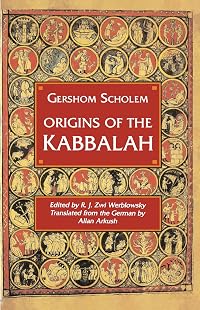
Origins of the Kabbalah
by Gershom Gerhard Scholem
On This Page
Description
One of the most important scholars of our century, Gershom Scholem (1897-1982) opened up a once esoteric world of Jewish mysticism, the Kabbalah, to concerned students of religion. The Kabbalah is a rich tradition of repeated attempts to achieve and portray direct experiences of God: its twelfth-and thirteenth-century beginnings in southern France and Spain are probed in Origins of the Kabbalah, a work crucial in Scholem's oeuvre. The book is a contribution not only to the history of Jewish show more medieval mysticism but also to the study of medieval mysticism in general and will be of interest to historians and psychologists, as well as to students of the history of religion. show lessTags
Recommendations












Member Reviews
E-books IV
LOS ORÍGENES DE LA CÁBALA
Prefácio del editor
Resulta superfluo preguntarse cuál es la obra más importante entre las escritas por un gran erudito. En el caso de Gershom SchoIem, también las opera minora, artículos y ensayos, eran «importantes». Pero hay tres obras que sobresalen, no sólo a causa de su mag nitud, sino también del impacto que produjeron. Cada una de ellas muestra cualidades diferentes. Major Trends in Jewish Mysticism (18 ed., 1941)* es el primer gran intento, aún hoy clásico, de abarcar la historia del misticismo judío de una sola y amplia mirada, combinando el poder sintético con la precisión analítica y la atención al detalle filológico. Sabbatai Sevi: The Mystical Messiah (versión original hebrea de show more 1956; versión inglesa revisada de 1973) se convirtió en un best seller no sólo a causa de la fascinación por su tema exótico. Pocas veces antes se había aplicado tanta erudición, cantidad y amplitud de fuentes, minuciosos análisis textuales y una profunda perspicacia histórica a un episodio relativamente breve -y sin embargo raro, espectacular y además significativo- de la historia judía (y de la historia de los movimientos mesiánicos en general). No obstante, en muchos sentidos, Ursprung und Anfänge der Kabbalah (1962) es la más impresionante de todas sus obras, ya que aquí Scholem abordó un fenómeno capital pero enigmático de la espiritualidad judía. La forma de misticismo específicamente judía (o de teosofía mística> conocida como Cábala apareció de forma repentina, como de la nada, en la Baja Edad Media. ¿Cuáles eran sus antecedentes? ¿Era realmente tan antigua como pretendía ser?¿Exactamente dónde y en qué círculos se originó? ¿Qué influencias (orientales, occidentales, filosóficas, gnósticas, tempranas. tardías) participaron en su elaboración? La riqueza de fuentes presentadas, la agudeza filológica con la que fueron analizadas y la amplitud de la visión histórica con la que fueron evaluadas, hacen de este estudio, publicado por primera vez en Alemania en 1962, un maximus opus.
En un principio el libro fue un resumen de investigación que se presentó como un borrador, por decirlo así, en el breve libro en hebreo Reshit haCabbalá (1948). El autor. en su prefacio (véase la pág. 17) describe su publicación alemana de 1962 como de un tamaño que . En una carta escrita en el verano de 1961 desde Londres a su amigo de toda la vida S. Y. Agnon, el escritor y premio Nobel hebreo, y que se conserva en el Agnon Archive de la National and Hebre':t' University, Scholem se refiere a aquel año fructífero, alaba el frío invierno londinense que lo mantuvo encerrado y trabajando mucho, y menciona que el tamaño del libro que estaba terminando era como tres veces el de la publicación hebrea. En realidad el libro hebreo tenía 262 páginas. mientras que la publicación alemana de 1962 era de 464 páginas.
Después de la publicación de Ursprung. la investigación continuó con intensidad creciente y. con el tiempo, los graduados y pos- graduados de Scholem comenzaron a contribuir a la misma en una medida cada vez mayor. Salieron a la luz fuentes adicionales, haciendo necesario un reexamen y una revaluación de las fuentes y textos conocidos. Los puntos de vista en desarrollo de Scholem se dieron a conocer durante sus cursos de conferencias en la Universidad Hebrea, y algunas de sus notas las publicaron posteriormente sus alumnos y circulaban como copias estarcidas. De este modo sus cursos de conferencias sobre (1961/1962) y sobre (1962/1963) los editó su alumno, ahora profesor. Rivkah Schatz-Uffenheimer, y se publicaron en 1966. El curso de conferencias sobre (1964/1965) los editó su alumno, ahora profesor. J. Ben-Shlomoh, y se publicaron en 1965. En 1966 apareció una traducción francesa del Ursprung (Les origines de la Kabba le) y. aunque hizo la obra accesible al lector francés, no añadió nada nuevo al estado show less
Prefácio del editor
Resulta superfluo preguntarse cuál es la obra más importante entre las escritas por un gran erudito. En el caso de Gershom SchoIem, también las opera minora, artículos y ensayos, eran «importantes». Pero hay tres obras que sobresalen, no sólo a causa de su mag nitud, sino también del impacto que produjeron. Cada una de ellas muestra cualidades diferentes. Major Trends in Jewish Mysticism (18 ed., 1941)* es el primer gran intento, aún hoy clásico, de abarcar la historia del misticismo judío de una sola y amplia mirada, combinando el poder sintético con la precisión analítica y la atención al detalle filológico. Sabbatai Sevi: The Mystical Messiah (versión original hebrea de show more 1956; versión inglesa revisada de 1973) se convirtió en un best seller no sólo a causa de la fascinación por su tema exótico. Pocas veces antes se había aplicado tanta erudición, cantidad y amplitud de fuentes, minuciosos análisis textuales y una profunda perspicacia histórica a un episodio relativamente breve -y sin embargo raro, espectacular y además significativo- de la historia judía (y de la historia de los movimientos mesiánicos en general). No obstante, en muchos sentidos, Ursprung und Anfänge der Kabbalah (1962) es la más impresionante de todas sus obras, ya que aquí Scholem abordó un fenómeno capital pero enigmático de la espiritualidad judía. La forma de misticismo específicamente judía (o de teosofía mística> conocida como Cábala apareció de forma repentina, como de la nada, en la Baja Edad Media. ¿Cuáles eran sus antecedentes? ¿Era realmente tan antigua como pretendía ser?¿Exactamente dónde y en qué círculos se originó? ¿Qué influencias (orientales, occidentales, filosóficas, gnósticas, tempranas. tardías) participaron en su elaboración? La riqueza de fuentes presentadas, la agudeza filológica con la que fueron analizadas y la amplitud de la visión histórica con la que fueron evaluadas, hacen de este estudio, publicado por primera vez en Alemania en 1962, un maximus opus.
En un principio el libro fue un resumen de investigación que se presentó como un borrador, por decirlo así, en el breve libro en hebreo Reshit haCabbalá (1948). El autor. en su prefacio (véase la pág. 17) describe su publicación alemana de 1962 como de un tamaño que . En una carta escrita en el verano de 1961 desde Londres a su amigo de toda la vida S. Y. Agnon, el escritor y premio Nobel hebreo, y que se conserva en el Agnon Archive de la National and Hebre':t' University, Scholem se refiere a aquel año fructífero, alaba el frío invierno londinense que lo mantuvo encerrado y trabajando mucho, y menciona que el tamaño del libro que estaba terminando era como tres veces el de la publicación hebrea. En realidad el libro hebreo tenía 262 páginas. mientras que la publicación alemana de 1962 era de 464 páginas.
Después de la publicación de Ursprung. la investigación continuó con intensidad creciente y. con el tiempo, los graduados y pos- graduados de Scholem comenzaron a contribuir a la misma en una medida cada vez mayor. Salieron a la luz fuentes adicionales, haciendo necesario un reexamen y una revaluación de las fuentes y textos conocidos. Los puntos de vista en desarrollo de Scholem se dieron a conocer durante sus cursos de conferencias en la Universidad Hebrea, y algunas de sus notas las publicaron posteriormente sus alumnos y circulaban como copias estarcidas. De este modo sus cursos de conferencias sobre (1961/1962) y sobre (1962/1963) los editó su alumno, ahora profesor. Rivkah Schatz-Uffenheimer, y se publicaron en 1966. El curso de conferencias sobre (1964/1965) los editó su alumno, ahora profesor. J. Ben-Shlomoh, y se publicaron en 1965. En 1966 apareció una traducción francesa del Ursprung (Les origines de la Kabba le) y. aunque hizo la obra accesible al lector francés, no añadió nada nuevo al estado show less
Apr 18, 2024Spanish
> Les origines de la Kabbale de Gershom G. SCHOLEM - traduit de l’allemand par Jean LOEWENSON. (Aubier-Montaigne, collection « Pardès ».)
Se reporter au compte rendu de NIKIPROWETZKY Valentin
In: Revue Esprit (1940-) Nouvelle série, No. 363 (9) (Septembre 1967), pp. 342-345… ; (en ligne),
URL : https://esprit.presse.fr/article/nikiprowetzky-valentin/gershom-g-scholem-les-or...
> Persée (Ménard Jacques E.) : https://www.persee.fr/doc/rscir_0035-2217_1967_num_41_3_2481_t1_0277_0000_2
Se reporter au compte rendu de NIKIPROWETZKY Valentin
In: Revue Esprit (1940-) Nouvelle série, No. 363 (9) (Septembre 1967), pp. 342-345… ; (en ligne),
URL : https://esprit.presse.fr/article/nikiprowetzky-valentin/gershom-g-scholem-les-or...
> Persée (Ménard Jacques E.) : https://www.persee.fr/doc/rscir_0035-2217_1967_num_41_3_2481_t1_0277_0000_2
Sep 12, 2020 (Edited)French
LES ORIGINES DE LA KABBALE
AVANT-PROPOS
Ce livre contient le fruit d'études entreprises voilà bien
quarante ans. A l'époque, j'avais fait du Livre Bahir, le plus
ancien des textes kabbalistiques conservés, le sujet du
premier travail de quelque ampleur auquel je me sois attaché.
Les questions que ce livre suscitait et dont je m'étais hâté
alors, dans ma juvénile présomption, de laisser envisager
l'examen, ont attendu fort longtemps d'être traitées; dans
l'ouvrage que voici, les résultats de l'enquête sont enfin
offerts sous une forme définitive.
Ce n'est pas la première fois, il est vrai, que j'essaie de
m'attaquer au problème de la genèse de la Kabbale. Je l'ai
déjà exposé en première ébauche, en 1928, avec la show more solution
proposée, dans Zur Frage der Entstehung der Kabbala,
paru dans le Korrespondenzblatt des Vereins für die
Begründung einer Akademie für die Wissenschaft des Judentums
Mes recherches sur les manuscrits kabbalistiques de la pé-
riode archaïque, que j'ai poursuivies durant de nombreuses
années et qui se sont montrées particulièrement fécondes,
ont abouti à de nouveaux éclaircissements que j'ai consignés
en 1945, pour la première fois, dans un livre publié ern
hébreu à Jérusalem, en 1948, sous le titre Reshit ha
Kabbala.
Les positions essentielles que j'ai adoptées alors sont
maintenues dans le présent texte, réélaboration fondamentale de
l'original hébreu, qui s'en trouve augmenté de plus du double.
Mon argumentation est ici, toutefois, plus détaillée, du
moins dans les limites imposées par ce volume. J'y ai décrit
et analysé les principaux matériaux, afin de permettre à
l'historien de la religion de juger par lui-même la nouvelle
conception que j'expose ici. Il m'est difficile de supposer que
des matériaux d'un intérêt capital, qui m'auraient échappé
pendant des dizaines d'années d'exploration, puissent encore... show less
AVANT-PROPOS
Ce livre contient le fruit d'études entreprises voilà bien
quarante ans. A l'époque, j'avais fait du Livre Bahir, le plus
ancien des textes kabbalistiques conservés, le sujet du
premier travail de quelque ampleur auquel je me sois attaché.
Les questions que ce livre suscitait et dont je m'étais hâté
alors, dans ma juvénile présomption, de laisser envisager
l'examen, ont attendu fort longtemps d'être traitées; dans
l'ouvrage que voici, les résultats de l'enquête sont enfin
offerts sous une forme définitive.
Ce n'est pas la première fois, il est vrai, que j'essaie de
m'attaquer au problème de la genèse de la Kabbale. Je l'ai
déjà exposé en première ébauche, en 1928, avec la show more solution
proposée, dans Zur Frage der Entstehung der Kabbala,
paru dans le Korrespondenzblatt des Vereins für die
Begründung einer Akademie für die Wissenschaft des Judentums
Mes recherches sur les manuscrits kabbalistiques de la pé-
riode archaïque, que j'ai poursuivies durant de nombreuses
années et qui se sont montrées particulièrement fécondes,
ont abouti à de nouveaux éclaircissements que j'ai consignés
en 1945, pour la première fois, dans un livre publié ern
hébreu à Jérusalem, en 1948, sous le titre Reshit ha
Kabbala.
Les positions essentielles que j'ai adoptées alors sont
maintenues dans le présent texte, réélaboration fondamentale de
l'original hébreu, qui s'en trouve augmenté de plus du double.
Mon argumentation est ici, toutefois, plus détaillée, du
moins dans les limites imposées par ce volume. J'y ai décrit
et analysé les principaux matériaux, afin de permettre à
l'historien de la religion de juger par lui-même la nouvelle
conception que j'expose ici. Il m'est difficile de supposer que
des matériaux d'un intérêt capital, qui m'auraient échappé
pendant des dizaines d'années d'exploration, puissent encore... show less
May 7, 2018Spanish
Ratings
Members
- Recently Added By
Author Information

98+ Works 5,398 Members
Gershom Scholem's contribution to the understanding of Jewish mysticism is so dramatic that it warrants a separate introduction. As a young student of mathematics, he became a Zionist and his interest shifted to Jewish history. Scholem moved from Germany to become the librarian of the new University and National Library in Jerusalem in 1923 and show more served as a professor at Hebrew University from 1935 to 1965. Before him, Jewish historians during the nineteenth and early twentieth centuries scorned the ignored mystical dimension of Judaism as a relic of premodern superstition and ignorance. Scholem's erudition and deep insight gave Cabala a scholarly audience. His writings are often difficult to read, but they are indispensable for any thorough knowledge of the subject of Jewish mysticism. (Bowker Author Biography) show less
Some Editions
Work Relationships
Common Knowledge
- Canonical title
- Origins of the Kabbalah
- Original title
- Ursprung und Anfänge der Kabbala
- Original publication date
- 1962
- First words
- The question of the origin and early stages of the Kabbalah, that form of Jewish mysticism and theosophy that appears to have emerged suddenly in the thirteenth century, is indisputably one of the most difficult in the histor... (show all)y of the Jewish religion after the destruction of the Second Temple.
- Last words
- (Click to show. Warning: May contain spoilers.)The hundred years leading up to Nahmanides may be regarded as the youth of the Kabbalah that in the subsequent period of the Zohar -- a period of "splendor" in a double sense -- reached its full maturity.
Classifications
Statistics
- Members
- 311
- Popularity
- 102,678
- Reviews
- 4
- Rating
- (4.00)
- Languages
- 5 — Czech, English, French, German, Spanish
- Media
- Paper, Ebook
- ISBNs
- 17
- ASINs
- 4