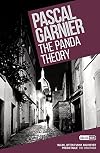
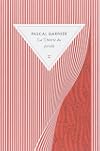
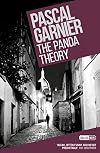
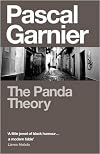
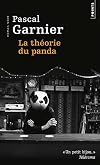
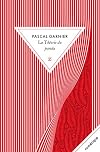
The Panda Theory
by Pascal Garnier
On This Page
Description
Gabriel is a stranger in a small Breton town. Nobody knows where he came from or why he's here. Yet his small acts of kindness, and exceptional cooking, quickly earn him acceptance from the locals. His new friends grow fond of Gabriel, who seems as reserved and benign as the toy panda he wins at the funfair. But unlike Gabriel, the fluffy toy is not haunted by his past...Tags
Recommendations
















































Member Reviews
In the Bible, Gabriel is God's messenger, and in Pascal Garnier's The Panda Theory, his namesake delivers a bleak message indeed:
Happiness is a calamity you can never recover from. As soon as you catch a glimpse of it, the door slams shut and you spend the rest of your life bitterly regretting what is no more.
Through a series of flashbacks, we learn about the experiences in Gabriel's life which have shaped this philosophy; those flashbacks come more quickly the closer we come to the book's classic noir ending, building the tension until the past and present collide in a sudden burst of violence.
At times, Gabriel's thoughts sound like those of an amoral psychopath: "It was a day to kill someone for no reason"; he cannot "feel the show more difference between good and evil." However, he also believes that he performs a "service," whether cooking meals for a bistro owner whose wife is in a coma, paying the hotel bill of an abandoned girlfriend, or offering companionship to a lonely hotel receptionist, and it is this desire to be of service which is the key to Gabriel's character and ultimately horrific actions.
The Panda Theory rewards reflection, leading me to raise my rating from 3.5 to 4 stars after writing this review. I recommend this book, and this author, to those who want more from their crime fiction than entertainment or fleeting thrills.
I received a free copy of The Panda Theory through NetGalley in exchange for an honest review. show less
Happiness is a calamity you can never recover from. As soon as you catch a glimpse of it, the door slams shut and you spend the rest of your life bitterly regretting what is no more.
Through a series of flashbacks, we learn about the experiences in Gabriel's life which have shaped this philosophy; those flashbacks come more quickly the closer we come to the book's classic noir ending, building the tension until the past and present collide in a sudden burst of violence.
At times, Gabriel's thoughts sound like those of an amoral psychopath: "It was a day to kill someone for no reason"; he cannot "feel the show more difference between good and evil." However, he also believes that he performs a "service," whether cooking meals for a bistro owner whose wife is in a coma, paying the hotel bill of an abandoned girlfriend, or offering companionship to a lonely hotel receptionist, and it is this desire to be of service which is the key to Gabriel's character and ultimately horrific actions.
The Panda Theory rewards reflection, leading me to raise my rating from 3.5 to 4 stars after writing this review. I recommend this book, and this author, to those who want more from their crime fiction than entertainment or fleeting thrills.
I received a free copy of The Panda Theory through NetGalley in exchange for an honest review. show less
Strange and compelling story of a man who, apparently by chance, stops in a small town and becomes involved in the lives of several people, including a restaurant owner with a sick wife, a down-and-out couple looking to cash in, and a hotel clerk who is attracted to him. Interspersed with the present day narrative, we have glimpses of the man's prior life with his wife and daughter, who we know have died, but not how. The ending here may not sit well with a lot of readers. My own feelings are ambivalent, but the writing from start to finish is superb, and Garnier opens up the lives of his characters in very revealing and believable ways. Recommended.
Morbid. Dark. Wicked. Nauseating. Sickening.
I need a hug, perhaps some warm tea, a bath, etc.
Shuddering to myself as I picture this story, how easily a sociopath can fool us all. YUCK!
This is why I trust NO humans. lol
The author has this really amazing way of writing what should be a delightful story but every so often drops just a hint of disgusting filth before carrying on.
I would read more from him, at a later time. I need to cleanse my palette and take a shower!
I need a hug, perhaps some warm tea, a bath, etc.
Shuddering to myself as I picture this story, how easily a sociopath can fool us all. YUCK!
This is why I trust NO humans. lol
The author has this really amazing way of writing what should be a delightful story but every so often drops just a hint of disgusting filth before carrying on.
I would read more from him, at a later time. I need to cleanse my palette and take a shower!
J'ai un avis tout sauf tranché sur ce livre. La dédicace à Jean-Bernard Pouy en début de bouquin me laissait plutôt présager du bon.
Le ton général correspond bien à ce présage, les personnages aussi, un peu loufoques, un peu sortis de nulle part, leurs relations les uns avec les autres, l'enchaînement serré.
Mais dans le détail... un peu trop d'expressions tarabiscotées, de métaphores cheloues, une histoire qui se termine de manière un peu trop brutale (même si ça tient - à peu près - la route).
Bref, ça ne me laissera sans doute pas un souvenir impérissable...
Le ton général correspond bien à ce présage, les personnages aussi, un peu loufoques, un peu sortis de nulle part, leurs relations les uns avec les autres, l'enchaînement serré.
Mais dans le détail... un peu trop d'expressions tarabiscotées, de métaphores cheloues, une histoire qui se termine de manière un peu trop brutale (même si ça tient - à peu près - la route).
Bref, ça ne me laissera sans doute pas un souvenir impérissable...
I really enjoyed this book! It was absurd, dark, and funny. It reminded me of Boris Vian's work. Highly recommended.
If you "like" similes, you will "like" Garnier's style immensely. Examples include:
"The TV screen spewed a stream of incoherent images and gurgling sounds, like blood bubbling from a slit throat."
"...two young men in ill fitting suits who talked business with the seriousness of a pair of children playing at being grown-ups."
"Orchids were ugly. They looked like photos of venereal diseases in medical books."
"The toilet he was standing in front of looked like a pelican made of white china, its beak open..."
If you "like" similes, you will "like" Garnier's style immensely. Examples include:
"The TV screen spewed a stream of incoherent images and gurgling sounds, like blood bubbling from a slit throat."
"...two young men in ill fitting suits who talked business with the seriousness of a pair of children playing at being grown-ups."
"Orchids were ugly. They looked like photos of venereal diseases in medical books."
"The toilet he was standing in front of looked like a pelican made of white china, its beak open..."
Gabriel balade sa solitude et son mal de vivre et vit au gré des rencontres. Il écoute et partage avec des inconnus puis leur apporte le bonheur avant de les aider définitivement....
Apr 27, 2008French
Ratings
Members
- Recently Added By
Published Reviews
ThingScore 50
This often bleak, often funny and never predictable narrative is written in a precise style; Garnier chooses to decorate his text with philosophical musings rather than description. He does, however, combine a sense of the surreal with a ruthless wit, and this lightens the mood as he condemns his characters to the kind of miserable existence you might find in a Cormac McCarthy novel.
added by celerydog
Author Information

51+ Works 832 Members
Some Editions
Work Relationships
Is contained in
Common Knowledge
- Original title
- La Théorie du panda
- Original publication date
- 2008
- Important places
- Brittany, France
- Epigraph*
- «Fuir le bonheur de peur qu'il se sauve... »
Serge Gainsbourg - Dedication*
- À Jean-Bernard Pouy
- Original language
- French
*Some information comes from Common Knowledge in other languages. Click "Edit" for more information.
Classifications
Statistics
- Members
- 104
- Popularity
- 307,482
- Reviews
- 6
- Rating
- (3.68)
- Languages
- English, French, German
- Media
- Paper, Audiobook, Ebook
- ISBNs
- 7
- ASINs
- 4