On This Page
Description
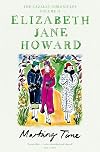
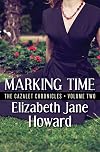
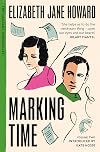
For fans of Downton Abbey, the second volume of the critically acclaimed Cazalet saga takes readers into the lives of an extended British family and their devoted retinue It is 1939, and Hitler has just invaded Poland. The exigencies of wartime will force the Cazalets to make difficult choices as the older children are evacuated from London and settled in Home Place, their longtime Sussex summer estate. Narrated primarily through the voices of three Cazalet cousins-sixteen-year-old Louise show more and fourteen-year-old Polly and Clary-Marking Time details the continuing saga of their fathers. With the outbreak of war, Edward is determined to do his part for England. Hugh, crippled in World War I, must sit back and watch other men fight for their country, including his brother Rupert, who enlists and goes missing in action. The Cazalets' story plays out against the greater drama unfolding on the world stage. Three young girls yearn for the freedom they believe adulthood will confer upon them in this tale of struggle and sacrifice, love and loss, as a new generation of Cazalets makes itself heard. With strong female characters such as the stoic Kitty; her daughter, Rachel, who's in a relationship with another woman; and the loyal governess Miss Milliment, Marking Time explores the role of women during the war amid early stirrings of feminism. show lessTags
Recommendations






















Member Reviews
The second installment of the Cazalet Chronicles opens with Britain’s declaration of war against Germany. Initially, life goes on pretty much as it did before the war. Even air raid sirens and German bombers flying overhead don’t disrupt the family’s lives as much as one might think. Only the youngest Cazalet brother, Rupert, is young enough to join up for active service. Oldest brother Hugh takes charge of the family business, with assistance from Edward who is also part of the reserves. They travel freely from Sussex to London. The women, of course, remain in the countryside managing the household and the children, constantly juggling living arrangements as various parts of the family come and go.
The Cazalet novels drive home show more the reality of women’s lives in the 1940s. Men have all the power, making important decisions and withholding information from their wives and daughters if they think it will make them anxious or upset. They are also free to have physical relationships with other women as well as their wives (who participate primarily out of a sense of duty). The women have very few options, and it appears their daughters’ lives will be similarly limited by their lack of formal education.
Elizabeth Jane Howard’s writing is simply brilliant. Most of the narrative is seen through the eldest child of each of the three families, all teenage daughters, who are in a unique position to observe events unfolding around them. Each one feels as if their life is on hold (“marking time”) because of the war, but their perspective is limited by their parents, who shield them from any serious discussions about the war and the family. So they only know what they know, and the reader has to make inferences and see how they play out. In terms of plot development, Howard leaves no stone unturned. Something notable happens to nearly every character, even the minor ones, and she leaves us with two significant loose ends that I’m sure will be taken up in the next installment. show less
The Cazalet novels drive home show more the reality of women’s lives in the 1940s. Men have all the power, making important decisions and withholding information from their wives and daughters if they think it will make them anxious or upset. They are also free to have physical relationships with other women as well as their wives (who participate primarily out of a sense of duty). The women have very few options, and it appears their daughters’ lives will be similarly limited by their lack of formal education.
Elizabeth Jane Howard’s writing is simply brilliant. Most of the narrative is seen through the eldest child of each of the three families, all teenage daughters, who are in a unique position to observe events unfolding around them. Each one feels as if their life is on hold (“marking time”) because of the war, but their perspective is limited by their parents, who shield them from any serious discussions about the war and the family. So they only know what they know, and the reader has to make inferences and see how they play out. In terms of plot development, Howard leaves no stone unturned. Something notable happens to nearly every character, even the minor ones, and she leaves us with two significant loose ends that I’m sure will be taken up in the next installment. show less
The second installment of the Cazalet Chronicles focuses mostly on the three teenage girls of this sprawling family—Clary, Louise, and Polly—each of whom feels like a very distinct person with their own voice and view of the world. Each of them feels like they are "marking time" as the usual frustrations of growing up (being too old for some things and too young for others) take on additional complications as the Phoney War ends and the Blitz begins. Elizabeth Jane Howard had a keen eye for the telling character detail, and Marking Time unfolds in a pleasurable readable way.
I would like for a very large bomb to fall on Edward, the shit.
The second volume of this series concentrates, for the most part, on the three adolescent girls of the family. Elizabeth Jane Howard captures their characters beautifully and just what it was like to be stuck at home trying to carry on with life when the world was descending into chaos. Frustration, fear and mundanity are the dominant themes. But also how are they going to make their way in the world? There are many secrets that lead to some heartbreaking misunderstandings. We also get glimpses into the lives of the other characters, family, extended family, friends and servants; their worries and concerns and the many secrets here too. Everything is beautifully observed and written. Can't wait to get onto the next instalment.
A lovely second entry in the Cazalet Chronicles, about an upper middle-class family in Britain during World War II. I loved the children's perspective and how pieces of the story needed to be inferred because it's not always clear to children what's going on. It's beautifully written, with rich prose that flows languidly, and just the right amount of wry humor. Looking forward to the next one!
4.25 stars
4.25 stars
The second book in the Cazalet Family Chronicles focuses on the younger generation of Cazalets as World War II gets underway. At the end of The Light Years, the prospect of war with Germany was temporarily averted but as this volume opens a year later in 1940, hostilities have officially begun. While the older generations — patriarch The Brig and his wife The Duchy, their sons and daughters-in-law Hugh (Sybil), Edward (Viola), and Rupert (Zoë), their unmarried daughter Rachel — grapple with making sure the family lumber business survives and enlisting in the military, they don't have much time for the teenagers who are caught between childhood and adulthood.
Most of the story this time is focused on cousins Louise, Clary and Polly. show more Louise, daughter of Edward and Viola, longs to be an actress, an idea her entire family finds ludicrous. Polly has an overwhelming fear of the war, which isn't helped by her mother's mysterious illness, and as the days pass she wonders what is the point of her life when she has no skills and no passions. Clary has to cope with the fear of being orphaned when her father Rupert joins the Navy and leaves her at home with her stepmother Zoë and younger brother and sister. The girl who once burned to be a famous author is left writing a desultory journal, the medium through which we see much of the events of a year both eventful and boring.
There are a lot of characters here, as befits a Family Chronicle, but I found it much easier to keep them all straight in this second book, as the children develop unique personalities and come into their own. The three girls — and their parents, for that matter — couldn't be more different from each other in some ways, even as they experience very similar upbringings. And they are all, in their own ways, both sympathetic and infuriating by turns, as Howard refuses to create two-dimensional characters. Even the slow-motion "romance" between the cook and the chauffeur is given depth even as it is also played for humor.
I'm looking forward to seeing what comes next for the Cazalet family in Confusion. show less
Most of the story this time is focused on cousins Louise, Clary and Polly. show more Louise, daughter of Edward and Viola, longs to be an actress, an idea her entire family finds ludicrous. Polly has an overwhelming fear of the war, which isn't helped by her mother's mysterious illness, and as the days pass she wonders what is the point of her life when she has no skills and no passions. Clary has to cope with the fear of being orphaned when her father Rupert joins the Navy and leaves her at home with her stepmother Zoë and younger brother and sister. The girl who once burned to be a famous author is left writing a desultory journal, the medium through which we see much of the events of a year both eventful and boring.
There are a lot of characters here, as befits a Family Chronicle, but I found it much easier to keep them all straight in this second book, as the children develop unique personalities and come into their own. The three girls — and their parents, for that matter — couldn't be more different from each other in some ways, even as they experience very similar upbringings. And they are all, in their own ways, both sympathetic and infuriating by turns, as Howard refuses to create two-dimensional characters. Even the slow-motion "romance" between the cook and the chauffeur is given depth even as it is also played for humor.
I'm looking forward to seeing what comes next for the Cazalet family in Confusion. show less
September 2, 1939: Germany has invaded Poland and, for the Cazalet family in London and Sussex, war seems imminent. The story is told from 1939 to 1941 from the viewpoints of three Cazalet cousins, teenagers Polly, Louise and Clary. ‘Marking Time ‘is second in the five-book series The Cazalet Chronicles by Elizabeth Jane Howard.
We see them growing up quickly, forced to face war and death before their time, watch their parents struggle with ordinary life and relationships and health crises which continue despite the fighting. One day a German bomber crashes into a nearby field and Christopher, a pacifist, runs out to prevent the local men from shooting the injured Germans. Afterwards, Polly and Christopher go for a walk. Polly thinks show more “how odd it was that when one wanted everything to be good with somebody, one started not telling them everything.” They come to understand that their parents are not just parents, but people too with their own feelings and worries. Polly wonders if “concealment and deceit were a necessary part of human relationships. Because if they were, she was going to be pretty bad at them.”
Louise is at acting school but struggles to play a character ‘in lust’ as she’s a virgin and unsure of the finer details. Then she meets a painter. Clary continues in Sussex, having lessons with Polly and growing to like and respect their tutor Miss Milliment, but she worries about her younger brother Neville who runs away from prep school. And all the time, the adults keep secrets.
Read more of my book reviews at my blog http://www.sandradanby.com/book-reviews-a-z/ show less
We see them growing up quickly, forced to face war and death before their time, watch their parents struggle with ordinary life and relationships and health crises which continue despite the fighting. One day a German bomber crashes into a nearby field and Christopher, a pacifist, runs out to prevent the local men from shooting the injured Germans. Afterwards, Polly and Christopher go for a walk. Polly thinks show more “how odd it was that when one wanted everything to be good with somebody, one started not telling them everything.” They come to understand that their parents are not just parents, but people too with their own feelings and worries. Polly wonders if “concealment and deceit were a necessary part of human relationships. Because if they were, she was going to be pretty bad at them.”
Louise is at acting school but struggles to play a character ‘in lust’ as she’s a virgin and unsure of the finer details. Then she meets a painter. Clary continues in Sussex, having lessons with Polly and growing to like and respect their tutor Miss Milliment, but she worries about her younger brother Neville who runs away from prep school. And all the time, the adults keep secrets.
Read more of my book reviews at my blog http://www.sandradanby.com/book-reviews-a-z/ show less
https://fromtheheartofeurope.eu/marking-time-by-elizabeth-jane-howard/
Marking Time is the second of the series, set a year after the first, and concentrating very much on three teenage Cazalet girls, whose fathers are brothers. But it’s now war time – the book starts in September 1939 and ends with Pearl Harbour in December 1941, so it covers a long and crucial period of the girls’ lives; Louise, an aspiring actress, whose father is abusive; Clary, an aspiring writer, whose father goes missing after Dunkirk; and sensitive Polly, whose mother is very ill though nobody will admit it. Between the lines (and not only there) is a thoughtful reflection on the roles of women in English society of the time.
The cast of characters is huge show more – the family tree at the start lists eighteen living Cazalet relatives, and there are a half dozen more who get at least some viewpoint time – lovers, servants, in-laws. But Howard keeps them all under control, and although we know that parts of this are based on her own life, it doesn’t come across didactically. There is a minor twist at the end of the book which made me gasp, but in any case I would have been impatient for the next instalment; some very tempting plot lines have been set up. I’ll get to it soon enough! show less
Marking Time is the second of the series, set a year after the first, and concentrating very much on three teenage Cazalet girls, whose fathers are brothers. But it’s now war time – the book starts in September 1939 and ends with Pearl Harbour in December 1941, so it covers a long and crucial period of the girls’ lives; Louise, an aspiring actress, whose father is abusive; Clary, an aspiring writer, whose father goes missing after Dunkirk; and sensitive Polly, whose mother is very ill though nobody will admit it. Between the lines (and not only there) is a thoughtful reflection on the roles of women in English society of the time.
The cast of characters is huge show more – the family tree at the start lists eighteen living Cazalet relatives, and there are a half dozen more who get at least some viewpoint time – lovers, servants, in-laws. But Howard keeps them all under control, and although we know that parts of this are based on her own life, it doesn’t come across didactically. There is a minor twist at the end of the book which made me gasp, but in any case I would have been impatient for the next instalment; some very tempting plot lines have been set up. I’ll get to it soon enough! show less
Members
- Recently Added By
Published Reviews
ThingScore 100
En dan is, eindelijk, ook deel 2 van de Cazalets Kronieken in het Nederlands vertaald! Aftellen – De Cazalets deel 2 – werd geschreven door de getalenteerde Britse schrijfster Elizabeth Jane Howell. Howell brengt met prachtige, uitgebreide beschrijvingen een hele familie in het post-Victoriaanse Engeland tot leven brengt. De boekenserie, die in totaal uit 5 delen bestaat, is show more autobiografisch, en gebaseerd op Howell’s eigen, welgestelde familie. Ze begon in 1982 aan dit uitgebreide werk. Het vijfde deel schreef ze op haar 90ste, een jaar voor haar dood in 2014. Het verhaal verscheen ook als dramaserie bij de BBC…lees verder > show less
added by Jordaan
Lists

Best family sagas
244 works; 32 members

Books Read in 2014
2,344 works; 86 members

Books Read in 2020
4,379 works; 123 members

Books Read in 2021
5,361 works; 114 members
Author Information

46+ Works 6,644 Members
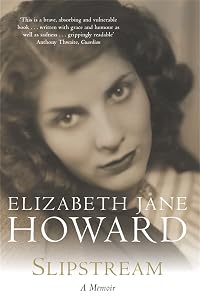
Elizabeth Jane Howard was born in London, England on March 26, 1923. She was educated by governesses at home. Her first novel, The Beautiful Visit, was published in 1950 and won the John Llewellyn Rhys prize. Her other works include the series the Cazalet Chronicles, Falling, and the autobiography Slipstream. The first two novels of the Cazalet show more Chronicles, The Light Years and Marking Time, became the BBC TV series The Cazalets in 2001. The other books in the series are Confusion, Casting Off, and All Change. She also edited several anthologies and wrote short stories, articles, television plays, film scripts and a book on food with Fay Maschler. She was made a CBE in 2000. She died on January 2, 2014 at the age of 90. (Bowker Author Biography) show less
Some Editions
Series

Belongs to Publisher Series
Le strade [Fazi] (281)
Gallimard, Folio (7132)
Work Relationships
Common Knowledge
- Canonical title
- Marking Time
- Original title
- Marking Time
- Original publication date
- 1991
- People/Characters
- Hugh Cazalet; Sybil Cazalet; Edward Cazalet; Villy Cazalet; Rupert Cazalet; Zoe Cazalet (show all 10); Polly Cazalet; Louise Cazalet; Clary Cazalet; Rachel Cazalet
- Important places
- Sussex, England, UK; domestic science college
- Important events
- World War II
- Related movies
- The Cazalets (2001 | IMDb)
- Dedication
- For Dosia Verney
- First words
- Someone had turned off the wireless and, in spite of the room being full of people, there was a complete silence - in which Polly could feel, and almost hear, her own heart thudding.
- Quotations
- Mrs Headford fumbled in her stiff, glossy handbag, which opened suddenly. A bottle of pills, a pink comb, a small hand mirror and half of a fountain pen skidded across the frosty path between them.
- Last words
- (Click to show. Warning: May contain spoilers.)And beside his feelings of respect and affection for her, he felt the stirring of jealousy - of Rupert, her father, and of any future, unknown subject that there might be of her affection.
- Blurbers
- Bedford, Sybille
- Original language
- English
Classifications
Statistics
- Members
- 911
- Popularity
- 29,555
- Reviews
- 32
- Rating
- (4.03)
- Languages
- 9 — Danish, Dutch, English, French, German, Italian, Portuguese, Spanish, Swedish
- Media
- Paper, Audiobook, Ebook
- ISBNs
- 57
- ASINs
- 16