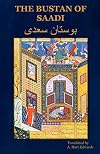
The Bustan
by Sadi
On This Page
Description
Publisher: London W.H. Allen Publication date: 1879 Notes: This is an OCR reprint. There may be numerous typos or missing text. There are no illustrations or indexes. When you buy the General Books edition of this book you get free trial access to Million-Books.com where you can select from more than a million books for free. You can also preview the book there.Tags
Recommendations




















Member Reviews
http://nwhyte.livejournal.com/1863191.html
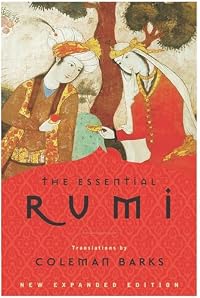
I got hold of a nineteenth-century English translation facing the original Persian, not only of Būstān [بستان, The Orchard] but also of Gulistān [گلستان , The Rose Garden], the two great works by the thirteenth century Persian poet normally known in English as Saʿdī or Saadi, but referred to in my edition as spelt in my subject line above. He was an exact contemporary of Rūmī, whose work I had greatly enjoyed earlier this year, and my expectations were consequently high.
I'm sorry to say that they were not met. Unlike Rūmī, comfortable in his literate and fairly sessile urban merchant lifestyle, Saadi is obsessed by the micropolitics of the court and the caravan. The two books show more are somewhat different in style - Gulistān mainly very short incidents and reflections, while Būstān is generally longer pieces, in both cases gathered together in chapters on various themes of life as an upper-class medieval man. Often there is an intriguing bit of autobiographical reflection at the start of each piece, followed by some vaguely relevant philosophical rambling and a final poetic quote which may have been a real zinger in the original Persian but is lost in the English. I found Saadi's political philosophy rather unattractive, with no real ethical compass as far as I could tell other than the need to stay alive under a despotic ruler and if possible preserve one's self-respect; like Machiavelli without the humour, or indeed like Confucianism without the sense of tradition.
Oddly the one area where I did feel moved by Saadi's prose was in his occasional reflections on love, quite explicitly his own love for cute young men; there is a passionate chapter in Būstān where he imagines himself as a beggar captivated by a young prince which I found really evocative of the passion of erotic attraction, and that was simply the best of several passages. In general, lust for young men is not my own usual preference, but Saadi took me into his own world very effectively. The flip side is, sadly, that women are annoying distractions and irrelevant to the business of being manly in Saadi's world.
One other thing I did enjoy was trying to spot the rhyming schemes in the poetry. Usually it is rhyming couplets:
بنی آدم اعضای یک پیکرند
که در آفرينش ز یک گوهرند
چو عضوى به درد آورد روزگار
دگر عضوها را نماند قرار
تو کز محنت دیگران بی غمی
نشاید که نامت نهند آدمی
But sometimes there are more complex rhyming schemes. It's quite fun to try and spot these things in a language where I barely know any of the letters.
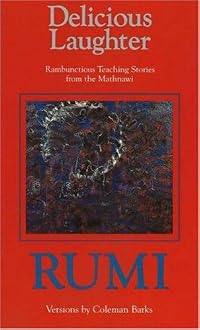
Anyway, the fault may lie with the translation - I think that Rūmī has been very well served by Coleman Banks, and perhaps Saadi simply hasn't been discovered by an English writer with the right sympathy for him yet. But I fear I would need some persuasion to try again. show less
I got hold of a nineteenth-century English translation facing the original Persian, not only of Būstān [بستان, The Orchard] but also of Gulistān [گلستان , The Rose Garden], the two great works by the thirteenth century Persian poet normally known in English as Saʿdī or Saadi, but referred to in my edition as spelt in my subject line above. He was an exact contemporary of Rūmī, whose work I had greatly enjoyed earlier this year, and my expectations were consequently high.
I'm sorry to say that they were not met. Unlike Rūmī, comfortable in his literate and fairly sessile urban merchant lifestyle, Saadi is obsessed by the micropolitics of the court and the caravan. The two books show more are somewhat different in style - Gulistān mainly very short incidents and reflections, while Būstān is generally longer pieces, in both cases gathered together in chapters on various themes of life as an upper-class medieval man. Often there is an intriguing bit of autobiographical reflection at the start of each piece, followed by some vaguely relevant philosophical rambling and a final poetic quote which may have been a real zinger in the original Persian but is lost in the English. I found Saadi's political philosophy rather unattractive, with no real ethical compass as far as I could tell other than the need to stay alive under a despotic ruler and if possible preserve one's self-respect; like Machiavelli without the humour, or indeed like Confucianism without the sense of tradition.
Oddly the one area where I did feel moved by Saadi's prose was in his occasional reflections on love, quite explicitly his own love for cute young men; there is a passionate chapter in Būstān where he imagines himself as a beggar captivated by a young prince which I found really evocative of the passion of erotic attraction, and that was simply the best of several passages. In general, lust for young men is not my own usual preference, but Saadi took me into his own world very effectively. The flip side is, sadly, that women are annoying distractions and irrelevant to the business of being manly in Saadi's world.
One other thing I did enjoy was trying to spot the rhyming schemes in the poetry. Usually it is rhyming couplets:
بنی آدم اعضای یک پیکرند
که در آفرينش ز یک گوهرند
چو عضوى به درد آورد روزگار
دگر عضوها را نماند قرار
تو کز محنت دیگران بی غمی
نشاید که نامت نهند آدمی
But sometimes there are more complex rhyming schemes. It's quite fun to try and spot these things in a language where I barely know any of the letters.
Anyway, the fault may lie with the translation - I think that Rūmī has been very well served by Coleman Banks, and perhaps Saadi simply hasn't been discovered by an English writer with the right sympathy for him yet. But I fear I would need some persuasion to try again. show less
"El Bustan" de Saadi de Shiraz es un compañero de su bien amado Gulistan. Bustan significa "jardín de frutos" y Gulistan "jardínd e flores" y ambos implican, por su título, algo hermoso y refrscante. Recomiendo el sheikh Saadi, no sólo como gran maestro sufí, sino como insigne poeta y narrador de historias que poseen la notable virtud de la simplicidad. Sus relatos se pueden leer por placer y para calmar la profunda sed espiritual que existe en la humanidad. Omar Ali Shah. - "El Bustan" by Saadi de Shiraz is a companion of his beloved Gulistan. Bustan means "garden of fruits" and Gulistan "garden of flowers" and both imply, by their title, something beautiful and refractory. I recommend Sheikh Saadi, not only as a Sufi show more grand master, but as an outstanding poet and storyteller who possesses the remarkable virtue of simplicity. His stories can be read for pleasure and to calm the deep spiritual thirst that exists in humanity. Omar Ali Shah. show less
Mar 9, 2021Spanish
Ratings
Members
- Recently Added By
Lists

The 100 Best Books of All Time by Norwegian Book Club (World Library)
104 works; 23 members

Truly old classics
63 works; 6 members
Author Information

47+ Works 527 Members
Some Editions
Awards and Honors
Notable Lists
Series
Belongs to Publisher Series
Common Knowledge
- Canonical title
- The Bustan
- Original title
- Būstān
- Original publication date
- 1257
- Original language
- Persian
Classifications
- Genres
- Fiction and Literature, Poetry
- DDC/MDS
- 891.55 — Literature & rhetoric Literatures of other languages East Indo-European and Celtic literatures Iranian literatures Modern Persian / Farsi literature (8th century CE to present)
- LCC
- PK6541 .B2 .W5 — Language and Literature Indo-Iranian languages and literatures Indo-Iranian philology and literature Iranian philology and literature New Persian Literature Individual authors or works Sa‘ d i_
- BISAC
Statistics
- Members
- 112
- Popularity
- 286,484
- Reviews
- 2
- Rating
- (3.33)
- Languages
- 8 — English, French, German, Norwegian (Bokmål), Farsi/Persian, Russian, Spanish, Turkish
- Media
- Paper
- ISBNs
- 25
- ASINs
- 1