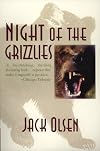
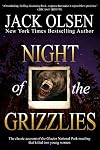
Night of the Grizzlies
by Jack Olsen
On This Page
Description
The relations between mankind and animals are explored in this account of a fatal attack of grizzlies in Glacier National Park.Tags
Recommendations












Member Reviews
Obviously Olsen is quite taken with Glacier National Park and the first section of the book is devoted to a close examination of the flora and fauna of that region before he delves into the habits of Ursa Horribilis, otherwise known as the Grizzly Bear. They are huge creatures, standing erect sometimes close to eight feet tall and despite their size can run faster than you’ll ever hope to. Their habitat has been under pressure for decades: “ ...the destruction of the forests in which he could hide, the plowing of the plains on which he grazed, the stringing of thousands of miles of barbed wire, and the pervading, unpleasant stink of man, who only smells good to himself and his fellow man, and not always then. The grizzly of the show more plains, as was his custom, backed into the final square miles of American wilderness, avoiding a fight. He is holed up there today, his numbers reduced to less than 1,000, perhaps as few as 500, his range restricted more or less to a few states: Montana, Wyoming....”
Grizzlies had been living in Glacier National Park for decades and their relationship with humans had been a comfortable one, each leaving the other alone. In 1967, however, an emaciated bear was seen foraging in garbage cans around Kelly’s Campground. The permanent residents noticed his strange behavior and warned the rangers that this bear was not acting normally, standing his ground when yelled at instead of running away.
The Park Service was torn, clearly it had a rogue grizzly on its hands, yet the ethic was to leave the wildlife as intact as possible. The visitors didn’t take numerous warnings seriously and the end result, a combination of negligence and procrastination coupled with some rule violations and insouciance resulted in two deaths and a mauling.
Several years ago, my wife and I went horseback riding in Glacier National Park. We had been told there had never been an attack on a person while on horseback. Just the following week, a group of riders ran into a large grizzly on the same trail we had been riding. When one of the children fell off his horse and attracted the interest of the bear,one of the guides reflexively charged the bear on “Tonk” a huge horse (part Percheron and 18 hands high -- I owned a large Arab that was 16 hands and he was big) that must have terrified the bear for he took off. The horse and wrangler made it on Letterman. The Letterman show can be seen here. (https://www.youtube.com/watch?v=tHAlYW_rqCY)
Olsen writes well and I must say the scenes describing the human/grizzly interactions are the stuff of nightmares. show less
Grizzlies had been living in Glacier National Park for decades and their relationship with humans had been a comfortable one, each leaving the other alone. In 1967, however, an emaciated bear was seen foraging in garbage cans around Kelly’s Campground. The permanent residents noticed his strange behavior and warned the rangers that this bear was not acting normally, standing his ground when yelled at instead of running away.
The Park Service was torn, clearly it had a rogue grizzly on its hands, yet the ethic was to leave the wildlife as intact as possible. The visitors didn’t take numerous warnings seriously and the end result, a combination of negligence and procrastination coupled with some rule violations and insouciance resulted in two deaths and a mauling.
Several years ago, my wife and I went horseback riding in Glacier National Park. We had been told there had never been an attack on a person while on horseback. Just the following week, a group of riders ran into a large grizzly on the same trail we had been riding. When one of the children fell off his horse and attracted the interest of the bear,one of the guides reflexively charged the bear on “Tonk” a huge horse (part Percheron and 18 hands high -- I owned a large Arab that was 16 hands and he was big) that must have terrified the bear for he took off. The horse and wrangler made it on Letterman. The Letterman show can be seen here. (https://www.youtube.com/watch?v=tHAlYW_rqCY)
Olsen writes well and I must say the scenes describing the human/grizzly interactions are the stuff of nightmares. show less
Over the course of U.S. history, the grizzly bear’s environment has been steadily encroached upon by man, the grizzly’s only enemy. Once roaming over the Great Plains and mountains of the western United States, they have retreated to the few remaining wilderness areas that afford them sufficient food. Still, they remain solitary and typically avoid humans. In this nonfiction work, Olsen explores the events that culminated in one night of terror in August 1967 when two young women were savagely attacked by grizzly bears.
I love reading ‘true crime’ and this work has all the hallmarks of the best of that genre. Olsen gives us an explanation and history of the various parties involved – park rangers, temporary concessionaire show more employees, casual hikers, physicians, birders, families, older couples, exuberant teenagers, and long-term residents. He also recounts the unusual number of bear sightings in Glacier National Park during the summer of 1967, and even more unusual number of “encounters” between bears and humans.
It’s important to remember that this was set in an era before cell phones or other forms of instant communication we are so used to today. I applaud the courage of the rangers and hikers who went to the aid of those attacked. I don’t know if I would have ventured out into the night to investigate the screams. Olsen doesn’t shy from exposing bureaucratic inefficiency, nor the fault of “tourists” who fail to understand the real dangers of a wild environment.
The pace is unrelenting and the tension builds to an unendurable pitch. I reluctantly stopped reading because it was after midnight and I couldn’t keep my eyes open much longer. I should have stopped an hour earlier, or just kept going until I finished. Even though I live in a decidedly suburban area, in a secure home and without any evidence of any type of bear within 500 miles, every slight noise fueled my imagination, and I had a fretful night and little sleep. show less
I love reading ‘true crime’ and this work has all the hallmarks of the best of that genre. Olsen gives us an explanation and history of the various parties involved – park rangers, temporary concessionaire show more employees, casual hikers, physicians, birders, families, older couples, exuberant teenagers, and long-term residents. He also recounts the unusual number of bear sightings in Glacier National Park during the summer of 1967, and even more unusual number of “encounters” between bears and humans.
It’s important to remember that this was set in an era before cell phones or other forms of instant communication we are so used to today. I applaud the courage of the rangers and hikers who went to the aid of those attacked. I don’t know if I would have ventured out into the night to investigate the screams. Olsen doesn’t shy from exposing bureaucratic inefficiency, nor the fault of “tourists” who fail to understand the real dangers of a wild environment.
The pace is unrelenting and the tension builds to an unendurable pitch. I reluctantly stopped reading because it was after midnight and I couldn’t keep my eyes open much longer. I should have stopped an hour earlier, or just kept going until I finished. Even though I live in a decidedly suburban area, in a secure home and without any evidence of any type of bear within 500 miles, every slight noise fueled my imagination, and I had a fretful night and little sleep. show less
That was an excellent book! It's more of a description of our park service and the American mind than a book about a bear attack. The actual attack was a very small part of the book. I knew that going in and was not disappointed.
I read this book for two reasons:
1. This was one of the first adult books I read as a child (I was probably around 9 or 10 when I read it) and I wanted to see if I remembered any of it at all. I didn't. The knowledge of having read it stayed with me though.
2. I was genuinely curious about why those two attacks happened. Brown and black bears are generally human averse and attacks are not common, even now when humans are nearly as common as ants and taking over every bit of the earth. The book did a grand job show more explaining it. It neither laid all of the responsibility on humans, nor did it blame the attack on bear aggression. It explained how and why it happened in the words of the people who investigated it and those who experienced the events surrounding the two attacks.
Most of the book explains the events leading to the attacks. The event itself is quite short. Both attacks took minutes and this is reflected in the book. The aftermath is short because it isn't over. It still isn't over. We're still feeling the aftermath today.
Thankfully, one of his predictions turned out very wrong. Humans protected the Grizzly Bear and allowed the population to grow. Ditto with the bison population, which is important to the brown bear. We learned from our mistakes. Well, most of them. We're still crowding out wild animals with our vast human population. show less
I read this book for two reasons:
1. This was one of the first adult books I read as a child (I was probably around 9 or 10 when I read it) and I wanted to see if I remembered any of it at all. I didn't. The knowledge of having read it stayed with me though.
2. I was genuinely curious about why those two attacks happened. Brown and black bears are generally human averse and attacks are not common, even now when humans are nearly as common as ants and taking over every bit of the earth. The book did a grand job show more explaining it. It neither laid all of the responsibility on humans, nor did it blame the attack on bear aggression. It explained how and why it happened in the words of the people who investigated it and those who experienced the events surrounding the two attacks.
Most of the book explains the events leading to the attacks. The event itself is quite short. Both attacks took minutes and this is reflected in the book. The aftermath is short because it isn't over. It still isn't over. We're still feeling the aftermath today.
Thankfully, one of his predictions turned out very wrong. Humans protected the Grizzly Bear and allowed the population to grow. Ditto with the bison population, which is important to the brown bear. We learned from our mistakes. Well, most of them. We're still crowding out wild animals with our vast human population. show less
This is a quick read, yet a detailed analysis forensic in its investigative detail of an evening when human encroachment and laxity led to two different grizzlies assaulting campers, killing one. I relish the detail and lessons learned that it offers (passively allowing garbage feeding leads to confrontations with humans), but I disagree with Olsen's assessment that this unicorn of events is a presage to more frequent lethal encounters.
Glacier National Park is one of America's greatest jewels. Full of rare wildlife, breathtaking vistas, and world-class hiking, tourists have been coming to commune with nature for decades. One of the most popular attractions is the park's grizzly bears and for all the years it's been open to the public, no grizzly fatalities have been recorded. All that is about to change one August night in 1967. On the same night, within an hour of each other, two nineteen year old girls will be drug out of their sleeping bags and into the darkness by two different grizzly bears.
This unlikely and shocking tragedy will forever change how the park is managed. Now decisions must be made about how to keep such a thing from ever happening again. A show more chilling story that will remind us all to stay out of the woods. show less
This unlikely and shocking tragedy will forever change how the park is managed. Now decisions must be made about how to keep such a thing from ever happening again. A show more chilling story that will remind us all to stay out of the woods. show less
A first-rate account of an horrific occurrence, from one of America's finest non-fiction writers. On August 12, 1967, two separate attacks by grizzly bears in Glacier National Park resulted in two deaths. Olsen tells us step-by-step of the days and events that led up to the attacks, and moment-by-moment of their aftermath. Never flinching from details, neither does he flinch from assigning blame where it inevitably points -- and the much-needed changes that these tragedies precipitated.
Up through the middle of the 20th century, as the frontier of the American West became more and more crowded with humans, the mighty grizzly bear population found its safe spaces dwindling to smaller and smaller enclaves. This led to increasing numbers of close encounters between people and the bears believed to be averse to human contact. Still, no one had ever been killed by a grizzly in the U.S. — until 1967, when two women were killed by two different grizzlies on the same night inside Glacier National Park in Montana. What provoked the bears to attack? And why did the National Park Service ignore a multitude of warnings all that summer that human-bear interactions were reaching dangerous levels?
Olsen tries to answer those show more questions with this account, though he comes up a bit short on final conclusions. And given that the book was first published in 1969, his pessimistic conclusion that the killings were the beginning of the end for the grizzly bear in North America proved to be premature. In fact, the population rebounded after being listed on the Endangered Species List in 1975 and has now recovered to the point where some of the restrictions on hunting and killing grizzlies are being lifted. By sheer coincidence, I heard a story about this very topic this morning on NPR: Grizzlies Have Recovered, Officials Say; Now Montanans Have to Get Along With Them.
Despite the ways in which Olsen's account is outdated, it's still worth reading for the descriptions of the beauty of Glacier NP and the magnificence of the grizzly bear. It's clear that Olsen, while not quite condoning the grizzly attacks (though it's clear he places the majority of the blame on the NPS), is on the side of Ursus horribilis when it comes to deserving a corner of the planet where they can live without human interference. show less
Olsen tries to answer those show more questions with this account, though he comes up a bit short on final conclusions. And given that the book was first published in 1969, his pessimistic conclusion that the killings were the beginning of the end for the grizzly bear in North America proved to be premature. In fact, the population rebounded after being listed on the Endangered Species List in 1975 and has now recovered to the point where some of the restrictions on hunting and killing grizzlies are being lifted. By sheer coincidence, I heard a story about this very topic this morning on NPR: Grizzlies Have Recovered, Officials Say; Now Montanans Have to Get Along With Them.
Despite the ways in which Olsen's account is outdated, it's still worth reading for the descriptions of the beauty of Glacier NP and the magnificence of the grizzly bear. It's clear that Olsen, while not quite condoning the grizzly attacks (though it's clear he places the majority of the blame on the NPS), is on the side of Ursus horribilis when it comes to deserving a corner of the planet where they can live without human interference. show less
Members
- Recently Added By
Lists

When Animals Attack
7 works; 3 members
Author Information

44+ Works 2,119 Members
Jack Olsen is the author of thirty-one books & the winner of many awards, including the Edgar & the National Headliners Awards. A former bureau chief for "Time," he has written for "Vanity Fair," "Life," "People," "Paris Match," "The New York Times," & "Reader's Digest." He lives on an island in Puget Sound with his wife & children. (Bowker Author show more Biography) show less
Awards and Honors
Distinctions
Common Knowledge
- Original publication date
- 1969
- Important places
- Glacier National Park, USA
Classifications
- Genres
- Nonfiction, General Nonfiction
- DDC/MDS
- 599.74446 — Natural sciences & mathematics Animals Mammals Carnivora; Cats, Dogs, Bears, Seals Feliformia [Land carnivores now 599.74–599.78] [Caniformia now at 599.76–599.77] [Bears now at 599.78]
- LCC
- QL737 .C27 .O4 — Science Zoology Zoology Chordates. Vertebrates Mammals
- BISAC
Statistics
- Members
- 168
- Popularity
- 194,216
- Reviews
- 10
- Rating
- (4.08)
- Languages
- English
- Media
- Paper, Audiobook, Ebook
- ISBNs
- 5
- ASINs
- 4