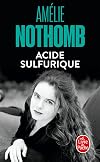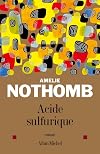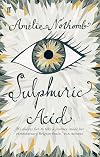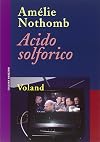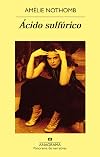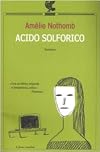
Sulphuric Acid
by Amélie Nothomb
On This Page
Description
Sulphuric Acid tells the story of a reality TV death camp, which has become the nation's obsession - an amoral spectacle played out through the media. It is a blackly funny and shocking satire on the modern predilection for reality television and celebrity, in which the audience at home develops a taste for blood.Tags
Recommendations


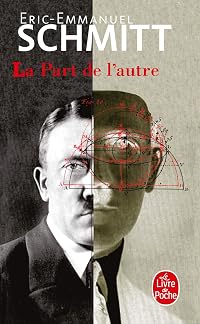

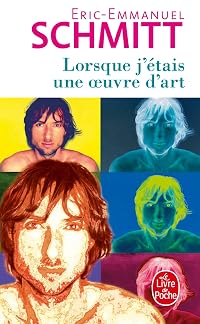

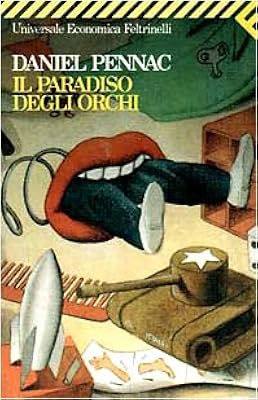
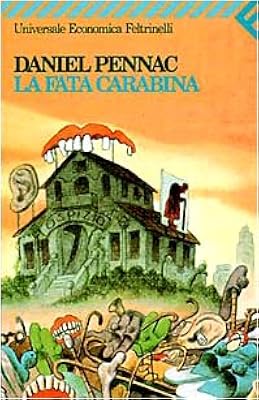

























Member Recommendations
bluepiano Both books are about groups of people being filmed for particularly nasty reality shows. And for another such account, this one focussing upon an individual rather than a group, have a look at Compton's The Continuous Katherine Mortenhoe.

IreneReads both are set in the future and are about people fighting to the death on TV
01
Member Reviews
La scrittura della Nothomb riesce ad affascinarmi e avvincermi anche questa volta pur raccontando una storia di una crudeltà e una durezza sconvolgente.
Una satira feroce, brutale e implacabile del mondo dei reality e che ci racconta anche a quali punti di estrema bassezza possa arrivare l’animo umano ormai privo di una qualsiasi empatia anche difronte a esiti estremi.
Un racconto che assume anche tratti spaventosi e terrificanti e che mi ha imposto pause nella lettura per poterne smorzare e sopportare la crudezza.
Un'esposizione lucida e spietata per analizzare e riflettere sul genere umano e la sua crescente smania di spettacolarizzazione del dolore.
Una satira feroce, brutale e implacabile del mondo dei reality e che ci racconta anche a quali punti di estrema bassezza possa arrivare l’animo umano ormai privo di una qualsiasi empatia anche difronte a esiti estremi.
Un racconto che assume anche tratti spaventosi e terrificanti e che mi ha imposto pause nella lettura per poterne smorzare e sopportare la crudezza.
Un'esposizione lucida e spietata per analizzare e riflettere sul genere umano e la sua crescente smania di spettacolarizzazione del dolore.
This novella/parable/fable whatever it might be called lasted precisely as long as my cappuccino. I suspect it would take considerably longer to completely understand its meaning.
Set in a futuristic Europe where reality TV is properly scouring the depths with a sort of televised death camp with victims rounded up at random. It’s the sort of terrain visited by DBC Pierre’s ‘Vernon God Little’ but this is rather more serious in its tone. There is clearly some religious/war symbolism going on, though for me the most telling image was of the audience – 100% viewership at moments of high drama, with even people without TV sets going round to their neighbours to watch the programme, later having the hypocrisy to condemn it. My first show more thought was: what of the politicians who had permitted it to happen? Yet politicians are supposedly the embodied will of the people, and as such who should anger be directed at? And would the will of the people allow such a programme to be made? Short book but many, many questions. show less
Set in a futuristic Europe where reality TV is properly scouring the depths with a sort of televised death camp with victims rounded up at random. It’s the sort of terrain visited by DBC Pierre’s ‘Vernon God Little’ but this is rather more serious in its tone. There is clearly some religious/war symbolism going on, though for me the most telling image was of the audience – 100% viewership at moments of high drama, with even people without TV sets going round to their neighbours to watch the programme, later having the hypocrisy to condemn it. My first show more thought was: what of the politicians who had permitted it to happen? Yet politicians are supposedly the embodied will of the people, and as such who should anger be directed at? And would the will of the people allow such a programme to be made? Short book but many, many questions. show less
Llegó el momento en que el sufrimiento de los demás no les bastó: Tuvieron que convertirlo en espectáculo Metáfora de la evolución de los realities y la televisión en general, el "siempre un poquito más lejos" degradando a la especie humana y aquí nadie hace nada. Al final se desinfla un poco, pero esa es mi impresión general de los libros de Amelie Nothomb. Sin embargo recuerdo que me enganchó muchísimo, me lo debí de leer en una noche.
Amélie Nothomb has blown me away several times, and I always want (and half expect) her books to be bittersweet little gems with endings that give me goosebumps. But here I must admit I was pretty darn sceptical at first. She ventures into was must be considered very close to a dystopian cliché, especially in the genre's more recent years. In a near future France (of which we learn almost nothing) a reality TV show is rounding up random people, putting them in a concentration camp and televising their every move (Hoo-hum). The TV audience is voting who will be taken off the show and killed each day (Sigh). Not the freshest of ideas, is it? (And reading this almost directly after a real account from the holocaust didn't help show more either).
But then she almost pulls it off! The psychological power struggle between the prisoner Pannonique (beacon of hope amongst the prisoners, which she struggles to cope with) and the guard Zdena (who becomes obsessed with learning Pannonique's real name) also feels worn at first, but Nothomb manages to twist and turn this theme until it seems fresh, exciting and full of nerve.
She even finds a fresh take on the viewing public, by letting them not be bloodthirsty sadists, but rather appalled and full of empathy with the prisoners. It's precisely those feelings that make them tune in every night... The relationship between the viewers and their unknowing heroine Pannonique is the most interesting one in the book.
Unfortunately, the ending disappointed. It feels to me in turn strained, constructed and overly distorted, and drags the book down with it. It stays clear of being mediocre, but I expect (there it is!) more from Mme Nothomb. If you haven't read her, I heartily recommend checking out Fear and tremling or Anti-Christa instead. show less
But then she almost pulls it off! The psychological power struggle between the prisoner Pannonique (beacon of hope amongst the prisoners, which she struggles to cope with) and the guard Zdena (who becomes obsessed with learning Pannonique's real name) also feels worn at first, but Nothomb manages to twist and turn this theme until it seems fresh, exciting and full of nerve.
She even finds a fresh take on the viewing public, by letting them not be bloodthirsty sadists, but rather appalled and full of empathy with the prisoners. It's precisely those feelings that make them tune in every night... The relationship between the viewers and their unknowing heroine Pannonique is the most interesting one in the book.
Unfortunately, the ending disappointed. It feels to me in turn strained, constructed and overly distorted, and drags the book down with it. It stays clear of being mediocre, but I expect (there it is!) more from Mme Nothomb. If you haven't read her, I heartily recommend checking out Fear and tremling or Anti-Christa instead. show less
This is quite a disturbing book. It reminded me of Blindness by Saramago, and likewise has left me with the feeling that I have been punched on the stomach. I read one previous book by Nothomb – Fear and Trembling – but it did not prepare me for Sulphuric Acid.
In both books Nothomb makes an acute criticism of society, but while in Fear and Trembling – an criticism of corporate organizations, the Japanese corporations more specifically – she uses humour and satire, in Sulphuric Acid the theme does not allow for such an approach. The book describes a reality show where people randomly picked at a park are sent to a concentration camp and their suffering televised daily to an audience that grows bigger as the conditions at the camp show more deteriorates. Some very hard questionings are then explored: love, hate, God, death, freedom, human identity, social apathy.
Be aware this is not a book for the faint of heart and Nothomb is not a great literary writer as my comparison to Saramago may suggest, yet I highly recommend it for those brave enough. show less
In both books Nothomb makes an acute criticism of society, but while in Fear and Trembling – an criticism of corporate organizations, the Japanese corporations more specifically – she uses humour and satire, in Sulphuric Acid the theme does not allow for such an approach. The book describes a reality show where people randomly picked at a park are sent to a concentration camp and their suffering televised daily to an audience that grows bigger as the conditions at the camp show more deteriorates. Some very hard questionings are then explored: love, hate, God, death, freedom, human identity, social apathy.
Be aware this is not a book for the faint of heart and Nothomb is not a great literary writer as my comparison to Saramago may suggest, yet I highly recommend it for those brave enough. show less
Didn't enjoy the style, it's easy to read but somehow too easy. I can't define why, maybe it's too simplistic sometimes. And though I love the pitch and its provocativity, I think the denouement is too optimistic: the day we will reach a level of ignominy, I am not sure it will be possible to stop the horrors we will have let start.
But another point of view could be to see this book as an homage to those who resisted to the Nazi ignominy and who proved it's always possible to stop. With a reminder: horror is not as far as we would like to think, and civilization is fragile.
But another point of view could be to see this book as an homage to those who resisted to the Nazi ignominy and who proved it's always possible to stop. With a reminder: horror is not as far as we would like to think, and civilization is fragile.
I've tried combining the French and English versions but it isn't showing up SO I'm posting my review on both.
Dear Reader,
This is one of my favorite Authors of all time. Amélie has this magical way with words, and if you've been following my reviews, you'll know I'll gush about her until the day I die. Did I love this book? No, but I did like it. This might be the first Nothomb book that didn't take my breath away, and that's okay! I don't expect her to blow me away EVERY time. I want to, but realistically, the odds aren't in my favor. Haha, get it? Okay, so maybe that went over your head because I haven't mentioned what this book is about but after I do, you'll get the cheap Hunger Games reference.
Sulphuric Acid plays with a theme show more that has been hashed out OVER and OVER again. Put yourself in the future, you've been kidnapped and brought to a prison, only to find out this is no ordinary prison. That's right, this prison is a TV Show, one where they tape everyone suffering and even their deaths. Recognize this? From the 80's movie "The Running Man", and the Japanese movie "Battle Royale" in 2000, to the book/movie franchise "The Hunger Games", each one of these has a similar plot line (almost like they've been copied off each other). There might even be others, who knows. What I really love... is that this novel came out in 1999, which pre-dates almost all those I've mentioned (The Running Man came before).
Getting back to Nothomb, she usually writes novellas and this is one of those at only 127 pages. She clearly had a statement with this book, she wanted to show the disgust of the viewers (the public). The one thing that stood out from this book and those other books/movies, was the idea that the finger should be pointed at the source. For example, in The Hunger Games, Katniss clearly throws her effort into overthrowing the makers behind the show. What Nothomb wants her reader to understand is that the ones behind the show are not the bad guys, we are. If we watch these horrible shows, the public is giving it fuel. I found this difference to be really interesting. It almost serves as a warning, let's stop complaining about the media throwing disgusting things down our throats (be it the news or those stupid reality shows). Let's stop watching them and see if the content will change.
If that's not enough, Nothomb also does in 120 pages what wasn't done with any of the others. She gives us a perfect example of kindness, love and patience. The main character is awe inspiring in her spirit and how she patiently takes what is given to her (none of it good). She doesn't give any satisfaction to her abusers and in turn wins the heart of the public. There is a lot to learn from her ways, and I don't know if I would have responded well to the book without her. If this is your first Nothumb, pick up one of her others first. If you've experienced her and she wasn't your cup of tea (who are you?!?) I would suggest trying this and seeing if this does it for you. Point being, I found Sulphuric Acid to be different from her other work. Not bad though, I don't think she is capable of writing anything bad.
Happy Reading,
AmberBug show less
Dear Reader,
This is one of my favorite Authors of all time. Amélie has this magical way with words, and if you've been following my reviews, you'll know I'll gush about her until the day I die. Did I love this book? No, but I did like it. This might be the first Nothomb book that didn't take my breath away, and that's okay! I don't expect her to blow me away EVERY time. I want to, but realistically, the odds aren't in my favor. Haha, get it? Okay, so maybe that went over your head because I haven't mentioned what this book is about but after I do, you'll get the cheap Hunger Games reference.
Sulphuric Acid plays with a theme show more that has been hashed out OVER and OVER again. Put yourself in the future, you've been kidnapped and brought to a prison, only to find out this is no ordinary prison. That's right, this prison is a TV Show, one where they tape everyone suffering and even their deaths. Recognize this? From the 80's movie "The Running Man", and the Japanese movie "Battle Royale" in 2000, to the book/movie franchise "The Hunger Games", each one of these has a similar plot line (almost like they've been copied off each other). There might even be others, who knows. What I really love... is that this novel came out in 1999, which pre-dates almost all those I've mentioned (The Running Man came before).
Getting back to Nothomb, she usually writes novellas and this is one of those at only 127 pages. She clearly had a statement with this book, she wanted to show the disgust of the viewers (the public). The one thing that stood out from this book and those other books/movies, was the idea that the finger should be pointed at the source. For example, in The Hunger Games, Katniss clearly throws her effort into overthrowing the makers behind the show. What Nothomb wants her reader to understand is that the ones behind the show are not the bad guys, we are. If we watch these horrible shows, the public is giving it fuel. I found this difference to be really interesting. It almost serves as a warning, let's stop complaining about the media throwing disgusting things down our throats (be it the news or those stupid reality shows). Let's stop watching them and see if the content will change.
If that's not enough, Nothomb also does in 120 pages what wasn't done with any of the others. She gives us a perfect example of kindness, love and patience. The main character is awe inspiring in her spirit and how she patiently takes what is given to her (none of it good). She doesn't give any satisfaction to her abusers and in turn wins the heart of the public. There is a lot to learn from her ways, and I don't know if I would have responded well to the book without her. If this is your first Nothumb, pick up one of her others first. If you've experienced her and she wasn't your cup of tea (who are you?!?) I would suggest trying this and seeing if this does it for you. Point being, I found Sulphuric Acid to be different from her other work. Not bad though, I don't think she is capable of writing anything bad.
Happy Reading,
AmberBug show less
Members
- Recently Added By
Author Information

87+ Works 16,178 Members
Some Editions
Series
Belongs to Publisher Series
Le amazzoni [Voland] (32)
Work Relationships
Is contained in
Common Knowledge
- Canonical title
- Sulphuric Acid
- Original title
- Acide sulfurique
- Original publication date
- 2005 (original French) (original French); 2007 (English translation) (English translation)
- People/Characters*
- Pannonique (détenue); CKZ 114 (matricule de Pannonique); Zdena (kapo); Marko (kapo); Jan (kapo); Lenka (kapo) (show all 11); Pietro Livi (détenu); EPJ 327 (matricule de Pietro); MDA 802 (détenue); ZHF 911 (détenue); PFX 150 (détenue)
- Important places*
- Parigi, Francia; Campo di concentramento in Europa
- First words
- The time came when the suffering of others was not enough for them; they needed the spectacle of it, too.
- Last words
- (Click to show. Warning: May contain spoilers.)'The cello! That's wonderful. And why the cello?'
'Because it's the instrument that most closely resembles the human voice.' - Publisher's editor*
- Voland
- Original language
- French
*Some information comes from Common Knowledge in other languages. Click "Edit" for more information.
Classifications
- Genres
- Fiction and Literature, General Fiction, Science Fiction
- DDC/MDS
- 843.914 — Literature & rhetoric French Literature French fiction 1900- 20th Century 1945-1999
- LCC
- PQ2674 .O778 .A25 — Language and Literature French, Italian, Spanish and Portuguese literatures French literature Modern literature 1961-2000
- BISAC
Statistics
- Members
- 729
- Popularity
- 39,008
- Reviews
- 32
- Rating
- (3.53)
- Languages
- 9 — Catalan, Dutch, English, French, German, Italian, Polish, Romanian, Spanish
- Media
- Paper, Ebook
- ISBNs
- 22
- ASINs
- 10