On This Page
Description
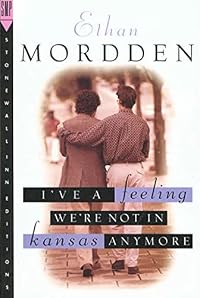
Two gay men abandon New York City for a poor, radically polarized village in Kansas, where a cast of characters--including a gay Black prostitute, a hermitic white artist, and a budding scholar--responds to a girl's kidnapping and rape.Tags
Recommendations


















Member Reviews
This book contains the following: 1. Several very different, deeply different, deeply imagined characters (complete with distinct concerns, flaws, unspoken fears, and, most importantly, unspoken loves). 2. Two names for everything that matters. (Note: If you're in the first ten to twenty pages, it is okay to be confused about the name of the town. Black people call it Galatia, while white people call it Galatea. Yes, you can assume that the individuals in charge of each part of the town - a minister in Galatia and a banker/developer in Galatea - treat the towns exactly as you would expect from those two meaning-crammed names.) 3. Polarities, with realistically accompanying strong feelings between people at opposing poles and about show more people who don't stay on one side or the other (Galatia/Galatea; gay/straight; black/white; educated/not; wealthy/not; etc). 4. Two novels within the novel, but they don't appear in the text, as the stories-within-stories have in Peck's previous novels - and they do affect the characters during the story, a lot. 5. Booze and despair. 6. Explosions, all types. 7. Escape attempts, from despair, poverty, bad memories, small-town-ish-ness, limited dating pools, and one of two very powerful people who are themselves polar, but not as opposite as they want to believe.
This book also contains the following:
1. More loose ends than "Lost" and "The X-Files" combined, though nothing supernatural.
2. Some gut-wrenching violence; not for the delicate reader.
3. Some really florid writing, though most of them turn up in passages told from the first-person viewpoint of someone who is the right age to be florid, which makes them less annoying.
4. More themes than seem to fit in the text. Rumor has it that the original book was over 1,000 pages - maybe some of the connective tissue ended up cut?
5. An overarching air of futility; only one character leaves the story with anything resembling hope, though a few others get away with possibility.
6. A cruelly accurate depiction of how people mythologize, how they make themselves out to be justified, what they leave out and what they leave in, and where they put things they leave out, e.g., a hidden diary, the ruins of a continuously smoldering town, a limestone cave that used to contain weird rocks, file drawers, a tree stump with a trap door on top, and in pictures hanging in plain sight.
7. Conspicuous authorial ambition.
I would not not recommend this book to fans of the Southern Gothic. I would not not recommend it to people who like puzzle rings and aren't turned off by rated-R elements. I would point to passages in order to demonstrate useful tips about to pull off multiple narrators, and I would cite the absence of certain passages as a good use of absence to tell more of the story.
I'm not going to go out and find the author's other works myself, because I have a nagging feeling that the author may reasonably have infused the characters of Colin and Justin with autobiographical life but may not have realized how perilously close to Rosemary and the Reverend he himself walks when he tries to pack small-j justice, massive cultural dilemmas, a baroque flourish of conspicuous symbolism, and too many voices speaking from too many places along the plotline (don't expect sections 5-7 to use chronological order, or even necessarily chronological cues) into one book.
You can build a novel with all the parts of a perfect novel, Mr. Peck, and you can animate it with your own breath, but the more complex the creature you are trying to build, the more difficult it is to make it self-sustaining, vital, meaningful to a wide audience. Myra saw, after all, how the parts of the novel's human Galatea's past never fit back together into a whole. Perhaps you did too, and your editor didn't; or perhaps you, like Colin, took the bag of cut words and flung them back. show less
This book also contains the following:
1. More loose ends than "Lost" and "The X-Files" combined, though nothing supernatural.
2. Some gut-wrenching violence; not for the delicate reader.
3. Some really florid writing, though most of them turn up in passages told from the first-person viewpoint of someone who is the right age to be florid, which makes them less annoying.
4. More themes than seem to fit in the text. Rumor has it that the original book was over 1,000 pages - maybe some of the connective tissue ended up cut?
5. An overarching air of futility; only one character leaves the story with anything resembling hope, though a few others get away with possibility.
6. A cruelly accurate depiction of how people mythologize, how they make themselves out to be justified, what they leave out and what they leave in, and where they put things they leave out, e.g., a hidden diary, the ruins of a continuously smoldering town, a limestone cave that used to contain weird rocks, file drawers, a tree stump with a trap door on top, and in pictures hanging in plain sight.
7. Conspicuous authorial ambition.
I would not not recommend this book to fans of the Southern Gothic. I would not not recommend it to people who like puzzle rings and aren't turned off by rated-R elements. I would point to passages in order to demonstrate useful tips about to pull off multiple narrators, and I would cite the absence of certain passages as a good use of absence to tell more of the story.
I'm not going to go out and find the author's other works myself, because I have a nagging feeling that the author may reasonably have infused the characters of Colin and Justin with autobiographical life but may not have realized how perilously close to Rosemary and the Reverend he himself walks when he tries to pack small-j justice, massive cultural dilemmas, a baroque flourish of conspicuous symbolism, and too many voices speaking from too many places along the plotline (don't expect sections 5-7 to use chronological order, or even necessarily chronological cues) into one book.
You can build a novel with all the parts of a perfect novel, Mr. Peck, and you can animate it with your own breath, but the more complex the creature you are trying to build, the more difficult it is to make it self-sustaining, vital, meaningful to a wide audience. Myra saw, after all, how the parts of the novel's human Galatea's past never fit back together into a whole. Perhaps you did too, and your editor didn't; or perhaps you, like Colin, took the bag of cut words and flung them back. show less
Although there were elements of this book I really didn't like, there was so much, much more that I loved. Wonderful characterisation, raw emotion, unusual storytelling and different perspectives.
There were some questions left unanswered at the end, but also some that had initially seemed important, but became irrelevent. I think that this is a book that improves even more on second and third reads.
There were some questions left unanswered at the end, but also some that had initially seemed important, but became irrelevent. I think that this is a book that improves even more on second and third reads.
Ratings
Members
- Recently Added By
Author Information

16+ Works 1,958 Members
Series

Classifications
- Genres
- Fiction and Literature, General Fiction, LGBTQ+, Suspense & Thriller, Horror
- DDC/MDS
- 813.54 — Literature & rhetoric American literature in English American fiction in English 1900-1999 1945-1999
- LCC
- PS3566 .E245 .N68 — Language and Literature American literature American literature Individual authors 1961-
- BISAC
Statistics
- Members
- 172
- Popularity
- 189,284
- Reviews
- 2
- Rating
- (3.86)
- Languages
- English, German, Spanish
- Media
- Paper, Ebook
- ISBNs
- 11
- ASINs
- 4