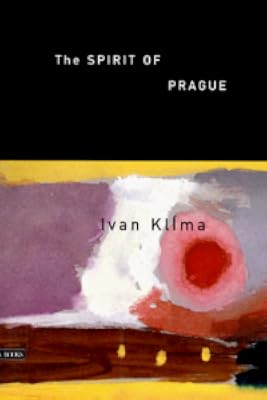
The Spirit of Prague and Other Essays
by Ivan Klima
On This Page
Description
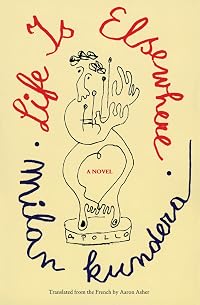
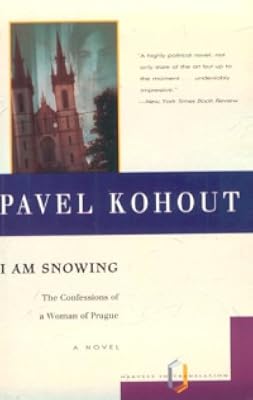
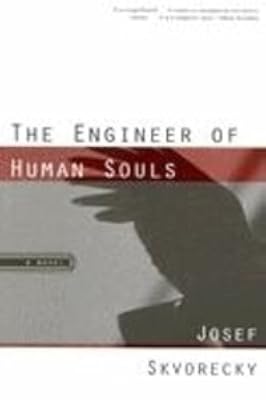
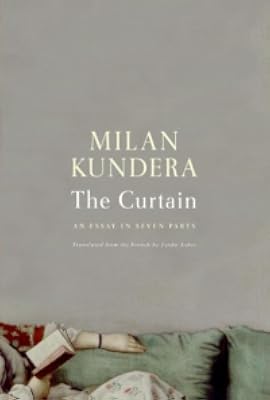
Here, in Klima's own powerful words, is the motivation behind his writing - the necessity to bear witness to his country's turbulent history. In the title essay of this collection of essays, Klima invokes the spirit of the city that has shaped and sustained him: ironical, cultural, accustomed to adversity but full of hope. A city which has spawned and inspired Milan Kundera, Josef Skvorecky and Pavel Kohut. Other essays deal with his childhood experience in a concentration camp, thoughts show more about literature and memory, and the nature and importance of honesty and hope. A penetrating interview by Philip Roth and a study of Franz Kafka, compassionate and illuminating, are also included. show lessTags
Recommendations








Member Reviews
"A city is like a person: if we don't establish a genuine realationship with it, it remains a name, an external form that soon fades from our minds. To create this relationship, we must be able to observe the city and understand its peculiar personality, its'I', its spirit, its identity, the circumstances of its life as they evolved through space and time." (p 39, "The Spirit of Prague")
I read Ivan Klíma’s wonderful collection of essays The Spirit of Prague, in connection for a Basic Program class on the literature of Prague. Klima has a simple style of writing, with a wonderful clarity and quiet authority.
The book is divided into five sections of essays. The first section includes the titular essay but the longest one opens the show more book. In this essay, entitled with characteristic understated irony "A Rather Unconventional Childhood", Klima writes of his childhood which coincided, in Eastern Europe, with the triumph of Nazism and his confinement (as a Jew) in the transit camp of Terezin. From and early age he was a reader:
"I read. Of all the books I owned, I was most excited by a prose retelling of Homer's two epics. I read them over and over again, until I knew whole pages by heart."(p. 15)
Later, when he has been transported to the camp he uses a wry, observational tone to devastating effect:
‘I also experienced my first real friendships at this time which , as I later came to understand, were really only prefigurations of the adolescent infatuations that transform every encounter, every casual conversation into an experience of singular importance. All those friendships ended tragically; my friends, boys and girls, went to the gas chamber, all except one, the one I truly loved, Arieh, a son of the chairman of the camp prisoners’ self-management committee, who was shot at the age of twelve.’(p. 20)
His experiences in the camp, and later under the communist regimes of the post-war years, lead him to the conclusion that "if we don't learn from catastrophes and if we don't accept these simple principles, the moment when we might have done something to decide the fate of mankind will pass us by."(p. 27)
Klima's observations in this essay are telling and are reminiscent of other books, including: Man's Search for Meaning by Victor Frankl; Night by Elie Weisel; Fatelessness by Imre Kertész; Speak You Also by Paul Steinberg; The Long Voyage by Jorge Semprun; and Survival in Auschwitz by Primo Levi.
The remainder of the collection includes further excursions into reading and literature, a commentary on Kafka as a source of inspiration, and a discussion of totalitarianism as seen from the perspective of Czech culture. The erudition and intensity of these essays along with Klima's lucid style made this collection a joy to read. I would recommend it to fans of Joseph Roth and other astute observers of mitteleuropean culture. show less
I read Ivan Klíma’s wonderful collection of essays The Spirit of Prague, in connection for a Basic Program class on the literature of Prague. Klima has a simple style of writing, with a wonderful clarity and quiet authority.
The book is divided into five sections of essays. The first section includes the titular essay but the longest one opens the show more book. In this essay, entitled with characteristic understated irony "A Rather Unconventional Childhood", Klima writes of his childhood which coincided, in Eastern Europe, with the triumph of Nazism and his confinement (as a Jew) in the transit camp of Terezin. From and early age he was a reader:
"I read. Of all the books I owned, I was most excited by a prose retelling of Homer's two epics. I read them over and over again, until I knew whole pages by heart."(p. 15)
Later, when he has been transported to the camp he uses a wry, observational tone to devastating effect:
‘I also experienced my first real friendships at this time which , as I later came to understand, were really only prefigurations of the adolescent infatuations that transform every encounter, every casual conversation into an experience of singular importance. All those friendships ended tragically; my friends, boys and girls, went to the gas chamber, all except one, the one I truly loved, Arieh, a son of the chairman of the camp prisoners’ self-management committee, who was shot at the age of twelve.’(p. 20)
His experiences in the camp, and later under the communist regimes of the post-war years, lead him to the conclusion that "if we don't learn from catastrophes and if we don't accept these simple principles, the moment when we might have done something to decide the fate of mankind will pass us by."(p. 27)
Klima's observations in this essay are telling and are reminiscent of other books, including: Man's Search for Meaning by Victor Frankl; Night by Elie Weisel; Fatelessness by Imre Kertész; Speak You Also by Paul Steinberg; The Long Voyage by Jorge Semprun; and Survival in Auschwitz by Primo Levi.
The remainder of the collection includes further excursions into reading and literature, a commentary on Kafka as a source of inspiration, and a discussion of totalitarianism as seen from the perspective of Czech culture. The erudition and intensity of these essays along with Klima's lucid style made this collection a joy to read. I would recommend it to fans of Joseph Roth and other astute observers of mitteleuropean culture. show less
Ratings
Members
- Recently Added By
Author Information

51+ Works 2,123 Members
Author and playwright Ivan Klima was born in Prague, Czechoslovakia in 1931. In 1968, he acted as an editor for the journal of the Czech Writer's Union. Following that, he was briefly a professor at the University of Michigan before returning to his homeland in 1970. His works, which include The Spirit of Prague, a collection of essays, were show more banned in Czechoslovakia until 1989. They address issues such as totalitarianism and intellectual freedom, which Klima also lectures on. (Bowker Author Biography) show less
Some Editions
Classifications
- Genres
- Nonfiction, Literature Studies and Criticism
- DDC/MDS
- 891.8645 — Literature & rhetoric Literatures of other languages East Indo-European and Celtic literatures West and South Slavic languages (Bulgarian, Slovene, Polish, Czech, Slovak, Serbo-Croatian, and Macedonian) Czech Czech essays 1900–1989
- LCC
- PG5039.21 .L5 .E87 — Language and Literature Slavic languages and literatures. Baltic languages. Albanian language Slavic. Baltic. Albanian Slavic Czech
- BISAC
Statistics
- Members
- 151
- Popularity
- 217,800
- Reviews
- 1
- Rating
- (3.67)
- Languages
- Catalan, English, French, Spanish
- Media
- Paper
- ISBNs
- 7