On This Page
Description
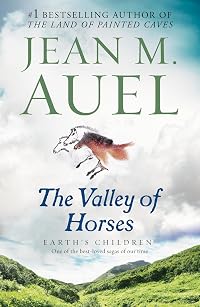
Ayla travels to a hidden valley where she lives with a herd of steppe horses, and rescues Jondalar, one of the "Others", from certain death.Tags
Recommendations


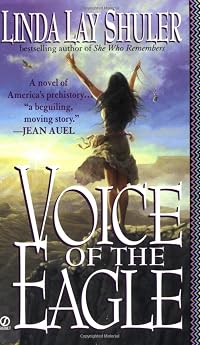
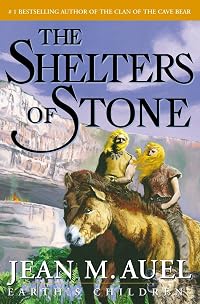

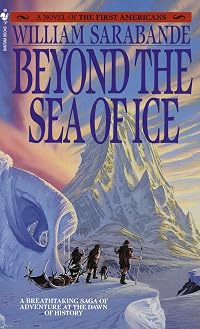
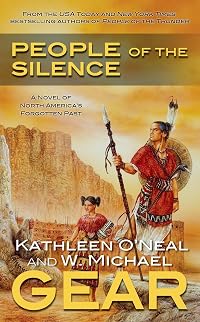




Member Recommendations

Member Reviews
Когато излиза, тази поредица е хвалена като уникален поглед в битието на предците ни и даже получава няколко награди. Защо, не мога да кажа.
Въпреки сносните си литературни качества като (главно) младежко четиво, описанията на живота и бита на хората от палеолита влизат в разрез с практически всеки научен факт, който знаем за тях. Като се започне от храната, която ядат, през предметите, които ползват, до show more общуването и племенния живот, авторката представя една идеализирана, романтична представа, очевидно повлияна от поколения натрупани в съзнанието й митове за "благородния дивак".
Фактите от археологията и антропологията обаче сочат, че хората от палеолита нито са се хранили със зърнени храни, нито са имали голямо разнообразие от методи за приготвяне на храна, нито са изработвали и притежавали много и сложни сечива и предмети на изкуството, нито са опитомявали животни. Не са и имали широка междуплеменна социална мрежа, а напротив - били са войнствени и канибали, със смъртност на мъжете от насилие стигаща до 40%. Като цяло, авторката им приписва сложност и изкусност на бита, каквито човешкият вид придобива едва стотици хилядолетия по-късно, на съвсем различен цивилизационен етап.
Описанието на неандерталците като примитивни полумаймуни може да се преглътне, защото книгата е писана преди потвърждаването на хипотезата, че са били всъщност по-интелигентни от Homo Sapiens. show less
Въпреки сносните си литературни качества като (главно) младежко четиво, описанията на живота и бита на хората от палеолита влизат в разрез с практически всеки научен факт, който знаем за тях. Като се започне от храната, която ядат, през предметите, които ползват, до show more общуването и племенния живот, авторката представя една идеализирана, романтична представа, очевидно повлияна от поколения натрупани в съзнанието й митове за "благородния дивак".
Фактите от археологията и антропологията обаче сочат, че хората от палеолита нито са се хранили със зърнени храни, нито са имали голямо разнообразие от методи за приготвяне на храна, нито са изработвали и притежавали много и сложни сечива и предмети на изкуството, нито са опитомявали животни. Не са и имали широка междуплеменна социална мрежа, а напротив - били са войнствени и канибали, със смъртност на мъжете от насилие стигаща до 40%. Като цяло, авторката им приписва сложност и изкусност на бита, каквито човешкият вид придобива едва стотици хилядолетия по-късно, на съвсем различен цивилизационен етап.
Описанието на неандерталците като примитивни полумаймуни може да се преглътне, защото книгата е писана преди потвърждаването на хипотезата, че са били всъщност по-интелигентни от Homo Sapiens. show less
Despite there being many problems with The Clan of the Cave Bear, the book ended on something of a cliff hanger and was interesting enough that I had to go ahead and pick up the sequel. The Valley of the Horses begins right after Clan of the Cave Bear ends, so I'll try not to get into too many details but keep in mind that there will be spoilers ahead.
The first half of the book is split between Ayla's and Jondalar's point of views. Ayla finds her own cave and is surviving alone, finding comfort only by taking in stray infant animals and caring for them. Jondalar meanwhile leaves his tribe by going on a journey with his brother, meeting up with several other tribe and having various encounters. The result is that the first half of the show more book dragged for me (it wasn't until Ayla and Jondalar FINALLY met each other that the pace picked up), and because Ayla is alone and Jondalar spends only short periods of time with any group of people, you don't get an in-depth look at any one culture as you did in Clan of the Cave Bear.
What you do get though is a brief looks at a variety of the Others (as Jondalar's people are described by the Cave Bear Clan), seeing how there is a mixture of perspectives and societies with different survival innovations — something you never saw among the Cave Bear Clan because of the problematic concept of racial memory. Auel also presents how the Others view the Clan as nothing more than animals. It's interesting, because for all that the Jondalar's peoples are good hearted with complex cultures, they are seen and stupidly and profoundly ignorant when it comes to the Cave Bear Clan. Their hatred is revealed to be illogical, especially when Ayla begins to reveal their humanity as she describes the Clan culture to Jondalar. It's an interesting complexity in terms of racial discussions, because for all that you want to like Jondalar's peoples, their clear racism against the Clan is disturbing, especially if you have read the first book first and grown attached to the Clan characters. So, the discussion of race in the sequel is still problematic, but at least it's an interesting problematic that opens potential for discussion.
And again this book, like the first, has some head scratching geographical and biological anomalies to it. Did buffaloes and antelopes and hyenas and wooly rhinos and horses and cave lions and mammoths all ever mix in the same location? I don't know, but I don't think so.
Another thing that had me wondering was the whole free love approach to sex that the author presents. Sex is a gift of Pleasures from the Mother and should be delighted in to honor her? Um. I'm not opposed to the idea per se, but I'm not convinced that the peoples were quite so free wheeling about that sort of thing back then. Maybe, but... Anyway, I guess despite the author's supposed research she can have her "historical" society be anyway she wants.
The character Jondalar is amusing, too, because he brings a Romance Novel aspects into the storyline that wasn't present in the first book. I remember a discussion with my college friends, when one said something like, "I know the book is totally ridiculous, but I still kind of want my own Jondalar." I can understand why. He's meant to be the perfect man, handsome, strong, tall, kind-hearted, giving in life and in love, and the perfect lover (remember what I said about the Pleasures), and of course the only person perfect enough for him to fall in love with is.... guess.
Oh! And there's the Shamud, a holy person of one of the tribes that Jondalar meets. The Shamud was interesting because the Shamud was presented as a male with the desires of a woman or a woman with the desires of a male. Jondalar keeps trying to guess which gender the Shamud is, but finally gives up under the assumption that it doesn't matter. The Shamud is powerful because of the lack of assigned gender, and is respected. Though I'm sure the portrayal isn't entirely without problems, I liked the Shamud character and how the author managed to skillfully avoid assigning gender pronouns, so that the character can remain both human and gender neutral.
Anyway, despite a lingering curiosity about what happens to Jondalar and Ayla now, the whole thing is pretty ridiculous and I think I'm pretty much done with this series, especially if the next book is going to be as slow going as the beginning of this one was. show less
The first half of the book is split between Ayla's and Jondalar's point of views. Ayla finds her own cave and is surviving alone, finding comfort only by taking in stray infant animals and caring for them. Jondalar meanwhile leaves his tribe by going on a journey with his brother, meeting up with several other tribe and having various encounters. The result is that the first half of the show more book dragged for me (it wasn't until Ayla and Jondalar FINALLY met each other that the pace picked up), and because Ayla is alone and Jondalar spends only short periods of time with any group of people, you don't get an in-depth look at any one culture as you did in Clan of the Cave Bear.
What you do get though is a brief looks at a variety of the Others (as Jondalar's people are described by the Cave Bear Clan), seeing how there is a mixture of perspectives and societies with different survival innovations — something you never saw among the Cave Bear Clan because of the problematic concept of racial memory. Auel also presents how the Others view the Clan as nothing more than animals. It's interesting, because for all that the Jondalar's peoples are good hearted with complex cultures, they are seen and stupidly and profoundly ignorant when it comes to the Cave Bear Clan. Their hatred is revealed to be illogical, especially when Ayla begins to reveal their humanity as she describes the Clan culture to Jondalar. It's an interesting complexity in terms of racial discussions, because for all that you want to like Jondalar's peoples, their clear racism against the Clan is disturbing, especially if you have read the first book first and grown attached to the Clan characters. So, the discussion of race in the sequel is still problematic, but at least it's an interesting problematic that opens potential for discussion.
And again this book, like the first, has some head scratching geographical and biological anomalies to it. Did buffaloes and antelopes and hyenas and wooly rhinos and horses and cave lions and mammoths all ever mix in the same location? I don't know, but I don't think so.
Another thing that had me wondering was the whole free love approach to sex that the author presents. Sex is a gift of Pleasures from the Mother and should be delighted in to honor her? Um. I'm not opposed to the idea per se, but I'm not convinced that the peoples were quite so free wheeling about that sort of thing back then. Maybe, but... Anyway, I guess despite the author's supposed research she can have her "historical" society be anyway she wants.
The character Jondalar is amusing, too, because he brings a Romance Novel aspects into the storyline that wasn't present in the first book. I remember a discussion with my college friends, when one said something like, "I know the book is totally ridiculous, but I still kind of want my own Jondalar." I can understand why. He's meant to be the perfect man, handsome, strong, tall, kind-hearted, giving in life and in love, and the perfect lover (remember what I said about the Pleasures), and of course the only person perfect enough for him to fall in love with is.... guess.
Oh! And there's the Shamud, a holy person of one of the tribes that Jondalar meets. The Shamud was interesting because the Shamud was presented as a male with the desires of a woman or a woman with the desires of a male. Jondalar keeps trying to guess which gender the Shamud is, but finally gives up under the assumption that it doesn't matter. The Shamud is powerful because of the lack of assigned gender, and is respected. Though I'm sure the portrayal isn't entirely without problems, I liked the Shamud character and how the author managed to skillfully avoid assigning gender pronouns, so that the character can remain both human and gender neutral.
Anyway, despite a lingering curiosity about what happens to Jondalar and Ayla now, the whole thing is pretty ridiculous and I think I'm pretty much done with this series, especially if the next book is going to be as slow going as the beginning of this one was. show less
I loved this book. It is just mesmerizing watching Ayla learn and discover all of these tools and skills just from the natural world around her. Her relationship with the animals, her ways of communicating, and her knowledge of plants feels so remarkable in todays context.
I am utterly impressed with the way The author created this prehistoric egalitarian society. there were some gendered norms but they were not strict and they were not valued any less. The spirituality piece was beautiful - how it centered Motherhood and also celebrated sex and Pleasure - and even more beautiful when Jondalar’s spirituality was combined with Ayla’s Clan/Cave Bear spirituality
The tension and othering around the Clan people and the new human people show more was also fascinating. show less
I am utterly impressed with the way The author created this prehistoric egalitarian society. there were some gendered norms but they were not strict and they were not valued any less. The spirituality piece was beautiful - how it centered Motherhood and also celebrated sex and Pleasure - and even more beautiful when Jondalar’s spirituality was combined with Ayla’s Clan/Cave Bear spirituality
The tension and othering around the Clan people and the new human people show more was also fascinating. show less
Spoilers only if you haven't read publisher summary/back of the book.
This honestly sits between two and four stars for me, and I had a similar ambivalence toward The Clan of the Cave Bear. As with the first book, there are many, many, many passages that are chockfull of anthropological detail and that is either a blessing or a curse, depending on the reader's mindset. What is positive is that Ayla gets a lot more character definition here simply by spending a few years by herself--we learn of her survival and adaptation and in so doing, get to know here more as a character, rather than a symbol of human development. But there are places where it starts to feel like a field guide to surviving alone in a cave, and this can be tedious if show more making fire with flint and dehydrating meat aren't your favorite pastimes.
The first 300 pages (or so) feature two storylines, and if you read the back cover blurb, you know that they will at some point join each other. This expectation marred the book for me somewhat as 300 pages was too long to wait, but not long enough for me to care enough about the characters other than Ayla. This isn't necessarily a fault of the book, but I wish I hadn't read the blurb. What's more, when the two storylines do...merge....there is, well... A LOT of sex. All of a sudden Call of the Wild turns into a Harlequin Romance. Seemingly, when not hunting, copulation is the no. 1 choice of activity. I'm not bothered by the vivid descriptions as much as it becomes the substantial narrative of the book and distracts from the far more interesting struggle of Ayla's sense of cultural identity. This struggle, through conversation with Jondalar, was for me, the most interesting part of the book, and the commentary on racism and bigotry, although rather obvious, is important for our historical and present consciousness.
The book could be shorter to be sure...trying to maintain the narrative of a journey in one storyline, and a survival epic in another, is a challenge. There are multiple tribes of folks to keep track of, and Auel describes everything with assiduous detail. Just as you get hooked on the secondary storyline, however, she whisks you back to "meanwhile...back at the ranch..", ok....cave. If you really enjoyed Clan of the Cave Bear, this is a worthwhile sequel. Ultimately, however, it tries to be a lot of different things, and not always successfully. I'm intrigued enough to read The Mammoth Hunters in the hope that it gets more into the anthropological differences and socialization aspects promised by the preview. But ultimately, not every book has to be a "saga" and I feel the self-conscious attempts by the author to be "epic" diminish a lot of what is valuable in these books. show less
This honestly sits between two and four stars for me, and I had a similar ambivalence toward The Clan of the Cave Bear. As with the first book, there are many, many, many passages that are chockfull of anthropological detail and that is either a blessing or a curse, depending on the reader's mindset. What is positive is that Ayla gets a lot more character definition here simply by spending a few years by herself--we learn of her survival and adaptation and in so doing, get to know here more as a character, rather than a symbol of human development. But there are places where it starts to feel like a field guide to surviving alone in a cave, and this can be tedious if show more making fire with flint and dehydrating meat aren't your favorite pastimes.
The first 300 pages (or so) feature two storylines, and if you read the back cover blurb, you know that they will at some point join each other. This expectation marred the book for me somewhat as 300 pages was too long to wait, but not long enough for me to care enough about the characters other than Ayla. This isn't necessarily a fault of the book, but I wish I hadn't read the blurb. What's more, when the two storylines do...merge....there is, well... A LOT of sex. All of a sudden Call of the Wild turns into a Harlequin Romance. Seemingly, when not hunting, copulation is the no. 1 choice of activity. I'm not bothered by the vivid descriptions as much as it becomes the substantial narrative of the book and distracts from the far more interesting struggle of Ayla's sense of cultural identity. This struggle, through conversation with Jondalar, was for me, the most interesting part of the book, and the commentary on racism and bigotry, although rather obvious, is important for our historical and present consciousness.
The book could be shorter to be sure...trying to maintain the narrative of a journey in one storyline, and a survival epic in another, is a challenge. There are multiple tribes of folks to keep track of, and Auel describes everything with assiduous detail. Just as you get hooked on the secondary storyline, however, she whisks you back to "meanwhile...back at the ranch..", ok....cave. If you really enjoyed Clan of the Cave Bear, this is a worthwhile sequel. Ultimately, however, it tries to be a lot of different things, and not always successfully. I'm intrigued enough to read The Mammoth Hunters in the hope that it gets more into the anthropological differences and socialization aspects promised by the preview. But ultimately, not every book has to be a "saga" and I feel the self-conscious attempts by the author to be "epic" diminish a lot of what is valuable in these books. show less
Valley of the Horses by Jean Auel introduces two main characters, each surviving adversity in the wild, while weaving in an on-again, off-again romance. Like Clan of the Cave Bear, the detailed passages on hunting, gathering, and early technologies will fascinate readers interested in prehistoric life, while those drawn to romance may find this book even more engaging than the first. What stayed with me most was the introduction of new prehistoric cultures and technologies — a sense of progression into more advanced civilizations. Auel continues her strong themes of loneliness, cultural intersections, and her remarkable depth of research into prehistoric life. Where it faltered for me was in the frequent and in-depth sex scenes, which show more I didn’t enjoy and tended to skim. Overall, I would recommend it to fans of historical fiction, archaeology, and cross-cultural storytelling — and now also to readers who enjoy romance. show less
In the second of Auel's Earth's Children series, Ayla travels in hopes of finding her own people. She meets up with Jondalar, a young man of the others who is likewise traveling. The research for these books is fantastic, it is too bad that Auel made it into chick lit by adding too much explicit sex and the deflowerings. She also makes Ayla just a little too inventive to be realistic, but I think this was supposed to have symbolic meaning.
What a lonely existence, luckily we've got a historical Dr Dolittle on our hands. A lot of history and description with fantastical elements -- It's entertaining enough, and I get that humans are pretty adaptable and constantly come up with ideas, but wow. Ayla and Jondalar are apparently some kind of mythical beings.
Members
- Recently Added By
Lists

Historical Fiction
889 works; 91 members

Female Protagonist
1,076 works; 57 members
Female Author
1,234 works; 67 members

Carole's List
445 works; 13 members
Animals in the Title
498 works; 11 members

Prehistoric Peoples and Animals
10 works; 3 members

Books Read in 2019
4,052 works; 108 members

Books Read in 2001
199 works; 4 members

Blue Pyramid 1,276 Best Books of All Time
1,248 works; 32 members
Author Information

31+ Works 50,331 Members
Jean Auel was born on February 18, 1936. For many years Auel considered herself a closet poet, writing in her spare time. She came up with an idea for a short story about a girl who lives with people who are unlike her. This short-story idea became the successful novel, "The Clan of the Cave Bear." Auel's considerable research for the novel show more included field trips to archeological digs that enable her to provide an accurate depiction of humans living in with nature. The cave dweller topic interested many readers, and Auel wrote several additional books. Together, these works comprise the Earth's Children Series. Auel's writing style draws the reader into exciting speculation about prehistoric earth and its adventures. (Bowker Author Biography) show less
Some Editions
Awards and Honors
Distinctions
Notable Lists
Series

Belongs to Publisher Series
Heyne Allgemeine Reihe (6658)
Work Relationships
Is contained in
Earth's Children 1-3 (The Clan of the Cave Bear; The valley of horses; The mammoth hunters) by Jean M. Auel
Jean M. Auel's the Earth's Children: The Clan of the Cave Bear, the Valley of Horses, the Mammoth Hunters, the Plains of Passage Earth's Children #1-4 by Jean M. Auel
Common Knowledge
- Canonical title*
- De vallei van de paarden
- Original title
- The Valley of Horses: A Novel
- Alternate titles*
- De tocht naar de Anderen
- Original publication date
- 1982-07-30
- People/Characters
- Ayla; Jondalar; Thonolan
- Important places
- Prehistoric Europe; Ukraine (prehistoric); The Danube; Hungary (prehistoric); Romania (prehistoric)
- Important events
- Prehistoric Age; Caenozoic Era; Pleistocene Epoch (Ice Age); Würm glaciation
- Dedication
- For KAREN,
who read the first draft of both,
and for ASHER
with Love - First words
- She was dead.
- Last words
- (Click to show. Warning: May contain spoilers.)"They are smiling at me."
- Publisher's editor
- Prashker, Betty
- Blurbers
- Down, Fred
- Original language
- English US
- Canonical DDC/MDS
- 813.54
*Some information comes from Common Knowledge in other languages. Click "Edit" for more information.
Classifications
- Genres
- Fiction and Literature, General Fiction, Historical Fiction, Fantasy, Romance
- DDC/MDS
- 813.54 — Literature & rhetoric American literature in English American fiction in English 1900-1999 1945-1999
- LCC
- PS3551 .U36 .V3 — Language and Literature American literature American literature Individual authors 1961-
- BISAC
Statistics
- Members
- 9,065
- Popularity
- 1,187
- Reviews
- 129
- Rating
- (3.80)
- Languages
- 19 — Catalan, Czech, Danish, Dutch, English, Estonian, Finnish, French, German, Hebrew, Hungarian, Italian, Norwegian (Bokmål), Norwegian, Portuguese, Russian, Slovenian, Spanish, Swedish
- Media
- Paper, Audiobook, Ebook
- ISBNs
- 144
- UPCs
- 1
- ASINs
- 64