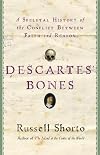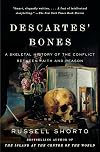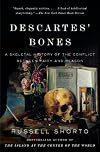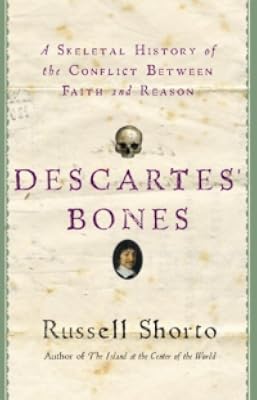
Descartes' Bones: A Skeletal History of the Conflict between Faith and Reason
by Russell Shorto
On This Page
Description
The best-selling author of The Island at the Center of the World chronicles the more than three-hundred-year debate between religion and science as revealed through the long and momentous odyssey of the skeletal remains of French philosopher René Descartes, creator of the famous phrase "I think, therefore I am."Tags
Recommendations
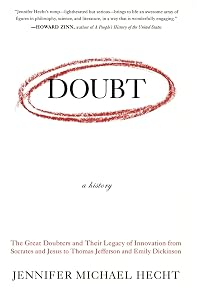
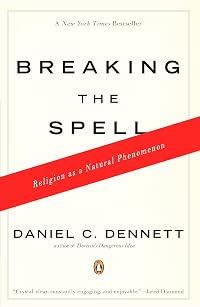
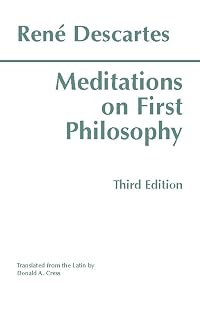
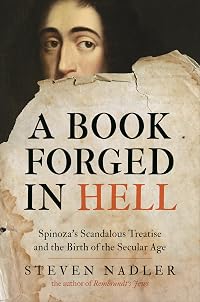
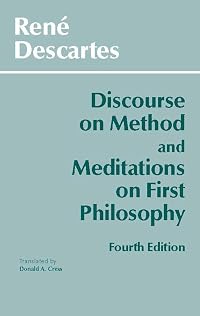
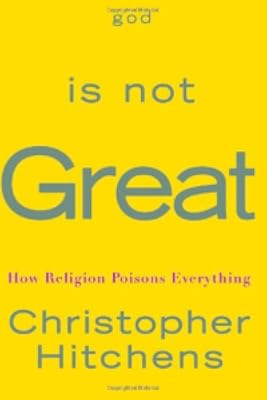
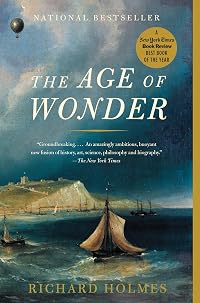
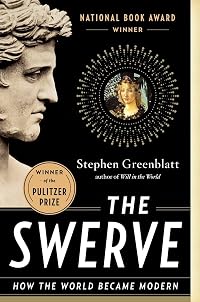






Member Recommendations

Sandydog1 Another beautifully written, rambling account of science, religion, natural history and discovery, albeit perhaps a couple years earlier.
Member Reviews
This surprisingly readable tale leverages the tale of Descarte’s bones as a framework upon which to hang an engaging exploration of how Descarte’s rationalist philosophy laid the groundwork for today’s modernism. For those of you who I just lost at “rationalist philosophy,” please bear with me! For this book is really more history than philosophy, told in a way that most people should find readable and diverting.
Come on, think back … remember that “Intro to Philosophy” class you took in college? Descartes, the father of Cartesian rationalism? Mr. “I think, therefore I am?” Remember your professor trying to explain how this simple statement was like a bomb dropped on medieval Europe, advocating as it did the show more assertion that humans should base their beliefs on their own perception rather than divine revelation? Forever pissing off churches but leading to the adoption of true observation-based scientific discovery? The guy who Cartesian planes in math are named after? Yeah … that guy!
I should have as many adventures in my life as the mortal remains of Rene Descarte! Between repeated interments and disinterments, his bones passed through the hands of queens, intellectuals, poets, mercenaries, French revolutionaries, painters, and promoters. What Shorto does is flesh out (sorry, couldn't resist!) the stories surrounding these postmortem meanderings, building the case that Descarte's bones travelled on a path that paralleled many of the most pivotal historical debates over reason vs. religion, debates which laid the groundwork for modern-day rationality.
Yes, I agree with other critics that Shorto strains a bit in his attempts to relate the bones to the story he really wants to tell. And since I didn’t actually take “Intro to Philosophy,” I’m in no position to quibble with folks who claim Shorto has overstated Descarte’s role in the evolution of modern empirical thought. However, I found this to be a fairly thorough and entertaining exploration of the evolution of rational thought from its stormy beginnings in the 17th century to modern times, including its influence on science, medicine, politics, philosophy and religion along the way. Neither light enough for beach reading nor heavy enough to pass as scholarship, but illuminating and worthwhile for all that. show less
Come on, think back … remember that “Intro to Philosophy” class you took in college? Descartes, the father of Cartesian rationalism? Mr. “I think, therefore I am?” Remember your professor trying to explain how this simple statement was like a bomb dropped on medieval Europe, advocating as it did the show more assertion that humans should base their beliefs on their own perception rather than divine revelation? Forever pissing off churches but leading to the adoption of true observation-based scientific discovery? The guy who Cartesian planes in math are named after? Yeah … that guy!
I should have as many adventures in my life as the mortal remains of Rene Descarte! Between repeated interments and disinterments, his bones passed through the hands of queens, intellectuals, poets, mercenaries, French revolutionaries, painters, and promoters. What Shorto does is flesh out (sorry, couldn't resist!) the stories surrounding these postmortem meanderings, building the case that Descarte's bones travelled on a path that paralleled many of the most pivotal historical debates over reason vs. religion, debates which laid the groundwork for modern-day rationality.
Yes, I agree with other critics that Shorto strains a bit in his attempts to relate the bones to the story he really wants to tell. And since I didn’t actually take “Intro to Philosophy,” I’m in no position to quibble with folks who claim Shorto has overstated Descarte’s role in the evolution of modern empirical thought. However, I found this to be a fairly thorough and entertaining exploration of the evolution of rational thought from its stormy beginnings in the 17th century to modern times, including its influence on science, medicine, politics, philosophy and religion along the way. Neither light enough for beach reading nor heavy enough to pass as scholarship, but illuminating and worthwhile for all that. show less
I loved this book. It's great when an author can weave a narrative through something physical to show something larger. This goes through philosophy in Europe, as expected, but also several individual's lives, the French Revolution, and the Scientific Revolution. I enjoyed this a lot, and hope to find more books by the author, or books like this.
Descartes is a subject near and dear to my heart . The book is an interesting examination of the battle over one man's bones long after he was gone, illustrating how his ideas had changed the world, inciting both adoration and hatred still, 350 years after his death. He tried to appease the establishment, left no great fortune and his only child died, but if anyone doubts that one man can change the course of history, the proof is in Russell Shorto's fascinating little book.
This is a delightful book. It uses the curious history to tell the story of several episodes in the development of Modern thought, and to relate this into a broader theme about the struggle between faith and reason through to contemporary society. The book excels in a few key areas.
First, it uses the central thread well. It is a fascinating story on its own, and it ties nicely into his central theme. This book structure can lend itself to books where the central unifying story doesn't really support the full range of stories the author wants to tell, but that is not the case here. The fate of Descartes' bones is both interesting in its own right, and sufficiently relevant to the more central themes to work as the central pillar of the show more book.
Second, Shorto does an able job with the philosophy. As an academic philosopher myself, I was prepared to be disappointed by sloppy descriptions of Descartes ideas. However, I found that Shorto presented them in a clear way, where the simplifications did not distort Descartes actual views (aside from one bit, see below). A reader with little familiarity with Descartes ideas would come out with a good grasp of the key ideas, and how they tie into the more general story.
Third, the book is well written. It moves crisply through lots of historical episodes without slowing down over the large cast of characters or all of the historical details. It is a breezy, but quite informative read.
There were two areas I felt the book came up a bit short. First, the culminating chapters, where Short engages the faith vs reason theme directly, were not particularly well developed. For example, the second major fault he identifies with Enlightenment ideas is that an overemphasis on reason limits the set of possible explanations that one might offer or need to understand reality. Ignoring religion, he suggests, is a form of intolerance. This may be true, but it is a pretty heavy idea to simply baldly assert. Enlightenment-sympathetic thinkers might simply argue that it is not intolerance to reject modes of explanation which do not provide us with access to the truth. The whole point hinges on the assumption that religion is a good way to understand the world and puzzles like dualism, and that is never really addressed.
Similarly, the final discussion of the mind-body problem are abrupt, and offer very little guidance. Shorto ends on a rather poetic note about all of us solving the mind-body problem on our own (or trying to) and Descartes' ideas from "The Passions of the Soul." While Shorto mentions the idea of there being an encoding of mind and body in the passions, this is hardly a helpful idea without some explanation. Descartes' substance dualism renders direct interaction mysterious. Simply pointing to our emotions as a solution carries rhetorical weight, but it is not an explanation, nor does it add any clarity.
This ties into the second concern I had about the book, which was the occasional flights into rhetorical fancy. The closing discussion of emotion is one. The bit about death is another such example. He notes that death is "why we write poetry, why sex thrills us." Really? Sex thrills us *because* of death? Not because we have evolved to enjoy sexual pleasure because it better enables us to pass on our genes? While one might offer a thoughtful exploration of how the recognition of the possibility of death leads us to savor life experiences, this is a far cry from saying death is the explanation for phenomena like this. I suspect that Shorto is caught up in a nice rhetorical flourish, regardless of whether it is true or not.
Despite these criticisms, the book is ultimately a strong one and is well recommended. Anyone interested in Descartes or Modern thought would find this a pleasurable and informative read. show less
First, it uses the central thread well. It is a fascinating story on its own, and it ties nicely into his central theme. This book structure can lend itself to books where the central unifying story doesn't really support the full range of stories the author wants to tell, but that is not the case here. The fate of Descartes' bones is both interesting in its own right, and sufficiently relevant to the more central themes to work as the central pillar of the show more book.
Second, Shorto does an able job with the philosophy. As an academic philosopher myself, I was prepared to be disappointed by sloppy descriptions of Descartes ideas. However, I found that Shorto presented them in a clear way, where the simplifications did not distort Descartes actual views (aside from one bit, see below). A reader with little familiarity with Descartes ideas would come out with a good grasp of the key ideas, and how they tie into the more general story.
Third, the book is well written. It moves crisply through lots of historical episodes without slowing down over the large cast of characters or all of the historical details. It is a breezy, but quite informative read.
There were two areas I felt the book came up a bit short. First, the culminating chapters, where Short engages the faith vs reason theme directly, were not particularly well developed. For example, the second major fault he identifies with Enlightenment ideas is that an overemphasis on reason limits the set of possible explanations that one might offer or need to understand reality. Ignoring religion, he suggests, is a form of intolerance. This may be true, but it is a pretty heavy idea to simply baldly assert. Enlightenment-sympathetic thinkers might simply argue that it is not intolerance to reject modes of explanation which do not provide us with access to the truth. The whole point hinges on the assumption that religion is a good way to understand the world and puzzles like dualism, and that is never really addressed.
Similarly, the final discussion of the mind-body problem are abrupt, and offer very little guidance. Shorto ends on a rather poetic note about all of us solving the mind-body problem on our own (or trying to) and Descartes' ideas from "The Passions of the Soul." While Shorto mentions the idea of there being an encoding of mind and body in the passions, this is hardly a helpful idea without some explanation. Descartes' substance dualism renders direct interaction mysterious. Simply pointing to our emotions as a solution carries rhetorical weight, but it is not an explanation, nor does it add any clarity.
This ties into the second concern I had about the book, which was the occasional flights into rhetorical fancy. The closing discussion of emotion is one. The bit about death is another such example. He notes that death is "why we write poetry, why sex thrills us." Really? Sex thrills us *because* of death? Not because we have evolved to enjoy sexual pleasure because it better enables us to pass on our genes? While one might offer a thoughtful exploration of how the recognition of the possibility of death leads us to savor life experiences, this is a far cry from saying death is the explanation for phenomena like this. I suspect that Shorto is caught up in a nice rhetorical flourish, regardless of whether it is true or not.
Despite these criticisms, the book is ultimately a strong one and is well recommended. Anyone interested in Descartes or Modern thought would find this a pleasurable and informative read. show less
Descartes’ Bones, by Russell Shorto, takes the reader on an interesting and compelling journey through 400 years of history in search of the true final resting place of Rene’ Descartes, the man arguably responsible for the advent of modern scientific inquiry. Told within the framework of the many travels of the great philosopher’s bones throughout Europe, from his death in Sweden in 1650 until his skull’s current resting place at the Museum of Man in Paris, Shorto recounts how his life and work have been interpreted throughout the centuries, engendering ideas that have shaped the very fabric of Western Civilization.
The author is one of those rare history writers who have a gift for making their subjects come alive. With wit and show more a keen ear for suspense a la Dan Brown, he traces the story of Descartes’ post mortem journey in such a way that keeps his reader both engaged and entertained. Shorto presents the past the way it should be – full of interesting characters and intriguing stories Great events like the French Revolution are illuminated as more than simply the sum of dry dates and dusty facts, but seminal events that happened within the context of continent-wide changes in the way mankind viewed himself and his place in the world. Through Shorto’s superb storytelling skills and his extensive historical knowledge, the reader comes away from this book with a good understanding along with a better appreciation of Descartes’ impact on his world and his continuing influence today. show less
The author is one of those rare history writers who have a gift for making their subjects come alive. With wit and show more a keen ear for suspense a la Dan Brown, he traces the story of Descartes’ post mortem journey in such a way that keeps his reader both engaged and entertained. Shorto presents the past the way it should be – full of interesting characters and intriguing stories Great events like the French Revolution are illuminated as more than simply the sum of dry dates and dusty facts, but seminal events that happened within the context of continent-wide changes in the way mankind viewed himself and his place in the world. Through Shorto’s superb storytelling skills and his extensive historical knowledge, the reader comes away from this book with a good understanding along with a better appreciation of Descartes’ impact on his world and his continuing influence today. show less
The author uses the story of Descartes' bones as a metaphor for the divisive and rambling path toward human progress. The use of Descartes' bones in this way is doubly clever because not only is the physical path of the bones mysterious and controversial; Descartes' philosophy of questioning received wisdom had its own controversy with traditional thinking. The book follows the history of The Enlightenment through to today's three-way tension between moderates, religious fundamentalist, and secular fundamentalist. Ironically, there is enough traditional 16th Century thinking in Descartes' writing to allow all sides in the later controversies to claim him, and this is paralleled by the multiple conflicting claims of possessing his bones. show more
The meaning of Descartes' most famous quotation is discussed early in the book:
"As philosophers since have pointed out, "I think, Therefore I am," or "Je pense, donc je suis," or "Cogito, ergo sum," does not fully encompass what Descartes intended. Once the acid of his methodological doubt had eaten its way through everything else, what he was left with was not, technically, even an "I" but merely the realization that there was thinking going on. More correct than "I think, therefore I am" would be "Thinking is taking place, therefore there must be that which thinks." but that hardly has the snap to make it a slogan fit for generations of T-shirts and cartoon panels."
The following is a portion of the book's discussion of the controversies related to mind/body separation:
"There was then, as there is now, what might be termed a liberal-conservative divide in attempts to resolve the problem. Put another way, there is a connection between the esoteric efforts to tackle dualism and the sorts of real-world battles that fill newspapers and occupy TV talk shows. Those on the left have tended to accept the seeming consequences of equating mind and brain: if it means that basic features of society --- the self, religion, marriage, moral systems --- need to be reconstructed along new lines, so be it. .... The point is not that mind-equals-brain requires one to hold particular positions on these topics but that it allows for a wide range of moral speculations. The "conservative" stance has been to fight to keep "mind" separate from "body" --- to preserve the status quo, whether in matters of religion, the family, or the self, to maintain that there is an eternal, unchanging basis of values. With regard to Descartes, the irony is that the man who was once seen as the herald of the modern program, the breaker of all icons and traditions, had by the nineteenth century become part of the conservative argument, the man who built a protective wall around the eternal verities, keeping them from the corrosive forces of modernity."
The following is a portion of the author's advocacy for a middle way:
"In these pages I have taken up Johathan Israel's thesis that there was a three-way division that came into being as modernity matured. There was the theological camp, which held on to a worldview grounded in religious tradition; the "Radical Enlightenment" camp, which in the advent of the "new philosophy," wanted to overthrow the old order, with its centers of power in the church and the monarch, and replace it with a society ruled by democracy and science; and the moderate Enlightenment camp, which subdivided into many factions but which basically took a middle position, arguing that the scientific and religious worldviews aren't truly inconsistent but that perceived conflicts have to be sorted out." .... If there is a solution to the dilemma of modernity, surely it lies in bringing the two wings into the middle, which is where most people live."
The following is an insightful quotation from the book that caught my attention:
"We are graced with a godlike ability to transcend time and space in our minds but are chained to death. The result is a nagging need to find meaning. This is where the esoteric "mind-body problem" of philosophy professors becomes meaningful to us all, where it translates into tears and laughter."
The following is an example of clever use of words in telling the story of the French Academy's decision regarding the genuineness of the skull that was purported to be Decartes':
"They had applied their doubts to the very head that had introduced doubt as a tool for advancing knowledge. And in the end they gave the head a nod."
The book provides a refreshing and civil discussion of philosophic debates. Weaving the story of Descartes' bones into the narrative makes the otherwise dry subject of philosophy an interesting read. show less
The meaning of Descartes' most famous quotation is discussed early in the book:
"As philosophers since have pointed out, "I think, Therefore I am," or "Je pense, donc je suis," or "Cogito, ergo sum," does not fully encompass what Descartes intended. Once the acid of his methodological doubt had eaten its way through everything else, what he was left with was not, technically, even an "I" but merely the realization that there was thinking going on. More correct than "I think, therefore I am" would be "Thinking is taking place, therefore there must be that which thinks." but that hardly has the snap to make it a slogan fit for generations of T-shirts and cartoon panels."
The following is a portion of the book's discussion of the controversies related to mind/body separation:
"There was then, as there is now, what might be termed a liberal-conservative divide in attempts to resolve the problem. Put another way, there is a connection between the esoteric efforts to tackle dualism and the sorts of real-world battles that fill newspapers and occupy TV talk shows. Those on the left have tended to accept the seeming consequences of equating mind and brain: if it means that basic features of society --- the self, religion, marriage, moral systems --- need to be reconstructed along new lines, so be it. .... The point is not that mind-equals-brain requires one to hold particular positions on these topics but that it allows for a wide range of moral speculations. The "conservative" stance has been to fight to keep "mind" separate from "body" --- to preserve the status quo, whether in matters of religion, the family, or the self, to maintain that there is an eternal, unchanging basis of values. With regard to Descartes, the irony is that the man who was once seen as the herald of the modern program, the breaker of all icons and traditions, had by the nineteenth century become part of the conservative argument, the man who built a protective wall around the eternal verities, keeping them from the corrosive forces of modernity."
The following is a portion of the author's advocacy for a middle way:
"In these pages I have taken up Johathan Israel's thesis that there was a three-way division that came into being as modernity matured. There was the theological camp, which held on to a worldview grounded in religious tradition; the "Radical Enlightenment" camp, which in the advent of the "new philosophy," wanted to overthrow the old order, with its centers of power in the church and the monarch, and replace it with a society ruled by democracy and science; and the moderate Enlightenment camp, which subdivided into many factions but which basically took a middle position, arguing that the scientific and religious worldviews aren't truly inconsistent but that perceived conflicts have to be sorted out." .... If there is a solution to the dilemma of modernity, surely it lies in bringing the two wings into the middle, which is where most people live."
The following is an insightful quotation from the book that caught my attention:
"We are graced with a godlike ability to transcend time and space in our minds but are chained to death. The result is a nagging need to find meaning. This is where the esoteric "mind-body problem" of philosophy professors becomes meaningful to us all, where it translates into tears and laughter."
The following is an example of clever use of words in telling the story of the French Academy's decision regarding the genuineness of the skull that was purported to be Decartes':
"They had applied their doubts to the very head that had introduced doubt as a tool for advancing knowledge. And in the end they gave the head a nod."
The book provides a refreshing and civil discussion of philosophic debates. Weaving the story of Descartes' bones into the narrative makes the otherwise dry subject of philosophy an interesting read. show less
Not bad for pop history
Perhaps inspired by the parallel story of the fate of Einstein's brain, Shorto shares with us the somewhat surprising history of the skeleton--in particular, the skull--of Rene Descartes and uses that tale as a springboard for sharing his (Shorto's) thoughts about naturalist versus supernaturalist understandings of the nature of the world and of humanity.
For popular history, this is pretty good. Shorto writes quite well, and handles an intrinsically controversial subject in a way that I thought was eminently fair and even-handed. Still, I found this book less than completely satisfying. The issues Shorto raises are important and interesting ones, but the nature of this book only allows him to address them in a show more superficial way. And the story of Descartes' skeleton, while interesting, is a little too thin to hold the reader's attention for very long. Shorto writes for the New York Times Magazine, and this book does have the feel of an extended feature article, one that was perhaps extended a bit too far. show less
Perhaps inspired by the parallel story of the fate of Einstein's brain, Shorto shares with us the somewhat surprising history of the skeleton--in particular, the skull--of Rene Descartes and uses that tale as a springboard for sharing his (Shorto's) thoughts about naturalist versus supernaturalist understandings of the nature of the world and of humanity.
For popular history, this is pretty good. Shorto writes quite well, and handles an intrinsically controversial subject in a way that I thought was eminently fair and even-handed. Still, I found this book less than completely satisfying. The issues Shorto raises are important and interesting ones, but the nature of this book only allows him to address them in a show more superficial way. And the story of Descartes' skeleton, while interesting, is a little too thin to hold the reader's attention for very long. Shorto writes for the New York Times Magazine, and this book does have the feel of an extended feature article, one that was perhaps extended a bit too far. show less
Members
- Recently Added By
Lists

Books Cited in Digging Up the Dead by Michael Kammen
183 works; 1 member
Author Information

27+ Works 5,132 Members
Russell Shorto, author of the best-selling The Island at the Center of the World, Amsterdam, and Revolution Song, is a contributing writer at the New York Times Magazine. He lives in Cumberland, Maryland.
Awards and Honors
Series
Belongs to Publisher Series
Il cammeo [Longanesi] (515)
Common Knowledge
- Original publication date
- 2008
- People/Characters
- Descartes, René, 1596-1650
- Epigraph
- "what can we bequeath
save our deposèd bodies to the ground?"
--Richard II, iii, 2 - Dedication
- For my mother
- First words
- Philippe Mennecier, the Director of Conservation at the Musée de l'homme, the great anthropology museum in Paris, is a tall, narrow man, thin of hair, with wire-rimmed glasses and the aspect of a bird of prey. (Preface)
On the southern edge of Stockholm's Old Town stands a four-story building that was constructed during the busy, fussy period called the Baroque. - Quotations
- Alla febbre era subentrata la polmonite; il paziente aveva il respiro irregolare, gli occhi erratici. Chanut avrebbe voluto mandare a chiamare il medico di corte, ma Cartesio si era infuriato all’idea. Alla fine Cristina, l... (show all)a ventitreenne regina di Svezia, dal suo palazzo fiabesco al capo opposto dell’isola che formava il centro di Stoccolma, mandò il proprio medico ad assisterlo. Era stata Cristina, insieme a Chanut, che aveva convinto il celebre pensatore a venire al Nord. Il dottore, un olandese di nome Wullen, si avvicinò al letto con riluttanza. Ci fu un alterco feroce in cui il filosofo chiarì con asprezza che riteneva il medico uno stupido. Il culmine si raggiunse quando Wullen propose un salasso, al che il paziente reagì con veemenza esplosiva: “Signori, non sprecate sangue francese!” e ordinò che l’uomo fosse condotto fuori. Wullen se ne andò, disinteressandosi della faccenda e borbottando un verso consolatorio di Orazio piuttosto fatuo: “Chi salva uno contro la sua volontà, fa lo stesso di chi lo uccide”.
Oggi si pensa a Cartesio soprattutto come matematico - l'inventore della geometria analitica - e come colui che ha formulato il problema del dualismo nel pensiero filosofico moderno, secondo cui la mente e i pensieri afferisc... (show all)ono a una categoria diversa o in qualche modo a un piano diverso rispetto a quello del mondo fisico, per cui è impossibile trasferire o comprendere gli uni nei termini dell'altro e viceversa. Sotto questo rispetto Cartesio è stato nel frattempo ridimensionato: oggi l'opinione prevalente nelle neuroscienze è che Cartesio sbagliasse a evocare due sostanze distinte. Mente e corpo - mente e cervello - non sono in realtà sostanzialmente diverse. Questa teoria ha molteplici conseguenze, l'esplorazione delle quali impegna filosofi, linguisti, uomini di fede, informatici e altri.
Ma nel corso della sua vita, e nei decenni che seguirono, Cartesio fu una figura di primissimo piano. I suoi contemporanei lo vedevano come l'uomo che aveva gettato le basi intellettuali dell'intero programma moderno, dove tutto, dalla moralità alla legge alla politica all'organizzazione sociale, si fonda sulla ragione e sulla percezione sociale della ragione. C'è del vero in questa visione dell'influenza di Cartesio. Il suo famoso "metodo" - che comporta la messa in questione degli assunti, il rifiuto delle asserzioni dogmatiche e la costruzione della nostra comprensione del mondo su osservazioni documentabili invece che sulla tradizione - divenne la base del metodo scientifico moderno. Il fatto di non basare più la conoscenza sul principio di autorità (i decreti del re, le pretsedella chiesa) ma su un io dalla nuova autorevolezza - la mente individuale e il suo "buon senso" - divenne il punto di partenza per lo sviluppo della democrazia, della psicologia e di molto altro di ciò che pensiamo moderno.
Molti di noi tendono a pensare che il "moderno" sia un dato, una base comune. E con "moderno" non mi riferisco solo alle grandi cose ad esso collegate - la scienza, la ragione, la democrazia - ma anche tutte le reazioni a que... (show all)sti concetti e alle loro rmaificazioni, dalla poesia romantica ai Sex Pistols, dagli appuntamenti via Internet agli investimenti finanziari ad alto rischio. Nel bene e nel male, tutto questo è in qualche modo unito e collegato a ciò che siamo, e perlopiù ne abbiamo un'opinione positiva. O no? - Last words
- (Click to show. Warning: May contain spoilers.)Then, maybe, members of opposing camps could meet anew, seeking out signs of trust in another person's face.
(Click to show. Warning: May contain spoilers.)There is no room in the records for all the life that must have been packed into the years, but somewhere in its density—the bustling of the inn, clanking tankards of Dutch beer, pipe smoke, leers and tears, song and suffering—lay the solution to Descartes' puzzle, which each of us solves, if we are very lucky. (Epilogue)
Classifications
- Genres
- Philosophy, Nonfiction, General Nonfiction, History, Religion & Spirituality, Biography & Memoir
- DDC/MDS
- 194 — Philosophy & psychology Modern western philosophy Philosophy of France
- LCC
- B1875 .S495 — Philosophy, Psychology and Religion Philosophy (General) By period Modern By region or country
- BISAC
Statistics
- Members
- 897
- Popularity
- 29,898
- Reviews
- 36
- Rating
- (3.70)
- Languages
- 7 — Catalan, Dutch, English, French, Italian, Portuguese, Spanish
- Media
- Paper, Audiobook, Ebook
- ISBNs
- 17
- ASINs
- 7