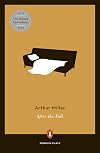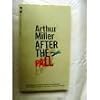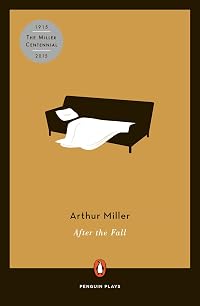
After the Fall
by Arthur Miller
On This Page
Description
Arthur Miller's famous autobiographical drama takes place inside the tortured mind of a 40-year-old lawyer. Quentin is haunted by his disastrous affair with a needy sex symbol - a character rumored to be based on Marilyn Monroe, Miller's second wife. An L.A. Theatre Works full-cast performance featuring Amy Brenneman, Anthony LaPaglia, Amy Pietz, Amy Aquino, Gregory Itzin, Claudette Nevins, Natalija Nogulich, Al Ruscio, Raphael Sbarge and Kenny Williams.Tags
Recommendations





























Member Recommendations
Cain by Lord Byron
by FFortuna
Member Reviews
Quentin, a lawyer, reflects on his two marriages and his current relationship through a running inner monologue throughout the play. It’s a painfully biographical piece, one that mirrors the playwright’s own life. It chronicles the main character's life as her falls in love with a young woman, his marriage ends, and he gets remarried to the young woman who has now become an international star and sex symbol.
The second wife, Maggie, is incredibly troubled, insecure, and jealous. She has a drinking and drug problem and is an obvious parallel for Marilyn Monroe. Their relationship is doomed from the start. They are unhappy together because they can't trust each other.
BOTTOM LINE: The play is so heartbreakingly raw and intimate. Miller show more was working through his own marriage in this play, and that truthfulness adds a layer of depth that fiction often can’t reach. Not an easy play to read, but very real look at the ways we can harm the people we love the most.
“I saw clearly only when I saw with love. Or can one ever remember love? It's like trying to summon up the smell of roses in a cellar. You might see a rose, but never the perfume. And that's the truth of roses, isn't it? — The perfume?” show less
The second wife, Maggie, is incredibly troubled, insecure, and jealous. She has a drinking and drug problem and is an obvious parallel for Marilyn Monroe. Their relationship is doomed from the start. They are unhappy together because they can't trust each other.
BOTTOM LINE: The play is so heartbreakingly raw and intimate. Miller show more was working through his own marriage in this play, and that truthfulness adds a layer of depth that fiction often can’t reach. Not an easy play to read, but very real look at the ways we can harm the people we love the most.
“I saw clearly only when I saw with love. Or can one ever remember love? It's like trying to summon up the smell of roses in a cellar. You might see a rose, but never the perfume. And that's the truth of roses, isn't it? — The perfume?” show less
Quentin is a lawyer at a big firm. He has friends, a wife, daughter and a Communist past he is still trying to come to terms with. He constantly flashbacks to his childhood to hear his parents bickering and flashes forward to listen to his current lover discuss her fear of Nazis. In between we see Quentin's first marriage end, the disintegration of his second marriage to a famous singer, and the fear he and his friends feel when the firm demands that someone names the former Communists among them.
When I began reading this I was aware that Miller had caught a tremendous amount of heat for this play. I can see why. It is self-serving and egotistical in monumental proportions. He might as well have gone ahead and given the characters their show more real names: Quentin is Miller whining endlessly about truth, Maggie is Marilyn Monroe as the "quite stupid, silly kid." And the later lover, calm Holga, is Miller's then wife, Ingeborg Morath, the only female in the play that Miller doesn't portray as impossible to please. If Miller had simply written a play that had a little bit in common with his own life it wouldn't have mattered, but that he chose to write so transparently about his marriage, break-up and death of Marilyn so immediately after her death comes off as exploitation. show less
When I began reading this I was aware that Miller had caught a tremendous amount of heat for this play. I can see why. It is self-serving and egotistical in monumental proportions. He might as well have gone ahead and given the characters their show more real names: Quentin is Miller whining endlessly about truth, Maggie is Marilyn Monroe as the "quite stupid, silly kid." And the later lover, calm Holga, is Miller's then wife, Ingeborg Morath, the only female in the play that Miller doesn't portray as impossible to please. If Miller had simply written a play that had a little bit in common with his own life it wouldn't have mattered, but that he chose to write so transparently about his marriage, break-up and death of Marilyn so immediately after her death comes off as exploitation. show less
This play feels like an extended psychotherapy session on Arthur Miller’s relationship with women and his parents and the anxiety of the McCarthy era. It is baldly autobiographical. It is abstract, experimental, far from the well-made-play form Miller excelled in. Audiences can avoid it. Fans of Marilyn Monroe, and McCarthy era history buffs will find it interesting for its content. Such broken, imperfect works aren't very useful when you’re searching for effective dramaturgy.
So, Maggie wasn't based on Marilyn Monroe, huh, Arthur? Liar! I didn't like this one at first ... the disjointed flash-back type play never held as much charm for me as a real-story type play. But it grew on me. Miller's writing truly approaches genius. There is something truly theatrical without being pretentious. Apparently, most playwrights can't pull this off, at least the ones I've read. This play follows a middle-aged man as he explores the failure of his personal relationships and his fear of intimacy ... at least that's my take.
More Theater of the Absurd. A very surreal play -- non-linear. A bit difficult to follow but once I got going it got easier.
after learning more about Miller's life, the book became more interesting to me. He writes beautifully, and this book contains some of my favorite sayings.
Members
- Recently Added By
Lists

Jewish Books
367 works; 24 members

SHOULD Read Books!
354 works; 9 members

Plays I Saw / 2025
37 works; 1 member
Author Information

194+ Works 43,229 Members
The son of a well-to-do New York Jewish family, Miller graduated from high school and then went to work in a warehouse. He was born on October 17, 1915, in Harlem, New York City. His plays have been called "political," but he considers the areas of literature and politics to be quite separate and has said, "The only sure and valid aim---speaking show more of art as a weapon---is the humanizing of man." The recurring theme of all his plays is the relationship between a man's identity and the image that society demands of him. After two years, he entered the University of Michigan, where he soon started writing plays. All My Sons (1947), a Broadway success that won the New York Drama Critics Circle Award in 1947, tells the story of a son, home from the war, who learns that his brother's death was due to defective airplane parts turned out by their profiteering father. Death of a Salesman (1949), Miller's experimental yet classical American tragedy, received both the Pulitzer Prize and the New York Drama Critics Circle Award in 1949. It is a poignant statement of a man facing himself and his failure. In The Crucible (1953), a play about bigotry in the Salem witchcraft trials of 1692, Miller brings into focus the social tragedy of a society gone mad, as well as the agony of a heroic individual. The play was generally considered to be a comment on the McCarthyism of its time. Miller himself appeared before the Congressional Un-American Activities Committee and steadfastly refused to involve his friends and associates when questioned about them. His screenplay for The Misfits (1961), from his short story, was written for his second wife, actress Marilyn Monroe (see Vol. 3); After the Fall (1964) has clear autobiographical overtones and involves the story of this ill-fated marriage as well as further dealing with Miller's experiences with McCarthyism. In the one-act Incident at Vichy (1964), a group of men are picked off the streets one morning during the Nazi occupation of France. The Price (1968) is a psychological drama concerning two brothers, one a police officer, one a wealthy surgeon, whose long-standing conflict is explored over the disposal of their father's furniture. The Creation of the World and Other Business (1973) is a retelling of the story of Genesis, attempted as a comedy. The American Clock (1980) explores the impact of the Depression on the nation and its individual citizens. Among Miller's most recent works is Danger: Memory! (1987), a study of two elderly friends. During the 1980s, almost all of Miller's plays were given major British revivals, and the playwright's work has been more popular in Britain than in the United States of late. Miller died of heart failure after a battle against cancer, pneumonia and congestive heart disease at his home in Roxbury, Connecticut. He was 89 years old. (Bowker Author Biography) Arthur Miller, American playwright, was born on October 17, 1915, in New York City. He earned an AB from the University of Michigan and began to write plays while still a student. He won the first of his many awards, the Avery Hopwood Prize of the University of Michigan, for his first play, Honors at Dawn. This was followed by many other award-winning plays. One of the best-known of these, Death of a Salesman, won the Pulitzer Prize in Drama in 1949 as well as a Drama Critics Circle Award; it continues to be one of the most frequently performed and adapted plays of this century. Some of his other titles include The Crucible, A View From the Bridge, The Misfits, After the Fall, and Vichy. Miller also wrote several travel pieces, including In Russia and Chinese Encounters (both in collaboration with his third wife, Ingeborg Morath); a novel, Focus; and the autobiography, Timebends: A Life. Arthur Miller was married to Mary Grace Slattery in 1940. They had two children and were divorced in 1952. In 1956, he married actress Marilyn Monroe and they divorced in 1961. He married Morath in 1962 and they have two children together. (Bowker Author Biography) show less
Some Editions
Series
Belongs to Publisher Series
Work Relationships
Common Knowledge
- Canonical title
- After the Fall
- Original title
- After the Fall
- Original publication date
- 1964
- People/Characters
- Quentin; Mother; Louise; Holga; Maggie; Father
- Important places
- New York, New York, USA; New York, USA
- First words
- The action takes place in the mind, thought, and memory of Quentin.
- Last words
- (Click to show. Warning: May contain spoilers.)Quentin: Hello. (He moves away with her as a loud whispering comes up from all his people, who follow behind, endlessly alive. Darkness takes them all.
Classifications
Statistics
- Members
- 679
- Popularity
- 42,260
- Reviews
- 7
- Rating
- (3.62)
- Languages
- 8 — Danish, Dutch, English, Estonian, German, Italian, Spanish, Swedish
- Media
- Paper, Audiobook, Ebook
- ISBNs
- 21
- ASINs
- 29