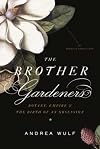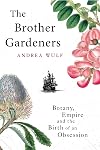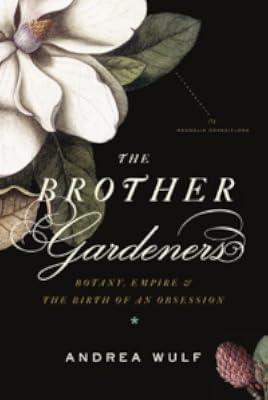
The Brother Gardeners: Botany, Empire and the Birth of an Obsession
by Andrea Wulf
On This Page
Description
From the bestselling author of The Invention of Nature, a fascinating look at the men who made Britain the center of the botanical world.Bringing to life the science and adventure of eighteenth-century plant collecting, The Brother Gardeners is the story of how six men created the modern garden and changed the horticultural world in the process. It is a story of a garden revolution that began in America.
In 1733, colonial farmer John Bartram shipped two boxes of precious American plants show more and seeds to Peter Collinson in London. Around these men formed the nucleus of a botany movement, which included famous Swedish botanist Carl Linnaeus; Philip Miller, bestselling author of The Gardeners Dictionary; and Joseph Banks and David Solander, two botanist explorers, who scoured the globe for plant life aboard Captain Cook’s Endeavor. As they cultivated exotic blooms from around the world, they helped make Britain an epicenter of... show less
Tags
Recommendations
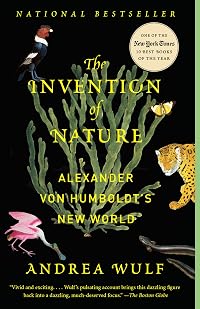
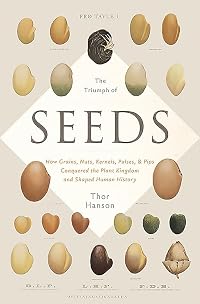
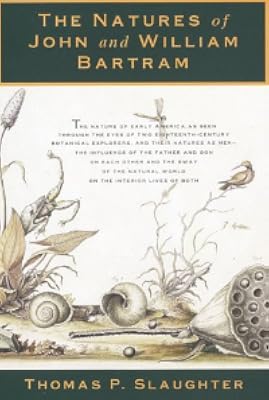
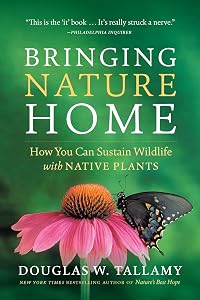






Member Reviews
Rating: 5 out of 5
Andrea Wulf is a superb popular historian. I haven't read any of her technical works, but she has consistently impressed me with her popular writing. The Brother Gardeners is expertly written. Wulf flawlessly weaves narrative and analysis with primary sources, which kept me glued to this book. My one gripe is the title of this book, I didn't really catch the impact of 'Brother' gardeners (likewise her biography of Alexander von Humboldt was titledThe Invention of Nature, another misnomer).
This is an exemplary example of what a history should be. Concise, insightful and captivating without neglecting accuracy and detail. By the end of the book, I left with a solid conceptualization some of the major players in the show more book. Collinson, Bartram, Banks and many others came to life in my mind as persons and not just as names on the page. show less
Andrea Wulf is a superb popular historian. I haven't read any of her technical works, but she has consistently impressed me with her popular writing. The Brother Gardeners is expertly written. Wulf flawlessly weaves narrative and analysis with primary sources, which kept me glued to this book. My one gripe is the title of this book, I didn't really catch the impact of 'Brother' gardeners (likewise her biography of Alexander von Humboldt was titledThe Invention of Nature, another misnomer).
This is an exemplary example of what a history should be. Concise, insightful and captivating without neglecting accuracy and detail. By the end of the book, I left with a solid conceptualization some of the major players in the show more book. Collinson, Bartram, Banks and many others came to life in my mind as persons and not just as names on the page. show less
Several times I have been to John Bartram's gardens during the years I lived in Philadelphia, so I was excited that Wulf had written about the man and the start of "botanizing". Wulf is interested in the early days of the natural sciences and her book on Alexander von Humboldt was marvelous.
Here, she examines the sudden onset of desire for American trees and shrubs (later flowers) brought to England, both for recreational purposes, for the gardens of the wealthy, and for study for potential uses, in some cases. Bartram begins, over time, to send 'seed boxes' to the Englishman (and fellow Quaker) Collinson, primarily a merchant, but with an interest in plantlife -- people are agog at the trees and shrubs he nurtures and gradually this show more hobby becomes far more than that, a livelihood for Bartram and a social success for Collinson and others who catch the bug. Most significantly, several aristocrats become deeply interested in improving their grounds. American trees and shrubs offer color and blooms in many seasons and the myriad evergreens provide green in the winter. Interest expands until a craze for "botany". Linnaeus comes up with a far better way to catalogue plants according to sexual attributes (which has hitherto been fairly random, different systems by different individuals ) and a professional gardener named Miller writes a book that anyone, gardener, earl, or commoner can study for advice about how to grow and care for the new plants.
The problem for me wasn't the information and certainly not Wulf's writing but that the subject itself, frankly, didn't thoroughly grip me. I was always interested, I'm not sorry I read it, but I think a slightly more passionate gardener than I am is required! I did find myself thinking, in our day of hysteria about "native plants" that we spread our bounty out into the world as well -- American plants more or less infest Europe and elsewhere as much as we host many newcomers here. It has been pointed out to me recently, as well, that this hysteria is weirdly akin to the hysteria about human newcomers to our country. Wulf does not bring this up, but I found myself thinking about what WE thoughtlessly export, nonetheless. ***1/2 show less
Here, she examines the sudden onset of desire for American trees and shrubs (later flowers) brought to England, both for recreational purposes, for the gardens of the wealthy, and for study for potential uses, in some cases. Bartram begins, over time, to send 'seed boxes' to the Englishman (and fellow Quaker) Collinson, primarily a merchant, but with an interest in plantlife -- people are agog at the trees and shrubs he nurtures and gradually this show more hobby becomes far more than that, a livelihood for Bartram and a social success for Collinson and others who catch the bug. Most significantly, several aristocrats become deeply interested in improving their grounds. American trees and shrubs offer color and blooms in many seasons and the myriad evergreens provide green in the winter. Interest expands until a craze for "botany". Linnaeus comes up with a far better way to catalogue plants according to sexual attributes (which has hitherto been fairly random, different systems by different individuals ) and a professional gardener named Miller writes a book that anyone, gardener, earl, or commoner can study for advice about how to grow and care for the new plants.
The problem for me wasn't the information and certainly not Wulf's writing but that the subject itself, frankly, didn't thoroughly grip me. I was always interested, I'm not sorry I read it, but I think a slightly more passionate gardener than I am is required! I did find myself thinking, in our day of hysteria about "native plants" that we spread our bounty out into the world as well -- American plants more or less infest Europe and elsewhere as much as we host many newcomers here. It has been pointed out to me recently, as well, that this hysteria is weirdly akin to the hysteria about human newcomers to our country. Wulf does not bring this up, but I found myself thinking about what WE thoughtlessly export, nonetheless. ***1/2 show less
Voltaire said to cultivate your garden… so what are you waiting for? It’s time to go outside and dig up the backyard. No backyard? Sign up for a community plot. If all else fails, do a little guerrilla gardening.
In between pulling up the weeds I recommend Brother Gardeners: Botany, Empire & the Birth of an Obsession by Andrea Wulf. This very readable book traces how a mail order seed business between two men, John Bartram of Philadelphia and Peter Collinson of London, fueled England’s dual obsessions with botany and empire.
Don’t be fooled by the dust jacket – Brother Gardeners is more than a superficial overview on the lives of a handful of 18th century botanists. This book is surprisingly well crafted and informative, despite show more the amount of material it encompasses. Andrea Wulf covers the years 1733-1820, intelligently choosing to bookend her narrative between the lives of John Bartram and Joseph Banks. In between we are introduced to men such as Carl Linneaus (the father of modern taxonomy & ecology), Phillip Miller (caretaker of the Chelsea Physic Garden), Thomas Fairchild (who created the first man made plant hybrid), Captain Cook (famous explorer) and a host of others. Brother Gardners succeeds in smoothly transitioning from one character to another by employing a strange version of seven degrees of botanist separation. These transitions help to establish a context for each man’s contribution to what was a botanical Golden Age.
It was in this period of less than a hundred years that the small island of England became the metaphorical and literal greenhouse of the world. (Interesting aside: Many of the plants Wulf discusses can still be found in British gardens today – putting a major hitch in the whole native plant movement. There’s a useful glossary at the end of the book which gives the year when individual plants were first introduced). These men and their gardens would ultimately change the landscape of England and its colonies. They would influence major, seemingly unrelated, historical events. Carl Linnaeus’ classification system of binomial nomenclature, the colonization of Australia and the infamous mutiny on the Bounty all had their impetus in the quest for botanical discovery.
It’s difficult not to be left with a newfound appreciation for what is too often viewed as an eccentric English hobby – batty old ladies potting around their cottage gardens – but was in fact a keystone in the foundation of a colonial empire. How so? Well… if you have slaves in the West Indies that need a cheap and productive food supply you import bread trees from Tahiti. You can ship New Zealand flax plants to Australia in order to create a niche in the linen industry. You attempt to break China’s monopoly on tea by sending plants (and willing Chinese planters) to India. The list goes on.
Overall it’s pretty fascinating stuff. But what makes Wulf’s book so accessible is that Brother Gardeners focuses on the relationships between the men whose stories it tells. It describes friendships that were based on a common scientific interest and which ultimately transcended nationality, politics and war. With the current resurgence in the popularity of gardening – demonstrated by the increase in vegetable gardens, as well as the growth of the slow and organic food movements - it’s an important lesson for modern day readers to walk away with.
Full review at:
http://booksexy.wordpress.com/2009/06/23/dig-into-a-good-book-pun-intended-broth... show less
In between pulling up the weeds I recommend Brother Gardeners: Botany, Empire & the Birth of an Obsession by Andrea Wulf. This very readable book traces how a mail order seed business between two men, John Bartram of Philadelphia and Peter Collinson of London, fueled England’s dual obsessions with botany and empire.
Don’t be fooled by the dust jacket – Brother Gardeners is more than a superficial overview on the lives of a handful of 18th century botanists. This book is surprisingly well crafted and informative, despite show more the amount of material it encompasses. Andrea Wulf covers the years 1733-1820, intelligently choosing to bookend her narrative between the lives of John Bartram and Joseph Banks. In between we are introduced to men such as Carl Linneaus (the father of modern taxonomy & ecology), Phillip Miller (caretaker of the Chelsea Physic Garden), Thomas Fairchild (who created the first man made plant hybrid), Captain Cook (famous explorer) and a host of others. Brother Gardners succeeds in smoothly transitioning from one character to another by employing a strange version of seven degrees of botanist separation. These transitions help to establish a context for each man’s contribution to what was a botanical Golden Age.
It was in this period of less than a hundred years that the small island of England became the metaphorical and literal greenhouse of the world. (Interesting aside: Many of the plants Wulf discusses can still be found in British gardens today – putting a major hitch in the whole native plant movement. There’s a useful glossary at the end of the book which gives the year when individual plants were first introduced). These men and their gardens would ultimately change the landscape of England and its colonies. They would influence major, seemingly unrelated, historical events. Carl Linnaeus’ classification system of binomial nomenclature, the colonization of Australia and the infamous mutiny on the Bounty all had their impetus in the quest for botanical discovery.
It’s difficult not to be left with a newfound appreciation for what is too often viewed as an eccentric English hobby – batty old ladies potting around their cottage gardens – but was in fact a keystone in the foundation of a colonial empire. How so? Well… if you have slaves in the West Indies that need a cheap and productive food supply you import bread trees from Tahiti. You can ship New Zealand flax plants to Australia in order to create a niche in the linen industry. You attempt to break China’s monopoly on tea by sending plants (and willing Chinese planters) to India. The list goes on.
Overall it’s pretty fascinating stuff. But what makes Wulf’s book so accessible is that Brother Gardeners focuses on the relationships between the men whose stories it tells. It describes friendships that were based on a common scientific interest and which ultimately transcended nationality, politics and war. With the current resurgence in the popularity of gardening – demonstrated by the increase in vegetable gardens, as well as the growth of the slow and organic food movements - it’s an important lesson for modern day readers to walk away with.
Full review at:
http://booksexy.wordpress.com/2009/06/23/dig-into-a-good-book-pun-intended-broth... show less
Well written, engaging look at the development of the gardening fashions in 18th century Britain. The author introduces a rich cast of characters whose passion for plants and gardens helped to transform the landscape of the British countryside. She argues that this passion for gardening was the embodiment of Enlightenment thinking in Britain, as these men moved away from the Baroque formality of geometric gardening and into an exploration and celebration of more natural forms. The work makes one wish for an illustrated version, with naturalists' illustrations of the objects of these men's passions.
interesting survey of some of the important characters of English gardening in the 18th century and, therefore , of world gardening and history. Like so many, she laid into Linnaeus, whose vainglorious boasts seems to prevent him from getting the credit he is actually due. Would have liked even more of banks and Solander and of the american gardeners. Interesting focus on trees and shrubs, know they predominated but would have liked a bit more on flowers
This was a fascinating and accessible book. I learned so much from it, I don't know where to begin. Except maybe to say that Fuchsia is NOT pronounced Fyou-sha, oh no. It should be pronounced FOOKS-ia after our dear Mr. Fuchs. I can hardly wait to try that out on the garden store clerk come spring.
This sweeping history of gardening and botany in the 18th century is compulsively readable and full of interesting trivia and tidbits about famous gardeners and botanists. Some of whom I'd actually heard of.
Highly recommended for gardeners.
This sweeping history of gardening and botany in the 18th century is compulsively readable and full of interesting trivia and tidbits about famous gardeners and botanists. Some of whom I'd actually heard of.
Highly recommended for gardeners.
A cracking read. The German-born Andrea Wulf casts an outsiders eye over the personalities and passions which shaped Britain's love for gardening in the Eighteenth Century. Concentrating on half a dozen individuals, their relationships and correspondence, she vividly illuminates how they had an such influence on botany and gardening lasting to this day.
Members
- Recently Added By
Published Reviews
ThingScore 100
Throughout “The Brother Gardeners,” Wulf’s flair for storytelling is combined with scholarship, brio and a charmingly airy style. (It’s hard to resist her comparison of the soft needles and dangling cones of an Eastern hemlock to “feather boas carelessly slung around a woman’s neck.”) She has written a delightful book — and you don’t need to be a gardener to enjoy it.
added by nvblue
Lists

Garden-essays and books on gardening
53 works; 10 members
Author Information

14+ Works 5,318 Members
Andrea Wulf is an English historian and writer, born in New Delhi, India in 1972. She studied design at the Royal College of Art. She is a public speaker and has lectured in the UK and USA. Her books include This Other Eden: Seven Great Gardens and 300 Years of English History; Founding Gardeners: The Revolutionary Generation, Nature, and the show more Shaping of the American Nation; and Chasing Venus: The Race to Measure the Heavens. Her award winning book, The Brother Gardeners, received a CBHL Annual Literature Award in 2010. The Invention of Nature: How Alexander Von Humboldt Revolutionized Our World, received the 2015 Costa Book Award in the biography category, and the 2016 Royal Society Science Book Prize for 'outstanding popular science books' written for a non-specialist audience. (Bowker Author Biography) show less
Awards and Honors
Common Knowledge
- Canonical title*
- La confraternita dei giardinieri. Come un gruppo di uomini uniti dalla passione per le piante rivoluzionò la botanica e i giardini d'Europa.
- Original title
- The brother gardeners : a generation of gentlemen naturalists and the birth of an obsession
- Alternate titles
- The brother gardeners : botany, empire and the birth of an obsession
- Original publication date
- 2009
- People/Characters
- Carl Linnaeus; John Bartram; Joseph Banks; Captain James Cook, RN, FRS; Peter Collinson; Philip Miller (show all 7); Daniel Solander
- Epigraph
- Our England is a garden, and such gardens are not made
By singing:--"Oh, how beautiful!" and sitting in the shade,
While better men than we go out and start their working lives
At grubbing weeds from gravel-paths wit... (show all)h broken dinner-knives.
RUDYARD KIPLING, "The Glory of Gardens" - Dedication
- To Brigette and Herbert
- First words
- Introduction: When I left my hometown of Hamburg more than a decade ago, few of my friends possessed a garden.
Prologue ("The Fairchild Mule"): On an early summer's day in 1716, Thomas Fairchild went into his Hoxton garden, closed the door of his potting shed, and set in motion a chain of events so momentous that in time no gardener ... (show all)would ever think about plants in the same way again.
Chapter 1 ("Forget Not Mee & My Garden"): The first three months of the year were always the busiest time for the cloth merchant Peter Collinson, for it was then that the ships from the American colonies arrived in London. - Last words
- (Click to show. Warning: May contain spoilers.)But only gardens like Painshill and Stourhead allow you to experience, in its true glory, that revolutionary time when English gardeners dug up their topiary and planted a new world.
*Some information comes from Common Knowledge in other languages. Click "Edit" for more information.
Classifications
- Genres
- Home & Garden, Nonfiction, Science & Nature, General Nonfiction, History, Biography & Memoir
- DDC/MDS
- 635.092241 — Applied science & technology Agriculture Garden crops (Horticulture) modified standard subdivisions History, geographic treatment, biography Biography Europe
- LCC
- SB61 .W85 — Agriculture Horticulture. Plant propagation. Plant breeding Plant culture
- BISAC
Statistics
- Members
- 521
- Popularity
- 57,774
- Reviews
- 16
- Rating
- (4.21)
- Languages
- English, Italian
- Media
- Paper, Ebook
- ISBNs
- 10
- ASINs
- 5