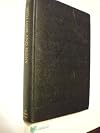
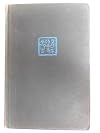
With Love and Irony
by Lin Yutang
On This Page
Tags
Recommendations


















Member Reviews
I found this in Browsers' Bookstore and decided to pick it up after flipping through a few pages and laughing. (would strongly encourage flipping through and bringing home old books- they can surprise you!)
I'd never heard of Lin Yutang before, and it's a shame I hadn't. With Love and Irony is a collection of his essays and satire that he wrote in English, some from various magazines he published in between 1930 and 1940. 80 years later, his sense of humor still reads sharp, and he remains relatively optimistic in spite of the Second Sino-Japanese War and occupation contemporary to his work. In "Mickey Mouse", he chides the college revolutionaries that sometimes art can just be for enjoyment and that not all literature needs to be show more political propaganda, recommending they take a break with comic strips. "The Coolie Myth" skewers Western perceptions on Chinese laborers. A lot of essays compare and contrast "traditional Chinese" culture to their English and American counterparts, in addition to the invading neighbors from Japan.
I felt sad reading "The Future of China", thinking about how he thought post-war nationalism would buoy future prospects only for the Chinese Civil War to resume and dash all those dreams.
Would recommend. It also makes me wonder what an equivalent would be today- like if someone in 2060 decided to read a Dave Barry collection? Would it age as well, or stymie the reader in temporally specific references and metaphor? show less
I'd never heard of Lin Yutang before, and it's a shame I hadn't. With Love and Irony is a collection of his essays and satire that he wrote in English, some from various magazines he published in between 1930 and 1940. 80 years later, his sense of humor still reads sharp, and he remains relatively optimistic in spite of the Second Sino-Japanese War and occupation contemporary to his work. In "Mickey Mouse", he chides the college revolutionaries that sometimes art can just be for enjoyment and that not all literature needs to be show more political propaganda, recommending they take a break with comic strips. "The Coolie Myth" skewers Western perceptions on Chinese laborers. A lot of essays compare and contrast "traditional Chinese" culture to their English and American counterparts, in addition to the invading neighbors from Japan.
I felt sad reading "The Future of China", thinking about how he thought post-war nationalism would buoy future prospects only for the Chinese Civil War to resume and dash all those dreams.
Would recommend. It also makes me wonder what an equivalent would be today- like if someone in 2060 decided to read a Dave Barry collection? Would it age as well, or stymie the reader in temporally specific references and metaphor? show less
Ratings
Members
- Recently Added By
Lists

The China Project Book List
100 works; 2 members
Author Information

168+ Works 3,333 Members
Though he was never considered to be a serious original thinker or a leading writer in his native China, Lin Yu-t'ang's role as an essayist and popularizer of things Chinese in the West is worthy of attention. He was a native of Changchow in Amoy, son of a Presbyterian minister, and third-generation Christian. He was brought up in a strict show more household and prepared for the ministry, and after middle school he was sent to the Protestant College of Amoy. In 1911 he entered the famous St. John's University in Shanghai, and it was during his time there that he became disillusioned with the choice of a religious career and renounced Christianity. After graduation (with a rather weak academic record), Lin Yu-t'ang became a professor of English at Tsinghua University because his grounding in foreign languages was much stronger than in classical Chinese. In 1919 he decided to pursue further study in the United States, where he spent one year at Harvard University and then went on to France where he worked for the YMCA. He moved to Germany for a term, and at last in 1923 earned a Ph.D. in Leipzig in the field of archaic Chinese phonology. Lin Yu-t'ang then returned home and tried out various teaching posts, and in 1927 became secretary to the Ministry of Foreign Affairs in the Wuhan government. But politics was not to his liking, and he resigned in the following year. In 1932 he founded the Analects Fortnightly, a magazine of wit and satire that proved to be an instant popular success. Two years later he began another periodical, This Human World, which contained short essays. Unfortunately, his satire angered intellectuals on both the Left and the Right, and this was the beginning of his lifelong friction with Chinese literary and academic circles. In 1936, feeling hostility at home but an increased demand for his writings in the West, Lin Yu-t'ang went to New York City and remained there until 1943, when he went back home to lecture briefly and again became embroiled in controversy. However, in the United States, his essays and ideas were greeted with great enthusiasm. Early in 1954 he was appointed chancellor of the new Chinese University in Singapore, but, because of a disagreement with the trustees on policy, he and his staff left early in 1955 before the university opened its doors. Not long after this, in New York, he and his wife publicly announced their reconversion to Christianity. In addition to his many books of essays, Lin Yu-t'ang published a novel, Moment in Peking, a saga about a Chinese family spanning the years 1900--38. He also published a number of translations of classical Chinese works, the best of which is perhaps Shen Fu's Six Chapters of a Floating Life, the moving autobiographical account of a happy marriage marred by parental disapproval and the tragic early death of the wife. Lin Yu-t'ang's writings are marked by an appreciation of both Eastern and Western culture, and their sparkling, idiomatic English style has endeared him to thousands of Western readers. (Bowker Author Biography) show less
All Editions
Awards and Honors
Notable Lists
Classifications
Statistics
- Members
- 55
- Popularity
- 557,074
- Reviews
- 1
- Rating
- (3.83)
- Languages
- Chinese, English, Hungarian
- Media
- Paper
- ISBNs
- 3
- ASINs
- 7