On This Page
Description
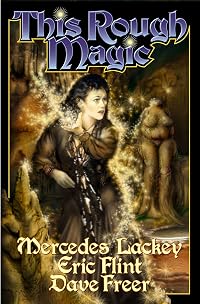
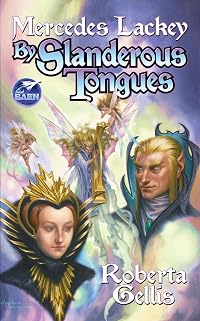
The demon sorcerer Chernobog, having failed in his attempt to gain power over Venice, enters into an alliance with the King of Hungary to seize control of Corfu, an island that holds the key to controlling the Adriatic.Tags
Recommendations



















Member Reviews
While I like this series just fine, and This Rough Magic is a perfectly acceptable entry, I don't like it as much as its predecessor for a couple reasons.
The pacing issues I mentioned in my review of the previous book become almost overwhelming here. This is not so much a book as a collection of three separate novels about the same people spliced together - my paperback copy is 900 pages long. It's hard to pick out what needed to be cut, though, because it's all solid writing and tight plotting - there's just too much of it. And the magical adventure at the end feels distinctly tacked-on - it's foreshadowed well enough, but for being the big emotional climax of the main relationship conflict, it's got next to no time spent on it show more compared to the rest of the book.
I also have mixed feelings about the female villains and their relationship to sex and power. There's a lot of talk of how many and what kinds of beings one has to fuck to become an immortal dark sorceress, and it feels a little obsessive. There are some interesting things done with the con-artist and his harem of bored housewives, but the actual magicians just don't quite ring true. There's also no mention of the humiliating and painful sex male evil wizards must have in order to gain power, which is probably what bugs me.
So, overall, still like the series, but it's not one I come back to often. It's not quite worth the immense time it takes to slog through it. show less
The pacing issues I mentioned in my review of the previous book become almost overwhelming here. This is not so much a book as a collection of three separate novels about the same people spliced together - my paperback copy is 900 pages long. It's hard to pick out what needed to be cut, though, because it's all solid writing and tight plotting - there's just too much of it. And the magical adventure at the end feels distinctly tacked-on - it's foreshadowed well enough, but for being the big emotional climax of the main relationship conflict, it's got next to no time spent on it show more compared to the rest of the book.
I also have mixed feelings about the female villains and their relationship to sex and power. There's a lot of talk of how many and what kinds of beings one has to fuck to become an immortal dark sorceress, and it feels a little obsessive. There are some interesting things done with the con-artist and his harem of bored housewives, but the actual magicians just don't quite ring true. There's also no mention of the humiliating and painful sex male evil wizards must have in order to gain power, which is probably what bugs me.
So, overall, still like the series, but it's not one I come back to often. It's not quite worth the immense time it takes to slog through it. show less
The Heirs of Alexandria series, by Mercedes Lackey, Eric Flint and Dave Freer. These are historical fantasies (c.1440 AD) set in an alternate universe. They are mostly set in Venice or the Eastern Mediterranean. The break point is the death of Hypatia in 415 AD; in this universe she survived and became a colleague of John Chrystostom, founding the Hypatian Order. The other thing is that magic and magical beings exist. See https://en.wikipedia.org/wiki/Heirs_of_Alexandria_series for more information.
1 Heirs of Alexandria, by Mercedes Lackey, Eric Flint and Dave Freer
Set in 1437+1438 in Venice. Orphan half-brothers Marco and Benito Valdosta acquire a protector and become involved in the politics of the city, saving it from a threat show more posed by Jagellion, Grand Duke of Lithuania (who has been taken over by a demon). They become involved with Manfred of Brittany, second heir to the Holy Roman Emperor Charles Frederick Hohenstauffen, and his Vinlander bodyguard, Eric Haakonson, who foils a plot by a religious order, the Servants of the Trinity, and their secular arm, the Knights of the Trinity.
2 This Rough Magic, by Mercedes Lackey, Eric Flint and Dave Freer
Set in 1438-1439 in Venice & Corfu. Marco stays behind in Venice, Benito is exiled to Corfu (we won't mention why). Manfred and Erik head to Jerusalem. King Emeric of Hungary decides to invade Corfu with assistance from his long-lved 'aunt', Elizabeth Bathory, and Jagellion..
2.5 A Mankind Witch, by Dave Freer
Set in 1438-1439 in Telemark (one of the Scandinavian kingdoms). A Barbary corsair on a plundering expedition to the north is shipwrecked and taken as a thrall in Telemark. He is given to the Princess Signy, who is under the subjection of her stepmother and half-brother (who is now the king).
3 Much Fall of Blood, by Mercedes Lackey, Eric Flint and Dave Freer
Set in 1540-1541 in the Balkans and the Eurasian steppe. Following the invasion of Corfu, Benito is made acting governor and starts making feelers to Iskander Beg. Manfred and Eric continue their interrupted pilgrimage to Jerusalem, and end up escorting a Mongol ambassador from the Ilkhanate to their cousins in the Golden Horde. In Hungary, Elizabeth Bathory frees Vlad of Valachia from King Emeric - she has designs on him. Vlad escapes and falls in with a shapeshifter pack who take him back to Valachia where he raises the flag of rebellion.
4 Burdens of the Dead, by Mercedes Lackey, Eric Flint and Dave Freer
Set in 1540-1541 in Constantinople and the Black Sea. Benito leads a fleet to invade the Byzantine Empire in order to depose Alexius (who has gone too far dealing with foreigners). The Ilkhanate are unhappy with the Baitani who have been fomenting trouble in the Black Sea.
I very much like this series; it's the sort of fantasy I enjoy. As #5 is due out later this year, I thought it best to refresh my memory (although I probably won't get it until the paperback comes out...) . Somewhat reminiscent of the Merovingen Nights sharecrop (especially the first in the series), but fantasy rather than SF. Each book is a standalone, but it helps to have read the previous to understand the politics (apart from A Mankind Witch which is a true-standalone). I do like these - they're an epic romp through early renaissance politics - it's fun spotting the historical background and wondering what could have happened to so-and-so. The glaring omission is the Medici in Florence; we see the Del Estes of Ferrara, the Visconti of Milan, and Carlo Sforza, but no mention of the Medici (Florence is mentioned, but doesn't seem to be one of the great city states in this version of history). The other thing is that there seems to be some conflation of history; partly because of the different timeline and partly because of the old magical beings still extant.
Recommended. (Similar are: The Kushiel series by Jacqueline Carey although this version has Christianity, and also the Instrumentalities of the Night series by Glen Cook. The Mongol Empire is similar to the Assassini series by Jon Courtney Grimwood.) show less
1 Heirs of Alexandria, by Mercedes Lackey, Eric Flint and Dave Freer
Set in 1437+1438 in Venice. Orphan half-brothers Marco and Benito Valdosta acquire a protector and become involved in the politics of the city, saving it from a threat show more posed by Jagellion, Grand Duke of Lithuania (who has been taken over by a demon). They become involved with Manfred of Brittany, second heir to the Holy Roman Emperor Charles Frederick Hohenstauffen, and his Vinlander bodyguard, Eric Haakonson, who foils a plot by a religious order, the Servants of the Trinity, and their secular arm, the Knights of the Trinity.
2 This Rough Magic, by Mercedes Lackey, Eric Flint and Dave Freer
Set in 1438-1439 in Venice & Corfu. Marco stays behind in Venice, Benito is exiled to Corfu (we won't mention why). Manfred and Erik head to Jerusalem. King Emeric of Hungary decides to invade Corfu with assistance from his long-lved 'aunt', Elizabeth Bathory, and Jagellion..
2.5 A Mankind Witch, by Dave Freer
Set in 1438-1439 in Telemark (one of the Scandinavian kingdoms). A Barbary corsair on a plundering expedition to the north is shipwrecked and taken as a thrall in Telemark. He is given to the Princess Signy, who is under the subjection of her stepmother and half-brother (who is now the king).
3 Much Fall of Blood, by Mercedes Lackey, Eric Flint and Dave Freer
Set in 1540-1541 in the Balkans and the Eurasian steppe. Following the invasion of Corfu, Benito is made acting governor and starts making feelers to Iskander Beg. Manfred and Eric continue their interrupted pilgrimage to Jerusalem, and end up escorting a Mongol ambassador from the Ilkhanate to their cousins in the Golden Horde. In Hungary, Elizabeth Bathory frees Vlad of Valachia from King Emeric - she has designs on him. Vlad escapes and falls in with a shapeshifter pack who take him back to Valachia where he raises the flag of rebellion.
4 Burdens of the Dead, by Mercedes Lackey, Eric Flint and Dave Freer
Set in 1540-1541 in Constantinople and the Black Sea. Benito leads a fleet to invade the Byzantine Empire in order to depose Alexius (who has gone too far dealing with foreigners). The Ilkhanate are unhappy with the Baitani who have been fomenting trouble in the Black Sea.
I very much like this series; it's the sort of fantasy I enjoy. As #5 is due out later this year, I thought it best to refresh my memory (although I probably won't get it until the paperback comes out...) . Somewhat reminiscent of the Merovingen Nights sharecrop (especially the first in the series), but fantasy rather than SF. Each book is a standalone, but it helps to have read the previous to understand the politics (apart from A Mankind Witch which is a true-standalone). I do like these - they're an epic romp through early renaissance politics - it's fun spotting the historical background and wondering what could have happened to so-and-so. The glaring omission is the Medici in Florence; we see the Del Estes of Ferrara, the Visconti of Milan, and Carlo Sforza, but no mention of the Medici (Florence is mentioned, but doesn't seem to be one of the great city states in this version of history). The other thing is that there seems to be some conflation of history; partly because of the different timeline and partly because of the old magical beings still extant.
Recommended. (Similar are: The Kushiel series by Jacqueline Carey although this version has Christianity, and also the Instrumentalities of the Night series by Glen Cook. The Mongol Empire is similar to the Assassini series by Jon Courtney Grimwood.) show less
This is a adequate follow up to the first novel (The Shadow of the Lion) - again nothing hugely original. All of the romantic loose ends are tied up as expected.
Sequel to a previous novel, this is very readable and actually a better read than the previous one!
Heirs of Alexandria #2
baen ebook
Members
- Recently Added By
Author Information

359+ Works 188,483 Members
Fantasy fiction author Mercedes Richie Lackey was born in Chicago on June 24, 1950, and she received a B.S. from Purdue University in 1972. She is also a professional lyricist and has rehabilitated raptors. Lackey started writing her own short stories when her favorite science fiction and fantasy authors weren't producing new books fast enough for show more her. She began writing professionally with the encouragement of author C. J. Cherryh, whom Lackey had met at a science fiction convention. Many of Lackey's books, including the Queen's Own trilogy, the Vows and Honor series, Valdemar: family Spies, and the Last Herald-Mage and Mage Winds trilogies, take place in the imaginary world of Valdemar. She has authored numerous series, including the Bardic Voices series and a series of occult mysteries featuring Diana Tregarde, a modern-day witch. Lackey enjoys collaborating and has co-written books with authors such as C.J. Cherryh, Anne McCaffrey, Piers Anthony, Marion Zimmer Bradley, Mark Shepherd, and Ru Emerson. Her title Redoubt made The New York Times Best Seller List for 2012. (Bowker Author Biography) show less

207+ Works 29,024 Members
Eric Flint was born in southern California in 1947. He received a bachelor's degree from UCLA in 1968 and did some work toward a Ph.D. in history, with a specialization in history of southern Africa in the 18th and early 19th centuries, also at UCLA. After leaving the doctoral program over political issues, he supported himself from that time show more until age 50 as a laborer, machinist and labor organizer. In 1993, his short story entitled Entropy and the Strangler won first place in the Winter 1992 Writers of the Future contest. His first novel, Mother of Demons, was published in 1997 and was picked by the Science Fiction Chronicle as a best novel of the year. He became a full-time writer in 1999. He writes science fiction and fantasy works including The Philosophical Strangler and the Belisarius series. (Bowker Author Biography) show less

55+ Works 4,787 Members
Some Editions
Series

Work Relationships
Common Knowledge
- Canonical title
- This Rough Magic
- Original publication date
- 2003
- Important places
- Venice, Veneto, Italy
Classifications
Statistics
- Members
- 540
- Popularity
- 55,490
- Reviews
- 7
- Rating
- (3.77)
- Languages
- English
- Media
- Paper, Audiobook, Ebook
- ISBNs
- 4
- ASINs
- 2