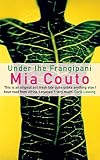
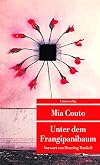
Under the Frangipani
by Mia Couto
On This Page
Description
A police inspector is investigating a strange murder, a case in which all the suspects are eager to claim responsibility for the act. Set in a former Portuguese fort which stored slaves and ivory, Under the Frangipani combines fable and allegory, dreams and myths with an earthy humour. The dead meet the living, language is invented, reality is constantly changing. Part thriller, part exploration of language, Mia Couto surprises and delights, and shows why he is one of the most important show more African writers of today. show lessTags
Recommendations























Member Reviews
This 150 page book is narrated by a spirit of a dead laborer buried on the site of a colonial fort in Mozambique. In a fantastical and almost lyrical style, it tells the story of an overly innocent police detective who is investigating a recent murder at the fort. The fort has been turned into an old-folks home, and many of the suspects are a mixed bag of interesting elderly all too ready to confess to the crime.
The book is unique in some ways. The dialogue reminds of Waiting for Godot in that it is seemingly simple, yet becomes contorted, devilish, fast and often leading nowhere. The author pulls this off, and like Beckett, leaves the reader with a sense of suspense for what will happen next when the all things point to absolutely show more little or nothing happening next. So mix Waiting for Godot with Agatha Christie, set it in Mozambique written by an African, add an anteater and a flowering tree, and you'll have this book. show less
The book is unique in some ways. The dialogue reminds of Waiting for Godot in that it is seemingly simple, yet becomes contorted, devilish, fast and often leading nowhere. The author pulls this off, and like Beckett, leaves the reader with a sense of suspense for what will happen next when the all things point to absolutely show more little or nothing happening next. So mix Waiting for Godot with Agatha Christie, set it in Mozambique written by an African, add an anteater and a flowering tree, and you'll have this book. show less
The strength of this book is the author's nearly inexplicable ability to imagine what it might be like to be dead, if that were to mean resting comfortably, and somewhat sadly, underground. Nominally the book is written by a dead man; by itself that wouldn't be remarkable ('The Third Policeman' comes immediately to mind), but here the narrator is content. He tells us all sorts of things that aren't grisly, melodramatic, or macabre: he doesn't dream, but the frangipani tree above him sometimes dreams of him; he has a pet spiny anteater, which burrows down to him and speaks to him in a kind of inner monologue as if it were his dog; he doesn't remember much of his life, but that doesn't often bother him.
Partway through the novel -- which show more is a mainly unsuccessful series of vignettes framed as a detective story -- I realized why Couto feels so at home with the idea of being forgotten, buried, suspended in a state of more or less permanent amnesia. It's because he has tremendous sympathy with people who live, as he has, in an isolated and impoverished corner of an isolated and impoverished country. Their lives are mainly forgotten, and their sense of themselves is tenuous: they are linguistically and racially mixed, so they do not always have any good way of matching ideas to words (as one of Couto's characters says).
There are some good pages on the hopelessness of feeling a home in such a postcolonial world (pp. 41-46) but that theme is very familiar: what is new is the way these characters are partly happy, mainly reconciled, slightly drifting, virtually isolated, somewhat dreamlike: it's the qualifiers, the lack of absolutes, that make Couto's way of thinking so distinctive. His sense of the postcolonial experience is the diametrical opposite of Frantz Fanon or any number of strident writers (Helon Habila, Chris Abani, Aminatta Forna) and theorists of hybridity and dislocation, and it is also miles from the usual ghost story in which the ghost pines for life, and then falls in love with it. The typical postcolonial narrator is full of passion, anger or joy, intricate introspection. The typical ghost has no life until it is reborn, and then everything happens in technicolor. This ghost likes his six days above ground, but in the end he is just as content in the earth, feeling vaguely uncertain about what he has forgotten, vaguely content, vaguely forgotten.
What other book makes it attractive to think of lying underground, with most memories gone, with no sense of smell, no light or color, and very little sound? What other book shows the coincidence between that state and life in a poor community? show less
Partway through the novel -- which show more is a mainly unsuccessful series of vignettes framed as a detective story -- I realized why Couto feels so at home with the idea of being forgotten, buried, suspended in a state of more or less permanent amnesia. It's because he has tremendous sympathy with people who live, as he has, in an isolated and impoverished corner of an isolated and impoverished country. Their lives are mainly forgotten, and their sense of themselves is tenuous: they are linguistically and racially mixed, so they do not always have any good way of matching ideas to words (as one of Couto's characters says).
There are some good pages on the hopelessness of feeling a home in such a postcolonial world (pp. 41-46) but that theme is very familiar: what is new is the way these characters are partly happy, mainly reconciled, slightly drifting, virtually isolated, somewhat dreamlike: it's the qualifiers, the lack of absolutes, that make Couto's way of thinking so distinctive. His sense of the postcolonial experience is the diametrical opposite of Frantz Fanon or any number of strident writers (Helon Habila, Chris Abani, Aminatta Forna) and theorists of hybridity and dislocation, and it is also miles from the usual ghost story in which the ghost pines for life, and then falls in love with it. The typical postcolonial narrator is full of passion, anger or joy, intricate introspection. The typical ghost has no life until it is reborn, and then everything happens in technicolor. This ghost likes his six days above ground, but in the end he is just as content in the earth, feeling vaguely uncertain about what he has forgotten, vaguely content, vaguely forgotten.
What other book makes it attractive to think of lying underground, with most memories gone, with no sense of smell, no light or color, and very little sound? What other book shows the coincidence between that state and life in a poor community? show less
In Under the Frangipani, a young police detective is called to an island fortress to investigate the murder of the magistrate. As he interviews the mostly elderly inhabitants, he finds him mired in a labyrinthine puzzle of sorts as each of the residents in turn seem to want to claim responsibility for the murder.
As with other African writers I have read, Couto is using magical realism to integrate oral storytelling traditions and indigenous beliefs into his story, the result, is this case, is inventive language and storytelling. The division between the living and the dead is fairly porous in this story, as also the division between fantasy and reality. The inhabitants of the refuge, as it is called, speak in what I can only describe as show more part poetry, part puzzle, part lie, part truth. For the reader, it's like one of those Chinese finger traps, the more you struggle, the tighter it gets. The trick is, I discovered, is to stop struggling against it and read it more like poetry.
If your patience allows, I'll explain. Come into the light a bit more. Don't be afraid of the smoke. Don't even fear getting burnt: There's no other way of listening to me. My voice grows weaker and weaker the longer I go on unravelling these confidences. Keep quiet as you listen to these stories. Silence makes the windows through which we glimpse the world. Don't write anything down, and leave that notebook on the ground. Be like water in a glass. He who is a drop always drips, he who is dew evaporates. Here in this refuge, your ears will grow bigger. For we live to talk. (from the inspector's first interview, p. 22).
Ultimately, this original story has a lot to say about Mozambique, the present. There is something you come to understand in the telling. Once I settled into it, I really liked it, but it's probably not the kind of book for everyone. show less
As with other African writers I have read, Couto is using magical realism to integrate oral storytelling traditions and indigenous beliefs into his story, the result, is this case, is inventive language and storytelling. The division between the living and the dead is fairly porous in this story, as also the division between fantasy and reality. The inhabitants of the refuge, as it is called, speak in what I can only describe as show more part poetry, part puzzle, part lie, part truth. For the reader, it's like one of those Chinese finger traps, the more you struggle, the tighter it gets. The trick is, I discovered, is to stop struggling against it and read it more like poetry.
If your patience allows, I'll explain. Come into the light a bit more. Don't be afraid of the smoke. Don't even fear getting burnt: There's no other way of listening to me. My voice grows weaker and weaker the longer I go on unravelling these confidences. Keep quiet as you listen to these stories. Silence makes the windows through which we glimpse the world. Don't write anything down, and leave that notebook on the ground. Be like water in a glass. He who is a drop always drips, he who is dew evaporates. Here in this refuge, your ears will grow bigger. For we live to talk. (from the inspector's first interview, p. 22).
Ultimately, this original story has a lot to say about Mozambique, the present. There is something you come to understand in the telling. Once I settled into it, I really liked it, but it's probably not the kind of book for everyone. show less
A dead man narrates this story, set in a decaying fort on the coast of post-conflict Mozambique. An inspector from the capital arrives to investigate the death of the man who had been in charge of the fort, which is currently sheltering elderly people with nowhere else to go. Each person the inspector interviews has a different perspective on the murder.
It’s hard to classify this book. Is it magical realism, apocalyptic/post-apocalyptic, speculative, or all of the above? There’s a lot going on under the surface, and there’s a lot I don’t understand since I’m not familiar with the political context of Mozambique’s independence, the war that preceded it, or the cultural changes that resulted from it.
It’s hard to classify this book. Is it magical realism, apocalyptic/post-apocalyptic, speculative, or all of the above? There’s a lot going on under the surface, and there’s a lot I don’t understand since I’m not familiar with the political context of Mozambique’s independence, the war that preceded it, or the cultural changes that resulted from it.
Magical realism murder mystery/storytelling that straddles the worlds between the living & the dead, traditions vs. modern mores, colonization against freedom, & war facing off against peace. It was different & even a bit challenging to understand, at least for me. I do think there's real depth there, but I'm not completely sure that I even made it far below the surface. A better knowledge of traditional myths & tales, as well as the history of the area might have helped some of my understanding more. As it turns out, it is not a traditional murder mystery, but rather a philosophical & heartfelt examination of the things that kill a people, a country, a place. Distinct. Though I'd give it just 3 stars right now, I think this is one that show more could age better with rereading (now that I understand where the storytelling is leading), the experience probably richer with a revisit down the road.... show less
A short book of mystery surrounding the death of a man in Mozambique. The inspector coming down from the city to solve it is confronted by various suspects confessing to the crime.
Thought-provoking, a look at post-colonial Mozambique, the past that still influences the present.
Thought-provoking, a look at post-colonial Mozambique, the past that still influences the present.
What an interesting book this was!
"...things begin even before they happen."
If you take that sentence to heart and get back to it every now and then when you you read this book, it makes a lot more sense. The mystery's solved and I had a very good time reading it, without being able to give a summary or tell you exactly what it's about. It just feels good :-)
"...things begin even before they happen."
If you take that sentence to heart and get back to it every now and then when you you read this book, it makes a lot more sense. The mystery's solved and I had a very good time reading it, without being able to give a summary or tell you exactly what it's about. It just feels good :-)
Members
- Recently Added By
Lists

Speculative Fiction from around the World
610 works; 17 members

Dead narrators
50 works; 4 members
Author Information

75+ Works 3,135 Members
Awards and Honors
Notable Lists
Series
Belongs to Publisher Series
Common Knowledge
- Canonical title*
- Unter dem Frangipanibaum
- Original title
- A Varanda do Frangipani
- Original publication date
- 1996
- Important places*
- Moçambique
- First words*
- Ich bin der Tote.
- Last words*
- (Click to show. Warning: May contain spoilers.)Fortan werde ich stiller schlafen als der Tod.
- Original language*
- Moçambiquanisches Portugiesisch
*Some information comes from Common Knowledge in other languages. Click "Edit" for more information.
Classifications
- Genres
- Fiction and Literature, General Fiction, Mystery, Romance
- DDC/MDS
- 813 — Literature & rhetoric American literature in English American fiction in English
- LCC
- PQ9939 .C68 .V3713 — Language and Literature French, Italian, Spanish and Portuguese literatures Portuguese literature Provincial, local, colonial, etc.
- BISAC
Statistics
- Members
- 214
- Popularity
- 152,088
- Reviews
- 10
- Rating
- (3.47)
- Languages
- 9 — Catalan, English, Finnish, French, German, Italian, Portuguese, Spanish, Swedish
- Media
- Paper, Ebook
- ISBNs
- 18
- ASINs
- 1