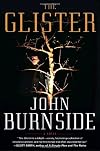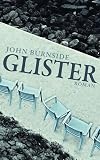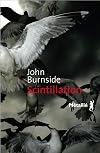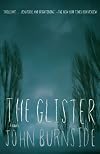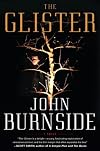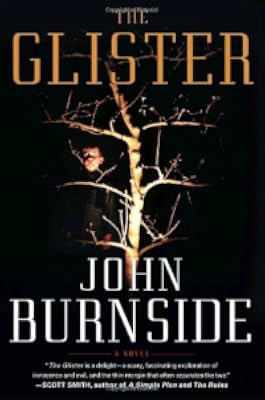
The Glister
by John Burnside
On This Page
Description
The terrifying new novel by the prize-winning Scottish author The children of Innertown exist in a state of suspended terror. Every year or so, a boy from their school disappears, vanishing into the wasteland of the old chemical plant. Nobody knows where these boys go, or whether they are alive or dead, and without evidence the authorities claim they are simply runaways. The town policeman, Morrison knows otherwise. He was involved in the cover-up of one boy's murder, and he believes all the show more boys have been killed. Though he is seriously compromised, he would still like to find out the killer's identity. The local children also want to know and, in their fear and frustration, they turn on Rivers, a sad fantasist and suspected paedophile living alone at the edge of the wasteland. Trapped and frightened, one of the boys, Leonard, tries to escape, taking refuge in the poisoned ruins of the old plant; there he finds another boy, who might be the missing Liam and might be a figment of his imagination. With his help, Leonard comes to understand the policeman's involvement, and exacts the necessary revenge - before following Liam into the Glister- possibly a disused chemical weapons facility, possibly a passage to the outer world. A terrifying exploration of loss and the violence that pools under the surface of the everyday, Glister is an exquisitely written, darkly imagined novel by one of our greatest contemporary writers. show lessTags
Recommendations












Member Recommendations
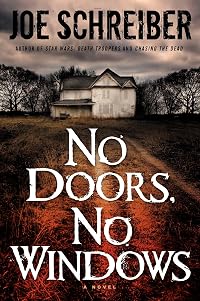
It by Stephen King
by Jthierer
Member Reviews
Unlike novels that create a world and then reflect it through the interior monologue of one or more characters, The Glister seems to be all interior voice and no reality. The terror of childhood is ever-present, even as our protagonist Leonard speaks with the voice of someone at least twice his age. Leonard's interior world is a deliciously wicked place to be - his observations razor-sharp, his motives decidedly unpure - yet he is not evil or even all that deviant. Leonard is a teenager navigating a literally poisoned world; poisoned by the plant since closed that chemically contaminated the town and the surrounding woods. And now boys are being murdered, stolen from their homes and turning up dead in horrifying corporeal displays. As show more Leonard winds his way toward an equally grim end, we are hard-pressed to determine what is real and what exists in the boy's head, refracted through the toxins of terror and distrust.
The book's cover describes this work as "terrifying" - I didn't find it so much terrifying in the traditional adult sense. What it does well is encapsulate the fear that children spend so much time trying to ignore. They are told by adults not to talk to strangers, for example, but they are usually not told why in an effort not to frighten them. But what could be more frightening than not knowing what you are supposed to be frightened of? The few adult characters in the book are not as thoroughly examined, but all are broken, shattered people. No one escapes whole - there is no hope here, just despair and decay. The story does not wrap up nicely; there are no easy answers, no definitive resolutions. I recommend it with reservations - a mystery with a toxic cloud at its center. show less
The book's cover describes this work as "terrifying" - I didn't find it so much terrifying in the traditional adult sense. What it does well is encapsulate the fear that children spend so much time trying to ignore. They are told by adults not to talk to strangers, for example, but they are usually not told why in an effort not to frighten them. But what could be more frightening than not knowing what you are supposed to be frightened of? The few adult characters in the book are not as thoroughly examined, but all are broken, shattered people. No one escapes whole - there is no hope here, just despair and decay. The story does not wrap up nicely; there are no easy answers, no definitive resolutions. I recommend it with reservations - a mystery with a toxic cloud at its center. show less
Denizens of Innertown, a sickly isolated place on the site of an abandoned toxic chemical plant, are in various stages of illness or pathology. Young boys keep disappearing. The ones who remain are sociopaths. The young girls are harlots. The older people are in various states of living death. The police and townspeople inexplicably ignore the evil in their midst.
This is Hell on Earth, or maybe just Purgatory, since you have to wait for the Angel of Death to come take you to your even grizzlier demise. Or some of each place: Innertown and Outertown (where the rich people live) could be analogous to Dante’s rings of Hell. In jarring contrast to the content, however, the prose is quite poetic. That doesn’t make it any more pleasant, show more just more dislocating. In fact, it seems, at times, like a dramatization of the poet Rainer Maria Rilke’s stanzas in “Duino Elegies”:
Who, if I cried out, would hear me among the angels’
hierarchies? And even if one of them suddenly
pressed me against his heart, I would perish
in the embrace of his stronger existence.
For beauty is nothing but the beginning of terror
which we are barely able to endure and are awed
because it serenely disdains to annihilate us.
Recommended only for fans of noir dystopias, or those interested in pondering the nature of death and evil from a very dark perspective. show less
This is Hell on Earth, or maybe just Purgatory, since you have to wait for the Angel of Death to come take you to your even grizzlier demise. Or some of each place: Innertown and Outertown (where the rich people live) could be analogous to Dante’s rings of Hell. In jarring contrast to the content, however, the prose is quite poetic. That doesn’t make it any more pleasant, show more just more dislocating. In fact, it seems, at times, like a dramatization of the poet Rainer Maria Rilke’s stanzas in “Duino Elegies”:
Who, if I cried out, would hear me among the angels’
hierarchies? And even if one of them suddenly
pressed me against his heart, I would perish
in the embrace of his stronger existence.
For beauty is nothing but the beginning of terror
which we are barely able to endure and are awed
because it serenely disdains to annihilate us.
Recommended only for fans of noir dystopias, or those interested in pondering the nature of death and evil from a very dark perspective. show less
The town and the people of Innertown have never been the same since George Lister’s chemical plant shut down, especially the woods. There is something evil in the woods. Every year a boy or two disappears, never to be seen or heard from again. The police won’t do anything about the disappearances as there is no sign of foul play. There are a few people who believe otherwise and they are town policeman, John Morrison in addition to Leonard and his friends. It seems that Morrison knows there is evil hiding in the woods but he just like the rest of the authorities will not do anything about it. So it is up to Leonard and his friends to fight the darkness, before it claims the rest of them.
Having never read any of author, John show more Burnside’s other previous works to go off of what type of author Mr. Burnside is; I thought The Glister was a hauntingly dark and gruesome piece of work. That is a good thing. It drew the reader in and enveloped them in Evil. I couldn’t stop reading. The Glister is like riding a horrifying roller-coaster ride that you can’t get abandon till the end, so all you have left to do is just hold on tight and enjoy the ride. I like that horror fans as well as anyone looking for a good scary will enjoy The Glister. This is one book you will want to get your hands on as soon as possible. You won’t regret it. show less
Having never read any of author, John show more Burnside’s other previous works to go off of what type of author Mr. Burnside is; I thought The Glister was a hauntingly dark and gruesome piece of work. That is a good thing. It drew the reader in and enveloped them in Evil. I couldn’t stop reading. The Glister is like riding a horrifying roller-coaster ride that you can’t get abandon till the end, so all you have left to do is just hold on tight and enjoy the ride. I like that horror fans as well as anyone looking for a good scary will enjoy The Glister. This is one book you will want to get your hands on as soon as possible. You won’t regret it. show less
Summary: Innertown is a place that is dying, or perhaps one already dead. Ever since the chemical plant shut down, the town has begun a long, poisoned decay - woods full of twisted trees and mutated animals, adults dying of a host of mysterious diseases, children running desperate and wild through a world that doesn't care about them. And then, several years prior to the story, a young boy disappears... and then another, and another. The official word is that these boys are runaways, but the truth is something altogether different, and no one is willing to look too closely at what's happening in the ruins of the plant.
Review: This book started out with such promise. The premise is intriguing, the writing is elegant and unique (about show more half of Burnside's bibliography is poetry, and he can certainly turn a phrase), and the atmosphere of Innertown is so pervasively creepy that reading even twenty pages left me feeling like I wanted a good, scalding-hot shower to rid myself of Innertown's haunting poison. This book reads like an elegy to bleakness and decay, both physical and spiritual, and while that's fine as an overarching stylistic choice, it's not enough to support a novel. The beginning of The Glister hints at mystery and horror and creepiness to come, but it gets so lost in its welter of beautifully-written deep thoughts that it forgets to actually find a plot, and never lives up to its initial promise. The ending kind of sputters to a halt without wrapping up most of the main story points, instead dissolving into a bunch of bizzare metaphysical mumbo-jumbo and then just stopping. It's entirely possible that it's just so Deep that I didn't get it, but if wanting my novels to have some kind of interesting plot on which to hang their poetical musings marks me out as being a Philistine, then so be it. I can live with that, and The Glister, although lyrically very well-written, just didn't measure up. 2.5 out of 5 stars.
Recommendation: Going into this book expecting a mystery, or horror, or anything other than an interesting philosophical look at innocence, evil, despair, and decay will only lead to disappointment. I'd certainly be willing to try some of Burnside's poetry, but as a novel, The Glister doesn't have enough of a story thread to satisfy. show less
Review: This book started out with such promise. The premise is intriguing, the writing is elegant and unique (about show more half of Burnside's bibliography is poetry, and he can certainly turn a phrase), and the atmosphere of Innertown is so pervasively creepy that reading even twenty pages left me feeling like I wanted a good, scalding-hot shower to rid myself of Innertown's haunting poison. This book reads like an elegy to bleakness and decay, both physical and spiritual, and while that's fine as an overarching stylistic choice, it's not enough to support a novel. The beginning of The Glister hints at mystery and horror and creepiness to come, but it gets so lost in its welter of beautifully-written deep thoughts that it forgets to actually find a plot, and never lives up to its initial promise. The ending kind of sputters to a halt without wrapping up most of the main story points, instead dissolving into a bunch of bizzare metaphysical mumbo-jumbo and then just stopping. It's entirely possible that it's just so Deep that I didn't get it, but if wanting my novels to have some kind of interesting plot on which to hang their poetical musings marks me out as being a Philistine, then so be it. I can live with that, and The Glister, although lyrically very well-written, just didn't measure up. 2.5 out of 5 stars.
Recommendation: Going into this book expecting a mystery, or horror, or anything other than an interesting philosophical look at innocence, evil, despair, and decay will only lead to disappointment. I'd certainly be willing to try some of Burnside's poetry, but as a novel, The Glister doesn't have enough of a story thread to satisfy. show less
If you’re one of those readers who need a solid ending, skip The Glister. You’ll not find an answer spelled out on the page. You’ll close the book and wonder what happened. Was it this? Or this? Could it have been as simple as that? You might even turn back and wonder if you’ve missed something, too much of a simpleton to understand all that beautiful language on the page.
You can pop around the Internet, trying to find a review that says, “the dead boys went here.” You won’t find it. If you find someone claiming to know the answer, it’ll be their own interpretation and up for a “did the author mean to be so damned ambiguous?” debate.
Still later, you’ll remember this horror tale fondly, even though you never read show more horror and you’re not even certain that horror is the genre that best fits the story. You’ll smirk, thinking of Leonard, the teen protagonist, glistening for eternity in a book you might not have liked, but you won’t soon forget.
The Glister is a mystery. Not Sherlock Holmes or Agatha Christie. Think Twilight Zone, fully in black and white with odd musical notes and dark one-dimensional characters. Your setting is Innertown, an amalgamation of death, toxins and small town simplicity. The town’s a ruined place of people living out their lives in that oft mimicked quiet desperation. In a town like this, there’s no one watching the teenagers and they’re doing things unsupervised teens do, having unprotected sex, running in gangs, looking for dead things to prove that they are vitally alive. And teens left unsupervised are certain to go missing; some doom certain to befall them. Yet for all of this blackness, the writer (who I’m told is a poet) manages to find a beautiful luminous landscape to pen his tale. The setting is absolutely gossamer in its dark descriptive, and the ambiance is tension-filled, yet somehow retains the tenderness of youth.
However, while the writer is busy painting this nuanced shadowy setting, he forgets to add any depth to his characters. Leonard, the young protagonist, is fantastic. I loved him (well, up until a point), but the others are like walking dead (and I mean that in flat character-speak, not zombie-speak). Perhaps this is the angle he was hoping for, as it is a tale of lives filled with emptiness, but it makes for a hard investment for this character-driven reader.
But, though I wasn't certain that I liked The Glister as I turned the last page, I couldn't stop thinking about it for days. I doubt a better compliment can be offered an author.
The Glister will be available on March 10, 2009.
Review first published on Many A Quaint & Curious Volume show less
You can pop around the Internet, trying to find a review that says, “the dead boys went here.” You won’t find it. If you find someone claiming to know the answer, it’ll be their own interpretation and up for a “did the author mean to be so damned ambiguous?” debate.
Still later, you’ll remember this horror tale fondly, even though you never read show more horror and you’re not even certain that horror is the genre that best fits the story. You’ll smirk, thinking of Leonard, the teen protagonist, glistening for eternity in a book you might not have liked, but you won’t soon forget.
The Glister is a mystery. Not Sherlock Holmes or Agatha Christie. Think Twilight Zone, fully in black and white with odd musical notes and dark one-dimensional characters. Your setting is Innertown, an amalgamation of death, toxins and small town simplicity. The town’s a ruined place of people living out their lives in that oft mimicked quiet desperation. In a town like this, there’s no one watching the teenagers and they’re doing things unsupervised teens do, having unprotected sex, running in gangs, looking for dead things to prove that they are vitally alive. And teens left unsupervised are certain to go missing; some doom certain to befall them. Yet for all of this blackness, the writer (who I’m told is a poet) manages to find a beautiful luminous landscape to pen his tale. The setting is absolutely gossamer in its dark descriptive, and the ambiance is tension-filled, yet somehow retains the tenderness of youth.
However, while the writer is busy painting this nuanced shadowy setting, he forgets to add any depth to his characters. Leonard, the young protagonist, is fantastic. I loved him (well, up until a point), but the others are like walking dead (and I mean that in flat character-speak, not zombie-speak). Perhaps this is the angle he was hoping for, as it is a tale of lives filled with emptiness, but it makes for a hard investment for this character-driven reader.
But, though I wasn't certain that I liked The Glister as I turned the last page, I couldn't stop thinking about it for days. I doubt a better compliment can be offered an author.
The Glister will be available on March 10, 2009.
Review first published on Many A Quaint & Curious Volume show less
John Burnside’s The Glister opens in a modern day ghost town. The chemical plant that once fused the city with life and prosperity has been closed and left to rot. Everything in the town can be described as dead and deformed. The town’s adults are apathetic, depressed and diseased. The children are violent, promiscuous, and haunted. But no one ever leaves the town, unless of course, they disappear.
This book is not a typical horror or mystery novel. It’s more of a very long dark fable complete with an abstract ending and an obscure moral. This is not an easy read; it can best be described as uncomfortable and difficult. Burnside manages to infuse every aspect of his tales with menace, down to the last comma. There is sex, violence show more and adult language—the majority of it committed by young adults. It’s also the kind of book that may torment it’s readers for months. If there is a more terrifying or disturbing novel out there, I have yet to read it. I’d warn anyone considering the novel that it is scary and edgy. You may not like it, but you should definitely read it. show less
This book is not a typical horror or mystery novel. It’s more of a very long dark fable complete with an abstract ending and an obscure moral. This is not an easy read; it can best be described as uncomfortable and difficult. Burnside manages to infuse every aspect of his tales with menace, down to the last comma. There is sex, violence show more and adult language—the majority of it committed by young adults. It’s also the kind of book that may torment it’s readers for months. If there is a more terrifying or disturbing novel out there, I have yet to read it. I’d warn anyone considering the novel that it is scary and edgy. You may not like it, but you should definitely read it. show less
If I hadn’t known before I started The Glister that author John Burnside was also a poet, I could likely have guessed it by the end of the first page. Throughout this very creepy novel, the language elevated it from prose to quite nearly poetry.
Initially appearing to be a novel about missing children in a post-industrial town, The Glister quickly becomes a metaphor for a dead-end life. The teenage narrator, Leonard speaks candidly about his choices, desires and decisions, and just as candidly about the things he has no control over – his parents, the state of the dying town and the corruption he knows exists among the few adults with anything like power and success in Outertown.
While I didn’t expect this book to be a show more genre-typical “thriller” or “horror” novel, the premise did lead me to expect that by the end a mystery would be solved – namely the fate of the missing boys. However, while there is a denouement, and a retribution of sorts, the metaphysical turn that the book took in the last few pages left me somewhat confused, and as a result vaguely edgy – which I liked – and not quite as satisfied as I wanted – which I didn’t like. show less
Initially appearing to be a novel about missing children in a post-industrial town, The Glister quickly becomes a metaphor for a dead-end life. The teenage narrator, Leonard speaks candidly about his choices, desires and decisions, and just as candidly about the things he has no control over – his parents, the state of the dying town and the corruption he knows exists among the few adults with anything like power and success in Outertown.
While I didn’t expect this book to be a show more genre-typical “thriller” or “horror” novel, the premise did lead me to expect that by the end a mystery would be solved – namely the fate of the missing boys. However, while there is a denouement, and a retribution of sorts, the metaphysical turn that the book took in the last few pages left me somewhat confused, and as a result vaguely edgy – which I liked – and not quite as satisfied as I wanted – which I didn’t like. show less
Members
- Recently Added By
Lists

Florida
366 works; 3 members
Author Information

55+ Works 1,922 Members
John Burnside is a poet, novelist, and memoirist whose many books include Still Life with Feeding Snake and On Henry Miller (Princeton). He is professor of English at the University of St Andrews and a regular contributor to the London Review of Books.
Awards and Honors
Common Knowledge
- Canonical title
- The Glister
- Original title
- The Glister
- Original publication date
- 2009-03-10
- People/Characters
- Leonard Wilson; The Moth Man; Elspeth; Andrew Rivers; Eddie; Jimmy (show all 8); John Morrison; Brian Smith
- Important places
- Innertown
- Epigraph
- "Hist, then. How dost thou know that some entire, living, thinking thing may not be invisibly and uninterpenetratingly standing precisely where thou now standest; aye, and standing there in thy spite? In thy most solitary hou... (show all)rs, then, dost thou not fear eavesdroppers?" --Herman Melville, Moby-Dick, or, The Whale
"Buoyed up by that coffin, for almost one whole day and night, I floated on a soft and dirge-like main. The unharming sharks, they glided by as if with padlocks on their mouths; the savage sea-hawks sailed with sheathed beaks... (show all). On the second day, a sail drew near, nearer, and picked me up at last. It was the devious-cruising Rachel, that in her retracing search after he missing children, only found another orphan." --Herman Melville, Moby-Dick, or, The Whale - First words
- In the beginning, John Morrison is working in his garden.
- Last words
- (Click to show. Warning: May contain spoilers.)The Moth Man, the Glister, the boy in the beams of the ceiling, Morrison in his plaster cell--everything I know is gone, and all that remains is the calling of the gulls, above and around me the calling of the gulls and the slow, insistent motion of the waters, slow and far away and barely audible, turning on the shore and in my mind.
- Blurbers
- Smith, Scott; Straub, Peter; Crace, Jim; Donohue, Keith
Classifications
Statistics
- Members
- 388
- Popularity
- 80,894
- Reviews
- 27
- Rating
- (3.24)
- Languages
- English, French, German, Italian
- Media
- Paper, Audiobook, Ebook
- ISBNs
- 22
- ASINs
- 10