
On This Page
Description
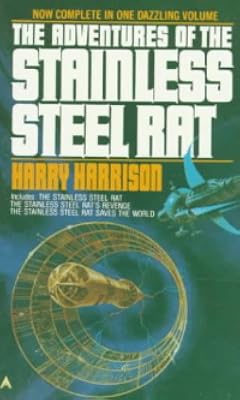
Bill, the Galactic Hero is written by Harry Harrison who is also the author of Deathworld, Make Room! Make Room! (filmed as Soylent Green), the popular Stainless Steel Rat books, and many other famous works of SF. "Simply the funniest science fiction book ever written."--New York Times besteselling author Terry Pratchett At the Publisher's request, this title is being sold without Digital Rights Management Software (DRM) applied.Tags
Recommendations


















Member Reviews
My reaction to reading this novel in 1999. Spoilers follow.
This savage satire takes aim at not only the military (Harrison was a machine gun instructor in the Army) but certain works and types of sf itself.
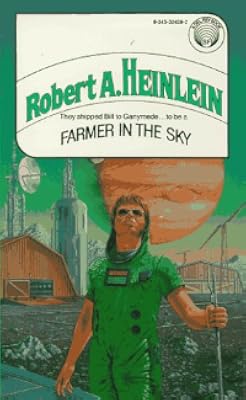
Robert A. Heinlein’s Starship Troopers with recruit Johnny Ringo's respectful worshp of his drill instructor is parodied here. Bill is tricked into joining the military and his drill instructor, one Petty Officer Deathwish Drang is an ex-actor who cynically got some fang implants to get the cushy role of DI. Bill threatens a chaplain at gunpoint to get Drang’s old dentition after the latter’s death. The powered suits of Heinlein’s novel prove a positive liability in combat on the mudworld of Venuria. Nor is Bill serving a show more noble state where veterans get a vote. He serves a cynical empire that, in one funny (and there are many in this novel) scene, stages a decoration ceremony with a fake emperor. (Thus Harrison satirizes not only Heinlein but all those space operas where good and noble empires are faithfully and willingly served by commoners in the military.) Bill doesn’t exactly deserve his medal – he unknowingly destroyed an enemy spaceship. Nor is – and this is particularly funny – his job heroic. His job is to change fuses in the massive fuse room of spaceship during combat, a job his superior insists will take at least a year to learn but can be mastered by almost anyone in under fifteen minutes.
The huge, gilded aluminum covered imperial capital city-planet of Helior is quite obviously a parody of Isaac Asimov’s Trantor in the Foundation series. Here is a world so vast and complex that its guidebooks are rare and precious items. Bill loses his and gets lost and shows up from leave late where he is promptly court-martialed in a kangaroo court. (Harrison takes great delight in mocking military bureaucracy which, at one point, gives Bill a second right arm as a transplant after a combat injury.) He eventually seeks refuge in the garbagemen of Helior (prefiguring the environmental concerns which were part of Harrison’s classic Make Room! Make Room! written a year later) whose main concern is how to get rid of Helior’s vast garbage. Bill hits on the scheme of mailing it, non-returnable post, of course – to the provinces. He also, on Helior, gets involved, coerced actually, as a double agent in the Robot Underground Resistance (RUR, an allusion to Karl Capek’s classic play of the same name). When the day of the revolution comes, it turns out there’s only one genuine human revolutionary. The rest are spies. (Harrison has a place in science fiction as inventing some of the wackier robot scenarios).
Speaking of espionage, the ship Bill serves on is the Christine Keeler, an allusion to a woman in a real British spy scandal of the early 1960s. Espionage plays its part when recruit Eager Beaver (always willing to polish his fellow recruit’s boots) turns out to be a Chinger spy – though the Chingers turn out to be seven inches high, though quite strong being from a heavy gravity planet, rather than the giant lizards of propaganda. But the final bit of savage satire comes at the end of the novel. Now possessing Drang’s old fangs, he’s become a recruiter. He unknowingly returns to his home planet and recruits his brother (using beer, music, and hypnotism). When his mother shows up, tells him what he’s done, and begs him “You wouldn’t take your own little brother into the troopers, would you?”, the completely dehumanized and brutalized Bill, knowing every recruit is a month off his service time, instantly and simply responds “Yes.”
I think it’s safe to say Harrison didn’t like his time in the military. show less
This savage satire takes aim at not only the military (Harrison was a machine gun instructor in the Army) but certain works and types of sf itself.
Robert A. Heinlein’s Starship Troopers with recruit Johnny Ringo's respectful worshp of his drill instructor is parodied here. Bill is tricked into joining the military and his drill instructor, one Petty Officer Deathwish Drang is an ex-actor who cynically got some fang implants to get the cushy role of DI. Bill threatens a chaplain at gunpoint to get Drang’s old dentition after the latter’s death. The powered suits of Heinlein’s novel prove a positive liability in combat on the mudworld of Venuria. Nor is Bill serving a show more noble state where veterans get a vote. He serves a cynical empire that, in one funny (and there are many in this novel) scene, stages a decoration ceremony with a fake emperor. (Thus Harrison satirizes not only Heinlein but all those space operas where good and noble empires are faithfully and willingly served by commoners in the military.) Bill doesn’t exactly deserve his medal – he unknowingly destroyed an enemy spaceship. Nor is – and this is particularly funny – his job heroic. His job is to change fuses in the massive fuse room of spaceship during combat, a job his superior insists will take at least a year to learn but can be mastered by almost anyone in under fifteen minutes.
The huge, gilded aluminum covered imperial capital city-planet of Helior is quite obviously a parody of Isaac Asimov’s Trantor in the Foundation series. Here is a world so vast and complex that its guidebooks are rare and precious items. Bill loses his and gets lost and shows up from leave late where he is promptly court-martialed in a kangaroo court. (Harrison takes great delight in mocking military bureaucracy which, at one point, gives Bill a second right arm as a transplant after a combat injury.) He eventually seeks refuge in the garbagemen of Helior (prefiguring the environmental concerns which were part of Harrison’s classic Make Room! Make Room! written a year later) whose main concern is how to get rid of Helior’s vast garbage. Bill hits on the scheme of mailing it, non-returnable post, of course – to the provinces. He also, on Helior, gets involved, coerced actually, as a double agent in the Robot Underground Resistance (RUR, an allusion to Karl Capek’s classic play of the same name). When the day of the revolution comes, it turns out there’s only one genuine human revolutionary. The rest are spies. (Harrison has a place in science fiction as inventing some of the wackier robot scenarios).
Speaking of espionage, the ship Bill serves on is the Christine Keeler, an allusion to a woman in a real British spy scandal of the early 1960s. Espionage plays its part when recruit Eager Beaver (always willing to polish his fellow recruit’s boots) turns out to be a Chinger spy – though the Chingers turn out to be seven inches high, though quite strong being from a heavy gravity planet, rather than the giant lizards of propaganda. But the final bit of savage satire comes at the end of the novel. Now possessing Drang’s old fangs, he’s become a recruiter. He unknowingly returns to his home planet and recruits his brother (using beer, music, and hypnotism). When his mother shows up, tells him what he’s done, and begs him “You wouldn’t take your own little brother into the troopers, would you?”, the completely dehumanized and brutalized Bill, knowing every recruit is a month off his service time, instantly and simply responds “Yes.”
I think it’s safe to say Harrison didn’t like his time in the military. show less
This Starship Troopers/Catch-22 anti-military, anti-war satire is one of the most depressing, bleakest books I have ever read in my life. When I started reading it, I thought, how amusing. How over the top. How funny. Poor Bill. Poor hick. Drugged and forced to enlist as an imperial trooper. Forced to fight in a stupid war he knows nothing about, doing nothing, eating crap, doing useless crap, training for nothing, when in action accidentally saving his ship from obliteration, becoming a hero, getting a hollow medal, getting robbed, going AWOL accidentally, on the run, finding help, becoming an informer, everyone is, how fun, off to prison, on trial to be shot to death, off to prison camp, is there any point, is there any future, is show more there any hope, oh holy shit, there's not, holy fucking shit, he's a fucking monster, damn!!!
I know this book was published in 1965 when the Vietnam "conflict" was becoming an actual war, following on the heels of the failed Korean War and when men were being drafted, perhaps not too unlike in this book, as Harrison sees it. And perhaps it's all too similar, per Harrison's viewpoint. I won't dispute that. And as Eager Beager, the Chigger spy says, we can't be civilized if all we like to do is fight wars. True dat. But crap, to have Bill end up like he does is fucking cruel to him and the reader. It's brutal. I guess that's carrying things through to the logical viciously satirical conclusion though. But that doesn't mean I have to like it. At some point in the book, I found I enjoyed the humor a great deal less than I once did and therefore enjoyed the book a great deal less than I once did. It became more of an effort to read. It became a chore I had to get through. It became a tasteless task and I didn't like that. Some people rave about this book. I guess I can see why some people might. These are the same people who like Catch-22, etc. I won't deny the genius of Catch-22, but I can't put this on the same level as that book for some reason. I just don't think it matches up, but then it's been so long since I've read that book, I really can't remember. Perhaps I now have to reread it.
This book isn't bad, per se. It's certainly unique. There are funny moments, especially early on, like when all of the recruits have to stand and wait hours in the ship's fuse room, ready to lift and replace 90 pound fuses in case of action, only to feel virtually nothing before being informed they've been in action and have destroyed the enemy with atomic torpedoes and they're getting medals. They get medals for everything. It's sad that Bill ultimately realizes that suicide is really the only way out. Sad because it seems to be the solution realized by so many of our current military servicemen and women, as well as our vets. It's truly tragic. I wonder how much foresight Harrison truly had. He's so over the top in skewering the military and makes the leaders out to be such blithering idiots, but how far from the truth is he? And the grunts just follow the orders upon pain of death. Yeah, it's funny, but like I said, at some point, the humor wears thin and then it just becomes painful. During Bill's trial, when the court just wants him shot regardless of evidence. When he's sent to the prison camp, the second one, where no one escapes and everyone dies. And he does what he has to do. It's fucking gruesome and damned depressing. I'm sorry, but that's not funny. So, as much as I've enjoyed some of Harrison's books and as interesting and unique and at times, funny, as I think this book is, I don't think I can't recommend it. Sorry to all the fans out there. Not recommended. show less
I know this book was published in 1965 when the Vietnam "conflict" was becoming an actual war, following on the heels of the failed Korean War and when men were being drafted, perhaps not too unlike in this book, as Harrison sees it. And perhaps it's all too similar, per Harrison's viewpoint. I won't dispute that. And as Eager Beager, the Chigger spy says, we can't be civilized if all we like to do is fight wars. True dat. But crap, to have Bill end up like he does is fucking cruel to him and the reader. It's brutal. I guess that's carrying things through to the logical viciously satirical conclusion though. But that doesn't mean I have to like it. At some point in the book, I found I enjoyed the humor a great deal less than I once did and therefore enjoyed the book a great deal less than I once did. It became more of an effort to read. It became a chore I had to get through. It became a tasteless task and I didn't like that. Some people rave about this book. I guess I can see why some people might. These are the same people who like Catch-22, etc. I won't deny the genius of Catch-22, but I can't put this on the same level as that book for some reason. I just don't think it matches up, but then it's been so long since I've read that book, I really can't remember. Perhaps I now have to reread it.
This book isn't bad, per se. It's certainly unique. There are funny moments, especially early on, like when all of the recruits have to stand and wait hours in the ship's fuse room, ready to lift and replace 90 pound fuses in case of action, only to feel virtually nothing before being informed they've been in action and have destroyed the enemy with atomic torpedoes and they're getting medals. They get medals for everything. It's sad that Bill ultimately realizes that suicide is really the only way out. Sad because it seems to be the solution realized by so many of our current military servicemen and women, as well as our vets. It's truly tragic. I wonder how much foresight Harrison truly had. He's so over the top in skewering the military and makes the leaders out to be such blithering idiots, but how far from the truth is he? And the grunts just follow the orders upon pain of death. Yeah, it's funny, but like I said, at some point, the humor wears thin and then it just becomes painful. During Bill's trial, when the court just wants him shot regardless of evidence. When he's sent to the prison camp, the second one, where no one escapes and everyone dies. And he does what he has to do. It's fucking gruesome and damned depressing. I'm sorry, but that's not funny. So, as much as I've enjoyed some of Harrison's books and as interesting and unique and at times, funny, as I think this book is, I don't think I can't recommend it. Sorry to all the fans out there. Not recommended. show less
I thought I would like this book more than I did. I remember reading it back in college and loved it. Now, I've gotten to know too many people in the military to find it as funny as I did forty years ago. I know now that it really isn't a real reflection of our military.
I think sometimes that part of what satire does is challenge our perceptions and make us question what we think we know. This book achieved that goal, I think. Perhaps that is why it wasn't as funny, but more uncomfortable.
Bill, the Galactic Hero isn't on my reread list, but I am glad I reread it now.
I think sometimes that part of what satire does is challenge our perceptions and make us question what we think we know. This book achieved that goal, I think. Perhaps that is why it wasn't as funny, but more uncomfortable.
Bill, the Galactic Hero isn't on my reread list, but I am glad I reread it now.
Sometimes you can't go home again. I remembered reading this with fond memories as an adolescent, but upon returning to it as a book-group selection I found it rather turgid as a satire. This is particuarly since Bill just turns out to be too much of a victim to feel much sympathy for. The novel is still probably worth reading once if you're in the right frame of mind, or if the current stream of military recruitment commercials is starting to drive you crazy; the opening sequence and the epilog ARE classic.
Here is a book that is seldom read these days. Bill the Galactic Hero, by Harry Harrison. It’s a satyrical look at the military, couched in a zany futuristic world where mankind is pitted against a race of small alien lizards called, the Chingers.It’s an important novel because it represents a particular sub-genre of science fiction. Namely, the military SF comedy. There are many military SF novels about, but ones that attempt humor are rare. And if it’s not fair to say rare, then I’d venture to say it’s rare to see one done well.So what about Bill the Galactic Hero, and what makes it so special? It’s one of the early novels of its class, and well constructed with good pacing and fun dialog. More importantly, it takes a very show more satirical gibe at the industrial military complex, which — many would agree — is probably its most endearing quality.The issue I have with it — and probably the point where there is some disagreement — is about how funny it is. I myself never laughed out loud while reading it. However, the situations that the protagonist (Bill) finds himself in are so bizarre, one can only smile. Even if you don’t laugh, one is compelled to read on. show less
I read BILL, THE GALACTIC HERO by Harry Harrison, when I was eleven. I'd picked it up hoping for a Star Wars-style romp full of spaceships and explosions. What I got was SF's answer to Catch-22: dazzlingly cynical, snortingly funny, Bill's story changed my outlook forever. I reread it again yesterday and it was every bit as terrific as the first time.
This is most certainly a book of it times - written as a response to the author being drafted into the army, it is a book that both satirizes, and shows the pointlessness of war. At times, I found it too over the top, but the bureaucracy and the demonizing the enemy is very much is very much on point.
Its satire. Its a book written in the 60's. It has lots of 60's science fiction tropes like 'big' 7 foot tall lizard aliens, weird machinery that almost makes sense(but not really) and ships running off of outdated technology that is at odds with today's computers.
Its also not subtle. This book hits you over the head with the absurdity of modern life, from how soldiers are trained, to how waste is handled. I found myself rolling my eyes a show more bit, but the book is satire, the style is a deliberate choice. Its not a bad book by any means. I stuck with it because of the absurdity that is the life of Bill. But its not one I will be reading again. show less
Its satire. Its a book written in the 60's. It has lots of 60's science fiction tropes like 'big' 7 foot tall lizard aliens, weird machinery that almost makes sense(but not really) and ships running off of outdated technology that is at odds with today's computers.
Its also not subtle. This book hits you over the head with the absurdity of modern life, from how soldiers are trained, to how waste is handled. I found myself rolling my eyes a show more bit, but the book is satire, the style is a deliberate choice. Its not a bad book by any means. I stuck with it because of the absurdity that is the life of Bill. But its not one I will be reading again. show less
Members
- Recently Added By
Lists

Top Five Books of 2023
767 works; 317 members
Author Information

440+ Works 44,465 Members
Harry Harrison was born Henry Maxwell Dempsey on March 12, 1925 in Stamford, Connecticut. He was drafted into the U. S. Air Corps in 1943 and became a sharpshooter, a military policeman, a gunnery instructor, and a specialist in the prototypes of computer-guided bomb-sights and gun turrets. After being discharged, he graduated from Hunter College show more with a degree in art. By the end of the 1940s, he was running a small studio that specialized in selling illustrations to comics and science-fiction magazines. He then moved on to editing some of the magazines. As the market for comics began to shrink, he started writing for science-fiction magazines. He wrote short science fiction stories and novels including Deathworld, Captive Universe, Montezuma's Revenge, Star Smashers of the Galaxy Rangers, Stonehenge, West of Eden, Stars and Stripes Forever. He also wrote the Stainless Steel Rat series and the Bill, the Galactic Hero series. His novel Make Room! Make Room! Was the inspiration for the movie Soylent Green. He also wrote under the pseudonyms Hank Dempsey, Felix Boyd, Wade Kaempfert, Cameron Hall, Philip St. John, and Leslie Charteris. He died on August 15, 2012 at the age of 87. (Bowker Author Biography) show less
Some Editions
Series

Belongs to Publisher Series
Work Relationships
Contains
Common Knowledge
- Canonical title*
- Bill, de held van de melkweg
- Original title
- Bill, the Galactic Hero
- Original publication date
- 1965
- People/Characters
- Corporal Bill; Deathwish Drang; Reverend Tembo; Spleen; Chaplain/Laundry Officer; Inspector Jeyes (show all 26); Basurero; X; Abdul O'Brien Cohen; Eager Beager; Recruiting Sergeant Grue; Bowb Brown; Director Ratt; Blackey; Bill's Mother; Litvok; Pinkerton; Court President; Sergeant Ferkel; Ugly Ugglesway; Cook; Doctor; Policeman; Schmutzig; Ghoulem, an android; Charlie
- Important places
- Chinger War Zone; Starship Bounty
- Related movies
- Bill the Galactic Hero (2014 | IMDb)
- Dedication
- For my shipmate BRIAN W. ALDISS who is reading the sextant and plotting the course for us all.
- First words
- Bill never realized that sex was the cause of it all.
- Last words
- (Click to show. Warning: May contain spoilers.)The music blared, the soldiers marched, the mother cried - as mothers have always done - and the brave little band tramped down the road and over the hill and out of sight into the sunset.
- Original language
- English
*Some information comes from Common Knowledge in other languages. Click "Edit" for more information.
Classifications
Statistics
- Members
- 1,280
- Popularity
- 19,087
- Reviews
- 21
- Rating
- (3.42)
- Languages
- 14 — Czech, Dutch, English, Finnish, French, German, Hungarian, Lithuanian, Polish, Portuguese, Russian, Serbian, Spanish, Swedish
- Media
- Paper, Ebook
- ISBNs
- 28
- ASINs
- 18