The Geopolitics of Emotion: How Cultures of Fear, Humiliation, and Hope are Reshaping the World
by Dominique Moïsi
On This Page
Description
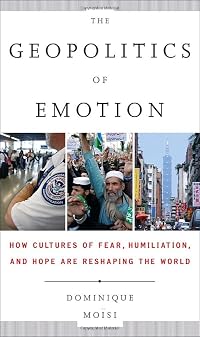
The first book to investigate the far-reaching emotional impact of globalization. Dominique Moi:si, an authority on international affairs, argues that our post-9/11 world has become divided by more than cultural fault lines. He chronicles how the geopolitics of today is characterized by a "clash of emotions," and how cultures of fear, humiliation, and hope are reshaping the world. Moi:si contends that the United States and Europe have been dominated by fears of the "other" and of their loss show more of a national identity and purpose. For Muslims, the combination of historical grievances, exclusion from the economic boon of globalization, and civil and religious conflicts have created a culture of humiliation that is quickly devolving into a culture of hatred. Meanwhile, Asia has been able to concentrate on building a better future and seizing the economic initiative from the American-dominated West, creating a new culture of hope. How will these varying emotions influence the political, social, and cultural conflicts that roil our world? And what will the effect of the world economic crisis be?--From publisher description. show lessTags
Recommendations








































Member Reviews
Very interesting read with the focus and spotlight on two countries where hope is very much alive and kicking, China and India (Chindia).
While both countries are experiencing blistering growth rates the manner in which they are achieving it merits some close examination. China is trying to marry stern authoritarianism with bleeding edge capitalism sort of a North Korea meets the United States kind of approach. Will that work in the long run? A country bereft of democratic traditions and an independent judicial system. It has managed to create a super rich class, a sizeable middle class (around 350 million) but about a billion of it's citizen are yet to experience the fruits of this windfall and will they keep quiet for long or is it a show more calm before the storm.
Some of it's actions have not endeared it to the International community at large, for instance, it has territorial disputes with every country it shares borders with, it's reaction towards any attempt to appease the Dalai Lama is always visceral and at times childish. It continues to militarily support megalomaniacs and failed states the likes of North Korea, Zimbabwe and Pakistan. It's continued support for the evil Sudanese junta is unconscionable.
India on the other hand has it's own share of problems some of which it shares with China, such as it's large underclass population that could prove to be the straw that broke the camel's back. It's venal and corrupt politicians. So for every two steps forward the country takes a step back. show less
While both countries are experiencing blistering growth rates the manner in which they are achieving it merits some close examination. China is trying to marry stern authoritarianism with bleeding edge capitalism sort of a North Korea meets the United States kind of approach. Will that work in the long run? A country bereft of democratic traditions and an independent judicial system. It has managed to create a super rich class, a sizeable middle class (around 350 million) but about a billion of it's citizen are yet to experience the fruits of this windfall and will they keep quiet for long or is it a show more calm before the storm.
Some of it's actions have not endeared it to the International community at large, for instance, it has territorial disputes with every country it shares borders with, it's reaction towards any attempt to appease the Dalai Lama is always visceral and at times childish. It continues to militarily support megalomaniacs and failed states the likes of North Korea, Zimbabwe and Pakistan. It's continued support for the evil Sudanese junta is unconscionable.
India on the other hand has it's own share of problems some of which it shares with China, such as it's large underclass population that could prove to be the straw that broke the camel's back. It's venal and corrupt politicians. So for every two steps forward the country takes a step back. show less
Very interesting read with the focus and spotlight on two countries where hope is very much alive and kicking, China and India (Chindia).
While both countries are experiencing blistering growth rates the manner in which they are achieving it merits some close examination. China is trying to marry stern authoritarianism with bleeding edge capitalism sort of a North Korea meets the United States kind of approach. Will that work in the long run? A country bereft of democratic traditions and an independent judicial system. It has managed to create a super rich class, a sizeable middle class (around 350 million) but about a billion of it's citizen are yet to experience the fruits of this windfall and will they keep quiet for long or is it a show more calm before the storm.
Some of it's actions have not endeared it to the International community at large, for instance, it has territorial disputes with every country it shares borders with, it's reaction towards any attempt to appease the Dalai Lama is always visceral and at times childish. It continues to militarily support megalomaniacs and failed states the likes of North Korea, Zimbabwe and Pakistan. It's continued support for the evil Sudanese junta is unconscionable.
India on the other hand has it's own share of problems some of which it shares with China, such as it's large underclass population that could prove to be the straw that broke the camel's back. It's venal and corrupt politicians. So for every two steps forward the country takes a step back. show less
While both countries are experiencing blistering growth rates the manner in which they are achieving it merits some close examination. China is trying to marry stern authoritarianism with bleeding edge capitalism sort of a North Korea meets the United States kind of approach. Will that work in the long run? A country bereft of democratic traditions and an independent judicial system. It has managed to create a super rich class, a sizeable middle class (around 350 million) but about a billion of it's citizen are yet to experience the fruits of this windfall and will they keep quiet for long or is it a show more calm before the storm.
Some of it's actions have not endeared it to the International community at large, for instance, it has territorial disputes with every country it shares borders with, it's reaction towards any attempt to appease the Dalai Lama is always visceral and at times childish. It continues to militarily support megalomaniacs and failed states the likes of North Korea, Zimbabwe and Pakistan. It's continued support for the evil Sudanese junta is unconscionable.
India on the other hand has it's own share of problems some of which it shares with China, such as it's large underclass population that could prove to be the straw that broke the camel's back. It's venal and corrupt politicians. So for every two steps forward the country takes a step back. show less
"Fear against hope, hope against humiliation, leading to sheer irrationality and even sometimes, to violence - one cannot comprehend the world in which we live without examining the emotions that help to sharpe it. We cannot understand this world withou trying to integrate and understand emotions. p xi This context is important to appreciate in learning to work with people around the world.
Analyse van de wereldsituatie anno 2008, aan de hand van psychologische categorieën angst, vernedering en hoop. Zo'n benadering heeft het voordeel de zaken eenvoudig en doorzichtig voor te stellen, het nadeel is dat de complexiteit niet helemaal tot zijn recht komt. Maar de poging is alleszins verdienstelijk!
Feb 11, 2011Dutch
Ratings
Members
- Recently Added By
Author Information

Some Editions
Series
Belongs to Publisher Series
Common Knowledge
- Canonical title*
- La géopolitique de l'émotion. Comment les cultures de peur, d'humiliation et d'espoir façonnent le monde
- Original title
- Geopolitics of emotion; La géopolitique des séries ou Le triomphe de la peur
- Alternate titles*
- Le triomphe de la peur
- Original publication date
- 2008 (1e traduction et édition française ∙ Flammarion) (1e traduction et édition française ∙ Flammarion); 2016 (1e édition originale française ∙ Stock) (1e édition originale française ∙ Stock); 2015 (Nouvelle édition française, Champs, Actuel, Flammarion) (Nouvelle édition française, Champs, Actuel, Flammarion); 2017-01-04 (Réédition française, Champs, Actuel, Flammarion) (Réédition française, Champs, Actuel, Flammarion)
- Original language*
- Anglais; Français
*Some information comes from Common Knowledge in other languages. Click "Edit" for more information.
Classifications
- Genres
- Nonfiction, Sociology, Politics and Government, General Nonfiction
- DDC/MDS
- 303.482 — Society, government, & culture Social sciences, sociology & anthropology Social processes Social change Causes of change Contact between cultures
- LCC
- JZ1318 .M64 — Political Science International relations International relations Scope of international relations. Political theory.
- BISAC
Statistics
- Members
- 160
- Popularity
- 205,147
- Reviews
- 4
- Rating
- (3.58)
- Languages
- 8 — Dutch, English, Estonian, French, German, Italian, Polish, Spanish
- Media
- Paper, Ebook
- ISBNs
- 17
- ASINs
- 2