On This Page
Description
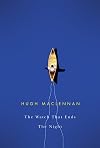
Jerome Martell abadoned his wife Catherine and their daughter Sally to fight on the Republican side in the Spanish Civil War. After he was presumed dead, Catherine married her childhood friend George. Twelve years later, Jerome returned to Montreal and turned Catherine's life upside down.Tags
Recommendations























Member Reviews
10/10
I finished (re)reading this some time ago but am finding time only now, to comment.
I feel like a toddler just learning her first steps, daring to venture into the world when she's so unsure.
This is one of my touchstones, when I need someplace to go.
Montreal, in winter, grounds me in a way that is inexplicable. (But I daresay you'll have to suffer through several tortured paragraphs as I nonetheless try to explain!) : )
My soul was shaped one winter long ago, in a way that has carried me, given me strength, courage, resilience, all the days of my life. I pick up this book, and I'm walking again along Avenue du Parc, shivering my way through the breadth/breath of winter to Mont Royal, carrying all my troubles in "my old kit bag". It show more was one of the most brutal winters Montréal had known in some time -- or so it seemed to my young self -- and seems so, still, in my mind. And I didn't know til much later that it was the most transformative one I would ever live through.
That is the beginning and the end of MacLennan's Watch. It seems that nothing happens at all; that you are only walking through the snow, in an endless loop of repetition; that it is always cold and the trees are barren; that there is only frozen obstacle after frozen obstacle to surmount; and then you wake up one day, to know that you've lived the life you always dreamed you would.
At first, you don't recognize the shapes, and the colours: but let's face it, you were only an apprentice when you started painting, and how could you have imagined, really, that the colours would turn so vivid, the lines become so abstract? But there it is: the very first dots of paint that you laid on the canvas are now plastered across huge country landscapes. Every brush stroke is recognizable.
Such is George and Catherine's story. Such is my story. And I daresay the story of so many millions of others: sometimes, the road not taken is exactly the one you shouldn't have taken after all; and all the regrets that went with the "what ifs" amount to nothing, because you are exactly where you were always meant to be.
George finds out just in time. Catherine knew all along.
The backdrop for the novel -- the political idealism that (mis)shaped the 30s and 40s -- is only a faint and distant landscape, in my mind. Though many consider it the heart of the novel, it is only faintly sketched in to contain, and give shape, to the lifeblood that flows within the main characters; and which hangs like the sword of Damocles over the lives of all of them.
Many have seen this is an existential cri de coeur for-or-against 1930s socialism (depending on which side of the line you stand), but I would barely recognize it as such, because for me it is more deeply personal, and thus more universal than any "ism" could ever be.
It is, rather, the shape of lives lived, for those who wait and watch patiently, without ever knowing that they wait and watch.
It is the one book I return to, everytime I am caught in a proverbial waiting room ... in a time of waiting ... for it always proves to me there is a point in waiting patiently.
While the bigger allegory about Canada, and our place in it, plays a tattoo in the background, for me it is only that. ... only background noise, for the humanity question rings so much harder, and truer, than simply the citizenship question. show less
I finished (re)reading this some time ago but am finding time only now, to comment.
I feel like a toddler just learning her first steps, daring to venture into the world when she's so unsure.
This is one of my touchstones, when I need someplace to go.
Montreal, in winter, grounds me in a way that is inexplicable. (But I daresay you'll have to suffer through several tortured paragraphs as I nonetheless try to explain!) : )
My soul was shaped one winter long ago, in a way that has carried me, given me strength, courage, resilience, all the days of my life. I pick up this book, and I'm walking again along Avenue du Parc, shivering my way through the breadth/breath of winter to Mont Royal, carrying all my troubles in "my old kit bag". It show more was one of the most brutal winters Montréal had known in some time -- or so it seemed to my young self -- and seems so, still, in my mind. And I didn't know til much later that it was the most transformative one I would ever live through.
That is the beginning and the end of MacLennan's Watch. It seems that nothing happens at all; that you are only walking through the snow, in an endless loop of repetition; that it is always cold and the trees are barren; that there is only frozen obstacle after frozen obstacle to surmount; and then you wake up one day, to know that you've lived the life you always dreamed you would.
At first, you don't recognize the shapes, and the colours: but let's face it, you were only an apprentice when you started painting, and how could you have imagined, really, that the colours would turn so vivid, the lines become so abstract? But there it is: the very first dots of paint that you laid on the canvas are now plastered across huge country landscapes. Every brush stroke is recognizable.
Such is George and Catherine's story. Such is my story. And I daresay the story of so many millions of others: sometimes, the road not taken is exactly the one you shouldn't have taken after all; and all the regrets that went with the "what ifs" amount to nothing, because you are exactly where you were always meant to be.
George finds out just in time. Catherine knew all along.
The backdrop for the novel -- the political idealism that (mis)shaped the 30s and 40s -- is only a faint and distant landscape, in my mind. Though many consider it the heart of the novel, it is only faintly sketched in to contain, and give shape, to the lifeblood that flows within the main characters; and which hangs like the sword of Damocles over the lives of all of them.
Many have seen this is an existential cri de coeur for-or-against 1930s socialism (depending on which side of the line you stand), but I would barely recognize it as such, because for me it is more deeply personal, and thus more universal than any "ism" could ever be.
It is, rather, the shape of lives lived, for those who wait and watch patiently, without ever knowing that they wait and watch.
It is the one book I return to, everytime I am caught in a proverbial waiting room ... in a time of waiting ... for it always proves to me there is a point in waiting patiently.
While the bigger allegory about Canada, and our place in it, plays a tattoo in the background, for me it is only that. ... only background noise, for the humanity question rings so much harder, and truer, than simply the citizenship question. show less
I am a sucker for good prose applied to interpersonal relationships through a historical period. Hugh MacLennan makes such good use of the English language, understands people, and has a good grasp on the (granted, in hindsight) temper of the times during the Spanish Civil War. He seems to invite us to judge every character while pleading the case for each. It is the eviscerating truth of the human condition that allows his work to draw us in.
This book chronicles the life of George Stewart; his wife, Catherine; and her first husband, Jerome Martell. George grew up with Catherine and always loved her, but never had the chance to marry her before Jerome did. Catherine's heart was damaged during a bout of rheumatic fever and so her time on Earth is more limited, but she does not let that limit her life. Jerome, a brilliant surgeon with an intense, energetic personality, goes to Spain during the Spanish Civil War and is presumed captured, tortured and dead, so after a while Catherine marries George. Except one day, Jerome comes back... and that's where our story opens. What effect will Jerome's return have on George and especially Catherine?
MacLennan writes beautifully in this show more book, and George's narration really touches your heart. Sometimes it is difficult to imagine how he would have been able to reconstruct some of the conversations, especially ones where he was not present, but it's easy enough to suspend disbelief. George's grief over Catherine's illness is all too real; MacLennan wrote this while his first wife was dying, and George's pain was likely to a great extent his own. But it's not all sad. Catherine herself refuses to let her condition bring her down, filling her days with creating joyful paintings, getting together with friends, and just enjoying life. There are amusing asides, too, especially about George's fellow teachers at Waterloo School (apparently based in part on MacLennan's experiences teaching at Lower Canada College). And the city of Montreal is very wonderfully described -- after reading this I have a hankering to go back. show less
MacLennan writes beautifully in this show more book, and George's narration really touches your heart. Sometimes it is difficult to imagine how he would have been able to reconstruct some of the conversations, especially ones where he was not present, but it's easy enough to suspend disbelief. George's grief over Catherine's illness is all too real; MacLennan wrote this while his first wife was dying, and George's pain was likely to a great extent his own. But it's not all sad. Catherine herself refuses to let her condition bring her down, filling her days with creating joyful paintings, getting together with friends, and just enjoying life. There are amusing asides, too, especially about George's fellow teachers at Waterloo School (apparently based in part on MacLennan's experiences teaching at Lower Canada College). And the city of Montreal is very wonderfully described -- after reading this I have a hankering to go back. show less
This novel is so many things. It's a tremendous love story, It's a story about a Canadian city (Montreal) as it was in the 1930's and 1940's. It's a story of loss, betrayal and abandonment. It's a story about the internal strength and resliency of the human spirit. It is also a story of Canada written by an author who truly loved this country of ours. The story is tragic and hopeful at the same time. It left me with a feeling of loss at the end when the narrative of the three main characters comes to its ineveitable end. Jerome, Catherine and George will reamin with me for a time, as so often happens with wonderful books written by a master as Hugh MacLennan was. Not quite the book that Two Solitudes is, but I'm glad that I took the show more time to read it. Hugh's love and understanding of Canada and the people who live here is quite remarkable, and reading one of his books makes prouder than ever to be a Canadian. show less
I cared about these characters. I appreciated the details that made them, their lives, their relationships and their world so real. I loved the writing - poetic in its rhythm and imagery. Julian Casey’s narration was fabulous.
Beautiful prose and a wonderful evocation of Montreal in the 1930s and 40s--taking the characters through the Depression, two wars, and a romance with communism that eventually went bad. It's a love story that tells a bigger tale. The dialog was sometimes distractingly unnatural--characters too often made prescient, sweeping pronouncements, and I don't believe good friends would answer urgent questions with a smug, pious, dismissive "What does it matter?" on such a regular basis--but that aside the author paints a vivid irresistible picture of a time and place with some parallels to our current situation. The writing is both intellectual and sensory--I felt the cold air under a starry sky, heard the crunch of footsteps on an icy show more sidewalk and saw the spring flowers growing out from under the snow. show less
This is a personality study of 3 people and the times that defined them; Montreal, 1930s depression and two World Wars. It is a haunting book that will stay with me for a long time. The author's writing style is intense and yet compassionate. MacLennan is a wonderful story teller.
Members
- Recently Added By
Lists

The Best of Canadian Literature
235 works; 33 members

Governor General of Canada's English Fiction Awards
89 works; 3 members
Author Information

24+ Works 1,603 Members
John Hugh MacLennan was born in Glace Bay, Cape Breton, Nova Scotia on March 20, 1907. He was educated at Dalhousie University, Oxford University, and Princeton University. He taught English at Lower Canada College and McGill University. His first book, Barometer Rising, was published in 1941. His other works included Each Man's Son, Return of the show more Sphinx, Voices in Time, and The Other Side of Hugh MacLennan. He won the Governor General's Literary Award three times for fiction for Two Solitudes, The Precipice, and The Watch that Ends the Night and twice for nonfiction for Cross-Country and Thirty and Three. He also won a Royal Bank Award in 1984 and in 1987 he became the first Canadian to receive Princeton University's James Madison Medal. He died on November 7, 1990. (Bowker Author Biography) show less
Awards and Honors
Awards
Distinctions
Series

Belongs to Publisher Series
Laurentian Library (32)
Common Knowledge
- First words
- There are some stories into which the reader should be led gently, and I think this may be one of them.
Classifications
Statistics
- Members
- 233
- Popularity
- 139,818
- Reviews
- 9
- Rating
- (3.97)
- Languages
- English, German
- Media
- Paper, Audiobook, Ebook
- ISBNs
- 14
- ASINs
- 14