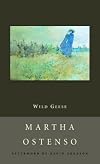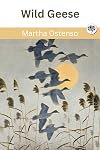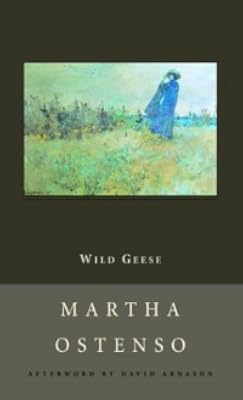
Wild Geese
by Martha Ostenso
On This Page
Description
In a farming community on the windswept plains of northern Manitoba, the fiery Judith Gare struggles for freedom from her father's brutal, controlling rule.Tags
Recommendations













Member Reviews
I would like to say that this has the resonance of a Greek tragedy. All the elements are present: a dead, romantic young regent; a controlling, cruel dictator; a captive spouse who is manipulated because of her past transgressions; a beautiful, strong-willed daughter who thinks of duty before happiness; a weak-hearted sister who is secretly jealous of the strong-willed elder daughter; a hapless prince-apparent who only wants to be happy and bestow happiness; an unruly younger child -- and an illegitmate son who is in danger of killing the cruel stepfather, unwittingly. If I put it that way to you, it's impossible that such a book should fail. But, while all these elements are true, this novel falls far short of a Greek tragedy and show more becomes something of a plain prairie tale, with neither morality or true redemption.
There are beautiful, captivating moments within this all-too common story of immigrant life on the Manitoba prairie but they are far too infrequent to leave you with a sense of satisfaction from something well-told. I puzzled through this book, wondering just what was not sitting right with me, and I think I may have found it in the author's biography.
While Martha Ostenso won a prize for this (a princely $13,500 in 1925!) it appears that she may have been more than a little bit disingenuous about its authenticity, for she had it "edited" by her mentor (later lover, and finally husband), Douglas Durkin, English professor at University of Manitoba and a professional writer in his own right. Ostenso admitted later in life that Wild Geese was "heavily edited" by Durkin. (Hmmm ...) Durkin and Ostenso went on to become courted in Hollywood, in fact, in the 1930s and '40s, and received "acclaim" for their screenwriting.
The other disingenous part about her story is that she is only marginally Canadian. (Maybe her elbow; maybe her left foot.) She is most often described as a Norwegian American writer -- who won a prize as a Canadian author because she spent a year teaching in Manitoba at a schoolhouse much like the one described in this book, and a year attending University of Manitoba. Most of her life was spent in Minnesota, New York, and California. [Her parents emigrated to Manitoba from Norway, like a glancing blow, but quickly re-settled in Minnesota and later North Dakota. I suppose therein lies the "authentic" Canadian Connection.]
All those biographical notations notwithstanding, she did seem to know the Canadian prairie (which is undoubtedly much like Minnesota, in any case, à la Laura Ingalls.) and writes convincingly of the prairie settlers' experience. With characters larger than life, combined with the immigrants' song, she paints a compelling Canadian landscape of hard scrabble life, deprivation and isolation. Her characters are driven by hard-work, determination and single-minded purpose; and her characters reflect what that single-minded purpose often engenders: mental and spiritual starvation.
There is cruelty here, to an incomprehensible degree, in the patriarch of the family; his wish to succeed economically above everything else in life is his motivating force. There is submission here, to an equally incomprehensible degree, in the matriarch -- which at best is a misnomer of position, as she abdicates everything to her husband's will. She fails to protect her children. More than failure to protect, it seems more like a refusal to protect. All the children are subjugated into obedience, at the worst cost; and yet, there is no need. Even when presented with choices for freedom, they remain. I rebelled most strongly at the mother's weakness for at best she was a will-o'-the-wisp, languid, spiritless sort: more vapour than solid, even before she met and married her husband. His controlling character only reinforced an already-weak character -- but then, that is undoubtedly how such men win: they marry those who will be controlled easily, who will accept the yoke willingly.
It is an ugly tale of breathless survival. Fresh air enters only when the winds blow in "from the south" -- a fresh young schoolmarm from away; a handsome young prince from "the towns". Redemption, which I hinted is missing, does come in a backward way, but it only comes through inertia and accident. The hapless immigrant's family prevails through no action of its own. Again hmmm... Is that really the quintessential Canadian pioneers' experience?
It is a mishmash tale, probably representative of the mishmash birth of this novel: a fresh young voice, painted over by an experienced hand, who hearkens back to the 19th century rather than look forward to the 20th. Therein lies the dilemma in the end: the novel was composed by two opposing voices and so the tension within the novel is always telling two disparate stories. It is indeed like someone who is building a Greek tragedy of epic scope, but who ultimately paints it a bit flat, like the landscape upon which it's built. show less
There are beautiful, captivating moments within this all-too common story of immigrant life on the Manitoba prairie but they are far too infrequent to leave you with a sense of satisfaction from something well-told. I puzzled through this book, wondering just what was not sitting right with me, and I think I may have found it in the author's biography.
While Martha Ostenso won a prize for this (a princely $13,500 in 1925!) it appears that she may have been more than a little bit disingenuous about its authenticity, for she had it "edited" by her mentor (later lover, and finally husband), Douglas Durkin, English professor at University of Manitoba and a professional writer in his own right. Ostenso admitted later in life that Wild Geese was "heavily edited" by Durkin. (Hmmm ...) Durkin and Ostenso went on to become courted in Hollywood, in fact, in the 1930s and '40s, and received "acclaim" for their screenwriting.
The other disingenous part about her story is that she is only marginally Canadian. (Maybe her elbow; maybe her left foot.) She is most often described as a Norwegian American writer -- who won a prize as a Canadian author because she spent a year teaching in Manitoba at a schoolhouse much like the one described in this book, and a year attending University of Manitoba. Most of her life was spent in Minnesota, New York, and California. [Her parents emigrated to Manitoba from Norway, like a glancing blow, but quickly re-settled in Minnesota and later North Dakota. I suppose therein lies the "authentic" Canadian Connection.]
All those biographical notations notwithstanding, she did seem to know the Canadian prairie (which is undoubtedly much like Minnesota, in any case, à la Laura Ingalls.) and writes convincingly of the prairie settlers' experience. With characters larger than life, combined with the immigrants' song, she paints a compelling Canadian landscape of hard scrabble life, deprivation and isolation. Her characters are driven by hard-work, determination and single-minded purpose; and her characters reflect what that single-minded purpose often engenders: mental and spiritual starvation.
There is cruelty here, to an incomprehensible degree, in the patriarch of the family; his wish to succeed economically above everything else in life is his motivating force. There is submission here, to an equally incomprehensible degree, in the matriarch -- which at best is a misnomer of position, as she abdicates everything to her husband's will. She fails to protect her children. More than failure to protect, it seems more like a refusal to protect. All the children are subjugated into obedience, at the worst cost; and yet, there is no need. Even when presented with choices for freedom, they remain. I rebelled most strongly at the mother's weakness for at best she was a will-o'-the-wisp, languid, spiritless sort: more vapour than solid, even before she met and married her husband. His controlling character only reinforced an already-weak character -- but then, that is undoubtedly how such men win: they marry those who will be controlled easily, who will accept the yoke willingly.
It is an ugly tale of breathless survival. Fresh air enters only when the winds blow in "from the south" -- a fresh young schoolmarm from away; a handsome young prince from "the towns". Redemption, which I hinted is missing, does come in a backward way, but it only comes through inertia and accident. The hapless immigrant's family prevails through no action of its own. Again hmmm... Is that really the quintessential Canadian pioneers' experience?
It is a mishmash tale, probably representative of the mishmash birth of this novel: a fresh young voice, painted over by an experienced hand, who hearkens back to the 19th century rather than look forward to the 20th. Therein lies the dilemma in the end: the novel was composed by two opposing voices and so the tension within the novel is always telling two disparate stories. It is indeed like someone who is building a Greek tragedy of epic scope, but who ultimately paints it a bit flat, like the landscape upon which it's built. show less
The Gare family lives in northern Manitoba - a cold, lonely place. They are ruled by Caleb Gare, the patriarch who controls his clan with cruelty and hard physical labour. Caleb holds a deadly secret over his wife Amelia, a secret that could ruin the entire family. This binds their children, Martin, Ellen, Charlie, and Judith, to a monotonous life working the land. Into the Gares' world comes Lind Archer, a young woman contracted to teach at the local school. Lind brings with her a more delicate way of life, and encourages Judith to break away from her cold existence.
Wild Geese marked a change in Canadian literature. Here, we have the meeting of romance and realism, of the old and the new. Juxtaposing the romantic, idealistic notions of show more Lind with the raw, gritty passion of Judith, Ostenso moves Canadian writing away from its Victorian past firmly into the modern era. Written in the 1920s, Wild Geese was the first novel by a woman who succeeded in becoming very popular. Ostenso has since fallen out of fashion, and I only discovered this novel through a chance encounter with the clearance shelf of my alma mater's used book store. Evidently, some Canadian Lit grad student had not found Wild Geese worthy of keeping, and so I snagged it for $1. Boy, am I glad that that grad student had such poor taste in literature. Wild Geese truly was an unexpected gem of a novel.
Ostenso's writing is stark, much like northern Manitoba, and the character of Judith is far from the Victorian norm. She is wild, abrasive, and a totally compelling entity. Caleb Gare is a villain worth hating, and the rest of his family, along with Lind, make for an interesting cast.
I love when novels take you by surprise, just as this one did. As a mixture of early and modern Canadian writing, it contains the best elements of both eras. Highly recommended for anyone interested in the development of Canadian Literature. show less
Wild Geese marked a change in Canadian literature. Here, we have the meeting of romance and realism, of the old and the new. Juxtaposing the romantic, idealistic notions of show more Lind with the raw, gritty passion of Judith, Ostenso moves Canadian writing away from its Victorian past firmly into the modern era. Written in the 1920s, Wild Geese was the first novel by a woman who succeeded in becoming very popular. Ostenso has since fallen out of fashion, and I only discovered this novel through a chance encounter with the clearance shelf of my alma mater's used book store. Evidently, some Canadian Lit grad student had not found Wild Geese worthy of keeping, and so I snagged it for $1. Boy, am I glad that that grad student had such poor taste in literature. Wild Geese truly was an unexpected gem of a novel.
Ostenso's writing is stark, much like northern Manitoba, and the character of Judith is far from the Victorian norm. She is wild, abrasive, and a totally compelling entity. Caleb Gare is a villain worth hating, and the rest of his family, along with Lind, make for an interesting cast.
I love when novels take you by surprise, just as this one did. As a mixture of early and modern Canadian writing, it contains the best elements of both eras. Highly recommended for anyone interested in the development of Canadian Literature. show less
This novel is said to have marked a change in the style of Canadian literature in favour of realism over romanticism, and was considered groundbreaking when it was written in 1923. To me, reading it for the first time in 2012, it is a novel that has stood the test of time. The story remains intriguing and the characters ring true even today.
This novel examines what holds people together: love, fear, loyalty. It also examines the sense of self, and how much we can or should deny ourselves. And, in Lind (the school teacher) and Judith Gare (youngest daughter of the tyrannical Caleb Gare, we see the tension between freedom and family ties.
Well written; worth reading as an examination of Canadian literature and as simply a good story.
This novel examines what holds people together: love, fear, loyalty. It also examines the sense of self, and how much we can or should deny ourselves. And, in Lind (the school teacher) and Judith Gare (youngest daughter of the tyrannical Caleb Gare, we see the tension between freedom and family ties.
Well written; worth reading as an examination of Canadian literature and as simply a good story.
I liked this book. It was interesting to get into the mind-set of these immigrants in the northern prairies. It's really a study of human nature, people living under the literal tyranny of patriarchy, social mores to do with "courting" and illegitimate births. Caleb Gare gets what he deserves, thank goodness.
“Lind wondered, as she had wondered time and again since her coming to Oeland, if there was any means in her power by which she might bring a little happiness into the lives of the Gares. And then in a moment, she was overwhelmed by her helplessness against the intangible thing that held them there, slaves to the land. It extended back farther than Caleb, this power, although it worked through him. Lind found herself longing for someone of her own world to talk with, someone to whom she might escape from the oppression of the Gares.”
“That’s a country for you. If there’s a God, I imagine that’s where he sits and does his thinking. The silence is awful. You feel immense things going on, invisibly. There is that eternal sky show more – light and darkness – the endless plains of snow – a few fir trees, maybe a hill or a frozen stream. And the human beings are like totems – figures of wood with mysterious legends upon them that you can never make out. The austerity of nature reduces the outward expression in life, simply, I think, because there is not such an abundance of natural objects for the spirit to react to. We are, after all, only the mirror of our environment. Life here at Oeland, even, may seem a negation but it’s only a reflection from so few exterior natural objects that it has the semblance of negation. These people are thrown inward upon themselves, their passions stored up, they are intensified figures of life with no outward expression – no releasing gesture.” show less
“That’s a country for you. If there’s a God, I imagine that’s where he sits and does his thinking. The silence is awful. You feel immense things going on, invisibly. There is that eternal sky show more – light and darkness – the endless plains of snow – a few fir trees, maybe a hill or a frozen stream. And the human beings are like totems – figures of wood with mysterious legends upon them that you can never make out. The austerity of nature reduces the outward expression in life, simply, I think, because there is not such an abundance of natural objects for the spirit to react to. We are, after all, only the mirror of our environment. Life here at Oeland, even, may seem a negation but it’s only a reflection from so few exterior natural objects that it has the semblance of negation. These people are thrown inward upon themselves, their passions stored up, they are intensified figures of life with no outward expression – no releasing gesture.” show less
$6. First Edition. Hardcover. Gray cloth, red lettering, pictorial, no dj, rubbed, owner's name on cover page. Novel; 14303.
Ratings
Members
- Recently Added By
Lists

New Canadian Library
191 works; 7 members
Author Information

17+ Works 311 Members
Martha Ostenso, 1900 - 1963 Martha Ostenso was born in Norway, in 1900, and raised in the United States. She wrote "Wild Geese" (1925), which is a tale of a strong young girl enslaved by a cruel father. (Bowker Author Biography)
Some Editions
Series
Belongs to Publisher Series
New Canadian Library (18)
Common Knowledge
- Original publication date
- 1925
- People/Characters
- Judith Gare; Lind Archer; Mark Jordan; Sven Sandbo; Caleb Gare
- Important places
- Yellow Post, Manitoba, Canada; Manitoba, Canada
- First words
- It was not openly spoken of, but the family was waiting for Caleb Gare.
- Last words
- (Click to show. Warning: May contain spoilers.)Far overhead in the night sky sounded the honking of the wild geese, going south now...a remote, trailing shadow...a magnificent seeking through solitude...an endless quest...
Classifications
Statistics
- Members
- 218
- Popularity
- 149,655
- Reviews
- 6
- Rating
- (3.46)
- Languages
- English, German
- Media
- Paper, Ebook
- ISBNs
- 6
- ASINs
- 11