On This Page
Description
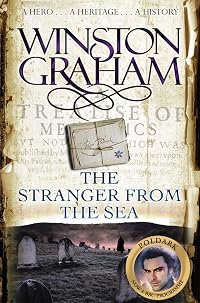
The Poldark family awaits the return of Ross from his mission to Wellington's army in Portugal. But their ordered existence ends with Jeremy Poldark's dramatic rescue of a stranger from the sea. Stephen Carrington's arrival in the Poldark household changes all their lives. For Clowance and Jeremy in particular, the children of Ross and Demelza, Stephen's advent is the key to a new world-- one of both love and danger.Tags
Recommendations

















Member Reviews
This book jumps ahead 10 years in the lives of the Poldark family and deposits us in 1810-11. The Poldark children are rapidly becoming adults: Jeremy is an engineering enthusiast, particularly fascinated with the potential of steam power, while Clowance is learning to navigate society and figuring out what she wants from her life (and eventual husband). And the youngest, Isabella-Rose, is eight and full of enthusiasm and life.
Ross becomes more involved in Parliament, particularly as the question of George III’s health becomes more urgent and the need for a regency looms closer. Napoleon is still wreaking havoc on the continent, and Ross sees some action in the Peninsular Wars (at long last making me grateful for having read The Gun, show more by C.S. Forester). Demelza comes to terms with approaching middle age, and George Warleggan takes tentative steps toward a new business venture.
This book is not as action-packed as some other installments have been, but it is a good comfortable book to read. Ross is almost maddeningly self-aware in this one (particularly in his conversations with Jeremy), and Dwight is perhaps a bit too gifted with 20th-century hindsight when it comes to diagnosing George III’s health problems, but with a setting as rich as this one, such points are easy to forgive.
On a personal note, I enjoyed the inclusion of a character called Henry Harvey; we have some Harveys in our family tree, and Henry is a common name in that branch of the family. He does appear to be a real person, but I’m not sure he’s an actual ancestor of mine. Still, it’s nice to pretend ;) show less
Ross becomes more involved in Parliament, particularly as the question of George III’s health becomes more urgent and the need for a regency looms closer. Napoleon is still wreaking havoc on the continent, and Ross sees some action in the Peninsular Wars (at long last making me grateful for having read The Gun, show more by C.S. Forester). Demelza comes to terms with approaching middle age, and George Warleggan takes tentative steps toward a new business venture.
This book is not as action-packed as some other installments have been, but it is a good comfortable book to read. Ross is almost maddeningly self-aware in this one (particularly in his conversations with Jeremy), and Dwight is perhaps a bit too gifted with 20th-century hindsight when it comes to diagnosing George III’s health problems, but with a setting as rich as this one, such points are easy to forgive.
On a personal note, I enjoyed the inclusion of a character called Henry Harvey; we have some Harveys in our family tree, and Henry is a common name in that branch of the family. He does appear to be a real person, but I’m not sure he’s an actual ancestor of mine. Still, it’s nice to pretend ;) show less
I think Poldark fever may have run its course. The second four books in the series, written after a gap of twenty years, were weaker than the first four, and The Stranger From The Sea, with a break of four years for the author and ten for the characters, is even worse! Ross was already suffering from a severe case of Hero Syndrome, dashing off to France to rescue Dwight and grudgingly becoming an MP, but suddenly he's a secret agent for the government? Demelza, after twenty years of marriage to Ross, is still fretting about her origins - and still attracting every man with a pulse? Their children are equally 'special', with beautiful, spirited Clowance and sensitive, intelligent Jeremy - oh, and Isabella-Rose, the 'ten years later' show more bolt-on. I just didn't buy into the clichéd continuation of Nampara family life, and struggled to care about characters who were originally so real and so dear to me as a reader.
Winston Graham, in his early seventies, had obviously run out of steam - little in-joke for anyone else who reads the book - by this point, but couldn't bear to abandon the money-spinning Poldark series. So he dusted off his wish-fulfilment hero and beloved heroine, fast-forwarded ten years, gave young children to the remaining central characters in return for the shade and depth of the original books, and turned a successful series into bad fan fiction. You know those 'What happens next?' stories penned by fifteen year old girls who 'ship' the H. and h. of romantic literary fiction, full of implausible historical cameos and fledgling matches for the next generation? That's Stranger in a nutshell. Ross spends the first half of the book 'en mission' in Portugal for his mate Canning, the Foreign Secretary, running into Geoffrey Charles and joining in the fray, and then returning to London for an audience with Prinny. Demelza, meanwhile, has three children to care for, two of whom are near full-grown, yet is still stuck in timewarp circa the early novels. The Enys' have two daughters mentioned only by name, Drake and Morwenna are married and looking after Ross' boatyard, Sam has taken up with Rosina Hoblyn, and George has turned into a teenage boy full of lustful urges, thinking to buy himself a wife and profit from the misfortunes of others. Graham spends so long narrating the literary version of 'Previously, on ER...' and condensing the social, industrial and martial history of Britain in the early 1800s that he never really gets round to a plot. Or if he did, then he looked to Georgette Heyer for inspiration. Budding engineer Jeremy falls for a hybrid of Elizabeth and Caroline, with a name I was never quite sure how to pronounce, even in my head, and is turned down for not being good/rich enough. Clowance is courted by the eponymous stranger from the sea, an Irish caricature who washes up on a raft, while being courted by a titled younger son. I'm not sure if Graham wanted his readers to like Stephen Carrington, but much in the same fashion as Hugh Armitage, I couldn't stomach him. Luckily I won't be reading any further, then!
A nonsense plot, full of bland romantic intrigues and potted history lessons, is not why I fell in love with this series. I think the real heart of the novels must have died with Elizabeth (woops, spoiler!) I might just watch the 1996 adaptation of this novel, though, to be perverse - I'm sure the cast couldn't do any real harm to the already limp story or barely recognisable characters! show less
Winston Graham, in his early seventies, had obviously run out of steam - little in-joke for anyone else who reads the book - by this point, but couldn't bear to abandon the money-spinning Poldark series. So he dusted off his wish-fulfilment hero and beloved heroine, fast-forwarded ten years, gave young children to the remaining central characters in return for the shade and depth of the original books, and turned a successful series into bad fan fiction. You know those 'What happens next?' stories penned by fifteen year old girls who 'ship' the H. and h. of romantic literary fiction, full of implausible historical cameos and fledgling matches for the next generation? That's Stranger in a nutshell. Ross spends the first half of the book 'en mission' in Portugal for his mate Canning, the Foreign Secretary, running into Geoffrey Charles and joining in the fray, and then returning to London for an audience with Prinny. Demelza, meanwhile, has three children to care for, two of whom are near full-grown, yet is still stuck in timewarp circa the early novels. The Enys' have two daughters mentioned only by name, Drake and Morwenna are married and looking after Ross' boatyard, Sam has taken up with Rosina Hoblyn, and George has turned into a teenage boy full of lustful urges, thinking to buy himself a wife and profit from the misfortunes of others. Graham spends so long narrating the literary version of 'Previously, on ER...' and condensing the social, industrial and martial history of Britain in the early 1800s that he never really gets round to a plot. Or if he did, then he looked to Georgette Heyer for inspiration. Budding engineer Jeremy falls for a hybrid of Elizabeth and Caroline, with a name I was never quite sure how to pronounce, even in my head, and is turned down for not being good/rich enough. Clowance is courted by the eponymous stranger from the sea, an Irish caricature who washes up on a raft, while being courted by a titled younger son. I'm not sure if Graham wanted his readers to like Stephen Carrington, but much in the same fashion as Hugh Armitage, I couldn't stomach him. Luckily I won't be reading any further, then!
A nonsense plot, full of bland romantic intrigues and potted history lessons, is not why I fell in love with this series. I think the real heart of the novels must have died with Elizabeth (woops, spoiler!) I might just watch the 1996 adaptation of this novel, though, to be perverse - I'm sure the cast couldn't do any real harm to the already limp story or barely recognisable characters! show less
Book Eight of the Poldark Series, [b:The Stranger from the Sea|194622|The Stranger from the Sea (Poldark, #8)|Winston Graham|https://images.gr-assets.com/books/1356129610s/194622.jpg|1545373] takes place ten years after Book Seven, [b:The Angry Tide|194630|The Angry Tide (Poldark, #7)|Winston Graham|https://images.gr-assets.com/books/1391952789s/194630.jpg|364847]. I was concerned that this would mean an abrupt transition from the story of Ross and Demelza to that of the next generation. I have had this happen with other sagas and found it disconcerting. Not to fear, Winston Graham knows precisely how to tell a story with continuity and progress mixed in perfect proportions.
Life has continued apace since we left Ross at a moment of show more sadness, but revelation, and Ross now finds himself in a very respectable, but not affluent, position:
”He had made little money. But over the years they had continued sufficiently affluent to live a comfortable life. As he said to Demelza, the most important thing was to strike a balance: poverty and riches each in their own way caused unhappiness. With money, the way to be happy was to continue to have almost enough.”
I was struck by how much truth there is to that. And, within this novel, we get a glimpse of both the horrors of extreme poverty and the decadence of unearned wealth. I am happy to say that Ross and Demelza have raised lovely children, smart and unassuming and in so many ways reflective of both their parents. I became immediately as interested in the futures of Jeremy and Clowance as I had been in that of Ross, Demelza, Elizabeth, George, Dwight and Caroline.
This installment reminds me particularly of Jane Austen. If you enjoy her witty look into the depths of societal classes, this book will resonate with you. It is the time in which class distinctions are collapsing due to the influx of new money, and the time when the aristocracy is perhaps most fervent to hold on to its position and power.
As always there are difficulties in love. People can never fall in love with only the right people and, even today, there are often obstacles not of our own making.
She helped tighten one of the girths. ‘I know you have been--greatly upset; and I cannot help you. It grieves me that I cannot help you. I can’t even give you advice!’
‘Nobody can’
‘For you would not take it. Quite right. It is hopeless for older people to tell younger ones--particularly their own children--that they have been through the same thing. Such information is no use at all! It bounces off one’s own grief--or jealousy or distress. If we are all born the same we are also all born unique--we all go through torments nobody else has ever had.”
Another bit of the human condition I could well relate to. Don’t we all want to save our children from pitfalls, but isn’t it human nature for each man to make his own mistakes and pay his own penalties...and isn’t that, in truth, the only way anyone finds their way and their own happiness.
Ross fails to see Jeremy for the man he is, capable and interested and daring. Again, I think Winston Graham has seen into the soul of mankind. We so often miss that which is most essential and best in those we are close to; we often view our children as children long after we should have seen them as adults. And, in the way he has often failed to appreciate Demelza, Ross is prone to failing to recognize the value of those who love him most. There is much, I would contend, about Jeremy that is Ross. That fearlessness and drive is there waiting for a place to commit itself, and the similarities sometimes make for less instead of more understanding.
And, lastly, we see that Ross and Demelza are no longer young themselves. They are well along their journey and, while not doddering on old age, we clearly see that they are closer to the end than they now are to the beginning.
”And who would have thought Lady Landsdowne was three months forward? I wish I were. I wish Jeremy was three again like her son. I wish I was twenty-six like her and it was all to come again. Life...it slips away like sand out of a torn envelope. Well, I’m still not exactly old. But it hurst me to see Ross limp and the lines about his jaw, and many of my friends sick or old or dead.”
Ah, another passage that seems written for my life and my age. I hear you, Demelza, but oh it has been a wonderful life, full of events that have warmed and torn you, and sworn to your zest for living it. show less
Life has continued apace since we left Ross at a moment of show more sadness, but revelation, and Ross now finds himself in a very respectable, but not affluent, position:
”He had made little money. But over the years they had continued sufficiently affluent to live a comfortable life. As he said to Demelza, the most important thing was to strike a balance: poverty and riches each in their own way caused unhappiness. With money, the way to be happy was to continue to have almost enough.”
I was struck by how much truth there is to that. And, within this novel, we get a glimpse of both the horrors of extreme poverty and the decadence of unearned wealth. I am happy to say that Ross and Demelza have raised lovely children, smart and unassuming and in so many ways reflective of both their parents. I became immediately as interested in the futures of Jeremy and Clowance as I had been in that of Ross, Demelza, Elizabeth, George, Dwight and Caroline.
This installment reminds me particularly of Jane Austen. If you enjoy her witty look into the depths of societal classes, this book will resonate with you. It is the time in which class distinctions are collapsing due to the influx of new money, and the time when the aristocracy is perhaps most fervent to hold on to its position and power.
As always there are difficulties in love. People can never fall in love with only the right people and, even today, there are often obstacles not of our own making.
She helped tighten one of the girths. ‘I know you have been--greatly upset; and I cannot help you. It grieves me that I cannot help you. I can’t even give you advice!’
‘Nobody can’
‘For you would not take it. Quite right. It is hopeless for older people to tell younger ones--particularly their own children--that they have been through the same thing. Such information is no use at all! It bounces off one’s own grief--or jealousy or distress. If we are all born the same we are also all born unique--we all go through torments nobody else has ever had.”
Another bit of the human condition I could well relate to. Don’t we all want to save our children from pitfalls, but isn’t it human nature for each man to make his own mistakes and pay his own penalties...and isn’t that, in truth, the only way anyone finds their way and their own happiness.
Ross fails to see Jeremy for the man he is, capable and interested and daring. Again, I think Winston Graham has seen into the soul of mankind. We so often miss that which is most essential and best in those we are close to; we often view our children as children long after we should have seen them as adults. And, in the way he has often failed to appreciate Demelza, Ross is prone to failing to recognize the value of those who love him most. There is much, I would contend, about Jeremy that is Ross. That fearlessness and drive is there waiting for a place to commit itself, and the similarities sometimes make for less instead of more understanding.
And, lastly, we see that Ross and Demelza are no longer young themselves. They are well along their journey and, while not doddering on old age, we clearly see that they are closer to the end than they now are to the beginning.
”And who would have thought Lady Landsdowne was three months forward? I wish I were. I wish Jeremy was three again like her son. I wish I was twenty-six like her and it was all to come again. Life...it slips away like sand out of a torn envelope. Well, I’m still not exactly old. But it hurst me to see Ross limp and the lines about his jaw, and many of my friends sick or old or dead.”
Ah, another passage that seems written for my life and my age. I hear you, Demelza, but oh it has been a wonderful life, full of events that have warmed and torn you, and sworn to your zest for living it. show less
The Napoleonic War is raging on the continent and with Ross freshly returned to Cornwall from an observational mission in Portugal for Parliament, he discovers quieter conflicts brewing at home. While Ross and Demelza have settled into a happier phase of their marriage, they must now watch as their two eldest children struggle with finding their place in the world. Meanwhile, George Warleggan finds himself in an entirely new position when he finds himself attracted to a woman for the first time since Elizabeth's death. But in his pursuit of her, George may put everything he's worked so hard for at risk.
A quieter entry in the Poldark saga, this book is very obviously laying groundwork for the coming books in the series. That doesn't make show more it lacking in any way, as the characters are the real draw of these books and as long as I get time with Ross and Demelza, I'm very happy. While the focus of this novel shifts a little more to the younger Poldarks, there's still enough of my favourite couple to keep it from being too much a jolt. And Jeremy and Clowance are both intriguing characters on their own so that I look forward to seeing what the remaining books bring for them. If you've come this far in the series, you'll definitely enjoy this book. show less
A quieter entry in the Poldark saga, this book is very obviously laying groundwork for the coming books in the series. That doesn't make show more it lacking in any way, as the characters are the real draw of these books and as long as I get time with Ross and Demelza, I'm very happy. While the focus of this novel shifts a little more to the younger Poldarks, there's still enough of my favourite couple to keep it from being too much a jolt. And Jeremy and Clowance are both intriguing characters on their own so that I look forward to seeing what the remaining books bring for them. If you've come this far in the series, you'll definitely enjoy this book. show less
A bit of a step back in quality as Mr. Graham enacts a large time shift and introduces a new cast of the next generation of Poldarks. It’s definitely a downgrade but Graham does a great job bringing the Poldark world forward. When I read this I was worried the final arc of the series wouldn’t be worth reading, but this novel was only a momentary misstep.
**This review actually refers to five books in this series: Stranger From the Sea, The Miller's Dance, The Loving Cup, The Twisted Sword & Bella Poldark**
I really have no clue what rock I was living under....I have no excuse. But, up until recently, I had no idea the Poldark series on television is based on a series of books! I love sweeping historical family sagas. I have no earthly clue how I missed this one! Rectifying the situation immediately!
There are 12 books in the Poldark Saga, written by Winston Graham from 1945-2002. The books are set in Cornwall, starting with Ross Poldark in 1783 and ending with Bella Poldark in 1820.
It's official -- I love this series! And I'm reading my way through all of the books before I watch the show more television series. I have a rule that before I can watch a film or television adaptation, I have to read the books first. Then I'm acquainted with the characters and can see what they changed/added/kept true to the original, etc. There are actually two Poldark television series. One from BBC in the 1970s that serialized the first seven books. And then the newer series that started in 2015. There have been five seasons of the new show. I can't wait to watch it! Still reading my way through the books first...and enjoying every page!
The four books listed here are books #8-12 of the series. I had review copies of all 5 novels and read them cover to cover. Binge read them, to be honest. I love the characters...the setting....the history. I had to stop periodically and look some things up as I'm not familiar with the time period or history of Cornwall at all. The one problem with reviewing books is that I'm under a deadline. With historical fiction or family sagas, I like to take my time and let the story sink in and savor the characters. But with five books to read, and not having read the first books in the series beforehand, I was a bit lost in names, places, etc. The story was enough to carry me through! I loved every book!
I'm backtracking now and reading the series from the start....and I will re-read these books when I come back around to them. I will have an even better understanding of the characters and history during my second reading! And then I can watch the television show. I'm curious which books it has already covered and which ones are upcoming -- whether it stays true to the books or goes off course, etc.
Great books! I highly recommend this series to any readers who enjoy historical fiction, family sagas, and just history in general!
Love, love, love! :) Here are some extra exclamation points in case I did not make it clear that I enjoy this series: !!!!!!!!
**I read review copies of these novels from St Martins Press via NetGalley. All opinions expressed are entirely my own.) show less
I really have no clue what rock I was living under....I have no excuse. But, up until recently, I had no idea the Poldark series on television is based on a series of books! I love sweeping historical family sagas. I have no earthly clue how I missed this one! Rectifying the situation immediately!
There are 12 books in the Poldark Saga, written by Winston Graham from 1945-2002. The books are set in Cornwall, starting with Ross Poldark in 1783 and ending with Bella Poldark in 1820.
It's official -- I love this series! And I'm reading my way through all of the books before I watch the show more television series. I have a rule that before I can watch a film or television adaptation, I have to read the books first. Then I'm acquainted with the characters and can see what they changed/added/kept true to the original, etc. There are actually two Poldark television series. One from BBC in the 1970s that serialized the first seven books. And then the newer series that started in 2015. There have been five seasons of the new show. I can't wait to watch it! Still reading my way through the books first...and enjoying every page!
The four books listed here are books #8-12 of the series. I had review copies of all 5 novels and read them cover to cover. Binge read them, to be honest. I love the characters...the setting....the history. I had to stop periodically and look some things up as I'm not familiar with the time period or history of Cornwall at all. The one problem with reviewing books is that I'm under a deadline. With historical fiction or family sagas, I like to take my time and let the story sink in and savor the characters. But with five books to read, and not having read the first books in the series beforehand, I was a bit lost in names, places, etc. The story was enough to carry me through! I loved every book!
I'm backtracking now and reading the series from the start....and I will re-read these books when I come back around to them. I will have an even better understanding of the characters and history during my second reading! And then I can watch the television show. I'm curious which books it has already covered and which ones are upcoming -- whether it stays true to the books or goes off course, etc.
Great books! I highly recommend this series to any readers who enjoy historical fiction, family sagas, and just history in general!
Love, love, love! :) Here are some extra exclamation points in case I did not make it clear that I enjoy this series: !!!!!!!!
**I read review copies of these novels from St Martins Press via NetGalley. All opinions expressed are entirely my own.) show less
Slight spoilers ahead:
In The Stranger From the Sea, Winston Graham returns to the people of Cornwall from his Poldark books, but about a decade after The Angry Tide. Ross and Demelza's children are almost "grown", as is Valentine Warleggan, child of The Black Moon.
I like how the author pulled us into the lives of the next generation without forsaking our old friends like Dr. Enys, Caroline, Demelza, and Ross Poldark. Well-written as all his works, Winston Graham has given us another gem to cherish and treasure. Definitely recommended.
In The Stranger From the Sea, Winston Graham returns to the people of Cornwall from his Poldark books, but about a decade after The Angry Tide. Ross and Demelza's children are almost "grown", as is Valentine Warleggan, child of The Black Moon.
I like how the author pulled us into the lives of the next generation without forsaking our old friends like Dr. Enys, Caroline, Demelza, and Ross Poldark. Well-written as all his works, Winston Graham has given us another gem to cherish and treasure. Definitely recommended.
Members
- Recently Added By
Lists

Books Read in 2016
4,666 works; 197 members

Books Read in 2017
4,249 works; 129 members
Talk Discussions
Past Discussions
Poldark Group Read: The Stranger from the Sea (August) in 2017 Category Challenge (August 2017)
Author Information

74+ Works 11,266 Members
Series

Common Knowledge
- Canonical title
- The Stranger from the Sea
- Original publication date
- 1981
- People/Characters
- Stephen Carrington; Clowance Poldark; Jeremy Poldark
- Important places
- Cornwall, England, UK
- Related movies
- Poldark (1996 | IMDb)
- First words
- On Thursday, the 25th October, 1810, a windy day with the first autumnal leaves floating down over the parks and commons of England, the old King went mad.
- Last words
- (Click to show. Warning: May contain spoilers.)He went down to rejoin the others.
Classifications
Statistics
- Members
- 560
- Popularity
- 52,860
- Reviews
- 11
- Rating
- (3.93)
- Languages
- 6 — English, Finnish, Italian, Norwegian, Polish, Swedish
- Media
- Paper, Audiobook, Ebook
- ISBNs
- 29
- ASINs
- 7