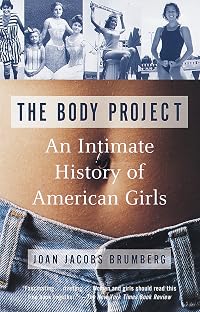
The Body Project: An Intimate History of American Girls
by Joan Jacobs Brumberg
On This Page
Description
Presents historical evidence, based on research that includes the diaries of American girls written between the 1830s and 1990s, to show how the process of maturation has changed since the nineteenth century, making young women more anxious than ever before about their bodies and themselves.Tags
Recommendations










Member Reviews
The Body Project is centered on female adolescence and body image. Probably the most fascinating aspect to The Body Project is Brumberg's collection of diaries she used as research for the narrative. She could draw on the experiences of Victorian era girls as if she had interviewed them just yesterday. She is able to compare perceptions throughout the ages and the changing times. There is special attention paid to how mothers relate to their daughters. Take for example, menarche and menstruation. When mothers teach their daughters about the process they talk about how to "take care of it" meaning the bleeding, but rarely do they explain why the blood is happening in the first place. Brumberg cites a distinct disconnect between show more menstruation and fertility. Mothers even do not fully explain what is physically happening to their daughters' bodies.
It's as if Brumberg needs to be that mother figure for young girls. The Body Project has a whole chapter on acne: pimples and blackheads, calling it the plague of youth or a sign of poverty. Not only is the history of the treatment of acne covered, but how marketing took advantage of the plight of teenagers with unclear skin. Eye opening for me was when Brumberg addressed masturbation and the misconception it causes acne. I have to admit, I never heard of that. Wasn't the theory you would go blind?
Another body project is more well known - the desire to be thin. One girl didn't want to attend Mount Holyoke for fear of gaining weight. She had heard the food was quite good but her goal was to lose weight, not gain it.
A word of warning: Brumberg focusses mainly on middle class girls and all of her reporting is from mid-nineties statistics. Despite that, it is an interesting read. show less
It's as if Brumberg needs to be that mother figure for young girls. The Body Project has a whole chapter on acne: pimples and blackheads, calling it the plague of youth or a sign of poverty. Not only is the history of the treatment of acne covered, but how marketing took advantage of the plight of teenagers with unclear skin. Eye opening for me was when Brumberg addressed masturbation and the misconception it causes acne. I have to admit, I never heard of that. Wasn't the theory you would go blind?
Another body project is more well known - the desire to be thin. One girl didn't want to attend Mount Holyoke for fear of gaining weight. She had heard the food was quite good but her goal was to lose weight, not gain it.
A word of warning: Brumberg focusses mainly on middle class girls and all of her reporting is from mid-nineties statistics. Despite that, it is an interesting read. show less
Joan Jacobs Brumberg’s The Body Project: An Intimate History of American Girls is an excellent and unique analysis of the changing nature of female beauty in the nineteenth and twentieth centuries, and its effects on cultural expectations of women, as well as the changed behaviors of teenagers. Brumberg characterizes the changing practices of girlhood in a complex web of relationships; causality of these practices lies within technological change and shifts in power, as well as changes in fashion sense.
The first of two epigraphs for The Body Project reads, “‘I would have girls regard themselves not as adjectives but as nouns’ —Elizabeth Cady Stanton, ‘Our Girls.’” This helps explain the atmosphere in which The Body show more Project was written. Brumberg’s introduction prefaces the rest of the book as thus:
At the close of the twentieth century, the female body poses an enormous problem for American girls, and it does so because of the culture in which we live…contemporary American society provides fewer social protections for them, a situation that leaves them unsupported in their development and extremely vulnerable to the excesses of popular culture and to pressure from peer groups.
While this statement could be considered blasé today, it is a useful framing mechanism for Brumberg, as there is a unique and ironic twist to the narrative of historical progress. While women’s freedoms have increased since the Victorian era, women today are faced with greater social constraints than ever. Furthermore, Brumberg finds that in addition to greater cultural pressures, women face different biological timetables now than in the Victorian Era, due to higher nutrition across the board. This in combination with the changing social landscape of twentieth century America, yields a truly unique phenomenon within American society at large.
In considering the wide topicality and sourcing of The Body Project, Brumberg is extraordinarily responsible as author who has a monopoly over the sources within her book. Being that a great deal of the topic material for Body Project specifically deals with gynecology and biology, the sources correctly reflect the nature of the argument at hand. This is most prevalent in the chapters, “The Body’s New Timetable,” in reference to earlier menarche, and “The Disappearance of Virginity: Sexual Expression and Sexual Danger,” in reference to the changing nature of gynecology. Brumberg asks the right questions as an author: while earlier menarche is a categorized phenomenon, especially in reading from the 2010s, Brumberg properly interrogates this fact in order find specific causality. She writes:
Menarche’s new timetable is problematic on two levels. Although girls are healthier and mature earlier, there has been no parallel acceleration in their emotional and cognitive skills, such as the capacity to think abstractly, make judgments, or move beyond egocentric—that is, self-centered—thinking…In addition, our society makes no special effort to help girls deal with the lag between their biological and their intellectual development.
As the social timetable changes as well as the timetable of the female life course, women are subject to forces that they, as well as society, are not prepared for. The Body Project is a great interrogation of these forces, as it acts as biological history as well as social history. In the case of “The Disappearance of Virginity,” which deals with the relationship between changing gynecological practices and cultural perceptions of virginity, Brumberg similarly makes a fantastic argument simply by asking the right questions, and backing up responses with proper sourcing.
The Body Project’s weakest link is probably the choices of sourcing. While Brumberg uses a variety of both primary and secondary sourcing (as well as annotating many endnotes), the primary basis for analysis is primary source-work of diaries, accumulated through a variety of means and methods. While, as mentioned, analysis in The Body Project also extends to secondary sources, the vast majority of direct exposure the reader gets (allusions, quotations, etc.) comes in the form of excerpts from these diary entries, which run the risk of being only personal accounts of cultural events. However, Brumberg uses them, “to provide entry into the hidden history of female adolescents’ experience, especially the experience of the body.” Since the diaries of young girls persists from the Victorian period onward, and these diaries provide insight into the personal thoughts and feelings of things young women would not be public about, diaries are an almost optimal choice for this analysis. It is also worthy to note that Brumberg doesn’t merely use diaries as accounts, but also probes trends across diaries, as well as analyzes certain peculiarities: the vocabulary used to describe personal hygiene within personal journals shows how changes in the medical profession as well as same-sex groups impacted the education of young women.
The Body Project does a somewhat satisfactory job of incorporating all women into the narrative, yet there still seems to be some work to be done here, especially with minority women. The amount of incorporation of women of color shows definite effort, but this incorporation doesn’t span across the whole book. Usually, references to African American women is in reference to a difference in function towards how power structures and cultural norms relate to normative white women. For instance, Brumberg discusses how images in working-class, African American magazines showed a tolerance for multiple body types, yet as African American affluence increased, whiter standards became increasingly adopted. However, discussions like this, while prevalent across the width of the book, aren’t prevalent across the span of the book: the African American narrative is notably absent in earlier discussions of culture. This isn’t to say that a discussion doesn’t exist, there is a definite conversation to be had (as well as available sources), it just isn’t undertaken here; similar issues exist when coming into discussion of Asian Americans or Latina Americans, who seem to be absent from the narrative. While the discussion in The Body Project casts a wider net in terms of relevance than many of its peers (granted, it has more mentions of black and brown women than other similar texts, and it does mention lesbian women as well as men), it would need to be more intersectional in order to “provoke the kind of intergenerational conversation about female bodies that most adult women like myself have wished for but never really had,” the “ambitious goal” the book has undertaken. With such an ambition, a book like this would need to at least address these sections of the population, even if the mechanisms of the thesis are designed to apply to all women.
That said, The Body Project is an amazing work of history. It provokes new insight, or even an emotional reaction of those who read it. The book is well-written and well-researched, and it is clear that this project was the work of time and care on the part of the author. show less
The first of two epigraphs for The Body Project reads, “‘I would have girls regard themselves not as adjectives but as nouns’ —Elizabeth Cady Stanton, ‘Our Girls.’” This helps explain the atmosphere in which The Body show more Project was written. Brumberg’s introduction prefaces the rest of the book as thus:
At the close of the twentieth century, the female body poses an enormous problem for American girls, and it does so because of the culture in which we live…contemporary American society provides fewer social protections for them, a situation that leaves them unsupported in their development and extremely vulnerable to the excesses of popular culture and to pressure from peer groups.
While this statement could be considered blasé today, it is a useful framing mechanism for Brumberg, as there is a unique and ironic twist to the narrative of historical progress. While women’s freedoms have increased since the Victorian era, women today are faced with greater social constraints than ever. Furthermore, Brumberg finds that in addition to greater cultural pressures, women face different biological timetables now than in the Victorian Era, due to higher nutrition across the board. This in combination with the changing social landscape of twentieth century America, yields a truly unique phenomenon within American society at large.
In considering the wide topicality and sourcing of The Body Project, Brumberg is extraordinarily responsible as author who has a monopoly over the sources within her book. Being that a great deal of the topic material for Body Project specifically deals with gynecology and biology, the sources correctly reflect the nature of the argument at hand. This is most prevalent in the chapters, “The Body’s New Timetable,” in reference to earlier menarche, and “The Disappearance of Virginity: Sexual Expression and Sexual Danger,” in reference to the changing nature of gynecology. Brumberg asks the right questions as an author: while earlier menarche is a categorized phenomenon, especially in reading from the 2010s, Brumberg properly interrogates this fact in order find specific causality. She writes:
Menarche’s new timetable is problematic on two levels. Although girls are healthier and mature earlier, there has been no parallel acceleration in their emotional and cognitive skills, such as the capacity to think abstractly, make judgments, or move beyond egocentric—that is, self-centered—thinking…In addition, our society makes no special effort to help girls deal with the lag between their biological and their intellectual development.
As the social timetable changes as well as the timetable of the female life course, women are subject to forces that they, as well as society, are not prepared for. The Body Project is a great interrogation of these forces, as it acts as biological history as well as social history. In the case of “The Disappearance of Virginity,” which deals with the relationship between changing gynecological practices and cultural perceptions of virginity, Brumberg similarly makes a fantastic argument simply by asking the right questions, and backing up responses with proper sourcing.
The Body Project’s weakest link is probably the choices of sourcing. While Brumberg uses a variety of both primary and secondary sourcing (as well as annotating many endnotes), the primary basis for analysis is primary source-work of diaries, accumulated through a variety of means and methods. While, as mentioned, analysis in The Body Project also extends to secondary sources, the vast majority of direct exposure the reader gets (allusions, quotations, etc.) comes in the form of excerpts from these diary entries, which run the risk of being only personal accounts of cultural events. However, Brumberg uses them, “to provide entry into the hidden history of female adolescents’ experience, especially the experience of the body.” Since the diaries of young girls persists from the Victorian period onward, and these diaries provide insight into the personal thoughts and feelings of things young women would not be public about, diaries are an almost optimal choice for this analysis. It is also worthy to note that Brumberg doesn’t merely use diaries as accounts, but also probes trends across diaries, as well as analyzes certain peculiarities: the vocabulary used to describe personal hygiene within personal journals shows how changes in the medical profession as well as same-sex groups impacted the education of young women.
The Body Project does a somewhat satisfactory job of incorporating all women into the narrative, yet there still seems to be some work to be done here, especially with minority women. The amount of incorporation of women of color shows definite effort, but this incorporation doesn’t span across the whole book. Usually, references to African American women is in reference to a difference in function towards how power structures and cultural norms relate to normative white women. For instance, Brumberg discusses how images in working-class, African American magazines showed a tolerance for multiple body types, yet as African American affluence increased, whiter standards became increasingly adopted. However, discussions like this, while prevalent across the width of the book, aren’t prevalent across the span of the book: the African American narrative is notably absent in earlier discussions of culture. This isn’t to say that a discussion doesn’t exist, there is a definite conversation to be had (as well as available sources), it just isn’t undertaken here; similar issues exist when coming into discussion of Asian Americans or Latina Americans, who seem to be absent from the narrative. While the discussion in The Body Project casts a wider net in terms of relevance than many of its peers (granted, it has more mentions of black and brown women than other similar texts, and it does mention lesbian women as well as men), it would need to be more intersectional in order to “provoke the kind of intergenerational conversation about female bodies that most adult women like myself have wished for but never really had,” the “ambitious goal” the book has undertaken. With such an ambition, a book like this would need to at least address these sections of the population, even if the mechanisms of the thesis are designed to apply to all women.
That said, The Body Project is an amazing work of history. It provokes new insight, or even an emotional reaction of those who read it. The book is well-written and well-researched, and it is clear that this project was the work of time and care on the part of the author. show less
I'd read most of this book in segments in various course packets while earning my Gender Studies degree, but wanted to have a proper go at it. It's an excellent work that looks at the ways in which American adolescent women's attitudes toward menarche, clothing, fitness, virginity, and personal appearance have changed from the 18th century to the present. Brumberg's analysis is carefully considered and lucidly presented, and she deftly avoids slipping into shrill alarmism. "The Body Project" imparts a sense of the dangerous ways in which women have been encouraged to focus on the outer, encouraged all the while by businesses that see the potential for big earnings in adolescent insecurity. It's an accessable and entertaining volume show more whose enjoyment potential reaches far beyond the women's studies cachet. (Brumberg's bemusing insistance that body piercings and tattoos are signs of sexual deviance are the only reason I've failed to award it five stars.) show less
The one thing that seems to be missing in our eternal quest for sveltness is Perspective, with a capital P. All this navel gazing, or in my case, navel hating, creates this unhealthy vortex of self-obsessed negativity that has a gravitational pull the likes of a black hole. The Body Project by Joan Jacobs Brumberg provides this Perspective in spades. A history of Amercian adolescent girls from the 19th century to the 20th century, the book covers the changing attitudes concerning menstruation, skin, body image, and sex for this period. Consumerism as well as medical and corporate appropriation of subjects that were traditionally the domain of elder females is a constant vein throughout the 20th century. Another important theme in her show more book is the fact that girls now develop physically much earlier than before yet their mental development has not kept pace with their bodies. Although a girl may menstruate at the age of twelve, she does not have the maturity level to consider sex responsibly, nor does she know how to process burgeoning sexual desires. This gap in the physical/emotional development coincides with a new era of sexual freedom never before seen in history. Brumberg makes the point that the number of teenage mothers in the United States is a direct result of society’s neglect towards their daughters and that we need to begin instilling a code of sexual ethics in our youth. This, of course, is very interesting to me who has two prepubescent daughters. How to navigate them safely through this pop culture steeped in sexual references is no easy task I assure you, especially when you still feel like you are in the grip of these messages yourself. Concerning body image, Brumberg has several interesting points, the main one being that instead of outer control of our bodies in the guise of corsets, etc., we have internalised these controls for smaller waistlines, more sculpted abs and bigger breasts by dieting, and exercising. So although we can boast more freedom in terms of choices and opportunities today, young girls (and most women I know, including, I am ashamed to admit, myself) equate their self worth with the size of their waist and how they look in a slinky black dress. And this is why it is good to read this. On my quest to lose these last fifteen pounds (which may never happen) I am in danger of losing my Perspective. Initially I began to lose weight mainly because I wanted to be an example for my children. You know, show them healthy, moderate eating and exercise habits. Along the way, this laudable excuse morphed into a negative obsession with my body and has played havoc with my self esteem. After having read The Body Project, I am reminded of my original goal and would like to tack on a new one : try my hardest to make my kids know that they are more than the sum of their parts. I guess I should start by remembering this myself. show less
feminist history of girl's bodies in modern america. not super novel information but there's always power in restating just how cruel we are to women. it draws a lot from diary entries and there's this effect where you read one diary entry of a young girl putting herself through hell over the cleanliness of her skin or the size of her breasts, and you remember that this is multiplied over hundreds of millions of women. and then you read another entry, and another. incomprehensible unfairness there, though it's not even close to the worst part of patriarchy.
unexpectedly conservative? i think the thesis of this book, that an intense focus on the body is not entirely an improvement over the repression of the victorian period, is more or show more less true, and Brumberg shows a very admirably charity towards the women of the past. there's a big focus on how young girls are not prepared to face the modern world of sexuality and the marketplace of bodily improvement alone, and how their family members must be more involved in their lives. which is certainly true, but the way Brumberg argues it is very rooted in, and responding to, some of the moral panics of the time. she talks a lot about piercings and teen sex and teen pregnancy in a way which is clearly addressed to parents worried about their children. I wish she wrote more about the unfairness and abuse of girls which very very often takes place in the home, and often with the aim of "protecting" girls. Brumberg herself never says anything super objectionable but her beliefs go down a dangerous path in my opinion. I like this book less the longer I think about it.
in general, there are a lot of things i wish Brumberg wrote more about. there are only cursory attempts to connect the shifts in gender to the titanic shifts in american life which were occuring contemporaneously. not materialist enough at all. the discussion of race is also very lacking; there are a couple good segments about Black girlhood but i can tell she views it as a variation on the norm.
one thing i did like was the inset with photos of historical girl's clothing/appearances. decontextualized images of nicely dressed girls from the past are a common feature in my life as like, pintrest aesthetic stuff, and it's striking to be reminded that those were real people (or advertising materials) who dressed that way as part of a complex social and aesthetic system show less
unexpectedly conservative? i think the thesis of this book, that an intense focus on the body is not entirely an improvement over the repression of the victorian period, is more or show more less true, and Brumberg shows a very admirably charity towards the women of the past. there's a big focus on how young girls are not prepared to face the modern world of sexuality and the marketplace of bodily improvement alone, and how their family members must be more involved in their lives. which is certainly true, but the way Brumberg argues it is very rooted in, and responding to, some of the moral panics of the time. she talks a lot about piercings and teen sex and teen pregnancy in a way which is clearly addressed to parents worried about their children. I wish she wrote more about the unfairness and abuse of girls which very very often takes place in the home, and often with the aim of "protecting" girls. Brumberg herself never says anything super objectionable but her beliefs go down a dangerous path in my opinion. I like this book less the longer I think about it.
in general, there are a lot of things i wish Brumberg wrote more about. there are only cursory attempts to connect the shifts in gender to the titanic shifts in american life which were occuring contemporaneously. not materialist enough at all. the discussion of race is also very lacking; there are a couple good segments about Black girlhood but i can tell she views it as a variation on the norm.
one thing i did like was the inset with photos of historical girl's clothing/appearances. decontextualized images of nicely dressed girls from the past are a common feature in my life as like, pintrest aesthetic stuff, and it's striking to be reminded that those were real people (or advertising materials) who dressed that way as part of a complex social and aesthetic system show less
In "The Body Project: An Intimate History of American Girls" Brumberg uses diary entries to chart the changing relationship between young women and their bodies over the past century and a half. She documents the shift from the Victorian era in which women and girls seldom mentioned their bodies in terms of strategies for self improvement or struggles for personal identity to the modern day when easily accessible and constant commercial interests play directly to body angst. Brumberg's goal, she says, is to "provoke the kind of intergenerational conversation about female bodies that most adult women like myself have wished for but never really had." It is a book more women need to read- perhaps with their mothers, sisters, cousins, or show more friends, in hopes that together we can begin to discuss our bodies in modern, more loving and accepting terms in order to bridge the gap between social body expectations and a woman's relationship to her body. Much thought is put into what adolescent girls have gained and lost as American women moved from the Victorian corset and the dangerous ideal of purity and virginity shed for a perhaps equality dangerous new ideal of dieting and body sculpting, and asks the reader to question how we define sexual freedom and self expression. ~Sarah R. show less
I had not expected to enjoy this book, since others of a similar nature that I have read recently have disappointed for the most part…but, enjoy it I did. It was well written and easy to understand…with notes even. I was fascinated on the evolution of body image and cultural expectations of women from the Victorian era to the present day…very interesting. I think the “trouble” with sexuality, body image, and the like is not going to go away until “we”, as women, accept and embrace who we are and how we look…fat, skinny, small breasts or large…and acknowledge that whatever it is we feel we are lacking, the girl that has it is probably just as angst ridden at what she feels she hasn’t got…the trouble is teaching that show more to young girls…I know it has been a hard road to my own acceptance of my body. It was a good read! I give it a solid A. show less
Members
- Recently Added By
Lists

Penguin Random House
458 works; 4 members
Author Information

4+ Works 1,487 Members
Professor of human development at Cornell University, Joan Jacobs Brumberg has devoted much of her energy to studying the social experiences of 13-21 year old girls in the United States over the past 100 years. Her numerous papers and books deal with a wide range of cultural issues: the changing social and cultural experience of menarche and show more menstruation; the changing nature of educational and work opportunities; parenting; popular culture and leisure; and diseases of girls. In 1988, she published Fasting Girls: The Emergence of Anorexia Nervosa as a Modern Disease. In 1997, The Body Project: An Intimate History of American Girls was published. Brumberg holds a B.A. in history from the University of Rochester (1965) and a Ph.D. in American social and cultural history from the University of Virginia (1978). (Bowker Author Biography) show less
Awards and Honors
Notable Lists
Common Knowledge
- Original publication date
- 1997
- Epigraph
- "I would have girls regard themselves not as adjectives but as nouns...."
--Elizabeth Cady Stanton, "Our Girls"
"My hopes of the future rest upon the girls. My patriotism clings to the girls. I believe America's future pivots on this great woman revolution."
--Dioclesian Lewis, Our Girls - Dedication
- For Madeline Rand Brumberg and Isabel Fenwick Brumberg
- First words
- At the close of the twentieth century, the female body poses an enormous problem for American girls, and it does so because of the culture in which we live. (Introduction)
- Last words
- (Click to show. Warning: May contain spoilers.)It is time for us to talk--squarely and fairly--about the ways in which American girlhood has changed and what girls must have to ensure a safe and creative future.
- Blurbers
- Couric, Katie
Classifications
- Genres
- Sexuality and Gender Studies, Sociology, Nonfiction, General Nonfiction, History
- DDC/MDS
- 305.235 — Society, government, & culture Social sciences, sociology & anthropology Social group - Age, Gender, Ethnicity Age groups Young people up to 20 Adolescents
- LCC
- HQ798 .B724 — Social sciences The family. Marriage, Women and Sexuality The Family. Marriage. Women The family. Marriage. Home Youth. Adolescents. Teenagers
- BISAC
Statistics
- Members
- 1,049
- Popularity
- 24,730
- Reviews
- 17
- Rating
- (3.78)
- Languages
- English
- Media
- Paper, Ebook
- ISBNs
- 5
- ASINs
- 1