God's Bits of Wood
by Ousmane Sembene
On This Page
Description
"God's Bits of Wood is a fictionalized account of the Dakar-Niger train strikes which took in the 1940s. The novel looks at both the political and personal sacrifices the strikers and their families made. The political power is portrayed here as the strikers try to win back pensions, annual paid vacations, and family allowances from the Europeans. The novel can be seen as a shift of power between the African strikers and their European bosses. The Europeans have the political process and show more violence as a leverage of power, which they use both insistently and mindlessly. One of the European delegates for the railway company accidentally shoots young boys who are playing along the tracks. The delegate isn't charged with their murders. The Europeans also prevent the strikers and their families from having access to water. Yet the strikers also have the masses as their power. The strikers gain powerful allies in their own women. In the beginning of the novel, the women are not told the details of the strike, though they are asked to support their men. Only the small child, Ad'jibid'ji, shows any interest and insists that her grandfather take her to a meeting of the strikers. Yet as the novel continues, the women become more and more involved in the strike. This is because the strike has hit home to them in a literal way. There is no water nor food to eat. The women and children begin to starve. The women suffer in silence until they begin to fight back. Two of the more striking sequences in the novel are the siege between the women of N'Diayene and the policemen who have come to arrest Ramatoulaye, and leads to the burning down of the village, and the march the women go on to Dakar to protest their treatment and to support the strikers. The strike breaks down the barriers which cause inequality between men and women, black and white." -- from www.associatedcontent.com (Oct. 22, 2010). show lessTags
Recommendations











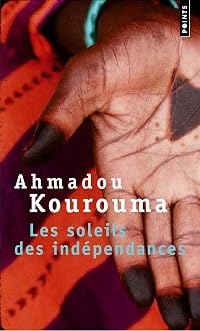


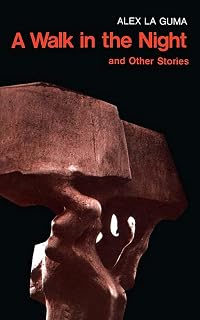


Member Recommendations

by mark
Member Reviews
The plot—a lengthy strike by railroad workers on the Dakar-Niger railway in the late 1940s against French colonial power—initially struck me as a story I couldn’t work up much interest in. I am extremely pleased to say that I was totally wrong. This may be the best of what I have read of this prolific author, a recounting of personalities, the day-to-day costs of a strike both psychologically and physically. Time and again, Ousmane brilliantly describes the struggle of the strikers’ families to eat, the political discussions of the strike leaders…even the behind-the-scenes plotting of the French. It is not a short work and yet I found myself sorry to turn the last page, wanting to know more about the stories of the people and show more of their lives. Ousmane’s writing is strong and his characterizations—particularly of the many women who play significant roles in the story—are excellent. show less
God's Bits of Wood has multiple layers. At face value it is a story of a Western African 1947-8 railroad strike. The story focuses on several key players but the most important individuals are Ibrahima Bakayoko, a locomotive engineer who becomes the union leader during the strike, and on the other side of the conflict, Dejean, the French colonial manager. Because the story takes place in several different areas (Bamako, Thies and Dakar) the overall impact of the strike is generalized to a population. The story reaches past an African railroad strike in order to analyze clashes that go beyond worker/employer relations. The social economic and political contexts are analyzed and illustrated. It is more than a description of the show more initiatives of the railroad workers versus the initiatives of the colonial administration. Feminists have a field day with re-imagining gender relations as the women of West Africa transform themselves into powerful members of society - the social function to the story as it pertains to Sengal and Africa as a whole. show less
This novel is about the six month long strike by the workers on the Dakar-Niger railway in 1947-48. The narrative splits among three locations, Dakar, Thies, and Bamako, and is told from the viewpoint of multiple characters. We come to love these people and empathize with their suffering.
What is interesting about the novel is how the role of women in society evolved over the time period of the strike. Initially, the women have no role to play; as the food and money runs out, however, it is left to the ingenuity and skills of the women to provide for their men and their families. Ultimately, it is the march of the women from Thies to Dakar that causes the railroad company to concede to the demands of the strikers.
While the book show more obviously makes a political statement, it does not rely on diatribe or polemic. It tells the story of a variety of individuals, their suffering and their courage. It makes for compelling reading. Highly recommended. show less
What is interesting about the novel is how the role of women in society evolved over the time period of the strike. Initially, the women have no role to play; as the food and money runs out, however, it is left to the ingenuity and skills of the women to provide for their men and their families. Ultimately, it is the march of the women from Thies to Dakar that causes the railroad company to concede to the demands of the strikers.
While the book show more obviously makes a political statement, it does not rely on diatribe or polemic. It tells the story of a variety of individuals, their suffering and their courage. It makes for compelling reading. Highly recommended. show less
Gripping recounting of the pivotal 1947-48 strike on the Dakar-Niger railway that was a turning point in West African independence. The black African railway men strike to demand basic equality with white European workers, simple things such as pensions, back pay and family allowances that have always been granted to Europeans. The strike is suppressed with a callousness and brutality that will unsurprising to anyone with a passing familiarity of the international labor movement. Not content with seeing how long the strikers can last without pay, the colonial establishment even cuts off electricity and in a particularly cruel twist, water to the workers and their families.
As one of the wives notes, “Real misfortune is not just a show more matter of being hungry and thirsty; it is a matter of knowing that there are people who want you to be hungry and thirsty – and that is the way it is with us.” One of the ways that I think this story compares favorably to roughly contemporaneous works by Steinbeck or Orwell is the highlighting of the pivotal role that the women played in the struggle. They stepped forward in a way that was revolutionary in a traditional Muslim society and I can’t help but wonder if they were able to hold on to their gains in the aftermath or suffered a backsliding in rights after the dust settled.
Sembène’s large cast of characters are all finely drawn individuals without a single stock character to be found. Even the French colonial officials are allowed their individual quirks and motivations, indeed the only completely unsympathetic person in the whole book was a sadistic prison commandant. And even the commandant may have only been drawn that way in order to allow his victims a moral choice of how far they would let hate and the yearning for vengeance rule them after the resolution of the strike. You have to love a story where a traditional elderly devout Muslim man and an independent young woman of “easy virtue” can be equally inspirational. show less
As one of the wives notes, “Real misfortune is not just a show more matter of being hungry and thirsty; it is a matter of knowing that there are people who want you to be hungry and thirsty – and that is the way it is with us.” One of the ways that I think this story compares favorably to roughly contemporaneous works by Steinbeck or Orwell is the highlighting of the pivotal role that the women played in the struggle. They stepped forward in a way that was revolutionary in a traditional Muslim society and I can’t help but wonder if they were able to hold on to their gains in the aftermath or suffered a backsliding in rights after the dust settled.
Sembène’s large cast of characters are all finely drawn individuals without a single stock character to be found. Even the French colonial officials are allowed their individual quirks and motivations, indeed the only completely unsympathetic person in the whole book was a sadistic prison commandant. And even the commandant may have only been drawn that way in order to allow his victims a moral choice of how far they would let hate and the yearning for vengeance rule them after the resolution of the strike. You have to love a story where a traditional elderly devout Muslim man and an independent young woman of “easy virtue” can be equally inspirational. show less
Sembene's most well-known work, God's Bits of Wood is set during the 1947-8 strike by the Dakar-Niger Railway workers who were demanding better pay, family allowances and pensions. We follow the men, women and children affected by the strike as the authorities' cut off their food and water supplies. Ultimately the strikers were successful in forcing the railway company to negotiate.
Sembene was himself a union organiser and member of the Communist Party in France. Because of this I expected a lot of politicised speeches from the book's characters. However, he tackles his subject in a much more subtle manner - the injustices of the colonial system are effectively conveyed without heavy-handed diatribes.
What struck me most was how the role show more of women in society changed during the strike because of the extreme situation they were in. At the beginning a girl is chastised by the women for going to the meetings where men were discussing the proposed strike, an unseemly place for a woman to be. By the end of the book, women were leading protests and riots and seem to have been much more active than men in organising militant action. I think this is because the privations of this time affected women much more - despite the food shortages they were still expected to provide for their families, and they were constantly confronted with the sight of their starving children or by not being able to produce enough milk for their babies.
The book also illustrates the ambivalence experienced by those who are colonised. The colonial power is hated, yet its language and customs are appropriated often by young people for whom they represent sophistication and a way to get ahead. A young woman in the book is proud of her ability to speak French but it ultimately leads to her humiliation as she can understand the lewd comments made about her by French officials. show less
Sembene was himself a union organiser and member of the Communist Party in France. Because of this I expected a lot of politicised speeches from the book's characters. However, he tackles his subject in a much more subtle manner - the injustices of the colonial system are effectively conveyed without heavy-handed diatribes.
What struck me most was how the role show more of women in society changed during the strike because of the extreme situation they were in. At the beginning a girl is chastised by the women for going to the meetings where men were discussing the proposed strike, an unseemly place for a woman to be. By the end of the book, women were leading protests and riots and seem to have been much more active than men in organising militant action. I think this is because the privations of this time affected women much more - despite the food shortages they were still expected to provide for their families, and they were constantly confronted with the sight of their starving children or by not being able to produce enough milk for their babies.
The book also illustrates the ambivalence experienced by those who are colonised. The colonial power is hated, yet its language and customs are appropriated often by young people for whom they represent sophistication and a way to get ahead. A young woman in the book is proud of her ability to speak French but it ultimately leads to her humiliation as she can understand the lewd comments made about her by French officials. show less
This book grew on me as I read it: at first it seemed like a relatively straightforward account, with political overtones, of a strike on the Dakar-Niger railway in 1947-1948, in which the African workers demanded higher wages, pensions, and more from the colonial French managers, but gradually I was drawn in by the perceptive portraits of a whole variety of characters and the more subtle interactions among them and by the portrait of changes in the society as the impact of western "civilization" made itself felt on traditional ways of life. As other reviewers have noted, one of the most interesting aspects of the book is the way the women take on new power as the story develops. Ousmane portrays not only the suffering caused by the show more strike, but also the suffering that made the strike necessary, and the strengths and weaknesses of the men and women who must deal with the consequences of the strike. He also illustrates the complex relationship between the colonizers and the colonized, some of whom take pride in having learned French, and how to read and write, while resenting the fact that they must speak French to the French, who have never taken the time to learn the African languages spoken by the people they control. Although the French characters are not as fully developed as the African ones, they too differ from each other and narrowly escape being stereotypes.
Ousmane immigrated to France where he became a union organizer and a member of the Communist party. At times in this book the political message borders on the obvious, but for the most part this is a story of people struggling to put food and water on the table and live in dignity. show less
Ousmane immigrated to France where he became a union organizer and a member of the Communist party. At times in this book the political message borders on the obvious, but for the most part this is a story of people struggling to put food and water on the table and live in dignity. show less
[God’s Bits of Wood] by Sengalese writer [[Sembene Ousmane] was first published in 1960. It is about the Dakar-Niger railway strike on 1947-48. The book has a political message, but is more than that.
I read this book for the Francophone theme in the Reading Globally group. It was written in French, but feels less “French” and more African compared to some of the other books I have read from this challenge. Ousmane’s style reminds me of Achebe, with it’s focus on community norms and the community story, and in the concrete story-telling mode. For example:
“It was an afternoon in med-October, at the end of the season of rains, and as was the custom at this time of day the women of the Bakayoko house were gathered in the show more courtyard. Only the women. As they went about their household tasks they chattered constantly, each of them completely indifferent to what the others were saying. Seated a little apart, with her back against the hard, clay wall, was old Niakoro. “
I enjoyed reading this book. The style is accessible and I grew to really care about the characters and the outcome of the strike. This book enhanced my respect for early labor leaders: the suffering for the strikers and their families was intense, but they were able to persevere.
The role of women in a traditional Moslem society is one of the major themes of this book. Women and men live in parallel worlds, which is one of the reasons, I think, that polygamy can work. As the story unfolds, we see the women taking more power and becoming more active in the strike. show less
I read this book for the Francophone theme in the Reading Globally group. It was written in French, but feels less “French” and more African compared to some of the other books I have read from this challenge. Ousmane’s style reminds me of Achebe, with it’s focus on community norms and the community story, and in the concrete story-telling mode. For example:
“It was an afternoon in med-October, at the end of the season of rains, and as was the custom at this time of day the women of the Bakayoko house were gathered in the show more courtyard. Only the women. As they went about their household tasks they chattered constantly, each of them completely indifferent to what the others were saying. Seated a little apart, with her back against the hard, clay wall, was old Niakoro. “
I enjoyed reading this book. The style is accessible and I grew to really care about the characters and the outcome of the strike. This book enhanced my respect for early labor leaders: the suffering for the strikers and their families was intense, but they were able to persevere.
The role of women in a traditional Moslem society is one of the major themes of this book. Women and men live in parallel worlds, which is one of the reasons, I think, that polygamy can work. As the story unfolds, we see the women taking more power and becoming more active in the strike. show less
Members
- Recently Added By
Lists

The Guardian's 1000 Novels Everyone Must Read
1,005 works; 547 members

Best African Books
126 works; 46 members

Black Authors
384 works; 32 members
Best African and African diaspora books
111 works; 4 members

Books Set In Africa
81 works; 4 members

Read These Too
458 works; 9 members

History is a Weapon Recommended Reading List
43 works; 3 members
Author Information

Some Editions
Awards and Honors
Notable Lists
Series
Belongs to Publisher Series
Common Knowledge
- Canonical title
- God's Bits of Wood
- Original title
- Les bouts de bois de Dieu
- Original publication date
- 1960
- Important places
- Africa; Senegal; Dakar, Senegal; Mali; Bamako, Mali; Thiès, Senegal
- Important events
- Dakar-Niger railway strike (1947 | 1948)
- First words
- The last rays of the sun filtered through a shredded lacework of clouds.
- Last words
- (Click to show. Warning: May contain spoilers.)But happy is the man who does battle without hatred.
Classifications
Statistics
- Members
- 759
- Popularity
- 36,929
- Reviews
- 11
- Rating
- (3.99)
- Languages
- 8 — Dutch, English, Finnish, French, German, Italian, Spanish, Swedish
- Media
- Paper, Ebook
- ISBNs
- 23
- ASINs
- 8