On This Page
Description
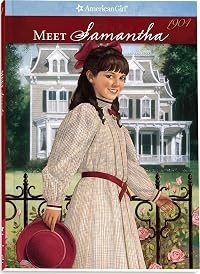
In 1904, nine-year-old Samantha, an orphan living with her wealthy grandmother, and her servant friend Nellie have a midnight adventure when they try to find out what has happened to the seamstress who suddenly left her job.Tags
Recommendations






Member Reviews
Rating is for Book One, review is for the original six-book Samantha series published in the 1980s
Historical fiction is my all-time favorite genre, and it isn't hard for me to pinpoint when/where my love for the genre started.
At my elementary school library, I discovered chapter books in The American Girls Collection, published by what was once the Pleasant Company. My favorite series in the collection were (in the order of their eras) the ones about:
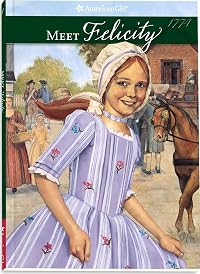
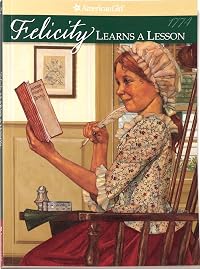
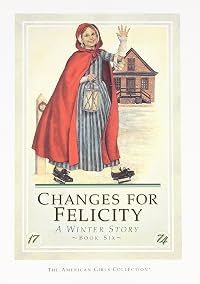
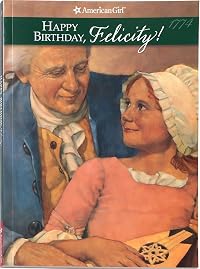
• Felicity (1774)
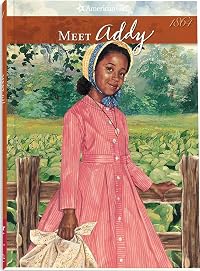
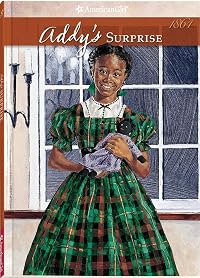
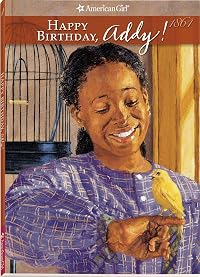
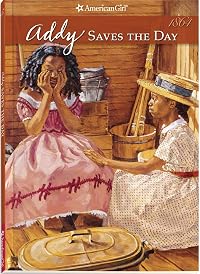
• Addy (1864)
• Samantha (1904)
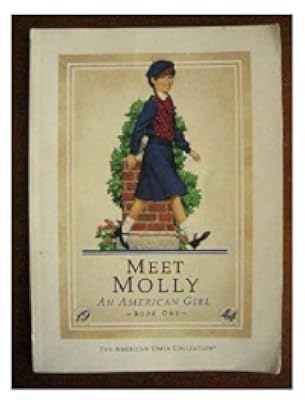
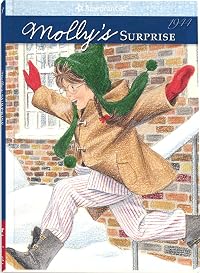
• Molly (1944)
Well, I recently found out there's an upcoming novel about one of these heroines as an adult. Samantha: The Next Chapter by Fiona Davis. So, I decided to revisit the adventures of nine- then ten-year-old Samantha.
For me as show more a child, it was the turn-of-the-century settings of the stories, combined with the pages of rich and colorful illustrations, that most drew me into the books about Samantha's great times as well as her lessons to learn. History wise, the issue that stood out to me the most in the series was women's suffrage.
Now for me as an adult, I better recognize how much important history the series touches on, and while these relatively short tales don't go deep into character development, I can appreciate Samantha's character a little more.
She's very compassionate, and she's at her most courageous when she's helping others in need. In addition to women's rights, Samantha's stories take a young reader-appropriate but still serious look at issues like race and class. There are also instances of alcohol abuse and thievery, and Samantha begins to learn about the hardships that different families and children face, including cramped and run-down living conditions, child labor, harsh and bleak orphanages, and childhood homelessness.
And even as well-off as Samantha is, she as an orphan herself does have her somber moments when she thinks about the two parents she lost before she would be able to remember them better.
On a different note, features I didn't remember but am glad I've rediscovered about the series are the history sections following the stories, with facts and photographs adding more historical context to the world Samantha lives in—and will live in when she grows up.
Here's hoping my grown-up self will enjoy reading about grown-up Samantha as much as I enjoyed this series, whether the first time I read the books or during my revisit. show less
Historical fiction is my all-time favorite genre, and it isn't hard for me to pinpoint when/where my love for the genre started.
At my elementary school library, I discovered chapter books in The American Girls Collection, published by what was once the Pleasant Company. My favorite series in the collection were (in the order of their eras) the ones about:
• Felicity (1774)
• Addy (1864)
• Samantha (1904)
• Molly (1944)
Well, I recently found out there's an upcoming novel about one of these heroines as an adult. Samantha: The Next Chapter by Fiona Davis. So, I decided to revisit the adventures of nine- then ten-year-old Samantha.
For me as show more a child, it was the turn-of-the-century settings of the stories, combined with the pages of rich and colorful illustrations, that most drew me into the books about Samantha's great times as well as her lessons to learn. History wise, the issue that stood out to me the most in the series was women's suffrage.
Now for me as an adult, I better recognize how much important history the series touches on, and while these relatively short tales don't go deep into character development, I can appreciate Samantha's character a little more.
She's very compassionate, and she's at her most courageous when she's helping others in need. In addition to women's rights, Samantha's stories take a young reader-appropriate but still serious look at issues like race and class. There are also instances of alcohol abuse and thievery, and Samantha begins to learn about the hardships that different families and children face, including cramped and run-down living conditions, child labor, harsh and bleak orphanages, and childhood homelessness.
And even as well-off as Samantha is, she as an orphan herself does have her somber moments when she thinks about the two parents she lost before she would be able to remember them better.
On a different note, features I didn't remember but am glad I've rediscovered about the series are the history sections following the stories, with facts and photographs adding more historical context to the world Samantha lives in—and will live in when she grows up.
Here's hoping my grown-up self will enjoy reading about grown-up Samantha as much as I enjoyed this series, whether the first time I read the books or during my revisit. show less
This was a fun American Girl book and introduces us to Samantha, a girl living in what is called Victorian times (although technically, as Queen Victoria was dead for three years in 1904, the time was Edwardian) Her family is pretty well-off, so Samantha enjoys some privilege, but her life is still restricted due to her sex, something which would be explored in this series, including womens' suffrage. her privilege also provides a stark contrast to another issue that is brought up in this series, poverty, child labor, and child exploitation.
I love the American Girl books. They were such a large part of my childhood. Their plots are somewhat slight, and they are very formulaic, but they also teach quite a bit about history to young girls, and, more importantly, interest them in it. I will always wonder, though, why they chose to call Samantha a 'Victorian' girl, when 1904 isn't Victorian at all. It's Edwardian. That probably confused quite a few people in my generation. It's terrible Pleasant Company (who created the series) sold out to Mattel. There's a definite sway these days toward contemporary themes with merchandising tie-ins, and very little in the way of historical information with any attempt at accuracy.
This book follows the story of Samantha growing up in the early 1900s. Samantha is an orphan living with her grandmother who expects her to behave like a young lady. Samantha befriends Nellie who is a young servant girl. They become close friends, despite their social classes, and solve a mystery together. The story reveals the inequality and hardships of the time. The story also talks about progressive women of the time, like Samantha's aunt who believes women should be able to make money. This book gives historically accurate information while telling a story of how friendship can be found in unlikely places.
I like this book, a few elements stood out to me that I really liked. The first thing you notice about the book is that even though it is a chapter book, it still included illustrations throughout. On page 2, Samantha finds Eddie’s beetle collection and there are is a picture of three different beetle pictures within the paragraph. Another thing I liked was the fact this is a great transition book to get younger readers into chapter books. The font is big, the paragraphs are manageable, and there are pictures throughout which reinforces the text on the page which is great for readers that are just getting into chapter books. I also love Samantha, this is the first book in a series of 6 and you really get a good idea of who Samantha show more is. Throughout the book, Samantha is depicted as a strong girl likable girl who is ahead of her time. She was always looking up to her Aunt Cornelia who was all about being a progressive modern woman. Cornelia would tell Samantha her ideals, for example, she told Samantha that women should be able to make money, which her Grandmother deeply disapproved of because it went against the cultural norms of the day. The main idea of the book is friendships can come out of the most unlikely circumstances if you just care about them. Samantha struck up a friendship with a neighbor’s servant (Nellie) even though they knew they shouldn’t be friends because of status, Samantha still went out of her way become friends and by the end of the book, they were great friends. show less
It is rare that two hobbies of mine collide, but that is exactly the case with 'Meet Samantha'. An avid doll collector, Samantha is one of my favorite American Girl dolls. Like many, I read this book series back in the early 90's when I was scrimping and saving my pennies for Pleasant Company's American Girl dolls. 2012, it seems, has been a year of re-reading for me, and I thought what better to re-read than Samantha's story?
Set in 1904, 'Meet Samantha' introduces us to 9 year old Samantha. Rich and upper class, Samantha is far from your typical socialite. She's full of spunk and not afraid to get dirty or speak her mind. This first book in this six book series is, for the most part, an introduction to the characters and settings. show more That's not to say there isn't a story, because there is, but a lot of this book concentrates on relationships.
What I love most about Samantha's story is the setting. 1904 was a time where you could realistically see cars and horse drawn carriages sharing roads. New things were being invented every day. Can you imagine?
I will forever recommend the Samantha book series to young readers. They are great stories with great themes (ie: friendship, confidence, etc). Even after all these years, I had a blast reading 'Meet Samantha' and your young reader will, too! Because of that, this blog gives 'Meet Samantha' 5 out of 5 stars. show less
Set in 1904, 'Meet Samantha' introduces us to 9 year old Samantha. Rich and upper class, Samantha is far from your typical socialite. She's full of spunk and not afraid to get dirty or speak her mind. This first book in this six book series is, for the most part, an introduction to the characters and settings. show more That's not to say there isn't a story, because there is, but a lot of this book concentrates on relationships.
What I love most about Samantha's story is the setting. 1904 was a time where you could realistically see cars and horse drawn carriages sharing roads. New things were being invented every day. Can you imagine?
I will forever recommend the Samantha book series to young readers. They are great stories with great themes (ie: friendship, confidence, etc). Even after all these years, I had a blast reading 'Meet Samantha' and your young reader will, too! Because of that, this blog gives 'Meet Samantha' 5 out of 5 stars. show less
This book introduces Samantha in the American Girl series. She is an orphan living with her grandmother in 1904. Samantha's neighbors have a girl her age come and live with them, but she has to work as a servant for her living rather than being priviliged as Samantha is. Samantha has grown up with servants but has never seen that children must also work in houses and factories. The two become friends and solve a mystery together. The story reveals the hardships and inequality of the time, rather than an idealistically whitewashed portrayal, but still shows the beauty of the period through historically accurate details. There are two versions of the artwork depending on the edition, but both give expression and warmth to the characters, show more and smaller illustrations show old-fashioned items that readers might have difficulty conceptualizing. These books introduce young readers to history in a non-glorified but approachable way that makes them more accessible and gives an understanding of real world concepts. The looking back section at the end uses real photographs and images from the era to display the highlights of that time in history along with the social implications. show less
Members
- Recently Added By
Lists

Favorite Childhood Books
1,646 works; 518 members

4th Grade Books
312 works; 5 members

Books for An American Girl Readers
58 works; 1 member

Novels featuring Orphans
76 works; 10 members

Historical Fiction
889 works; 91 members
Overdue Podcast
806 works; 9 members
Author Information
12 Works 8,448 Members
Some Editions
Awards and Honors
Awards
Series

Belongs to Publisher Series
American Girl (Samantha 1)
Work Relationships
Common Knowledge
- Canonical title
- Meet Samantha: An American Girl
- Original publication date
- 1986
- People/Characters
- Samantha Parkington; Nellie O'Malley; Jessie
- Important places
- Mount Bedford, New York, USA
- Dedication
- To my parents, who made childhood beautiful
- First words
- "Samantha!"
- Last words
- (Click to show. Warning: May contain spoilers.)"You are really quite a fine young lady, Samantha Parkington," she said as she opened her arms to fold Samantha in a hug as warm as summer sunshine.
Classifications
Statistics
- Members
- 4,574
- Popularity
- 3,185
- Reviews
- 36
- Rating
- (3.98)
- Languages
- English
- Media
- Paper, Audiobook
- ISBNs
- 12
- UPCs
- 1
- ASINs
- 13
