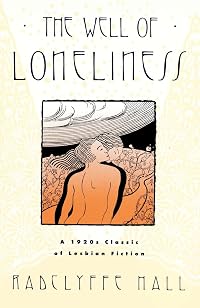
The Well of Loneliness
by Radclyffe Hall
On This Page
Description
'As a man loved a woman, that was how I loved...It was good, good, good...' Stephen is an ideal child of aristocratic parents - a fencer, a horse rider and a keen scholar. Stephen grows to be a war hero, a bestselling writer and a loyal, protective lover. But Stephen is a woman, and her lovers are women. As her ambitions drive her, and society confines her, Stephen is forced into desperate actions. The Well of Lonelinesswas banned for obscenity when published in 1928.Tags
Recommendations

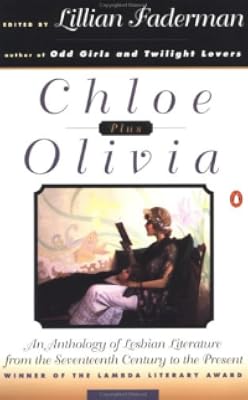
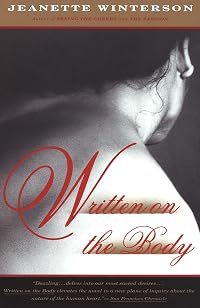
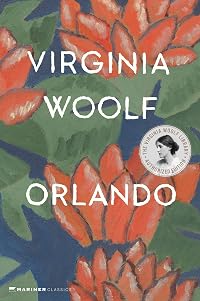

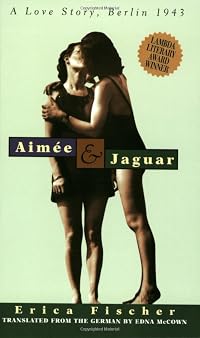










Member Recommendations

Member Reviews
*4.5? 4.8?*
Do the best you can, no man can do more — but never stop fighting. For us there is no sin so great as despair, and perhaps no virtue so vital as courage.
Um. Wow.
I came across this book in my many forays of pre-Stonewall queer history when I was writing a novelization of queer 1920s New York. Lucky for my research, my main characters were male, but I still came across the few and far between primary source fictions of queer women and bookmarked them. I received this book as a gift this Christmas, and seeing a lull in school work, dedicated myself to the 166k word, 400-page clunker. (After reading War and Peace, it was a reassuring number, believe me.)
And man am I glad I read it.
A word of caution: If you don't like old-style show more prose, you probably won't like it. If you don't like a lot of detail that comes inherent to that style, you probably won't like it. And if you can't appreciate Christianity/Religiosity for a queer person and the many sufferings of it, you probably won't like it.
As I began reading, the idea that Stephen is a transgender man, instead of a "butch" lesbian, seemed to take over me. The linguistic and psychological concepts to differentiate same-sex attraction and gender identity were not known at the time, and it made Stephen's character at times both frustration and immensely fascinating. Coming into the book I was expecting a lesbian narrative, and the more I heard Stephen's feeling of being a boy, the more I grew convinced they were probably transgender, and thus a key part of understanding would be lost to me. As the book progressed, however, my theory seemed to waver, and I'm still not sure how Stephen would identify in the modern world. To me I realized, it didn't necessarily matter to my understanding of the novel's themes of a world not accepting something natural. No matter how Stephen would align themselves, the sentiments still stand: All queer people deserve to be treated equally.
From one character to the next we see how unjust the life is for an "invert". From Angela's twisted sense of selfishness to save her own unhappy honor, to Anna's disgusting denunciation of her child, to Puddle's true inclination never uttered to Stephen, to Martin's awkward growth of love and embarrassed leaving, to the deeply tragic story of Jamie and Barbara, and especially down to Stephen's last sacrifice—not only is the message abundantly clear but seems to also strengthen the connection Stephen had with her father, Sir Phillip.
Sir Phillip is the original God in this story, the Father who understands and accepts his child—but is too afraid to tell her or others for fear of hurting them. This then is the God the Father Stephen prays to at the end, the Father who loves and understands her, but for one reason or another is silent. Stephen finds his scrawled book of Psychopathia Sexualis like the commandments, and through it learns her Father accepts her. He just didn't tell her explicitly. The story is ultimately one of Stephen returning to her Father; enjoying his unabashed love as a child before being banished from her Eden of Morton, she must seek to find peace in her silent, God the Father once more.
And so I found attention to religion beautiful. Being religiously-inclined and grappling with my faith as I try to return to my own halcyon days of God (as Hall themselves would so eloquently put it), the struggle of religion was poignant to me. Stephen's life is underlined by a feeling of God: at times she believes in none of it, at others she seems to understand the power that He really is there—the symbolism of Stephen as Jesus comes to mind, sacrificing herself for her love so she may have a better life. If Hall could be a devout Catholic in the face of her sexuality, her trials—and hell—even WWI, then anyone could. I've been praying for my own spirituality recently, trying to understand my encounters with spirits against a world that tells me I must be insane, the outmoded creation stories, and twisted single-mindedness of the Christian we've all come to revile. It seems like a blessing then that I read this book at the time that I did, and I hope one day I'm at peace with my encounters with the unexplained and otherworldly, and the universality of a God for all people on earth no matter what creed. For now, I'm reminded of one of my favorite quotes from the book, something I'll hold on to for life:
(For anyone more interested in Hall's relationship with her spirituality, I recommend this article written by a queer Christian site
The book is not 5 stars only because of the length. Sometimes I felt myself slogging through (sometimes being the keyword), though I genuinely liked the writing style in all its stately obsequiousness to detail I know many do not appreciate. Sometimes the attention to detail, especially of natural elements, went on for paragraphs and I wanted to bang my head against something to wake it up. I felt at times the themes were not completely cohesive either, as the details seemed to muddy the message Hall was going for.
I could write 3 papers on this book and the literary merit it still holds—why it is not in schools hounds me. I feel the value of the book escapes the masses, not by any deficiency of themselves but rather of the time and the subject manner. We have equal protection under the law now and classical religion is dwindling. The pertinent issues were already niche 90 years ago, I understand the canon's ignorance of it, though it makes my heart ache. If only Hall could see the happy, queer marriages able to take place in churches now—though a part of me knows she sees it all already.
***
Do the best you can, no man can do more — but never stop fighting. For us there is no sin so great as despair, and perhaps no virtue so vital as courage.
Um. Wow.
I came across this book in my many forays of pre-Stonewall queer history when I was writing a novelization of queer 1920s New York. Lucky for my research, my main characters were male, but I still came across the few and far between primary source fictions of queer women and bookmarked them. I received this book as a gift this Christmas, and seeing a lull in school work, dedicated myself to the 166k word, 400-page clunker. (After reading War and Peace, it was a reassuring number, believe me.)
And man am I glad I read it.
A word of caution: If you don't like old-style show more prose, you probably won't like it. If you don't like a lot of detail that comes inherent to that style, you probably won't like it. And if you can't appreciate Christianity/Religiosity for a queer person and the many sufferings of it, you probably won't like it.
As I began reading, the idea that Stephen is a transgender man, instead of a "butch" lesbian, seemed to take over me. The linguistic and psychological concepts to differentiate same-sex attraction and gender identity were not known at the time, and it made Stephen's character at times both frustration and immensely fascinating. Coming into the book I was expecting a lesbian narrative, and the more I heard Stephen's feeling of being a boy, the more I grew convinced they were probably transgender, and thus a key part of understanding would be lost to me. As the book progressed, however, my theory seemed to waver, and I'm still not sure how Stephen would identify in the modern world. To me I realized, it didn't necessarily matter to my understanding of the novel's themes of a world not accepting something natural. No matter how Stephen would align themselves, the sentiments still stand: All queer people deserve to be treated equally.
From one character to the next we see how unjust the life is for an "invert". From Angela's twisted sense of selfishness to save her own unhappy honor, to Anna's disgusting denunciation of her child, to Puddle's true inclination never uttered to Stephen, to Martin's awkward growth of love and embarrassed leaving, to the deeply tragic story of Jamie and Barbara, and especially down to Stephen's last sacrifice—not only is the message abundantly clear but seems to also strengthen the connection Stephen had with her father, Sir Phillip.
Sir Phillip is the original God in this story, the Father who understands and accepts his child—but is too afraid to tell her or others for fear of hurting them. This then is the God the Father Stephen prays to at the end, the Father who loves and understands her, but for one reason or another is silent. Stephen finds his scrawled book of Psychopathia Sexualis like the commandments, and through it learns her Father accepts her. He just didn't tell her explicitly. The story is ultimately one of Stephen returning to her Father; enjoying his unabashed love as a child before being banished from her Eden of Morton, she must seek to find peace in her silent, God the Father once more.
And so I found attention to religion beautiful. Being religiously-inclined and grappling with my faith as I try to return to my own halcyon days of God (as Hall themselves would so eloquently put it), the struggle of religion was poignant to me. Stephen's life is underlined by a feeling of God: at times she believes in none of it, at others she seems to understand the power that He really is there—the symbolism of Stephen as Jesus comes to mind, sacrificing herself for her love so she may have a better life. If Hall could be a devout Catholic in the face of her sexuality, her trials—and hell—even WWI, then anyone could. I've been praying for my own spirituality recently, trying to understand my encounters with spirits against a world that tells me I must be insane, the outmoded creation stories, and twisted single-mindedness of the Christian we've all come to revile. It seems like a blessing then that I read this book at the time that I did, and I hope one day I'm at peace with my encounters with the unexplained and otherworldly, and the universality of a God for all people on earth no matter what creed. For now, I'm reminded of one of my favorite quotes from the book, something I'll hold on to for life:
Then an unexpected, and to her very moving thing happened; his eyes filled with pitiful tears: ‘Lord,’ he muttered, ‘why need this have come upon you — this incomprehensible dispensation? It’s enough to make one deny God’s existence!’
She felt a great need to reassure him. At that moment he seemed so much younger than she was as he stood there with his eyes full of pitiful tears, doubting God, because of his human compassion: ‘There are still the trees. Don’t forget the trees, Martin — because of them you used to believe.’
‘Have you come to believe in a God then?’ he muttered.
‘Yes,’ she told him, ‘it’s strange, but I know now I must — lots of us feel that way in the end. I’m not really religious like some of the others, but I’ve got to acknowledge God’s existence, though at times I still think: “Can He really exist?” One can’t help it, when one’s seen what I have here in Paris. But unless there’s a God, where do some of us find even the little courage we possess?’
(For anyone more interested in Hall's relationship with her spirituality, I recommend this article written by a queer Christian site
The book is not 5 stars only because of the length. Sometimes I felt myself slogging through (sometimes being the keyword), though I genuinely liked the writing style in all its stately obsequiousness to detail I know many do not appreciate. Sometimes the attention to detail, especially of natural elements, went on for paragraphs and I wanted to bang my head against something to wake it up. I felt at times the themes were not completely cohesive either, as the details seemed to muddy the message Hall was going for.
I could write 3 papers on this book and the literary merit it still holds—why it is not in schools hounds me. I feel the value of the book escapes the masses, not by any deficiency of themselves but rather of the time and the subject manner. We have equal protection under the law now and classical religion is dwindling. The pertinent issues were already niche 90 years ago, I understand the canon's ignorance of it, though it makes my heart ache. If only Hall could see the happy, queer marriages able to take place in churches now—though a part of me knows she sees it all already.
***
‘God,’ she gasped, we believe; we have told You we believe . . . We have not denied You, then rise up and defend us. Acknowledge us, oh God, before the whole world. Give us also the right to our existence!’show less
Kind of an odd book. Many of the characters outside of Stephen's family are quite shallow, and the novel often tends towards the maudlin--it seems emotionally invested in an antiquated view of gentility, Britishness, and of course sexuality that modernist literature often worked to challenge. The ending was particularly heavy-handed. Nevertheless, I was moved by the novel's description of navigating gender nonconformity in a conservative, sexist culture, especially the descriptions of Stephen's childhood. Stephen's pain at being inescapably an other, always in between, is so real, and yet also clear is that the intractability of that pain has a lot to do with her investment in adhering the status quo and gaining the acceptance of show more mainstream society. show less
When her parents were disappointed that their newborn had not been the boy they expected, they went ahead with the name they had picked out pre-birth: Stephen. For 1928 that was pretty progressive, especially since no one in their society circles really questioned it, not even Stephen herself. Her full name was Stephen Mary Olivia Gertrude Gordon. It was a name that seemed to overshadow her true identity and caused her some confusion as she navigated her way through childhood. Living in an environment where societal norms and expectations were rigid, Stephen often found herself clashing with the traditional gender roles.
Hall uses all the clichés to make obvious Stephen's sexual orientation even as a young child: Stephen developed a show more strong romantic attachment to her nanny, she wanted to hunt, climb trees, and ride horses like a boy. She instinctively needed to change her appearance by cutting her hair and building her muscles and wearing pants and ties. She thought dresses were ridiculous, girlish emotions even more so. These feelings and desires were contrary to what was expected of a girl in her society, leading to a sense of internal conflict and confusion as she tried to understand and accept herself. She knew she was different but could not articulate why. As a teenager, Stephen was thrilled to make the acquaintance of a boy with whom she seemed to have so much in common. Here was a person with whom she could be her true self...until he admitted he was falling in love with her. Of course she could not love him back in the same way, as her own feelings did not align with his blossoming romantic affection. All through her formative years, Stephen's father could not tell her the truth about her "strangeness" and yet he knew. As a result, he was overprotective and sheltering. There is a naivete to Stephen throughout The Well of Loneliness. Even when she found reciprocated love with Mary, a young woman she met during the war, she was never secure in her feelings, often plagued by a persistent fear of rejection and misunderstanding. show less
Hall uses all the clichés to make obvious Stephen's sexual orientation even as a young child: Stephen developed a show more strong romantic attachment to her nanny, she wanted to hunt, climb trees, and ride horses like a boy. She instinctively needed to change her appearance by cutting her hair and building her muscles and wearing pants and ties. She thought dresses were ridiculous, girlish emotions even more so. These feelings and desires were contrary to what was expected of a girl in her society, leading to a sense of internal conflict and confusion as she tried to understand and accept herself. She knew she was different but could not articulate why. As a teenager, Stephen was thrilled to make the acquaintance of a boy with whom she seemed to have so much in common. Here was a person with whom she could be her true self...until he admitted he was falling in love with her. Of course she could not love him back in the same way, as her own feelings did not align with his blossoming romantic affection. All through her formative years, Stephen's father could not tell her the truth about her "strangeness" and yet he knew. As a result, he was overprotective and sheltering. There is a naivete to Stephen throughout The Well of Loneliness. Even when she found reciprocated love with Mary, a young woman she met during the war, she was never secure in her feelings, often plagued by a persistent fear of rejection and misunderstanding. show less
With the expiration in the EU of its copyright, this initially suppressed novel is now, somewhat ironically, in the public domain in Europe. Almost 88 years to the day after it was banned, I finished this off as an audio book. It left me with mixed feelings.
This is a brave attempt to sensitively portray a human side of lesbianism given contemporary attitudes to homosexuality. In its attempt, Hall gets full marks for effort. But, for me at least, I felt it was a bit over the top. I tried hard to discern whether this was a factor of the era that I’m living in or not. I don’t think it was.
Stephen Gordon, so named despite being an unexpected daughter, is raised pretty much like any little boy would be. Now, if I met a woman called show more Bruce, I’d at least wonder why her parents named her that. But no. Strangely, not a single person in the entire novel seem to find it strange that she, a girl/woman, has a man’s name. “But the author had a man’s name,” I hear you chime. Actually, the author’s first given name was in fact Marguerite.
Anyway. I digress. Small plot issues aside, the novel follows the life of Stephen as she grows into a woman who is male in all but physiognomy. At this point, you’d have thought that the whole nature/nurture thing would come into play a bit. But no, it’s nature all the way. Maybe, from an gay perspective, it’s only ever about nature. I don’t know; when I’m with people who are gay, I spend about as much time discussing their sexuality as I do when I’m with people who are straight.
And along with the emphasis on the natural side of things comes several passages that are very much heartfelt cries for society to accept this state of being. Not only that. There are also many episodes where Hall uses Stephen’s struggle to illustrate a deeply conflicted sense of self. There were even pleas to God Himself for acceptance, none more emphatic than the very last line. While I acknowledge the sentiment, this is where I felt the writing was a bit over the top in its desire to appeal to the reader.
What did I get out of it? Well, as a Christian whose world view is definitely not compatible with the mainstream, I appreciated it first as a stimulus to reconsider my own beliefs and thereby reaffirm them. In addition, I valued it as a historical document of the gay community and one with valuable insights into the issues that they may still face. Thus, it very definitely deserves its place in the history of world literature and its relevance has only grown with time. show less
This is a brave attempt to sensitively portray a human side of lesbianism given contemporary attitudes to homosexuality. In its attempt, Hall gets full marks for effort. But, for me at least, I felt it was a bit over the top. I tried hard to discern whether this was a factor of the era that I’m living in or not. I don’t think it was.
Stephen Gordon, so named despite being an unexpected daughter, is raised pretty much like any little boy would be. Now, if I met a woman called show more Bruce, I’d at least wonder why her parents named her that. But no. Strangely, not a single person in the entire novel seem to find it strange that she, a girl/woman, has a man’s name. “But the author had a man’s name,” I hear you chime. Actually, the author’s first given name was in fact Marguerite.
Anyway. I digress. Small plot issues aside, the novel follows the life of Stephen as she grows into a woman who is male in all but physiognomy. At this point, you’d have thought that the whole nature/nurture thing would come into play a bit. But no, it’s nature all the way. Maybe, from an gay perspective, it’s only ever about nature. I don’t know; when I’m with people who are gay, I spend about as much time discussing their sexuality as I do when I’m with people who are straight.
And along with the emphasis on the natural side of things comes several passages that are very much heartfelt cries for society to accept this state of being. Not only that. There are also many episodes where Hall uses Stephen’s struggle to illustrate a deeply conflicted sense of self. There were even pleas to God Himself for acceptance, none more emphatic than the very last line. While I acknowledge the sentiment, this is where I felt the writing was a bit over the top in its desire to appeal to the reader.
What did I get out of it? Well, as a Christian whose world view is definitely not compatible with the mainstream, I appreciated it first as a stimulus to reconsider my own beliefs and thereby reaffirm them. In addition, I valued it as a historical document of the gay community and one with valuable insights into the issues that they may still face. Thus, it very definitely deserves its place in the history of world literature and its relevance has only grown with time. show less
One of those seminal (no pun intended) novels which gets harder to read when the original shock value has long worn off. I'm sure Radclyffe Hall's open and emotional account of 'inverts', or lesbians, in Edwardian England and post-war Paris was controversial enough to warrant the furore raised at the time of publication - an obscenity trial which lead to the book being banned in the UK - but now Loneliness is just a weakly written historical account of prejudice and persecution - interesting, important but lacking in inspiration.
Don't get me wrong, for the first half of the book, all I could think was 'Yes! I'm going to change my name to Stephen, this woman is telling my story!' - which I suppose is a good thing, 90 years on - but then show more the purple prose kicked in. Now, I have read every last one of Baroness Orczy's Scarlet Pimpernel novels, which was like Enid Blyton writing for Mills and Boon, but at least her characters were interesting. Stephen - yes, of course giving the female protagonist a male name instantly turns her into a pseudo-man - suffers for her 'unnatural' love, but she is so dreadfully upper class, I couldn't bring myself to care. I was more concerned about her horse. And Mary is a drip. I did like the acid-tongued Brockett, though.
I'm sorry, I know I should revere this novel far more than I do, and I'm sure reading this drivel gave a lot of confused and closeted women the strength to be themselves, but the writing is so stodgy. There's a lot going on - gay love affairs, World War One, 'Gay Paree' - but there is also much heavy prose, caricatures and general racism, which I don't normally complain about in nineteenth/early twentieth century texts, but there are a couple of cringe-inducing examples.
'For sooner the world came to realise that fine brains very frequently went with inversion, the sooner it would have to withdraw its ban, and the sooner would cease this persecution.' show less
Don't get me wrong, for the first half of the book, all I could think was 'Yes! I'm going to change my name to Stephen, this woman is telling my story!' - which I suppose is a good thing, 90 years on - but then show more the purple prose kicked in. Now, I have read every last one of Baroness Orczy's Scarlet Pimpernel novels, which was like Enid Blyton writing for Mills and Boon, but at least her characters were interesting. Stephen - yes, of course giving the female protagonist a male name instantly turns her into a pseudo-man - suffers for her 'unnatural' love, but she is so dreadfully upper class, I couldn't bring myself to care. I was more concerned about her horse. And Mary is a drip. I did like the acid-tongued Brockett, though.
I'm sorry, I know I should revere this novel far more than I do, and I'm sure reading this drivel gave a lot of confused and closeted women the strength to be themselves, but the writing is so stodgy. There's a lot going on - gay love affairs, World War One, 'Gay Paree' - but there is also much heavy prose, caricatures and general racism, which I don't normally complain about in nineteenth/early twentieth century texts, but there are a couple of cringe-inducing examples.
'For sooner the world came to realise that fine brains very frequently went with inversion, the sooner it would have to withdraw its ban, and the sooner would cease this persecution.' show less
If all you did was judge [The Well of Loneliness] on literary merit, you would have to throw it out the window well before you reached the end as the writing is histrionic, a mass of clichés and stereotyping, annoyingly repetitive, and utterly predictable. But don't do that for this is the sort of novel that proves that novels aren't always about good writing; sometimes what lies at the heart of a novel--what drove the writer to write it--matters far more than the story itself, which is window dressing to carry the message, in this case a message so compelling as to shift the book into a different realm. WoL was published in 1928 and promptly banned, as it is the story of a male soul born in a female body. The first openly lesbian show more novel, it is clear that Hall's purpose was to write above all a romance that might draw in any reader of any orientation, and having drawn them in, start changing their perceptions. As annoying as the book often was (the gender stereotyping made me cringe and howl) yet just often enough Hall would drop all the foolishness briefly and I would be moved by Stephen Gordon's predicament, her confusion, her attempts to be true to herself but also to be sensitive and respectful of the people around her, and her gradual disillusionment and despair. I am sure Hall's novel has made a difference. It's significant, historical, and, in its own odd way, a very genuine creation. **** show less
Watch my YouTube review right here: https://www.youtube.com/watch?v=Q0jwYvWzqO8
I’ve taken more notes for this review than a lot of other reviews I’ve written.
Writing this feels bitter-sweet. I feel like I’ve come to know her, come to love her. Stephen Gordon, the young red-haired, strapping lass who learnt to fence, learnt to box and was willing to fight a boy from Eton because girls are better than boys. She has a temper as fiery as her hair, is initially seriously socially awkward, forever trying to prove herself against a world that wasn’t made for her. I loved baby butch Stephen, who had no idea she was unusual, until she did know.
“She felt shy, yet unusually daring.”
This book begins, as most books do, with the main show more character’s birth. There’s much description of the environment, much like Thomas Hardy. The seasons, hills and valleys and trees all become a part of the novel. Women are described as ivy, clinging and beautiful and men are described as oak trees — and there’s no need to tell you which Stephen would prefer to be. Morton, the country house where Stephen grows up, becomes a character in and of itself. Reading this book is like listening to an orchestra, there are lulls, highs, dips, crescendos. There are parts you do and don’t like, because of how long it is.
If you don’t like horses or animals, I thought I should forewarn you and say there are two fairly prominent horse characters in this book and a dog, much later. These animals have thoughts and interact with Stephen a lot, especially in her childhood. The dynamics of her family are probably the most interesting part of her growing up — Stephen is friendless, lonely, apart from her father, who vows to protect her. He knows she’s queer and keeps it from her, while her mother grows more and more distant from her, to the point of cruelty.
Her parents begin to argue, to fight, as they’ve never done before, and Stephen believes it to be all her fault.
"It is bad for the soul to know itself a coward. It is apt to take refuge in mere wordy violence.”
“I won’t let her face your hatred alone.”
No matter the quality of the writing in this book, because of its trial for obscenity and subsequent infamy, it formed bridges for queer women that they could safely cross. In second World War, libraries lent books on army bases to people who signed their name in a ledger. If you looked in the Well of Loneliness, you could see all the people who’d borrowed the book, and approach women who’d signed their name to it.
A conversation might’ve taken place, and it might’ve sounded something like this.
“I saw you borrowed Well of Loneliness from the library.”
“Oh, yes I did. Such a queer book it was, too.”
“Yes, indeed. Did you enjoy it?”
“On the whole, yes.”
“Would you like to go for a drink?”
“Absolutely.”
… and there you have it. Hall, with her novel, created a way for queer women to talk to other queer women without ever endangering them or creating suspicion. Many times, cheap lesbian pulp, written and produced mostly by men, for men, said on their blurbs that their books were “like something of the Well of Loneliness.”
Radclyffe Hall carved her own path. The story is remarkably autobiographical in parts, and, at times, obsessed with martyrdom. The latter half of the book, especially the last 100 pages are almost a moral monologue of what to do and what not to do as a queer person. How to survive in a place that does not make space for you. And yet the author runs into the same roadblocks as always: marriage, the right to own property together, the right to have their relationship recognised as legitimate. The right to be called anything but a ‘friend’ by the side of a dying spouse.
Any passages that discussed this really affected me. I immigrated to Canada to be with my wife. At the time of our application, same-sex marriage was only available in Canada, not Australia. Legally, on the Australian census, I was single. Recently, we received a call from the Canadian tax office and had to clarify again and again that I didn’t live with Valerie for 2 years of our relationship.
I still get people asking me “Why’d you move?” when they look outside and see slush, snow, cold biting wind. Why did I move from a sub-tropical climate, from the bluest skies in the world and the best beaches I’ve ever been on. Because the slush, the snow, the cold biting wind offered my wife and I more security than Australia could at the time. Usually people would shrug and say “ok” because they’d never considered not having the right to be with the person they loved.
And even when it does have more rights than Australia, the Canadian immigration process is still relentlessly gruelling. After the federal decision to allow same-sex marriage, the Prime Minister at the time, Stephen Harper, created a law so that any couples immigrating here had to have their relationships evaluated for their legitimacy. Because, y’know, now the queers could get married, anyone could apply for the process.
Now, of course, since November of last year, Australia has same-sex marriage at the federal level. It was a pleasure to vote, to say yes and to see it succeed. I’m so happy for all my queer friends at home but also now that my wife and I have another option, and perhaps one day, our children will too.
But any time Stephen Gordon despaired at being unable to marry, to provide security for her beloved, I felt for her. I have been to the those crossroads.
And yet, through it all, we have the character of Valerie Seymour, a French socialite, who stood “like a lighthouse in a storm-swept ocean. The waves had lashed round her feet in vain; winds had howled; clouds had spewed forth their hail and their lightning; torrents had deluged but had not destroyed her. The storms, gathering force, broke and drifted away, leaving behind them the shipwrecked, the drowning. But when they looked up, the poor spluttering victims, why what should they see but Valerie Seymour! Then a few would strike boldly out for the shore, at the sight of this indestructible creature.”
I loved Stephen Gordon. I cherished her. She felt like a friend to me. I never loved her more than when Hall painstakingly described her evening routine. Combing her hair back with a wet comb, the clink of cufflinks, the stiff starch of a collar, meticulously buttoned shirts, cuffs, men’s silk underwear.
But, Hall also uses slurs and sometimes antiquated language to describe black people, or Jewish people. I rolled my eyes. If Hall were born now, she’d be a racist TERF of the worst degree. Her writing, at times, smacks of privilege and I realised, if she existed now, I’d make every effort to kick her out of the community.
And in regards to her writing: most of the other characters, for their part, do not come to life as Stephen does. Mary comes close, but for the majority of the novel, many characters are merely soundboards for Gordon, and somehow I didn’t mind. I didn’t mind any of the novel’s flaws at all, because I loved Stephen so much. I felt like she was real.
There were so many times where I wanted to pull her aside and ask her questions. I took to flagging the book with a mess of pink post-it notes instead. In terms of the overall plot, it moved slowly, sometimes it barely crawled. I feel that the queer people Stephen associates with were introduced too late in the book and it would’ve done better to introduce them earlier, then introduce them again once Stephen had overcome her internalised homophobia, but that’s just me.
There’s no telling why it was flagged for indecency. The word queer, in relation to Stephen, is used a total of 16 times. The word queer is used a total of 21 times and the word invert, which, at the time, was the medical term for a queer person, to describe someone as ‘sexually inverted’, was used 15 times. This last one, perhaps, apart from the scenes where people of the same sex are described in bed, is the most damning of all. Queer has more than one connotation, but invert was used specifically to describe LGBTIQA people. Hall’s bold use of the words themselves, never mind the characters, is incredible.
And yet the only time she ever used the word ‘invert’ was in warning. To say: this is what you shall become. If you’re queer, and you come out, you can never come back from that. You will be cast out. You will be isolated. You will be alone. Despite all your efforts, the world is not built for us. Even Stephen, who is described as having “above all, a grateful nature” is later described as “having a hardened heart.”
Whether this book has a happy ending or a sad ending, there will be an element of bitter-sweetness. Either in the fact that the author risked it all to publish it, or refused to publish it until they could be punished no longer (in the case of E.M. Forster’s Maurice.)
I might not care very much for many of the author’s attitudes, but I loved Stephen Gordon. I still do.
Hall warned us, warned us all what stepping out into the world would do. Then, she did the gayest thing she could possibly think of: she wrote and published this book.
This book was a lifeline in its time, and I would argue, at times, a lifeline now. It reaffirms what I know down to my bones: that queer women and femmes have always existed, that we will always exist, no matter how any society attempts to cast us out.
Hall was angry, bitter and sometimes full of hate.
And in the midst of that, she created Stephen Gordon, who became a lighthouse for us all. show less
I’ve taken more notes for this review than a lot of other reviews I’ve written.
Writing this feels bitter-sweet. I feel like I’ve come to know her, come to love her. Stephen Gordon, the young red-haired, strapping lass who learnt to fence, learnt to box and was willing to fight a boy from Eton because girls are better than boys. She has a temper as fiery as her hair, is initially seriously socially awkward, forever trying to prove herself against a world that wasn’t made for her. I loved baby butch Stephen, who had no idea she was unusual, until she did know.
“She felt shy, yet unusually daring.”
This book begins, as most books do, with the main show more character’s birth. There’s much description of the environment, much like Thomas Hardy. The seasons, hills and valleys and trees all become a part of the novel. Women are described as ivy, clinging and beautiful and men are described as oak trees — and there’s no need to tell you which Stephen would prefer to be. Morton, the country house where Stephen grows up, becomes a character in and of itself. Reading this book is like listening to an orchestra, there are lulls, highs, dips, crescendos. There are parts you do and don’t like, because of how long it is.
If you don’t like horses or animals, I thought I should forewarn you and say there are two fairly prominent horse characters in this book and a dog, much later. These animals have thoughts and interact with Stephen a lot, especially in her childhood. The dynamics of her family are probably the most interesting part of her growing up — Stephen is friendless, lonely, apart from her father, who vows to protect her. He knows she’s queer and keeps it from her, while her mother grows more and more distant from her, to the point of cruelty.
Her parents begin to argue, to fight, as they’ve never done before, and Stephen believes it to be all her fault.
"It is bad for the soul to know itself a coward. It is apt to take refuge in mere wordy violence.”
“I won’t let her face your hatred alone.”
No matter the quality of the writing in this book, because of its trial for obscenity and subsequent infamy, it formed bridges for queer women that they could safely cross. In second World War, libraries lent books on army bases to people who signed their name in a ledger. If you looked in the Well of Loneliness, you could see all the people who’d borrowed the book, and approach women who’d signed their name to it.
A conversation might’ve taken place, and it might’ve sounded something like this.
“I saw you borrowed Well of Loneliness from the library.”
“Oh, yes I did. Such a queer book it was, too.”
“Yes, indeed. Did you enjoy it?”
“On the whole, yes.”
“Would you like to go for a drink?”
“Absolutely.”
… and there you have it. Hall, with her novel, created a way for queer women to talk to other queer women without ever endangering them or creating suspicion. Many times, cheap lesbian pulp, written and produced mostly by men, for men, said on their blurbs that their books were “like something of the Well of Loneliness.”
Radclyffe Hall carved her own path. The story is remarkably autobiographical in parts, and, at times, obsessed with martyrdom. The latter half of the book, especially the last 100 pages are almost a moral monologue of what to do and what not to do as a queer person. How to survive in a place that does not make space for you. And yet the author runs into the same roadblocks as always: marriage, the right to own property together, the right to have their relationship recognised as legitimate. The right to be called anything but a ‘friend’ by the side of a dying spouse.
Any passages that discussed this really affected me. I immigrated to Canada to be with my wife. At the time of our application, same-sex marriage was only available in Canada, not Australia. Legally, on the Australian census, I was single. Recently, we received a call from the Canadian tax office and had to clarify again and again that I didn’t live with Valerie for 2 years of our relationship.
I still get people asking me “Why’d you move?” when they look outside and see slush, snow, cold biting wind. Why did I move from a sub-tropical climate, from the bluest skies in the world and the best beaches I’ve ever been on. Because the slush, the snow, the cold biting wind offered my wife and I more security than Australia could at the time. Usually people would shrug and say “ok” because they’d never considered not having the right to be with the person they loved.
And even when it does have more rights than Australia, the Canadian immigration process is still relentlessly gruelling. After the federal decision to allow same-sex marriage, the Prime Minister at the time, Stephen Harper, created a law so that any couples immigrating here had to have their relationships evaluated for their legitimacy. Because, y’know, now the queers could get married, anyone could apply for the process.
Now, of course, since November of last year, Australia has same-sex marriage at the federal level. It was a pleasure to vote, to say yes and to see it succeed. I’m so happy for all my queer friends at home but also now that my wife and I have another option, and perhaps one day, our children will too.
But any time Stephen Gordon despaired at being unable to marry, to provide security for her beloved, I felt for her. I have been to the those crossroads.
And yet, through it all, we have the character of Valerie Seymour, a French socialite, who stood “like a lighthouse in a storm-swept ocean. The waves had lashed round her feet in vain; winds had howled; clouds had spewed forth their hail and their lightning; torrents had deluged but had not destroyed her. The storms, gathering force, broke and drifted away, leaving behind them the shipwrecked, the drowning. But when they looked up, the poor spluttering victims, why what should they see but Valerie Seymour! Then a few would strike boldly out for the shore, at the sight of this indestructible creature.”
I loved Stephen Gordon. I cherished her. She felt like a friend to me. I never loved her more than when Hall painstakingly described her evening routine. Combing her hair back with a wet comb, the clink of cufflinks, the stiff starch of a collar, meticulously buttoned shirts, cuffs, men’s silk underwear.
But, Hall also uses slurs and sometimes antiquated language to describe black people, or Jewish people. I rolled my eyes. If Hall were born now, she’d be a racist TERF of the worst degree. Her writing, at times, smacks of privilege and I realised, if she existed now, I’d make every effort to kick her out of the community.
And in regards to her writing: most of the other characters, for their part, do not come to life as Stephen does. Mary comes close, but for the majority of the novel, many characters are merely soundboards for Gordon, and somehow I didn’t mind. I didn’t mind any of the novel’s flaws at all, because I loved Stephen so much. I felt like she was real.
There were so many times where I wanted to pull her aside and ask her questions. I took to flagging the book with a mess of pink post-it notes instead. In terms of the overall plot, it moved slowly, sometimes it barely crawled. I feel that the queer people Stephen associates with were introduced too late in the book and it would’ve done better to introduce them earlier, then introduce them again once Stephen had overcome her internalised homophobia, but that’s just me.
There’s no telling why it was flagged for indecency. The word queer, in relation to Stephen, is used a total of 16 times. The word queer is used a total of 21 times and the word invert, which, at the time, was the medical term for a queer person, to describe someone as ‘sexually inverted’, was used 15 times. This last one, perhaps, apart from the scenes where people of the same sex are described in bed, is the most damning of all. Queer has more than one connotation, but invert was used specifically to describe LGBTIQA people. Hall’s bold use of the words themselves, never mind the characters, is incredible.
And yet the only time she ever used the word ‘invert’ was in warning. To say: this is what you shall become. If you’re queer, and you come out, you can never come back from that. You will be cast out. You will be isolated. You will be alone. Despite all your efforts, the world is not built for us. Even Stephen, who is described as having “above all, a grateful nature” is later described as “having a hardened heart.”
Whether this book has a happy ending or a sad ending, there will be an element of bitter-sweetness. Either in the fact that the author risked it all to publish it, or refused to publish it until they could be punished no longer (in the case of E.M. Forster’s Maurice.)
I might not care very much for many of the author’s attitudes, but I loved Stephen Gordon. I still do.
Hall warned us, warned us all what stepping out into the world would do. Then, she did the gayest thing she could possibly think of: she wrote and published this book.
This book was a lifeline in its time, and I would argue, at times, a lifeline now. It reaffirms what I know down to my bones: that queer women and femmes have always existed, that we will always exist, no matter how any society attempts to cast us out.
Hall was angry, bitter and sometimes full of hate.
And in the midst of that, she created Stephen Gordon, who became a lighthouse for us all. show less
Members
- Recently Added By
Lists

The Guardian's 1000 Novels Everyone Must Read
1,005 works; 552 members

Best Lesbian Fiction (And Narrative Non-Fiction)
155 works; 36 members

Pre-1969 LGBTQ Literature
184 works; 67 members
20th Century Literature
1,161 works; 55 members

Banned Books Week 2014
268 works; 62 members
500 Great Books by Women
507 works; 60 members

Banned or Challenged Books
402 works; 43 members

Publishing Triangle 100 Best Lesbian and Gay Novels
97 works; 6 members

Authors from England
147 works; 4 members

Modernism
140 works; 9 members

1,001 BYMRBYD Concensus
723 works; 27 members

Good LGBT fiction for LGBT folk and friends
553 works; 52 members

Books mentioned in The Diary of a Provincial Lady
59 works; 4 members

Books Read in 2016
4,666 works; 199 members

Books Read in 2020
4,379 works; 124 members
Our Favorite Banned Books
138 works; 122 members

Classics Reading List
16 works; 1 member
Books referenced in A Very Great Profession: The Woman's Novel 1914-39
199 works; 6 members

Borrowed Books 2024 (Books We Have Read BUT do NOT Own)
20 works; 1 member

Books Read in 2024
4,727 works; 128 members

Lesbian young adult fiction
50 works; 1 member

Queer Fiction (Owned TBR)
142 works; 1 member
Talk Discussions
Past Discussions
Group Read, October 2020: The Well of Loneliness in 1001 Books to read before you die (October 2020)
The Well of Loneliness in Book talk (March 2011)
Author Information

25+ Works 3,925 Members
Born Marguerite Radclyffe Hall, the writer called herself John as an adult. Educated at King's College, London, Hall began her career writing poetry set to music and performed prominently before World War I. Under the influence of the socialite Mabel Batten, Hall became devoutly Roman Catholic and met Una, Lady Troubridge, who was to become Hall's show more lifelong companion. The Well of Loneliness (1928), a frank and touching portrayal of lesbian sensibilities, was banned in Britain and America (despite George Bernard Shaw's comment that the novel told of things people should know about), nearly ruining her literary career. Copies of the book were widely confiscated; censors expressed moral outrage, especially because Hall's characters showed no contrition for their "vices" and were portrayed sympathetically. Despite aggressive attempts at censorship, though, audiences clamored for the novel, which attained a strong popularity. Hall wrote of lesbianism as natural and pleaded for tolerance, yet her writing manifests a degree of guilt that in some way affirms her society's widespread prejudice that homosexuality was a deformity. Despite her fierce defense of The Well of Loneliness, none of Hall's later writing explicitly deals with homosexual themes. Still, though Hall was less self-accepting than contemporary gay writers, The Well of Loneliness endures as a relatively rare and valuable documentation of lesbian lives and aesthetics in the early twentieth century. (Bowker Author Biography) show less
Some Editions
Awards and Honors
Notable Lists
Greatest Books algorithm (1385)
Series
Belongs to Publisher Series
Work Relationships
Is abridged in
Is replied to in
Common Knowledge
- Canonical title
- The Well of Loneliness
- Original title
- The Well of Loneliness
- Original publication date
- 1928-07-27
- People/Characters
- Stephen Gordon; Anna Gordon; Mary Llewellyn; Sir Phillip Gordon; Martin Hallam; Angela Crossby (show all 9); Ralph Crossby; Collins; Violet Antrim
- Important places
- Worcestershire, England, UK; Paris, France
- Important events
- World War I
- Related movies
- The Third Sex (1934 | IMDb)
- Dedication
- TO
OUR THREE SELVES - First words
- Not very far from Upton-on-Severn - between it, in fact, and the Malvern Hills - stands the country seat of the Gordons of Bramley; well-timbered, well-cottaged, well-fenced and well-watered, having, in this latter respect, a... (show all) stream that forks in exactly the right position to feed two large lakes in the grounds.
There is an illuminating and entertaining monograph to be written on the sub-literature which has grown up around The Well of Loneliness. (Introduction) - Last words
- (Click to show. Warning: May contain spoilers.)Give us also the right to our existence!"
(Click to show. Warning: May contain spoilers.)And at those points where Stephen Gordon's despairing and embattled world seems furthest removed from our own, it's worth remembering that it was The Well of Loneliness which helped to bring about the difference. (Introduction) - Original language
- English
- Canonical DDC/MDS
- 823.912
- Canonical LCC
- PZ3.H1468
Classifications
Statistics
- Members
- 3,179
- Popularity
- 5,491
- Reviews
- 59
- Rating
- (3.47)
- Languages
- 16 — Czech, Danish, Dutch, English, Finnish, French, German, Hebrew, Hungarian, Italian, Japanese, Korean, Spanish, Swedish, Portuguese (Brazil), Chinese, traditional
- Media
- Paper, Audiobook, Ebook
- ISBNs
- 66
- ASINs
- 74