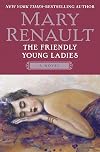
The Friendly Young Ladies
by Mary Renault
On This Page
Description
A wry romp through 1930s mores, social and sexualProgressive for its time as well as ours, The Friendly Young Ladies is a deftly witty comedy set in England between the wars. At eighteen, Elsie has had enough of life at her bickering parents' Cornwall home. She decides to join up with her bohemian older sister, Leo, in the city. Leo's life is full of surprises-not least her significant other, Helen, a beautiful nurse. As Elsie gets acquainted with Leo's world, new characters-including a show more novelist and a doctor deluded enough to chase all three women at once-come into play. With acid humor and a show lessTags
Recommendations


















Member Recommendations
Member Reviews
The writing is excellent which makes the story effective. The young Elsie is a very sad character who doesn't have much grasp of the reality that everybody else seems to understand so well, but their reality strains all credibility. I think that Renault intends us to sympathize with these other characters, but their reality makes so little sense. Why is it an alarming faux-pas to accidentally get a facial sunburn? What's wrong with telling someone directly what's expected of them? How can the way a person applies lipstick be imbued with so much significance? To me Elsie is a tragic figure, unable to escape her solipsism because even those who might have bothered with her are too reserved in what is probably an English fashion to have show more any effect on her. She's the only character whom I can like and yet she is doomed while the rest are overwrought, pretentious, and just as self-absorbed in their own way.
Mary Renault and Dorothy Sayers were two really talented women drinking the same disturbing Kool-Aid and then inflicting it on the rest of the world with a mordant effectiveness. Renault's early contemporary novels are direct descendants of Sayers' last, Gaudy Night. show less
Mary Renault and Dorothy Sayers were two really talented women drinking the same disturbing Kool-Aid and then inflicting it on the rest of the world with a mordant effectiveness. Renault's early contemporary novels are direct descendants of Sayers' last, Gaudy Night. show less
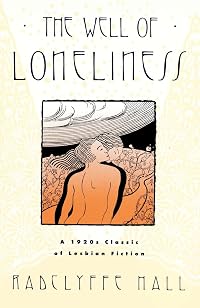
I read this book because I was reading reviews of the Well of Loneliness, and it was mentioned. In fact, the comment was something like 'oh God, the Well of Loneliness, it's so up itself and tortured and po faced and hilarious, it's such a shame it's the defining lesbian novel, the only good thing I can say about it is that it inspired Mary Renault to write The Friendly Young Ladies because she felt exactly the same way as me.' Which given Well is up there in my Favourite Books Ever was a bit of a red rag to a bull, but I like books that are in conversation with other books, and I like queer books that aren't modern queer books and so shed a different light on things, and I like buying books WLOG. So I bought it.
It is definitely in show more conversation with Well. There are some really wonderfully crafted snarks, where the heroines will be given feedlines to Angst, and then say very prosaically 'I expect most relationships are unusual when one knows enough about them. We're pretty well used to ours, it seems ordinary to us'.
It's a book that left me very keen to Study It - there are bits where they are having clever grown up conversations hinting and implying things I don't quite get, and there are bits where the characters just Know their feelings and act on them, but it's a bit show and not tell - whether I'm a modern reader, or a stupid reader, there were definitely times I'd like the Spark notes just to confirm that what was being implied was what I was reading.
The plot.. well, there isn't that much plot. We start with Elsie Lane, a schoolgirl who runs away from her boring sad middle class home, and seeks out her older sister, Leo, who lives on a boat with Helen. Elsie has a crush on Peter, who has been her doctor and the first man she's really known, there's an author living nearby called Joe, and the characters wander around and interact and change relationships and grow. But they're skillfully drawn, and engaging, and the book has moments of great humour and great sadness and great passion.
Much of the book is setting Elsie's naivety (and Peter's too) against the wisdom of Helen and Joe and Leo. Elsie is so young and sweet and painfully unaware about what is really going on - not stupid, but very sheltered, and not self aware enough to face the things that would hurt her. I wanted her to grow and change, and found the ending (heartbroken that Peter is having a fling with Leo, she returns to her parents) unsatisfactory... but she has grown and changed, and he parents have moved, and the world she goes back to is not the world she left.
Oh, Peter. I loved Peter. I hated Peter. I saw too much of myself reflected in Peter. So arrogant, so convinced he is Saving people by making them fall in love with him, so self centred that he doesn't even see what he is doing. The entire book is worth it for the scene where Peter carelessly and painfully turns up at the boat with his real girlfriend (which will break Elsie's heart if she realises) and Leo delightfully seduces the girlfriend and leaves him entirely dumbfounded and with no recourse.
And the book is worth it for the joy of living on the boat - the sunlight, the island, the feel of the punt sliding through the water, or the chilly morning swims, or the hard work pumping out the bilges.
It turns Well on its head in many ways. There is Leo, boyish in her shirts and trousers, living with Helen, a beautiful well dressed feminine nurse. And you see the patterns of Stephen and Mary, except then it is _Leo_ who finds a boy and runs off with the boy at the end of the book, and it is Helen who gets to make the speeches about how she stays with Leo because Leo is what she wants, but Leo stays with Helen only because she has a broken wing that will heal one day...
Yes, for the record, if you want Well of Loneliness fix it fic, this is another book where the charming, adorable and friendly young ladies of the title are going to end up Doomed because one of them ends up with a boy. Even the author is annoyed by this - when they republished the book she wanted them to stop the ending short - 'far better leave Leo's choice in the air with the presumption she stays with Helen' - and in the end they compromised by letting her write an epilogue, saying 'there is much I would write differently... the silliness of the ending [is] inevitable disaster, [which] is it naïve to present as a happy ending'. Although it isn't a happy ending, it is a deeply uncomfortable ending, Leo swayed by Joe's bold ultimatum of a letter, standing in her bedroom holding Helen's dress in floods of tears, and packing to leave. Not really fix it fic...
It's notable as a book in that it has both silly and serious relationships. Not a farce, where everything is casual and superficial, but a space where people fall casually together for light love making that doesn't have to mean a lot, and yet still have deep deep passions for the people they truly love.
Oh, Helen. Beautiful, charming, wonderful, she is never the focus of the novel, but drifts in when needed, healing, soothing, straightening. Graceful and kind, but with a core of strength, who would never want to try to keep someone who did not want to be kept. A goodbye kiss, and her graceful brisk walk to the ferry, 'It's perfectly fair. Whatever happens, that's the thing to remember. To see things straight, not to arrange them round oneself; if one keeps that, one keeps everything in the end'
So it may be a book that claims to be in conflict with Well's heavy handedness and moralising. But it has very clear messages and morals of its own, how to live and love and be good people, and how things run very deep, and one should never live in comfortable self indulgent delusions. show less
It is definitely in show more conversation with Well. There are some really wonderfully crafted snarks, where the heroines will be given feedlines to Angst, and then say very prosaically 'I expect most relationships are unusual when one knows enough about them. We're pretty well used to ours, it seems ordinary to us'.
It's a book that left me very keen to Study It - there are bits where they are having clever grown up conversations hinting and implying things I don't quite get, and there are bits where the characters just Know their feelings and act on them, but it's a bit show and not tell - whether I'm a modern reader, or a stupid reader, there were definitely times I'd like the Spark notes just to confirm that what was being implied was what I was reading.
The plot.. well, there isn't that much plot. We start with Elsie Lane, a schoolgirl who runs away from her boring sad middle class home, and seeks out her older sister, Leo, who lives on a boat with Helen. Elsie has a crush on Peter, who has been her doctor and the first man she's really known, there's an author living nearby called Joe, and the characters wander around and interact and change relationships and grow. But they're skillfully drawn, and engaging, and the book has moments of great humour and great sadness and great passion.
Much of the book is setting Elsie's naivety (and Peter's too) against the wisdom of Helen and Joe and Leo. Elsie is so young and sweet and painfully unaware about what is really going on - not stupid, but very sheltered, and not self aware enough to face the things that would hurt her. I wanted her to grow and change, and found the ending (heartbroken that Peter is having a fling with Leo, she returns to her parents) unsatisfactory... but she has grown and changed, and he parents have moved, and the world she goes back to is not the world she left.
Oh, Peter. I loved Peter. I hated Peter. I saw too much of myself reflected in Peter. So arrogant, so convinced he is Saving people by making them fall in love with him, so self centred that he doesn't even see what he is doing. The entire book is worth it for the scene where Peter carelessly and painfully turns up at the boat with his real girlfriend (which will break Elsie's heart if she realises) and Leo delightfully seduces the girlfriend and leaves him entirely dumbfounded and with no recourse.
And the book is worth it for the joy of living on the boat - the sunlight, the island, the feel of the punt sliding through the water, or the chilly morning swims, or the hard work pumping out the bilges.
It turns Well on its head in many ways. There is Leo, boyish in her shirts and trousers, living with Helen, a beautiful well dressed feminine nurse. And you see the patterns of Stephen and Mary, except then it is _Leo_ who finds a boy and runs off with the boy at the end of the book, and it is Helen who gets to make the speeches about how she stays with Leo because Leo is what she wants, but Leo stays with Helen only because she has a broken wing that will heal one day...
Yes, for the record, if you want Well of Loneliness fix it fic, this is another book where the charming, adorable and friendly young ladies of the title are going to end up Doomed because one of them ends up with a boy. Even the author is annoyed by this - when they republished the book she wanted them to stop the ending short - 'far better leave Leo's choice in the air with the presumption she stays with Helen' - and in the end they compromised by letting her write an epilogue, saying 'there is much I would write differently... the silliness of the ending [is] inevitable disaster, [which] is it naïve to present as a happy ending'. Although it isn't a happy ending, it is a deeply uncomfortable ending, Leo swayed by Joe's bold ultimatum of a letter, standing in her bedroom holding Helen's dress in floods of tears, and packing to leave. Not really fix it fic...
It's notable as a book in that it has both silly and serious relationships. Not a farce, where everything is casual and superficial, but a space where people fall casually together for light love making that doesn't have to mean a lot, and yet still have deep deep passions for the people they truly love.
Oh, Helen. Beautiful, charming, wonderful, she is never the focus of the novel, but drifts in when needed, healing, soothing, straightening. Graceful and kind, but with a core of strength, who would never want to try to keep someone who did not want to be kept. A goodbye kiss, and her graceful brisk walk to the ferry, 'It's perfectly fair. Whatever happens, that's the thing to remember. To see things straight, not to arrange them round oneself; if one keeps that, one keeps everything in the end'
So it may be a book that claims to be in conflict with Well's heavy handedness and moralising. But it has very clear messages and morals of its own, how to live and love and be good people, and how things run very deep, and one should never live in comfortable self indulgent delusions. show less
I hadn't expected to find this book about a young girl's awakening and the allure of the daring lesbian lifestyle (!) in a bygone bohemian age so charming - it's very funny, in a wistful, bittersweet way. It made me smile, rather than laugh, but I smiled all the way through. I remember reading Mary Renault years ago, rather stodgy historical fiction stuff about ancient Greece - I wouldn't have expected a book as sensitive and delightful as this from her on that basis. Pleasant surprise!
This book has me questioning my country shelves. Country shelf is at the moment hovering between country of author/country of publication. The Friendly Young Ladies is set in England by an English author who lived most of her life in South Africa. Categorisation is no easy task.
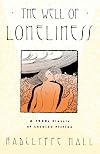
As for the book itself, for many, many pages it lives up the the back cover blurb of a 'stylish social comedy set in the 1930s', 'delightfully provocative', 'partly in answer to the despair of Radclyffe Hall's [b:The Well of Loneliness|129223|The Well of Loneliness|Radclyffe Hall|http://photo.goodreads.com/books/1171984586s/129223.jpg|1156985]' right up to the end when it got morose and despairing. Oh well.
Mary Renault is deft, sharp and hilarious. She picks show more apart her characters' seams and then sews them up again. It's worth reading for the social comedy and not worth reading for the tedious last minute melodrama. Social comedy outweighs melodrama, btw, and if you stop at the end of Chapter 19 you'll have got most of the comedy. Trust me, the end will just make you want to kick an armchair psychiatrist.
One of the best parts of the copy I read is Mary Renault's marvellous afterword, where she not only puts the boot in to poor, glum Radclyffe Hall, she begins, 'On re-reading this forty-year-old novel for the first time in about twenty years, what struck me most was the silliness of the ending.'
Also, houseboats.
And that's as good a last word on the book as anything. show less
As for the book itself, for many, many pages it lives up the the back cover blurb of a 'stylish social comedy set in the 1930s', 'delightfully provocative', 'partly in answer to the despair of Radclyffe Hall's [b:The Well of Loneliness|129223|The Well of Loneliness|Radclyffe Hall|http://photo.goodreads.com/books/1171984586s/129223.jpg|1156985]' right up to the end when it got morose and despairing. Oh well.
Mary Renault is deft, sharp and hilarious. She picks show more apart her characters' seams and then sews them up again. It's worth reading for the social comedy and not worth reading for the tedious last minute melodrama. Social comedy outweighs melodrama, btw, and if you stop at the end of Chapter 19 you'll have got most of the comedy. Trust me, the end will just make you want to kick an armchair psychiatrist.
One of the best parts of the copy I read is Mary Renault's marvellous afterword, where she not only puts the boot in to poor, glum Radclyffe Hall, she begins, 'On re-reading this forty-year-old novel for the first time in about twenty years, what struck me most was the silliness of the ending.'
Also, houseboats.
And that's as good a last word on the book as anything. show less
Acquired via BookCrossing 18 Dec 2009 - picked up at Urban Coffee Company's OBCZ
An interesting Virago, quite charming but with an intriguing message as well. This was apparently written as a riposte to Radclyffe Hall's "The Well of Loneliness". Hall posits the idea of a "third sex" of women who are "inverts", ie they have a masculine appearance and nature, while being genetically women. They famously wear "masculine underwear" (Renault mentions this in her Afterword and I've heard it discussed before) and try to make their way in the world as men.
Renault introduces us first to gentle and unformed Elsie, who lives with tyrannical parents, tyrannical because they use her in their battles against each other, so nothing she can do is right show more for the one, if it's right for the other. She is aware that her older sister, Leo(nora) ran away from home eight years ago. Encouraged by a smarmy locum doctor, she eventually snaps and runs away herself, seeking out her sister on the narrowboat she shares with the pretty medical illustrator, Helen. Leo shares her life and her bed with Helen, but as gentlemen callers, from the smarmy doctor to the half-wild author Joe, circle the boatful of girls, we wonder if Leo could have been turned from her rather masculine early life and dress, if only she'd met the right man...
The doctor, Peter, is a hilarious creation, with his psychological reports on his patients to the long-suffering Norah, but Renault doesn't seem to like her other characters much and the ending, she admits too, is a bit silly. Also, I'm sure she has written books about and accepting male homosexuality, while seeming to cast doubt on the female variety in this novel.
Anyway, it was an enjoyable read with some wincy and some very funny moments.
Offering to the LibraryThing Viragoites. show less
An interesting Virago, quite charming but with an intriguing message as well. This was apparently written as a riposte to Radclyffe Hall's "The Well of Loneliness". Hall posits the idea of a "third sex" of women who are "inverts", ie they have a masculine appearance and nature, while being genetically women. They famously wear "masculine underwear" (Renault mentions this in her Afterword and I've heard it discussed before) and try to make their way in the world as men.
Renault introduces us first to gentle and unformed Elsie, who lives with tyrannical parents, tyrannical because they use her in their battles against each other, so nothing she can do is right show more for the one, if it's right for the other. She is aware that her older sister, Leo(nora) ran away from home eight years ago. Encouraged by a smarmy locum doctor, she eventually snaps and runs away herself, seeking out her sister on the narrowboat she shares with the pretty medical illustrator, Helen. Leo shares her life and her bed with Helen, but as gentlemen callers, from the smarmy doctor to the half-wild author Joe, circle the boatful of girls, we wonder if Leo could have been turned from her rather masculine early life and dress, if only she'd met the right man...
The doctor, Peter, is a hilarious creation, with his psychological reports on his patients to the long-suffering Norah, but Renault doesn't seem to like her other characters much and the ending, she admits too, is a bit silly. Also, I'm sure she has written books about and accepting male homosexuality, while seeming to cast doubt on the female variety in this novel.
Anyway, it was an enjoyable read with some wincy and some very funny moments.
Offering to the LibraryThing Viragoites. show less
I think I enjoyed this book more this time than I have previously. As with other Renault books, every re-read seems to reveal something that you had missed earlier. I feel sorry for Elsie, I dislike Peter more intensely every time, and like Leo and Helen more and more. I can't remember what I thought about the ending earlier, this time I found it still quite confusing - I'm not entirely sure about what Leo intends to do.
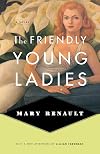
This edition incorporates Renault's 1983 afterword and a new afterword by Lillian Faderman - I enjoy Renault's but didn't think Faderman succeeded in adding anything to the text itself.
This edition incorporates Renault's 1983 afterword and a new afterword by Lillian Faderman - I enjoy Renault's but didn't think Faderman succeeded in adding anything to the text itself.
Heh: seems like the character of Peter is an eternal type.
Members
- Recently Added By
Lists

Pre-1969 LGBTQ Literature
184 works; 67 members

Publishing Triangle 100 Best Lesbian and Gay Novels
97 works; 6 members
Author Information

26+ Works 19,052 Members
Awards and Honors
Notable Lists
Series
Belongs to Publisher Series
Virago Modern Classics (147)
Work Relationships
Is a reply to
Common Knowledge
- Alternate titles
- The Middle Mist)
- Original publication date
- 1943
- People/Characters
- Elsie Lane; Leo Lane; Helen Vaughan; Dr Peter Bracknell; J O (Joe) Flint (Joe)
- First words
- Very quietly and carefully, hardly moving her thin young neck and round shoulders, Elsie looked round the room, first at the french windows into the garden, then at the door, measuring distances.
- Quotations
- How pleasant illness was; the freedom from responsibility, the willing dependence ...
- Last words
- (Click to show. Warning: May contain spoilers.)He loitered in the sunshine, looking contentedly at the willow-trees rippling in the sun and wind on the deserted island, and beginning to think about his tea.
- Disambiguation notice
- Sometimes published in the US as The Middle Mist.
Classifications
Statistics
- Members
- 397
- Popularity
- 78,861
- Reviews
- 9
- Rating
- (3.55)
- Languages
- English, German, Spanish
- Media
- Paper, Audiobook, Ebook
- ISBNs
- 14
- ASINs
- 10