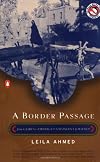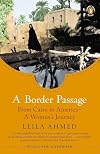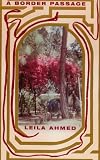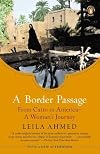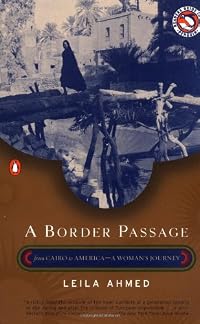
A Border Passage: From Cairo to America - A Woman's Journey
by Leila Ahmed
On This Page
Description
Leila Ahmed grew up in Cairo in the 1940s and '50s in a family that was eagerly and passionately political. Although many in the Egyptian upper classes were firmly opposed to change, the Ahmeds were proud supporters of independence. But when the Revolution arrived, the family's opposition to Nasser's policies led to persecutions that would throw their lives into turmoil and set their youngest child on a journey across cultures. Through university in England and teaching jobs in Abu Dhabi and show more America, Leila Ahmed sought to define herself - and to understand how the world defined her - as a woman, a Muslim, an Egyptian, and an Arab. Her search touched on questions of language and nationalism, on differences between men's and women's ways of knowing, and on vastly different interpretations of Islam. She arrived in the end as an ardent but critical feminist with an insider's understanding of multiculturalism and religious pluralism. In language that vividly evokes the lush summers of her Cairo youth and the harsh barrenness of the Arabian desert, Leila Ahmed has given us a story that can help us all to understand the passages between cultures that so affect our global society. show lessTags
Recommendations
Member Reviews
A wonderful autobiography by a feminist scholar who explores her own experience of colonization, and her own identity as an Egyptian, Muslim, Arab woman.
Leila Ahmed’s autobiography is a well-crafted, multifaceted gem, shining with an integrity all its own. And that makes it a difficult book for me to summarize and review. According to Ahmed, all of us have multifaceted identities. We are not this or that, but a mixture of many personas. She rejects identities that are purely negative, including an Egyptian identity that denies the value of European culture and literature, a Arab nationalism that is primarily anti-Jew, or an US-style feminism that invalidated Islamic religion. In describing how she has brought together her own various show more identities, she warns us all of the dangers of polarizing self-definitions.
Read more...
http://mdbrady.wordpress.com/2012/03/20/a-border-passage-from-cairo-to-america-a... show less
Leila Ahmed’s autobiography is a well-crafted, multifaceted gem, shining with an integrity all its own. And that makes it a difficult book for me to summarize and review. According to Ahmed, all of us have multifaceted identities. We are not this or that, but a mixture of many personas. She rejects identities that are purely negative, including an Egyptian identity that denies the value of European culture and literature, a Arab nationalism that is primarily anti-Jew, or an US-style feminism that invalidated Islamic religion. In describing how she has brought together her own various show more identities, she warns us all of the dangers of polarizing self-definitions.
Read more...
http://mdbrady.wordpress.com/2012/03/20/a-border-passage-from-cairo-to-america-a... show less
This is an intellectually stimulating and beautifully memoir. It reflects the formative moments of Leila Ahmed's life while simultaneously investigating questions of imperialism, culture, religion, identity, feminism, race, literacy, politics, literature, Egypt, and the formation of Arab identity at a level exceptionally perceptive and thorough. Ahmed draws a complex portrait of her childhood in Egypt and experiences in British academia. Her critical eye and articulate voice combine to form a rich memoir, one which perhaps leaves the reader with more questions that he or she started with, in realization of the complexity of the issues Ahmed takes on.
For whatever reason, this book took me longer than usual to read. But I think that's a good thing. It's billed as a memoir, but it's much more than that. It's about a fascinating time in Egyptian history (the end of British colonialism, the rise of Arab nationalism, the formation of Israel), it's about what it means to be an Islamic woman, and it's about feminism. I found the book fascinating. Ahmed is a professor at Harvard, and the book does have a bit of a scholarly tone, but it's not at all hard to read. It's just that you need to pause and think about what you've read every few pages.
Rather than spend a whole lot of time sharing my thoughts with you, let me share with you some of the quotes from the book that especially resonated show more with me:
(On her father's illness) - It was to me at once incomprehensible and riveting that one could know oneself to be dying and yet so enjoy, unperturbed, the passing precious moment.
For the truth is, I think that we are always plural. Not either this or that, but this and that. And we always embody in our multiple shifting consciousnesses a convergence of traditions, cultures, histories coming together in this time and this place and moving like rivers through us. And I know now that the point is to look back with insight and without judgment, and I know now that it is of the nature of being in this place, this place of convergence of histories, cultures, ways of thought, that there will always be new ways to understand what we are living through, and that I will never come to a point of rest or of finality in my understanding.
And once more she seemed to be speaking from that space where one is who one is in oneself, that space where one is not, for that moment, daughter, mother, or wife, but only a consciousness traversing life, existing beyond social trappings and gathering on its way what wisdom and insights it may. It is a space perhaps that one enters in reading or that reading somehow opens up, for she had again been reading when I came in.
And the women had, too, I now believe, their own understanding of Islam, an understanding that was different from men's Islam, "official" Islam.
It was through religion that one pondered the things that happened, why they had happened, and what one should make of them, how one should take them.
For the first time now in my graduate student years I was living bereft of a community of belief and bereft of the sense of sustenance and reassurance that such communities can provide whether we are active believers or not. Such communities buoy and sustain us, without our necessarily even being aware of it, by their sense of the meaningfulness of all our lives.
This is not a book to pick up and whiz through in a weekend. But it is one to pick up, study, and contemplate. show less
Rather than spend a whole lot of time sharing my thoughts with you, let me share with you some of the quotes from the book that especially resonated show more with me:
(On her father's illness) - It was to me at once incomprehensible and riveting that one could know oneself to be dying and yet so enjoy, unperturbed, the passing precious moment.
For the truth is, I think that we are always plural. Not either this or that, but this and that. And we always embody in our multiple shifting consciousnesses a convergence of traditions, cultures, histories coming together in this time and this place and moving like rivers through us. And I know now that the point is to look back with insight and without judgment, and I know now that it is of the nature of being in this place, this place of convergence of histories, cultures, ways of thought, that there will always be new ways to understand what we are living through, and that I will never come to a point of rest or of finality in my understanding.
And once more she seemed to be speaking from that space where one is who one is in oneself, that space where one is not, for that moment, daughter, mother, or wife, but only a consciousness traversing life, existing beyond social trappings and gathering on its way what wisdom and insights it may. It is a space perhaps that one enters in reading or that reading somehow opens up, for she had again been reading when I came in.
And the women had, too, I now believe, their own understanding of Islam, an understanding that was different from men's Islam, "official" Islam.
It was through religion that one pondered the things that happened, why they had happened, and what one should make of them, how one should take them.
For the first time now in my graduate student years I was living bereft of a community of belief and bereft of the sense of sustenance and reassurance that such communities can provide whether we are active believers or not. Such communities buoy and sustain us, without our necessarily even being aware of it, by their sense of the meaningfulness of all our lives.
This is not a book to pick up and whiz through in a weekend. But it is one to pick up, study, and contemplate. show less
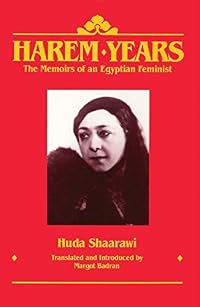
while leila ahmed's memoir is little better than, say, hoda shaarawi's, it's still condescending, upper-class egyptian feminism.
Ratings
Members
- Recently Added By
Author Information

7+ Works 937 Members
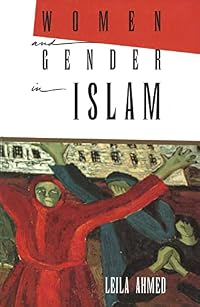
Leila Ahmed is the Victor S. Thomas Professor of Divinity at Harvard Divinity School. She is the author of Women and Gender in Islam and A Border Passage: From Cairo to America-A Woman's Journey.
Awards and Honors
Awards
Common Knowledge
- Canonical title
- A Border Passage: From Cairo to America - A Woman's Journey
- Alternate titles
- A Border Passage
- Original publication date
- 1999
- People/Characters
- Leila Ahmed
- Important places
- Cairo, Egypt; Egypt; USA
- Epigraph
- "To hear the song of the reed
Everything you have ever known
must be left behind."
Rumi - First words
- It was as if there were to life itself a quality of music in that time, the era of my childhood, and in that place, the remote edge of Cairo.
- Last words
- (Click to show. Warning: May contain spoilers.)But this now is another time. We are on the point of a new beginning.
Classifications
- Genres
- Nonfiction, Biography & Memoir, Sexuality and Gender Studies, Religion & Spirituality, General Nonfiction, Travel
- DDC/MDS
- 305.42092 — Society, Government, and Culture Social sciences, sociology & anthropology Social group - Age, Gender, Ethnicity Women Social role and status of women Standard subdivisions History, geographic treatment, biography Biography
- LCC
- HQ1793 .Z75 .A55 — Social sciences The family. Marriage, Women and Sexuality The Family. Marriage. Women Women. Feminism
- BISAC
Statistics
- Members
- 335
- Popularity
- 94,312
- Reviews
- 4
- Rating
- (3.61)
- Languages
- Dutch, English
- Media
- Paper
- ISBNs
- 4
- ASINs
- 4