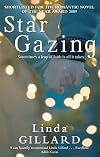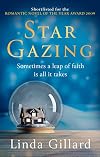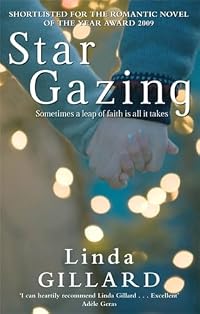
Star Gazing
by Linda Gillard
On This Page
Description
Blind since birth, widowed in her twenties, now lonely in her forties, Marianne Fraser lives in Edinburgh in elegant, angry anonymity with her sister, Louisa, a successful novelist. Marianne's passionate nature finds solace and expression in music, a love she finds she shares with Keir, a man she encounters on her doorstep one winter's night. Whilst Marianne has had her share of men attracted to her because they want to rescue her, Keir makes no concession to her condition. He is abrupt to show more the point of rudeness, and yet oddly kind. But can Marianne trust her feelings for this reclusive stranger who wants to take a blind woman to his island home on Skye, to 'show' her the stars? show lessTags
Recommendations






















Member Reviews
This lovely book goes down like a cup of hot cocoa on a cold day; a delicious treat that leaves you with a warm, satisfied feeling on the inside.
Marianne is blind – she has been so from birth. She deals with her condition through sarcastic humor and determination, and refuses to give in (consciously, at any rate) to anger: “Anger is a place I don’t go, a colour I never wear.” She lives in Edinburgh with her generous sister Louisa who is a charmingly self-deprecating writer of vampire fiction.
Marianne, 45, is stubbornly independent, though she was once married - to Harvey, an oil man who died in an explosion at age 33. Now she meets another oiler, Kier, from the Isle of Skye, whose ability to describe nature by selections of show more music touches Marianne, and she finds herself falling in love. Louisa describes Kier as “a polymath. A geologist who’s interested in zoology, astronomy and music. He’d never admit it, but he’s also something of a poet, I think.”
Imagine trying to describe color, or nature, or the stars to a blind person. Kier does this for Marianne through music, in a way that will enchant you as it does Marianne:
"If you look east, one of the brightest stars you’ll see is Arcturus. It has a yellow-orange glow. Most stars look cold. Icy. They’d sound like…flutes. No, piccolos. Shrill. Arcturus looks warmer. A cello maybe…It looks like the stove feels when it gives off just a bit of heat. Arcturus glows, but it doesn’t burn or blaze like the sun. It’s like the feeling you might have for an old friend… or an ex-lover, one who still means something to you. Steady. Passionless. On second thoughts, make that a viola…How am I doing?"
He teaches her a whole new way to interact with nature, and she teaches him a whole new way to accept his own differences. Kier is strong, patient, and gentle, but not like most other men. In a way, he is a reflection of the rugged, isolated, but welcoming land he calls home – a land that has vast, dramatic vistas under a rich canopy of twinkling stars.
Marianne has always wanted to know what twinkling is like.” Kier explains to her, “It’s a kind of a pulse. A gentle throbbing of light. Not like a headache. A beautiful, magical throbbing…”
The characters make no effort to paper over the constant linguistic gaffes of the sighted (“see what I mean?”), nor the ongoing difficulties the sightless have with coping. Yet this is not a morose book. On the contrary, it is humorous, touching, and upbeat. For example, when they are first getting to know each other, Kier asks Marianne if she ever saw the film “Harvey”:
M. “I’ve never seen it.
K. Have you ever seen any film?
M. No. I’ve been blind since birth.”
K. Aye, well, you missed a good one there.
The social commentary is mordant and revealing, both of the protagonists and of ourselves. Marianne says at one point: “Oh, I’m scarcely a woman in the eyes of the world. I don’t see, so I don’t shop. I don’t have children. I don’t even have a man. In the eyes of the world, I’m just blind.”
And blindness can be frightening. An incident when Marianne gets lost will have your heart pounding.
Though the deprivation of sight is part of the story, your other senses will be stretched to the limit in this book, as you learn, along with Marianne and Kier, to “see” through other means. The eloquent results of their efforts to redefine visual reality through aural or tactile sensations are radiant paeans to the creative forces of love. And the love scenes themselves, in particular, are a revelation of sensory communication.
I loved this book. show less
Marianne is blind – she has been so from birth. She deals with her condition through sarcastic humor and determination, and refuses to give in (consciously, at any rate) to anger: “Anger is a place I don’t go, a colour I never wear.” She lives in Edinburgh with her generous sister Louisa who is a charmingly self-deprecating writer of vampire fiction.
Marianne, 45, is stubbornly independent, though she was once married - to Harvey, an oil man who died in an explosion at age 33. Now she meets another oiler, Kier, from the Isle of Skye, whose ability to describe nature by selections of show more music touches Marianne, and she finds herself falling in love. Louisa describes Kier as “a polymath. A geologist who’s interested in zoology, astronomy and music. He’d never admit it, but he’s also something of a poet, I think.”
Imagine trying to describe color, or nature, or the stars to a blind person. Kier does this for Marianne through music, in a way that will enchant you as it does Marianne:
"If you look east, one of the brightest stars you’ll see is Arcturus. It has a yellow-orange glow. Most stars look cold. Icy. They’d sound like…flutes. No, piccolos. Shrill. Arcturus looks warmer. A cello maybe…It looks like the stove feels when it gives off just a bit of heat. Arcturus glows, but it doesn’t burn or blaze like the sun. It’s like the feeling you might have for an old friend… or an ex-lover, one who still means something to you. Steady. Passionless. On second thoughts, make that a viola…How am I doing?"
He teaches her a whole new way to interact with nature, and she teaches him a whole new way to accept his own differences. Kier is strong, patient, and gentle, but not like most other men. In a way, he is a reflection of the rugged, isolated, but welcoming land he calls home – a land that has vast, dramatic vistas under a rich canopy of twinkling stars.
Marianne has always wanted to know what twinkling is like.” Kier explains to her, “It’s a kind of a pulse. A gentle throbbing of light. Not like a headache. A beautiful, magical throbbing…”
The characters make no effort to paper over the constant linguistic gaffes of the sighted (“see what I mean?”), nor the ongoing difficulties the sightless have with coping. Yet this is not a morose book. On the contrary, it is humorous, touching, and upbeat. For example, when they are first getting to know each other, Kier asks Marianne if she ever saw the film “Harvey”:
M. “I’ve never seen it.
K. Have you ever seen any film?
M. No. I’ve been blind since birth.”
K. Aye, well, you missed a good one there.
The social commentary is mordant and revealing, both of the protagonists and of ourselves. Marianne says at one point: “Oh, I’m scarcely a woman in the eyes of the world. I don’t see, so I don’t shop. I don’t have children. I don’t even have a man. In the eyes of the world, I’m just blind.”
And blindness can be frightening. An incident when Marianne gets lost will have your heart pounding.
Though the deprivation of sight is part of the story, your other senses will be stretched to the limit in this book, as you learn, along with Marianne and Kier, to “see” through other means. The eloquent results of their efforts to redefine visual reality through aural or tactile sensations are radiant paeans to the creative forces of love. And the love scenes themselves, in particular, are a revelation of sensory communication.
I loved this book. show less
I have wondered many times how I would cope if I were blind. This book goes some way to describing what it must be like - a world where the other senses are heightened, where sound is more distinct and touch and smell of great importance.
Marianne who has been blind from birth, is now widowed and even though she lives with her older sister in Edinburgh she is lonely and angry. Her husband was killed years before in the world’s worst-ever offshore disaster - the Piper Alpha oil rig explosion. By chance she meets Keir, a solitary Highlander and geophysicist, who also works on the oil rigs, but who spends his time on shore at his house on Skye.
Despite her misgivings and unwillingness to get involved with another oilman, Marianne trusts show more Keir when he takes her to Skye to ’show’ her the stars. Keir is kind and gentle but makes little concession to Marianne’s blindness in contrast to other men she has known. At times Marianne’s stubborness is quite exasperating, but she is immensely resourceful. One of the most memorable episodes is when Keir has left her on her own at the house on Skye whilst he goes shopping and Marianne, startled by a fall of snow from the roof loses her bearings. Fearful of hypothermia she struggles desperately through the snow and a frozen pond, before finding the burn that she follows back to safety. I had to hold my breath whilst reading this passage for fear she wouldn’t make it.
I loved Star Gazing. It’s not just a love story, it’s also about how we ’see’ the world, how we interact with other people and how we cope with our disabilities be they physical, emotional or otherwise. show less
Marianne who has been blind from birth, is now widowed and even though she lives with her older sister in Edinburgh she is lonely and angry. Her husband was killed years before in the world’s worst-ever offshore disaster - the Piper Alpha oil rig explosion. By chance she meets Keir, a solitary Highlander and geophysicist, who also works on the oil rigs, but who spends his time on shore at his house on Skye.
Despite her misgivings and unwillingness to get involved with another oilman, Marianne trusts show more Keir when he takes her to Skye to ’show’ her the stars. Keir is kind and gentle but makes little concession to Marianne’s blindness in contrast to other men she has known. At times Marianne’s stubborness is quite exasperating, but she is immensely resourceful. One of the most memorable episodes is when Keir has left her on her own at the house on Skye whilst he goes shopping and Marianne, startled by a fall of snow from the roof loses her bearings. Fearful of hypothermia she struggles desperately through the snow and a frozen pond, before finding the burn that she follows back to safety. I had to hold my breath whilst reading this passage for fear she wouldn’t make it.
I loved Star Gazing. It’s not just a love story, it’s also about how we ’see’ the world, how we interact with other people and how we cope with our disabilities be they physical, emotional or otherwise. show less
Mills & Boon for grown-ups - I mean real grown ups who like reading and can even be a bit superior about the types of books they read. The narrator is a fiercely determined blind woman in her 40s who lives in Edinburgh with her older sister. All the characters are well-drawn although through the eyes of the sightless. Wonderful views are described but through smell, sound and touch. Reading woke all my non-visual senses from their slumber. I saw the world differently. As a disabled person myself, I can be hyper-sensitive about how disabled people are portrayed but I loved the main character - she was funny, exasperating and feisty - just how I would like to be written about myself. Linda Gillard has written a great debut novel and I show more would certainly read more of her work. show less
The day before I started Star Gazing I spent some time surfing sites with pictures of the place where I spent wonderful holidays as a child, the Ardnamurchan peninsula. Part of the pleasure of those holidays was the very long drive from the Central Highlands – up the Great North Road over the Drumochter Pass to Dalwhinnie, then turning westwards towards Spean Bridge and Fort William, before catching the Corran ferry. Once we had crossed Loch Linnhe it was still a long journey – a couple of hours to drive a little over 50 miles along a single track road, but at every bend the views were indescribably beautiful, especially the unforgettable first sight of the islands in the distance. Circumstance has dictated that I have only been show more back once as an adult, but I dream of seeing it again one day.
The route I describe is a little further south than the one undertaken by Marianne and Keir in Star Gazing, when he takes her to Skye to show her his home, but my own experience lent piquancy to their journey – such beauty, which Marianne can only see in Keir’s description, because she is blind. Much of his attraction for her is in the way in which he creates pictures out of the other senses, the tangible ones of sound and smell and touch, but important also is his awareness of intangible senses, like the location of the body in space. Much of the story is told in Marianne’s voice, and we become aware of her reliance on these other senses to maintain her independence, while her refusal to use a stick is a means of holding to a psychological independence, since she is doubly vulnerable, first by nature of her blindness and second by the early death of her husband.
One of the things that I liked about Marianne is that she isn’t entirely likeable – she’s prickly and sharp-tongued, “crabbit” as Keir says, and her relationship with her older sister Louisa is at times scratchy. Louisa’s is the other main voice telling the story, and her protectiveness and occasional impatience are entirely convincing. Their days are spent in the douce surroundings of Edinburgh, with visits to concerts and to the “Botanics”, so that the events which unfold during Marianne’s visit to Skye are a shock to them both, causing each to retreat defensively into her shell while she considers the future. The sense of the two women treading carefully round each other is well caught. The portrayal of these three characters, Marianne, Louisa and Keir, is delicate and sensitive – Gillard’s instincts about the ways in which people work are finely-tuned - which makes the contrast with Louisa’s assistant, Garth the Goth, all the more joyous – despite his Goth make-up he is down-to-earth and just plain fun.
I really don’t want to say too much more about the plot – this is one of those books which will absorb you completely (I read it in a day), and will stay with you long afterwards. The lingering image I have from it is the one I mentioned earlier – the body’s location in space, an image heightened by the involvement of other senses than sight and which recurs throughout the novel. Keir’s dream of his friend Mac falling from a rig platform is one such image, the isolated cottage on Skye another. It’s a book, too, with a strong spirit of place, with Edinburgh, Skye and briefly, Aberdeen, clearer for the the counted paces, the reliance on sound and touch. show less
The route I describe is a little further south than the one undertaken by Marianne and Keir in Star Gazing, when he takes her to Skye to show her his home, but my own experience lent piquancy to their journey – such beauty, which Marianne can only see in Keir’s description, because she is blind. Much of his attraction for her is in the way in which he creates pictures out of the other senses, the tangible ones of sound and smell and touch, but important also is his awareness of intangible senses, like the location of the body in space. Much of the story is told in Marianne’s voice, and we become aware of her reliance on these other senses to maintain her independence, while her refusal to use a stick is a means of holding to a psychological independence, since she is doubly vulnerable, first by nature of her blindness and second by the early death of her husband.
One of the things that I liked about Marianne is that she isn’t entirely likeable – she’s prickly and sharp-tongued, “crabbit” as Keir says, and her relationship with her older sister Louisa is at times scratchy. Louisa’s is the other main voice telling the story, and her protectiveness and occasional impatience are entirely convincing. Their days are spent in the douce surroundings of Edinburgh, with visits to concerts and to the “Botanics”, so that the events which unfold during Marianne’s visit to Skye are a shock to them both, causing each to retreat defensively into her shell while she considers the future. The sense of the two women treading carefully round each other is well caught. The portrayal of these three characters, Marianne, Louisa and Keir, is delicate and sensitive – Gillard’s instincts about the ways in which people work are finely-tuned - which makes the contrast with Louisa’s assistant, Garth the Goth, all the more joyous – despite his Goth make-up he is down-to-earth and just plain fun.
I really don’t want to say too much more about the plot – this is one of those books which will absorb you completely (I read it in a day), and will stay with you long afterwards. The lingering image I have from it is the one I mentioned earlier – the body’s location in space, an image heightened by the involvement of other senses than sight and which recurs throughout the novel. Keir’s dream of his friend Mac falling from a rig platform is one such image, the isolated cottage on Skye another. It’s a book, too, with a strong spirit of place, with Edinburgh, Skye and briefly, Aberdeen, clearer for the the counted paces, the reliance on sound and touch. show less
I loved this book right from the start. The characters are so well drawn and the story so moving. Marianne is very independent, and a little prickly. She doesn't like to use her cane when she's out because she doesn't want it to be obvious she's blind. Some of the things she said made me smile, but you could also really feel her pain, both at the loss of her husband, and the other losses that she suffers.
Linda Gillard's writing seems to have so much feeling to it and I really cared what happened to Marianne and Keir. There's also Louisa and her relationship with the much younger Garth the Goth.
Because the main character is blind, there's a lot of description of Edinburgh and Skye, two wonderful settings. And the things Keir does to be show more able to describe surroundings to Marianne are very touching.
A lovely book, and one which I highly recommend. show less
Linda Gillard's writing seems to have so much feeling to it and I really cared what happened to Marianne and Keir. There's also Louisa and her relationship with the much younger Garth the Goth.
Because the main character is blind, there's a lot of description of Edinburgh and Skye, two wonderful settings. And the things Keir does to be show more able to describe surroundings to Marianne are very touching.
A lovely book, and one which I highly recommend. show less
Now I've always had certain preconceptions about romantic fiction, based on the one-and-only Mills and Boon novel I read years ago on a fishing boat from Tioman (there being no other reading material at hand), but Gillard manages to very nicely shatter them, and to keep this fussiest of readers with her throughout.
Marianne is in her forties, and has been blind from birth. She was widowed in her twenties when her husband was killed in the Piper Alpha oil rig disaster. She's long given up on love, and now, living with her sister finds her pleasure in attending concerts and long walks. She's fiercely independent, and so stubborn you sometimes want to shake her. But her courage comes through time and again.
Of course, the author places a show more bloke in her path. She encounters Keir literally on her own doorstep when she accidentally drops her shopping and he comes to her aid. Later, she agrees to visit his home on the Isle of Sky where he lives an almost hermit like existence when he isn't on the rigs. (He's another oilman, yes, and there are for Marianne disturbing echoes of the past throughout the novel.)
Keir's the kind of hero I would fall for myself in two shakes. Never mind the tall, dark and handsome (which Marianne of course can't appreciate in the same way, of course) he loves classical music and nature, is involved in conservation work, and is able to paint the beauty of the island for Marianne through words alone.
I loved though the second love-story in the humourous sub-plot - Marianne's sister Louisa writes vampire novels set in Edinburgh and falls for her much younger goth assistant.
The writing is good, the characters well drawn and the dialogue realistic. An interesting theme of ways of seeing and perception runs through the novel, and Gillard helps the reader to inhabit Marianne's blindness.
The pacing of the novel just right and (quite cleverly because you always believe romance novels are written to a formula) the reader is led to a point where the happy ending no longer seems a safe bet. One of the main events that propels the plot, Keir's misadventure in Kazakhstan, and its aftermath could have done with a bit more space (but then, I suppose, Gillard would be wandering into the territory of the thriller and away from the romance).
So, yes, there are love stories that steer clear of all the mush and the cliches and heaving bosoms and provide even a jaded old cynic like me with an enjoyable read. show less
Marianne is in her forties, and has been blind from birth. She was widowed in her twenties when her husband was killed in the Piper Alpha oil rig disaster. She's long given up on love, and now, living with her sister finds her pleasure in attending concerts and long walks. She's fiercely independent, and so stubborn you sometimes want to shake her. But her courage comes through time and again.
Of course, the author places a show more bloke in her path. She encounters Keir literally on her own doorstep when she accidentally drops her shopping and he comes to her aid. Later, she agrees to visit his home on the Isle of Sky where he lives an almost hermit like existence when he isn't on the rigs. (He's another oilman, yes, and there are for Marianne disturbing echoes of the past throughout the novel.)
Keir's the kind of hero I would fall for myself in two shakes. Never mind the tall, dark and handsome (which Marianne of course can't appreciate in the same way, of course) he loves classical music and nature, is involved in conservation work, and is able to paint the beauty of the island for Marianne through words alone.
I loved though the second love-story in the humourous sub-plot - Marianne's sister Louisa writes vampire novels set in Edinburgh and falls for her much younger goth assistant.
The writing is good, the characters well drawn and the dialogue realistic. An interesting theme of ways of seeing and perception runs through the novel, and Gillard helps the reader to inhabit Marianne's blindness.
The pacing of the novel just right and (quite cleverly because you always believe romance novels are written to a formula) the reader is led to a point where the happy ending no longer seems a safe bet. One of the main events that propels the plot, Keir's misadventure in Kazakhstan, and its aftermath could have done with a bit more space (but then, I suppose, Gillard would be wandering into the territory of the thriller and away from the romance).
So, yes, there are love stories that steer clear of all the mush and the cliches and heaving bosoms and provide even a jaded old cynic like me with an enjoyable read. show less
Star Gazing is a lyrically poignant novel, set in Edinburgh and Skye which I found hugely readable and often very touching. It is the story of a woman, a music lover, widowed, blind from birth, she lives with her writer siter, then one winter night she meets a man on her doorstep.
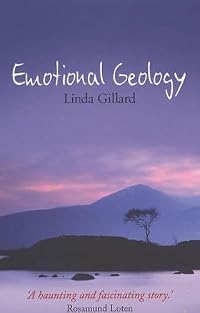
As with Emotional Geology (Linda Gillard's first novel) the parts of the book set on Skye just make you want to go there to fully expierence what must be a beautiful and completley unspoiled natural enviroment. The central character Marianne is thouroughly realistic and likeable, she's intelligent, vulnerable, and sensitive, but never helpless despite her blindeness. Marianne's love of the natural world is infectious, there were some beautiful descriptions of show more trees and rain, the sound of rain in the trees has forever been enhanced for me through these lovely descriptions. Kier is a wonderful romantic hero type. The most memorable part of the book for me was when Marianne loses her way in the snow - my heart was in my mouth - and I could just imagine how that would have felt. The subject of blindess is brilliantly tackled - so many things that as a sighted person you take for granted, and so many simple things that for a blind person became laden with difficulties. This is a lovely novel, and I can't wait for more by this author. show less
As with Emotional Geology (Linda Gillard's first novel) the parts of the book set on Skye just make you want to go there to fully expierence what must be a beautiful and completley unspoiled natural enviroment. The central character Marianne is thouroughly realistic and likeable, she's intelligent, vulnerable, and sensitive, but never helpless despite her blindeness. Marianne's love of the natural world is infectious, there were some beautiful descriptions of show more trees and rain, the sound of rain in the trees has forever been enhanced for me through these lovely descriptions. Kier is a wonderful romantic hero type. The most memorable part of the book for me was when Marianne loses her way in the snow - my heart was in my mouth - and I could just imagine how that would have felt. The subject of blindess is brilliantly tackled - so many things that as a sighted person you take for granted, and so many simple things that for a blind person became laden with difficulties. This is a lovely novel, and I can't wait for more by this author. show less
Members
- Recently Added By
Author Information
16+ Works 534 Members
Series
Belongs to Publisher Series
Work Relationships
Common Knowledge
- Canonical title*
- Увидеть звезды
- Original title
- Star Gazing
- Original publication date
- 2008
- Epigraph
- As a man is so he sees - William Blake
- Dedication
- For my father Charles Frederick Gillard (1925 - 2005)
- First words
- This is not a ghost story.
- Last words
- (Click to show. Warning: May contain spoilers.)Feel ...
*Some information comes from Common Knowledge in other languages. Click "Edit" for more information.
Classifications
Statistics
- Members
- 99
- Popularity
- 324,834
- Reviews
- 12
- Rating
- (4.21)
- Languages
- English, German, Russian, Spanish
- Media
- Paper, Audiobook, Ebook
- ISBNs
- 10
- ASINs
- 4