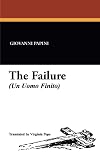
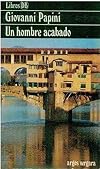
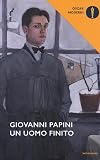
The Failure
by Giovanni Papini
On This Page
Description
"In itself it is an absorbing, a breath-taking confession of an egoism so colossal that it would be termed madness but for the pitiless honesty and virile intelligence running through it."- Springfield RepublicanTags
Recommendations



















Member Reviews
The book is both depressing and sound for those with intellectual ambitions during adolescence. It certainly was sound to me. It explores the protagonist's quest for greatness, yet he ultimately achieves nothing according to his own standards. Despite this, by his thirties, he has managed to direct philosophical magazines and reflect on various aspects of life, questioning whether he is truly a "finished" man. I recommend it to someone in their thirties facing an existential crisis. The book resonates with themes similar to "Thus Spoke Zarathustra," reflecting the intellectual journey to maturity. It's a compelling read that prompts introspection.
Autobiografía filosófica y espiritual en la que Papini reflexiona sobre su vida, sus contradicciones, su búsqueda de sentido y su desengaño ante la cultura moderna. Considerada una de las obras más representativas del existencialismo literario temprano.
During his youth, Mircea Eliade identified himself with Giovanni Paini in this work,The Man Finished .
But then,who read Papini now?
Perhaps, as Jorge Luis Borges says, Papini is unjustly forgotten.
But then,who read Papini now?
Perhaps, as Jorge Luis Borges says, Papini is unjustly forgotten.
I-2
Oct 15, 2020Catalan
Ratings
Members
- Recently Added By
Lists

I 100 migliori libri italiani degli ultimi 200 anni -- Opere fuori lista
40 works; 1 member
Author Information

201+ Works 1,754 Members
With Giuseppe Prezzolini, Papini was a central figure in the pragmatist movement that brought Italy into the mainstream of European culture before World War I. The record of his labors can be read in the journals Leonardo, Regno, La Voce, and Lacerba. A restless spirit, his shifts from pragmatism to futurism, from agnosticism to Roman Catholicism, show more from critical severity to enthusiastic encouragement of new writers, mirror the revolutionary current of his time. His most famous writings include lives of Christ, St. Augustine and Dante, but most characteristic is his world-famous autobiographical novel, The Failure (1912), which first endeared him to his generation. (Bowker Author Biography) show less
Some Editions
Awards and Honors
Notable Lists
Common Knowledge
- Canonical title
- The Failure
- Original title
- Un uomo finito
- Original publication date
- 1913
- Epigraph*
- Tu non se' morta, ma se' ismarrita / Anima nostra, che sì ti lamenti. Dante
- First words*
- Io non sono mai stato bambino. Non ho avuto fanciullezza.
- Last words*
- (Click to show. Warning: May contain spoilers.)E se dopo avermi ascoltato crederete lo stesso, a dispetto dei miei propositi, ch'io sia davvero un uomo finito dovrete almen confessare ch'io son finito perché volli incominciar troppe cose e che non sono più nulls perché volli essere tutto.
*Some information comes from Common Knowledge in other languages. Click "Edit" for more information.
Classifications
Statistics
- Members
- 129
- Popularity
- 251,926
- Reviews
- 4
- Rating
- (4.11)
- Languages
- 7 — English, French, German, Italian, Romanian, Spanish, Turkish
- Media
- Paper
- ISBNs
- 18
- ASINs
- 5