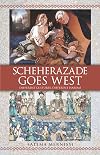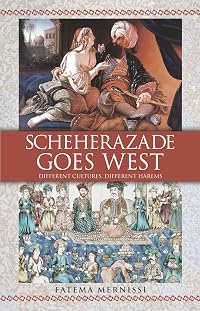
Scheherazade Goes West
by Fatema Mernissi
On This Page
Description
So recalls Fatema Mernissi at the outset of her mesmerizing new book. Of all the lessons she learned from her grandmother -- whose home was, after all, a type of prison -- the most central was that the opportunity to cross boundaries was a sacred privilege. Indeed, in journeys both physical and mental, Mernissi has spent virtually all of her life traveling -- determined to "use her wings" and to renounce her gender's alleged legacy of powerlessness. Bursting with the vitality of Mernissi's show more personality and of her rich heritage, Scheherazade Goes West reveals the author's unique experiences as a liberated, independent Moroccan woman faced with the peculiarities and unexpected encroachments of Western culture. Her often surprising discoveries about the conditions of and attitudes toward women around the world -- and the exquisitely embroidered amalgam of cleareyed autobiography and dazzling meta-fiction by which she relates those assorted discoveries -- add up to a deliciously wry, engagingly cosmopolitan, and deeply penetrating narrative. So recalls Fatema Mernissi at the outset of her mesmerizing new book. Of all the lessons she learned from her grandmother -- whose home was, after all, a type of prison -- the most central was that the opportunity to cross boundaries was a sacred privilege. Indeed, in journeys both physical and mental, Mernissi has spent virtually all of her life traveling -- determined to "use her wings" and to renounce her gender's alleged legacy of powerlessness. Bursting with the vitality of Mernissi's personality and of her rich heritage, Scheherazade Goes West reveals the author's unique experiences as a liberated, independent Moroccan woman faced with the peculiarities and unexpected encroachments of Western culture. Her often surprising discoveries about the conditions of and attitudes toward women around the world -- and the exquisitely embroidered amalgam of cleareyed autobiography and dazzling meta-fiction by which she relates those assorted discoveries -- add up to a deliciously wry, engagingly cosmopolitan, and deeply penetrating narrative. In her previous bestselling works, Mernissi -- widely recognized as the world's greatest living Koranic scholar and Islamic sociologist -- has shed unprecedented light on the lives of women in the Middle East. Now, as a writer and scholarly veteran of the high-wire act of staraddling disparate societies, she trains her eyes on the female culture of the West. show lessTags
Recommendations








Member Reviews
Its sometimes very hard for me to read a non-fiction novel and be objective. Often non-fiction novels bore me, even ones about cultures or time periods I like, because I don't like mixing reality with my fiction. For some reason however Scheherazade Goes West as well as several other of Mernissi's books have always been of interest to me, though this will be the first I've read.
Mernissi's accounting of what it was like to grow up in a 'harem' environment are powerful. The book itself doesn't progress in a consecutive time frame, often Mernissi will relate something that happened to her since being an adult and then tie that in with stories of her childhood. For instance she mentions talking with reporters and other media types from the show more English-speaking world and how when she said the word 'harem' different countries held different expressions. Some had a curious and almost leering look in their eyes--imagining the Sultans with the barely clad women at their feet no doubt. Others had looks of disgust in their eyes. Regardless she never felt they understood exactly what it meant.
The book itself is about just that however--its her observations from various book tours and trips of her own that made about how each different country viewed harems. She is careful to explain that she understands that foreign media portrays the 'harem life' as something exotic and erotic, but also explains how the life is a hard and brutal one at times. Using the famous storyteller Scheherazade Mernissi explores how the harem life she grew up in and was an integral part of her culture and religion, was more about the female power and ingenuity then about erotic arts.
The book can be dry at times, but Mernissi's remarks about foreign journalists and friends reactions to her stories are priceless and full of wit. This isn't a book that is meant to be the bible on East meets West cultural clashes--this is almost a traveling journal about her observations. She doesn't claim to have all the answers, but Mernissi offers an academic and entertaining book about perceptions and viewpoints. show less
Mernissi's accounting of what it was like to grow up in a 'harem' environment are powerful. The book itself doesn't progress in a consecutive time frame, often Mernissi will relate something that happened to her since being an adult and then tie that in with stories of her childhood. For instance she mentions talking with reporters and other media types from the show more English-speaking world and how when she said the word 'harem' different countries held different expressions. Some had a curious and almost leering look in their eyes--imagining the Sultans with the barely clad women at their feet no doubt. Others had looks of disgust in their eyes. Regardless she never felt they understood exactly what it meant.
The book itself is about just that however--its her observations from various book tours and trips of her own that made about how each different country viewed harems. She is careful to explain that she understands that foreign media portrays the 'harem life' as something exotic and erotic, but also explains how the life is a hard and brutal one at times. Using the famous storyteller Scheherazade Mernissi explores how the harem life she grew up in and was an integral part of her culture and religion, was more about the female power and ingenuity then about erotic arts.
The book can be dry at times, but Mernissi's remarks about foreign journalists and friends reactions to her stories are priceless and full of wit. This isn't a book that is meant to be the bible on East meets West cultural clashes--this is almost a traveling journal about her observations. She doesn't claim to have all the answers, but Mernissi offers an academic and entertaining book about perceptions and viewpoints. show less
n Scherazade goes West, Fatema Mernissi, a Moroccan women, sets out to explore the differences between “Eastern” and “Western” men’s views of the harems and promoting the superiority of “Eastern” views of sexuality and gender.
Instead of stating positions and offering evidences for them, Mernissi takes us along on her exploration into “Western” men’s views of harems. She describes the European and American paintings and books she explored and the two, atypical “Western” men and one woman that she interviewed. Not surprisingly, she identifies how harem women are portrayed as passive and inarticulate, waiting for men’s attention. Such images led her to see “Western” gender relations in those terms. On the show more basis of not being able to find a skirt in her size in a New York City store, she determines that “Western” men control women by defining women as obedient, brainless children. Interesting insights with some validity for some men, but hardly enough to define a whole culture’s views of gender and sexuality.
Read more on my blog: me, you and books
http://mdbrady.wordpress.com/2012/02/25/scherezada-goes-west-by-fatema-mernissi/ show less
Instead of stating positions and offering evidences for them, Mernissi takes us along on her exploration into “Western” men’s views of harems. She describes the European and American paintings and books she explored and the two, atypical “Western” men and one woman that she interviewed. Not surprisingly, she identifies how harem women are portrayed as passive and inarticulate, waiting for men’s attention. Such images led her to see “Western” gender relations in those terms. On the show more basis of not being able to find a skirt in her size in a New York City store, she determines that “Western” men control women by defining women as obedient, brainless children. Interesting insights with some validity for some men, but hardly enough to define a whole culture’s views of gender and sexuality.
Read more on my blog: me, you and books
http://mdbrady.wordpress.com/2012/02/25/scherezada-goes-west-by-fatema-mernissi/ show less
Fatema begins her book by narrating the story of
The Lady with the Feather Dress mentioned in the The Arabian Nights .she tells it from her grandmother's perspective who changed the end, that instead of living happily ever after , that lady left her husband and went back to her island home , as she was deprived from her wings,the main message is that a woman should lead her life ,. She should be ready to move, the tale teaches, that love can engulf and imprison you …
She is impressed by the wisdom of her grandmother,who has always encouraged her to leave her country,and try to learn from other cultures,she uses her Sufi heritage to help her be patient and open to learn……
With the knowledge of other cultures we can compare ourselves show more to others, and came to gain better understanding of ourselves….
she was referring also to the storytelling which was away to escape censorship on written works ....
And that oral heritage has been a record for a lot of traditions that has a very powerful effect......
She thinks that men are irresistibly attracted to independent women and fall deeply in love with them, but are always terrified of being abandoned......
And that is why men used to imprison women.....
As they recognize their uncontrollable force.....
She then move to another point which is Western representations of Scheherazade in ballet, Hollywood movies and paintings ....
Which was completely different from the eastern point of view
As she was seen as intelligent an smart woman who has succeeded in saving many women from death.......
Her ability to penetrate Shahriyar's brain by using the power of her stories.......
She was using her wisdom to get control over him.....
And get him repent killing all those brides......
She sees her as woman of a particular political role who was rescuing her own life for stopping all this killing......
She didn’t see her as an oppressed sexual object......
As if she was so ,she would have been killed at her first night, like the others........
She was having the role of a psychiatrist who was trying to heal his patient's wounds.....
She was trying to say by her stories that you are not the only man who has been betrayed......
in Fatema's journey of searching,Jack her friend, was guiding her and advised her to read Kant's books,she was shocked to know that he sees that the knowledge decrease women charm and attractiveness,he thinks that a learned woman "might as well even have a beard. "
also the same idea was mentioned in some of Molière plays.....
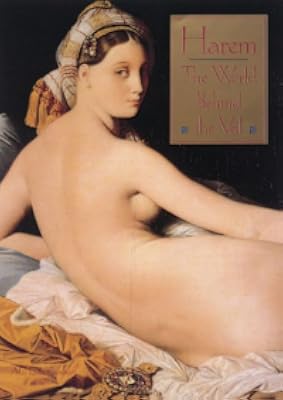
she accompanied Jack on a walking tour of his favorite odalisques, from Ingres to Matisse, she wanted to know why Ingres was portraying them so nude and powerless although they actually dressed like men ,and was very powerful and have a great authority and control over men,and that that place was a scene of many conspiracies…and a dangerous site for struggle.......
she said that one of the European Travelers was amazed when he sneaks a peek over on of the Turkish harem and saw that they were dressed like men......
here she focuses on how art can signify a culture,and result in a Social stigma .......
She also differentiate between different Islamic cultures,saying that Turkish women were having control over their men, and gave examples of famous powerful women in different cultures,like Empress of the Mughal Empire , Nur Jahan who was the best tiger haunter......
She ended her book with a story she told about herself,in a trip to a designer's shop in New York,she didn’t find her size in the store,she thinks that western women are pressured to be at size 6 , which limits value and visibility of women to an image of a certain kind of 14-year-old girl,she sees this as a new oppression and enslavement and the western harem,this situation makes her lose her self confidence,but she comforted her self by remembering how she was praised in her country for having those heavy hips......
I wanna tell u Ms. Rantisi that this is not existing any more,eastern men are now obsessed with skinny blonde girls....
u are talking about something from the past!!! show less
Ratings
Members
- Recently Added By
Lists

Women in Islam
120 works; 8 members
Author Information

47+ Works 2,411 Members
Fatema Mernissi is an Islamic feminist whose books have been published in 22 countries & have been bestsellers in many. (Bowker Author Biography)
Some Editions
Awards and Honors
Awards
Common Knowledge
- Canonical title*
- Harem: westliche Phantasien – östliche Wirklichkeit
- Original title
- Scheherazade Goes West – Western Fantasies, Eastern Realities
- Original publication date
- 2001
*Some information comes from Common Knowledge in other languages. Click "Edit" for more information.
Classifications
- Genres
- Nonfiction, Sexuality and Gender Studies, General Nonfiction, Religion & Spirituality, Biography & Memoir, History
- DDC/MDS
- 305.42 — Society, government, & culture Social sciences, sociology & anthropology Social group - Age, Gender, Ethnicity Women Social role and status of women
- LCC
- HQ1170 .M467 — Social sciences The family. Marriage, Women and Sexuality The Family. Marriage. Women Women. Feminism
- BISAC
Statistics
- Members
- 288
- Popularity
- 112,098
- Reviews
- 3
- Rating
- (3.50)
- Languages
- 9 — Catalan, Dutch, English, French, German, Italian, Portuguese, Spanish, Swedish
- Media
- Paper, Ebook
- ISBNs
- 18
- ASINs
- 3