On This Page
Description
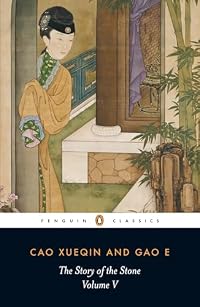
"The fifth part of Cao Xueqin's magnificent saga continues to chart the changing fortunes of the Jia dynasty."--Back cover.Tags
Recommendations
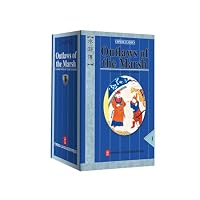
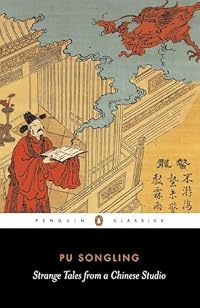
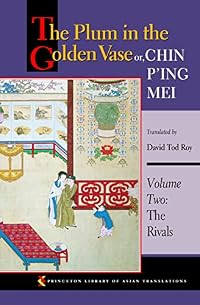
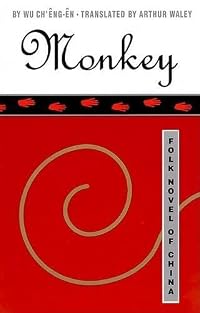

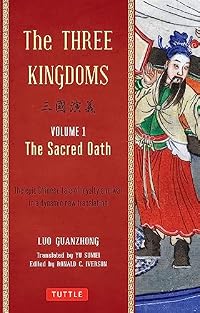
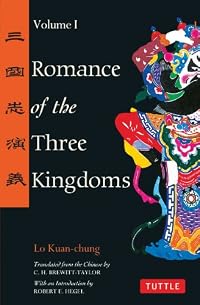
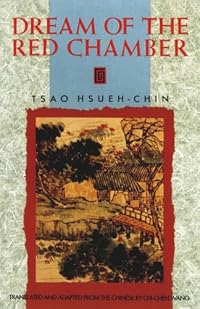

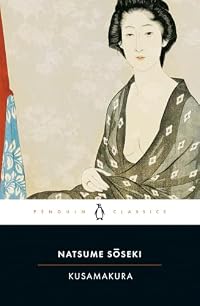
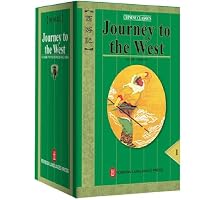
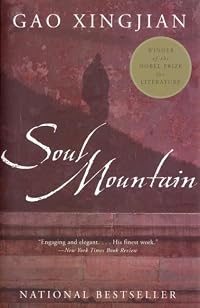
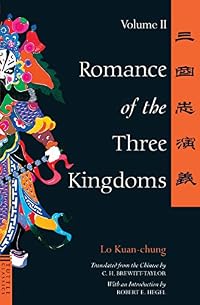
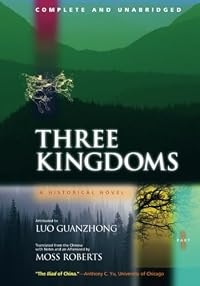


Member Recommendations

On The red chamber dream; a critical study of two annotated manuscripts of the XVIIIth century by Shichang Wu
defaults Very much worth hunting down if you got this far. The insights go far beyond Hawkes and Minford's annotations and though this volume dates from the sixties it in fact seems to represent some of the more recent scholarly work available in English translation—some of the studies it sets out to rebut have been published in English more recently.
Member Reviews
The last couple of chapters contain an absurdly happy ending — notwithstanding all the unhappiness already recorded — but in general I have a lot of sympathy for Gao E’s production of chapters 81-120. Considering the magnitude of his task, to wrap up a story that seemed to be going nowhere yet everywhere, to document the dissolution of a dynasty, to please the fans — he did OK.
For much of my trip through DoRC I was focused on various supporting characters. Xi Feng, Skybright, Xue Pan, Tan Chun all won me over. But looking back on it all, the one I miss most is young Bao Yu. I loved his haplessness, his last-minute excuses and dissimulations, his sudden “aiyos” whe he realises he’s screwed up which are like Bart Simpson’s show more “d’oh”. His kindness and real concern for his servants, not an educated veneer but real humanity. And in the end this is what tears him away from the world, his connection to it.
It’s been a wonderful, enriching experience. The second volume is on a par with the second volume of Proust, very similar in its themes too. The slowly melting ice of the third book with its sudden violent cracks is brilliant. The sheer confusion of who’s who, replenished by infusions of new characters who inevitably fall ill, have their pulses taken through curtains, are prescribed incredibly complicated compounds and then either recover or perish. To quote Blackadder, “the endless, bloody, poetry!” Although the poetry translated by Hawkes was generally amazing. The earthly paradise of the garden in its halcyon days.
Sometimes boring, sometimes compulsive, almost always convincing, the Story of the Stone, like all great stories, is the story of life itself. show less
For much of my trip through DoRC I was focused on various supporting characters. Xi Feng, Skybright, Xue Pan, Tan Chun all won me over. But looking back on it all, the one I miss most is young Bao Yu. I loved his haplessness, his last-minute excuses and dissimulations, his sudden “aiyos” whe he realises he’s screwed up which are like Bart Simpson’s show more “d’oh”. His kindness and real concern for his servants, not an educated veneer but real humanity. And in the end this is what tears him away from the world, his connection to it.
It’s been a wonderful, enriching experience. The second volume is on a par with the second volume of Proust, very similar in its themes too. The slowly melting ice of the third book with its sudden violent cracks is brilliant. The sheer confusion of who’s who, replenished by infusions of new characters who inevitably fall ill, have their pulses taken through curtains, are prescribed incredibly complicated compounds and then either recover or perish. To quote Blackadder, “the endless, bloody, poetry!” Although the poetry translated by Hawkes was generally amazing. The earthly paradise of the garden in its halcyon days.
Sometimes boring, sometimes compulsive, almost always convincing, the Story of the Stone, like all great stories, is the story of life itself. show less
[b:The Story of the Stone, or The Dream of the Red Chamber, Vol. 5: The Dreamer Wakes|139826|The Story of the Stone, or The Dream of the Red Chamber, Vol. 5 The Dreamer Wakes|Cao Xueqin|https://i.gr-assets.com/images/S/compressed.photo.goodreads.com/books/1348045613l/139826._SY75_.jpg|49685129] is the fifth and final volume of the epic Story of the Stone. In the previous volume, [b:The Story of the Stone, or The Dream of the Red Chamber, Vol. 4: The Debt of Tears|139820|The Story of the Stone, or The Dream of the Red Chamber, Vol. 4 The Debt of Tears|Cao Xueqin|https://i.gr-assets.com/images/S/compressed.photo.goodreads.com/books/1172113533l/139820._SY75_.jpg|49685167] tragedy and disaster that had loomed upon the horizon began to show more unfold. In this volume, terrible events reach a long-foretold crescendo. The Jia family is beset by problems that compound each other. Falling out of political favour worsens the already fragile financial situation, damaging the health of many family members. Plans and decisions made in previous volumes produce unintended consequences in this one. It’s fascinating how gradual yet inexorable the shift in tone has been. While the second volume is full of joyful socialising and poetry composition, the fifth is replete with disaster, decline, and death. The one attempt at party games falls flat. Yet the five volumes don't compose an unequivocally downward narrative by any means. By the end, the Jia family remains, albeit diminished, with some hopes for recovery.
The progress of events is as compelling and carefully observed in this volume as the others, despite discussion in the preface about whether the book is complete. It certainly read as complete to me, which at least suggests excellent editing and translation work. The range of family reactions to disaster is striking to observe: denial, self-pity, rage, withdrawal, and hard work to try and improve things, among others. The ostensible head of the family Jia Zheng has not been aware of what state his household is in and is shocked when he realises:
I don’t consider Bao-yu’s uselessness in the face of financial problems to be a spoiler, as his characterisation throughout the books is very consistent: a dreamy, artistic, emotional, and wholly impractical young man. He cannot be relied upon to do his homework, let alone manage a household. By comparison, Grandmother Jia (the actual head of the family) reacts in a much more measured and pragmatic way to the prospect of household bankruptcy. However she is elderly and cannot turn things around herself.Her death while the family is still in turmoil and the theft of her belongings afterwards are particularly shocking moments of pathos. She was a stable and comforting figure throughout the previous four books, a matriarch overseeing her family. Xi-feng’s death is also shocking and includes the classic tradition of coughing up blood. Her illness becomes terminal due to the stress and overwork of attempting to manage the affairs of a family falling apart.
Given the tragedies of this concluding volume, it isn’t surprising that the supernatural and theological has a strong narrative presence in relation to illness, mourning, attempts to forecast the future, haunted places, and religious vocations. Different characters evince various levels of scepticism and conviction around these matters, creating a very interesting tension for the reader. Bao-yu, as we know from prior volumes, has always had one foot in the spiritual world, while many of his relatives are doubtful of fortune telling.Near the end, Bao-yu’s prophecy from the first volume comes to pass and he disappears, returning to the fairy world of his dream. On the other hand, this final volume has fewer material details as the sense of abundance and luxury is gone.
The whole five-volume work is a remarkable and fascinating insight into 18th century life in a wealthy Chinese family, as well as an involving melodrama peopled with memorable characters. The inclusion of so many perspectives within the sprawling household, from kitchen maids to young masters to put-upon wives to gardeners, creates a wonderfully detailed sense of how things work or fall apart. The tone oscillates between joy and sadness beautifully. The reader both gets a feeling of interdependent community and keen psychological insight into individuals. I really enjoyed spending five books with the Jia family and their extended family, servants, friends, and hangers-on. As well as being interesting from a historical perspective, The Story of the Stone is a real page-turner. John Minford’s translation is highly readable and the plot full of constant incident. I highly recommend this reading experience to anyone who enjoys historical fiction or epic family sagas. show less
The progress of events is as compelling and carefully observed in this volume as the others, despite discussion in the preface about whether the book is complete. It certainly read as complete to me, which at least suggests excellent editing and translation work. The range of family reactions to disaster is striking to observe: denial, self-pity, rage, withdrawal, and hard work to try and improve things, among others. The ostensible head of the family Jia Zheng has not been aware of what state his household is in and is shocked when he realises:
"But both households must now look to me for their daily sustenance, and how can I hope to support them all? This latest revelation of Lian’s is another grievous blow; not only have we no reserves, we are seriously in debt. We have evidently been living under false pretences for years! And I have only my own stupidity to blame! How can I have been so blind? If only my eldest son were still alive! In Zhu I might at least have had some support. But Bao-yu, for all he is my son, and now a grown man, can offer my no help whatsoever."
I don’t consider Bao-yu’s uselessness in the face of financial problems to be a spoiler, as his characterisation throughout the books is very consistent: a dreamy, artistic, emotional, and wholly impractical young man. He cannot be relied upon to do his homework, let alone manage a household. By comparison, Grandmother Jia (the actual head of the family) reacts in a much more measured and pragmatic way to the prospect of household bankruptcy. However she is elderly and cannot turn things around herself.
Given the tragedies of this concluding volume, it isn’t surprising that the supernatural and theological has a strong narrative presence in relation to illness, mourning, attempts to forecast the future, haunted places, and religious vocations. Different characters evince various levels of scepticism and conviction around these matters, creating a very interesting tension for the reader. Bao-yu, as we know from prior volumes, has always had one foot in the spiritual world, while many of his relatives are doubtful of fortune telling.
The whole five-volume work is a remarkable and fascinating insight into 18th century life in a wealthy Chinese family, as well as an involving melodrama peopled with memorable characters. The inclusion of so many perspectives within the sprawling household, from kitchen maids to young masters to put-upon wives to gardeners, creates a wonderfully detailed sense of how things work or fall apart. The tone oscillates between joy and sadness beautifully. The reader both gets a feeling of interdependent community and keen psychological insight into individuals. I really enjoyed spending five books with the Jia family and their extended family, servants, friends, and hangers-on. As well as being interesting from a historical perspective, The Story of the Stone is a real page-turner. John Minford’s translation is highly readable and the plot full of constant incident. I highly recommend this reading experience to anyone who enjoys historical fiction or epic family sagas. show less
Phenomenal ending. I read the first volume months ago and even I caught many of the ways this final volume was interwoven with the other volumes. I'm still mad about how horribly they treated Xi-feng, who will forever be my favorite. Bao-chai really did end up being just the worst didn't she?
The dream ends. I went into this having heard that volume five is little more than tying up loose ends, and while that's not false (the character of Vanitas even admits it), and while the arc of the plot could definitely have been traced out from the end of volume three, this is still a basically satisfying and often moving conclusion to one of the greatest works of literature ever made. I don't know what to do with myself now that it's over; this really feels like a book that you never stop reading.
I started reading this novel a number of months ago after reading an article that suggested it as a good place for westerner's to start familiarizing themselves with Chinese literary culture (and that it has a role something roughly akin to that of shakespeare in English-- ie, the original source of all kinds of idioms, allusions, and recycled story lines) . Such a completely different world and mindset from what I'm used to -- I actually quickly gave in and got a commentary/guide to help me get the allusions and implications I was clearly just not getting.
That said it was a fun read as a (very soap opera-y) story, and a great window into another world, and how that world approached all the normal questions of life in ways so show more fundamentally differently (and yet not) from those of us in the West.
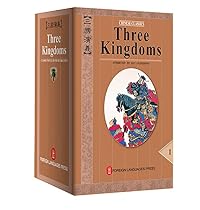
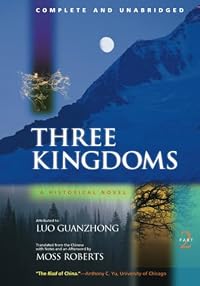
I'm now excited to go read more (the three kingdoms, maybe? Or, shift gears and try the analytics?). Regardless, and highly unusual for me, I fully expect to want to pick this up again in a few years.
(2024 Review # 1) show less
That said it was a fun read as a (very soap opera-y) story, and a great window into another world, and how that world approached all the normal questions of life in ways so show more fundamentally differently (and yet not) from those of us in the West.
I'm now excited to go read more (the three kingdoms, maybe? Or, shift gears and try the analytics?). Regardless, and highly unusual for me, I fully expect to want to pick this up again in a few years.
(2024 Review # 1) show less
The accumulated weight of everything is given its due as all the little plots come together pretty neatly - especially the frame story - and it's nice how the climax is concerned with perhaps the largest plot-strand of Bao-yu's court examination. However, a few of the key characters aren't given fair treatment - especially Aroma and Xi-Feng, whose fates are a little too hastily conveyed. Though one could argue the curtness with which they are dismissed is tragic in itself, I would've liked to have seen a little more time spent on them. They're two of the most sympathetic and complex characters (and my favorite characters) and they deserved more than what they were given. Sad,
And so the Dream of Golden Days draws to a close, and along with it the story of the Jia family - their decadent and luxurious lifestyle, subsequent fall from grace, and their eventual restoration. As this volume's subtitle tells, Jia Baoyu achieves the realisation that his life and its passions are but an illusion and the debts of fate foreshadowed in the first volume are finally repaid in full.
The fifth volume, translated by John Minford and edited by Gao E, systematically and at times predictably completes the lives of the numerous characters; by now though, the story feels somewhat repetitive: Baoyu is thought mad, Baochai admonishes him, Lady Wang and the older women bemoan their fate, the servants are either greedy and traitorous show more or bemoan their masters' fates. Yet this is not a damning indictment of Cao's masterpiece - just symptomatic of Gao E having trouble re-assembling the story after Cao's death.
I enjoyed the novel and the previous four volumes. They offered an enlightening window into traditional Chinese life during the Qing Dynasty for a wealthy family: their day-to-day lives, homes, literature, beliefs, etc. The translation by Hawkes and Minford is an excellent addition to the English canon and does justice to this sweeping novel.
Altogether, I give the complete series 5 STARS. And now to re-read it once more... show less
The fifth volume, translated by John Minford and edited by Gao E, systematically and at times predictably completes the lives of the numerous characters; by now though, the story feels somewhat repetitive: Baoyu is thought mad, Baochai admonishes him, Lady Wang and the older women bemoan their fate, the servants are either greedy and traitorous show more or bemoan their masters' fates. Yet this is not a damning indictment of Cao's masterpiece - just symptomatic of Gao E having trouble re-assembling the story after Cao's death.
I enjoyed the novel and the previous four volumes. They offered an enlightening window into traditional Chinese life during the Qing Dynasty for a wealthy family: their day-to-day lives, homes, literature, beliefs, etc. The translation by Hawkes and Minford is an excellent addition to the English canon and does justice to this sweeping novel.
Altogether, I give the complete series 5 STARS. And now to re-read it once more... show less
Members
- Recently Added By
Author Information

102+ Works 5,382 Members
2+ Works 847 Members
Some Editions
Awards and Honors
Notable Lists
Series

Belongs to Publisher Series
Work Relationships
Is contained in
Common Knowledge
- Canonical title
- The Dreamer Wakes
- People/Characters
- Jia Baoyu
- Important places
- China
- Dedication
- FOR EMMA, LUKE, DANIEL AND LAURA
(Penguin Classics, translated by John Minford) - First words
- TO CONTINUE OUR STORY,
We told in our previous volume how Xi-feng, finding Grandmother Jia and Aunt Xue somewhat cast down by the mention of Dai-yu’s death, had endeavoured to raise their spirits with a humorous anec... (show all)dote.
(Penguin Classics, translated by John Minford) - Last words
- (Click to show. Warning: May contain spoilers.)A later reader of the manuscript added a four-line gatha, to expand a little on the author's original envoi:
When grief for fiction's idle words
More real than human life appears,
Reflect that life itself's a dream
And do not mock the reader's tears.
(Penguin Classics, translated by John Minford) - Original language
- Chinese
- Disambiguation notice
- This is part 5 (of 5) of the complete work variously known as A Dream of Red Mansions , The Dream of the Red Chamber, or The Story of the Stone, by Cao Xueqin (also known as Tsao Hsueh-chin) and Kao Ngo (... (show all)also known as Kao Hgo, or Gao E). Please distinguish it from the complete work, any abridged versions, or any other portions. Thank you.
This is part 5 (of 5) of the complete work variously known as A Dream of Red Mansions , The Dream of the Red Chamber, or The Story of the Stone, by Cao Xueqin (also known as Tsao Hsueh-chin) and Kao Ngo (... (show all)also known as Kao Hgo, or Gao E). Please distinguish it from the complete work, any abridged versions, or any other portions. Thank you.
Classifications
- Genres
- General Fiction, Fiction and Literature
- DDC/MDS
- 813 — Literature & rhetoric American literature in English American fiction in English
- LCC
- PL2727 .S2 .S713 — Language and Literature Languages and literatures of Eastern Asia, Africa, Oceania Languages of Eastern Asia, Africa, Oceania Chinese language and literature Chinese literature Individual authors and works
- BISAC
Statistics
- Members
- 415
- Popularity
- 74,086
- Reviews
- 10
- Rating
- (4.09)
- Languages
- English, Swedish
- Media
- Paper, Ebook
- ISBNs
- 4
- ASINs
- 2