We of the Never-Never
by Mrs. Aeneas Gunn
On This Page
Description
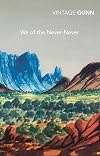
In 1902, newly-married Jeannie Gunn (Mrs Aeneas Gunn) left the security and comfort of her Melbourne home to travel to the depths of the Northern Territory, where her husband had been appointed manager of 'The Elsey', a large cattle station. One of the very few white women in the area, she was at first resented by people on and around the station, till her warmth and spirit won their affection and respect. This is her moving and simple account of her life amidst the beauty and cruelty of the show more land, and the isolation and loneliness. With introduction by Bud Tingwell. show lessTags
Recommendations


















Member Reviews
A revealing book about life on an early Australian cattle station.
It's a little confusing at first with the author's referring to places as if they are people and the multitude of nicknames she gives to those who accompany her into the bush, but easier once you get into it.
The author paints some beautiful and poignant pictures of life in the Australian bush. Most moving to me was the description of the postman's determined and dangerous journey along his mail route to the inside. Six times a year he would risk his life to deliver email to remote stations.
This book is however a product of its time. It's disheartening that the author so often places men on pedestals while denigrating her fellow women, and there is some fairly racist show more content. The author is actually surprised to discover that Chinese men can feel compassion, for instance, and the aboriginals are constantly described as childlike and credulous.
As unappealing as this content is, however, I think it is valuable to anyone seeking an honest picture of early Australia, as it starkly demonstrates the attitude of the white colonists towards the aboriginals and Chinese fellow colonists. show less
It's a little confusing at first with the author's referring to places as if they are people and the multitude of nicknames she gives to those who accompany her into the bush, but easier once you get into it.
The author paints some beautiful and poignant pictures of life in the Australian bush. Most moving to me was the description of the postman's determined and dangerous journey along his mail route to the inside. Six times a year he would risk his life to deliver email to remote stations.
This book is however a product of its time. It's disheartening that the author so often places men on pedestals while denigrating her fellow women, and there is some fairly racist show more content. The author is actually surprised to discover that Chinese men can feel compassion, for instance, and the aboriginals are constantly described as childlike and credulous.
As unappealing as this content is, however, I think it is valuable to anyone seeking an honest picture of early Australia, as it starkly demonstrates the attitude of the white colonists towards the aboriginals and Chinese fellow colonists. show less
A feel-good recount of a year in the Australian outbush in 1902, it romanticises the tough bush life with its beautiful imagery of the landscape and the optimistic promises of a new home. There's a distinct sly, dry humour underlying the novel where everybody walks around with a twinkle in their eye.The life is painted as one that is almost impossibly perfect and full of humorous, good-hearted people who survive and thrive in an isolation where mail only comes every six weeks. Then this mirage is given a dose of reality with period racism and slurs or with a recount of the fate of the previous postman. Even though current tastes have moved towards more realistic portrayals of the outback, I can't begrudge Jeannie Gunn her charmed and show more charming year knowing its sad demise.
Aside: Fizzer needs to write his own book.
Update: a fascinating article that contextualises the book. show less
Aside: Fizzer needs to write his own book.
Update: a fascinating article that contextualises the book. show less
Mrs Aeneas Gunn, as she was long known, wrote this pivotal Australian text from the first years of the 20th century, the story of the only white woman on a massive station in the outback. Gunn's writing is engaging and well-versed, and the story rarely lapses into melodrama, if only because we have to keep remembering that this is drawn from life - just on a magnified scale.
Of course, it's easy (and fair) to grimace at Gunn's portrayal of non-white people, not to mention her own less-than-progressive views on her role as a woman. But the lady was born in 1870, and she was content to be a pioneer in her on ways without getting enveloped in the still cloudy issue of feminism. As with many books of this kind, we can't necessarily blame show more Gunn for all of her stereotyping, we can simply ensure that we read with a critical eye, and treat this book as an important historical and literary piece - especially in terms of what it tells us about the role of women and the approach to the outback. show less
Of course, it's easy (and fair) to grimace at Gunn's portrayal of non-white people, not to mention her own less-than-progressive views on her role as a woman. But the lady was born in 1870, and she was content to be a pioneer in her on ways without getting enveloped in the still cloudy issue of feminism. As with many books of this kind, we can't necessarily blame show more Gunn for all of her stereotyping, we can simply ensure that we read with a critical eye, and treat this book as an important historical and literary piece - especially in terms of what it tells us about the role of women and the approach to the outback. show less
Very interesting description of life on a station in Northern Australia in the early 1900's. Women were not exactly welcome, but Mrs. Gunn earned respect of the station hands.Austrailia, early 1900's, bush country
A bare-bones synopsis, from http://www.booksandcollectibles.com.au
"In 1902 Mrs Aeneas Gunn went with her husband to live on the remote Elsey cattle station near the Roper River in the Northern Territory. She wrote these classic stories about her experiences in the outback." I read this memoir before going to live in Australia, and remember feeling that it gave me needed courage. I also just learned that the text is available on the Gutenberg Project site.
"In 1902 Mrs Aeneas Gunn went with her husband to live on the remote Elsey cattle station near the Roper River in the Northern Territory. She wrote these classic stories about her experiences in the outback." I read this memoir before going to live in Australia, and remember feeling that it gave me needed courage. I also just learned that the text is available on the Gutenberg Project site.
Memoir of early life of European ranchers in Australia
the bookcover image goodreads uploaded here is not We of the Never Never.= have fixed that.
Members
- Recently Added By
Lists

Booktopia's 50 Must Read Australian Novels
50 works; 5 members
Australia's Greatest Books, as chosen by Geoffrey Dutton (1985)
97 works; 6 members
Author Information

7+ Works 641 Members
Awards and Honors
Notable Lists
Australia's Greatest Books (1908)
Work Relationships
Common Knowledge
- Original title
- We of the Never Never
- Original publication date
- 1982
- Important places
- Australia; Elsey Homestead; Elsey Station; Northern Territory, Australia
- Related movies
- We of the Never Never (1982 | IMDb)
Classifications
- Genre
- Biography & Memoir
- DDC/MDS
- 994.29041092 — History & geography Oceania & Polar Regions Australia South Australia, Northern Territory Northern Territory
- LCC
- DU395 .G8 — History of Europe, Asia, Africa and Oceania Oceania (South Seas) History of Oceania (South Seas) Australia Northern Territory of Australia
- BISAC
Statistics
- Members
- 400
- Popularity
- 77,823
- Reviews
- 7
- Rating
- (3.80)
- Languages
- Dutch, English
- Media
- Paper, Audiobook, Ebook
- ISBNs
- 56
- UPCs
- 1
- ASINs
- 18