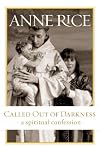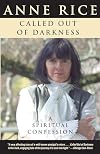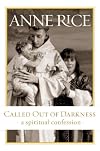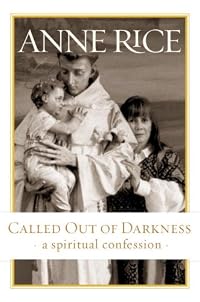
Called Out of Darkness: A Spiritual Confession
by Anne Rice
On This Page
Description
An intimate memoir of Anne Rice's Catholic girlhood, her unmaking as a devout believer, and her return to the Church--what she calls a decision of the heart. Moving from her New Orleans childhood in the 1940s and '50s, with all its religious devotions, through how she slowly lost her belief in God, the book recounts Anne's years in radical Berkeley, where she wrote Interview with the Vampire (a lament for her lost faith) and where she came to admire the principles of secular humanists. She show more writes about loss and alienation (her mother's drinking, the deaths of her young daughter and later, her husband); about the birth of her son, Christopher; and about how, after 38 years as an atheist, she once again came to believe in Christ.--From publisher description. show lessTags
Recommendations



Member Reviews
In this autobiography, Rice describes her upbringing in the Catholic religion, her subsequent renunciation and final reconciliation. What struck me in this book, is that Rice has always been profoundly religious, mystical even, but cannot envision faith outside of organized religion. She is an extremely sensorial being, responding to the stimuli of the church: paintings, music, colour and smells are all part of the religious experience. These are what makes her fiction so appealing - this constant call to the senses. She moves in the world very intuitively and seeks the guidance of a god to explain it - it's an appealing, albeit not very rational, way of explaining life and its experiences. I'm not sure this book is very convincing for show more non-believers, however, because Rice feels rather than thinks her surroundings. show less
What does it take for an atheist who authored the famous Vampire novels to return to the faith of her childhood—and to live out that faith in her publishing commitments? Nothing but the love of Jesus.
This book will move you. There’s an honest simplicity to it that many spiritual works lack. In her words:
"If this path to God is an illusion, then the story is worthless. If the path is real, then we have something here that may matter to you as well as to me."
This book will move you. There’s an honest simplicity to it that many spiritual works lack. In her words:
"If this path to God is an illusion, then the story is worthless. If the path is real, then we have something here that may matter to you as well as to me."
Bestselling author Anne Rice writes about her spiritual journey. She hasn't formally broken the work up, but I'd argue that the book is basically divided into three parts: her childhood, which was heavily religious; her atheistic adulthood; and her return to Catholicism at the age of fifty-seven. Within these three segments, she discusses the ways in which religion influenced each stage in her life.
I had a rather strange reaction to this book. I love Rice's work. I love her visual imagery; her ornate and detailed prose; the religious and artistic preoccupations that drive each of her novels. I love the way she brings her settings to life. I love the Catholic elements in her work. Even before she regained her faith, she taught me so much show more about the Christian church. I feel confident in saying that my interest in comparative religion dates to my first exposure to her work.
So the first segment, (her childhood), had all the right elements. New Orleans and its Catholic community are depicted very well indeed. The prose is heady. The Catholicism is described in great detail. And yet, I just wasn't feeling it.
I hate to say this, but I came perilously close to abandoning the book. It wouldn't click for me. I was pretty upset. It's one thing when you want to abandon a book by some random author you've only just met. It's another thing entirely when you find yourself tempted to put down a very personal book by one of your favourite authors.
I took a longish break from it, then gave it one more go late on a Sunday evening. And wouldn't you know it, but I didn't willingly put it down again until I'd read the last page.
I'm not sure whether Rice hit her stride as a writer or I hit mine as a reader. Either way, I found her adulthood and return to faith personal, compelling, and impossible to put down. She got me thinking about so many things: gender issues, childhood versus adulthood, what it means to be a good person, her body of work, my own faith. I'm surprised, too, at how she's discussed faith without emphasizing any particular method of worship. She is, of course, a practicing Catholic; she personally believes in and follows the doctrines of that particular church. But nowhere does she push Catholicism as the right and only way. She doesn't even speak poorly of atheists or those of other faiths. Rather, she emphasizes the goodness she's found in people of all beliefs and of none. She writes about love as the core tenet of Christianity, and about her own struggles to embrace love and lead a love-filled life.
I most certainly recommend this to anyone interested in religion. I think it's relevant to people of all faiths; I'm not a Christian myself, but I still got a lot out of it.
(A slightly different version of this review originally appeared on my blog, Stella Matutina). show less
I had a rather strange reaction to this book. I love Rice's work. I love her visual imagery; her ornate and detailed prose; the religious and artistic preoccupations that drive each of her novels. I love the way she brings her settings to life. I love the Catholic elements in her work. Even before she regained her faith, she taught me so much show more about the Christian church. I feel confident in saying that my interest in comparative religion dates to my first exposure to her work.
So the first segment, (her childhood), had all the right elements. New Orleans and its Catholic community are depicted very well indeed. The prose is heady. The Catholicism is described in great detail. And yet, I just wasn't feeling it.
I hate to say this, but I came perilously close to abandoning the book. It wouldn't click for me. I was pretty upset. It's one thing when you want to abandon a book by some random author you've only just met. It's another thing entirely when you find yourself tempted to put down a very personal book by one of your favourite authors.
I took a longish break from it, then gave it one more go late on a Sunday evening. And wouldn't you know it, but I didn't willingly put it down again until I'd read the last page.
I'm not sure whether Rice hit her stride as a writer or I hit mine as a reader. Either way, I found her adulthood and return to faith personal, compelling, and impossible to put down. She got me thinking about so many things: gender issues, childhood versus adulthood, what it means to be a good person, her body of work, my own faith. I'm surprised, too, at how she's discussed faith without emphasizing any particular method of worship. She is, of course, a practicing Catholic; she personally believes in and follows the doctrines of that particular church. But nowhere does she push Catholicism as the right and only way. She doesn't even speak poorly of atheists or those of other faiths. Rather, she emphasizes the goodness she's found in people of all beliefs and of none. She writes about love as the core tenet of Christianity, and about her own struggles to embrace love and lead a love-filled life.
I most certainly recommend this to anyone interested in religion. I think it's relevant to people of all faiths; I'm not a Christian myself, but I still got a lot out of it.
(A slightly different version of this review originally appeared on my blog, Stella Matutina). show less
Read: June 2019
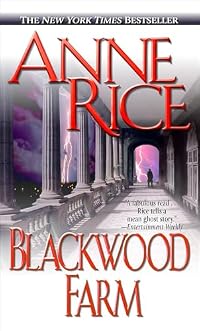
I hesitated between a four and five star rating for this book. Anne Rice was one of the biggest influences in my teenage years and Pandora, Blackwood Farm and the Mayfair Witch trilogy remain some of my favourite novels. I even managed to include Merrick in my university dissertation when I wrote about the role of women in gothic fiction in my early twenties.
I haven’t read any of her recent novels because I felt as though her more recent offerings wouldn’t be able to compare to her earlier works. Having finished Called out of Darkness this morning I will definitely start reading Anne Rice’s fiction again. She writes so beautifully and vividly here, and it is painfully clear how much she’s struggled with both show more Catholicism and atheism over the decades.
It’s not quite a five star book for me; the detailed descriptions of the churches she attended as a child seemed to go on and on and I ended up skim reading some of those pages. However from the point at which she describes going to college onwards, I read this book so quickly. I couldn’t put it down!
Obviously the book is based around Anne’s return to religion but I felt there were certain events that weren’t really fleshed out that as a fan I would like to have read more about. A life threatening illness that almost killed her was dealt with in about two sentences, for example.
Overall I loved reading Called out of Darkness and although I borrowed this copy from the library, I’m sure I’m going to end up buying one to keep on my bookshelves in the future. show less
I hesitated between a four and five star rating for this book. Anne Rice was one of the biggest influences in my teenage years and Pandora, Blackwood Farm and the Mayfair Witch trilogy remain some of my favourite novels. I even managed to include Merrick in my university dissertation when I wrote about the role of women in gothic fiction in my early twenties.
I haven’t read any of her recent novels because I felt as though her more recent offerings wouldn’t be able to compare to her earlier works. Having finished Called out of Darkness this morning I will definitely start reading Anne Rice’s fiction again. She writes so beautifully and vividly here, and it is painfully clear how much she’s struggled with both show more Catholicism and atheism over the decades.
It’s not quite a five star book for me; the detailed descriptions of the churches she attended as a child seemed to go on and on and I ended up skim reading some of those pages. However from the point at which she describes going to college onwards, I read this book so quickly. I couldn’t put it down!
Obviously the book is based around Anne’s return to religion but I felt there were certain events that weren’t really fleshed out that as a fan I would like to have read more about. A life threatening illness that almost killed her was dealt with in about two sentences, for example.
Overall I loved reading Called out of Darkness and although I borrowed this copy from the library, I’m sure I’m going to end up buying one to keep on my bookshelves in the future. show less
Being a former Anne Rice fan who hasn't picked up one of her new releases since Memnoch the Devil, I was initially interested in reading this memoir to find out how Rice feels about writing her decidedly un-Christian novels now that she is once again a practicing Catholic. Rice wrote of supernatural beings such as vampires and witches living in a Godless world engaging in perversion and violence. She also wrote several erotic novels under pseudonyms. How does she now feel about continuing to collect royalties from these "profane" works? Essentially, she is not apologetic for her past works but instead believes that her faith in God now is all that matters and she has committed herself to writing for God.
I wonder if Rice's turning away show more from God in her college years would have happened if not for two influences in her life: (1) living in the Haight-Ashbury district of San Francisco in the 60s when everyone was questioning everything anyway; and (2) the death of her young daughter at this time. Rice feels that her novels reflect her subconscious journey from question-filled atheism back to a meaningful understanding of God. show less
I wonder if Rice's turning away show more from God in her college years would have happened if not for two influences in her life: (1) living in the Haight-Ashbury district of San Francisco in the 60s when everyone was questioning everything anyway; and (2) the death of her young daughter at this time. Rice feels that her novels reflect her subconscious journey from question-filled atheism back to a meaningful understanding of God. show less
Fabulous memoir. Very heavy on her childhood, and her childhood faith, about half the book is that, with the other half talking a little about her years away as an atheist and then her return to faith.
The thing that struck me is that she is so very Catholic to the core. She pretty much only became an atheist because she felt like she had to leave the Catholic church in order to learn about the whole world and not only what was acceptable. But even while she was an atheist, she was still collecting religious figurines, and waiting in line to touch the tomb of St. Francis, and visiting cathedrals and such. It's almost as if her head left but her heart never did. Not that those things are really what faith is about, and she wouldn't say show more they are either, but they do seem like something you wouldn't expect an atheist, even one who grew up going to Mass every day would want to do.
Her descriptions of how she learned about God as a child through hearing and seeing rather than reading was quite moving. She apparently had a hard time reading for a very long time, and as such especially as a child, her faith didn't have much to do with the written word, which I find very interesting. Some of us so associate faith with written word (whether the Bible or other works about it) that reading this really makes you want to be able to capture even the tinest bit of that great mystery, even if one is not Catholic.
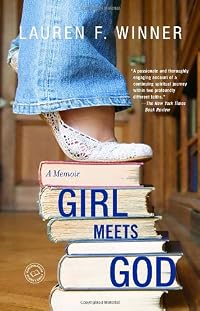
I gave this one 5 stars because it really is just a fabulous read. I read this from the library, but I've already ordered myself a copy so I can mark passages rather than typing so much (there are post-it notes sticking out all over) and so I can reread it again. This is probably the only spiritual memoir other than Lauren Winner's Girl Meets God that I'd really want to own for myself and reread. And I'm not sure entirely why that is, because there's a lot of ways in which I disagree with both of them.
I do feel I need to address the fact of Anne Rice's most recent comment about her faith, and her whole "I quit being a Christian" comment. From reading this book I think I understand partially where she is coming from on that. She clearly still has issues with the Catholic church, and for her, it's Catholicism or nothing. However, irregardless, it doesn't make this book any less of a great read, even knowing that. Personally most of her comments on faith have always struck me as "here is a woman on a journey and while I may find some of her beliefs to be a good bit off, I do think she sincerely wants to follow God" and I still feel that way. show less
The thing that struck me is that she is so very Catholic to the core. She pretty much only became an atheist because she felt like she had to leave the Catholic church in order to learn about the whole world and not only what was acceptable. But even while she was an atheist, she was still collecting religious figurines, and waiting in line to touch the tomb of St. Francis, and visiting cathedrals and such. It's almost as if her head left but her heart never did. Not that those things are really what faith is about, and she wouldn't say show more they are either, but they do seem like something you wouldn't expect an atheist, even one who grew up going to Mass every day would want to do.
Her descriptions of how she learned about God as a child through hearing and seeing rather than reading was quite moving. She apparently had a hard time reading for a very long time, and as such especially as a child, her faith didn't have much to do with the written word, which I find very interesting. Some of us so associate faith with written word (whether the Bible or other works about it) that reading this really makes you want to be able to capture even the tinest bit of that great mystery, even if one is not Catholic.
I gave this one 5 stars because it really is just a fabulous read. I read this from the library, but I've already ordered myself a copy so I can mark passages rather than typing so much (there are post-it notes sticking out all over) and so I can reread it again. This is probably the only spiritual memoir other than Lauren Winner's Girl Meets God that I'd really want to own for myself and reread. And I'm not sure entirely why that is, because there's a lot of ways in which I disagree with both of them.
I do feel I need to address the fact of Anne Rice's most recent comment about her faith, and her whole "I quit being a Christian" comment. From reading this book I think I understand partially where she is coming from on that. She clearly still has issues with the Catholic church, and for her, it's Catholicism or nothing. However, irregardless, it doesn't make this book any less of a great read, even knowing that. Personally most of her comments on faith have always struck me as "here is a woman on a journey and while I may find some of her beliefs to be a good bit off, I do think she sincerely wants to follow God" and I still feel that way. show less
A very dissapointing book in my opinion. Rice spends far too much time describing her childhood and the Catholic Church and not nearly enough time explaining what drew her back. She writes about all the rituals and practices of the Church as well as descibing in great detail seemingly every single building she ever walked into between the ages of 5-18. Then she glosses over her 38 years of atheism before talking about her miracle reconversion. She speaks of world trips she took where she began feeling God haunting her until she just gave in and went back to church. What is missing is any real insight into what propelled her mind into this state. She barely mentions the death of her daughter and what effect it may have played on her show more mental state. As a lapsed Catholic myself, I was hoping for something I could relate to but found virtually nothing. I came away feeling like Anne Rice could really benefit from some serious pyschotherapy and actually delve into a number of issues from childhood to the present that have made her who she is. I think she is just as lost as she was when she was an atheist. show less
Members
- Recently Added By
Author Information

132+ Works 189,697 Members
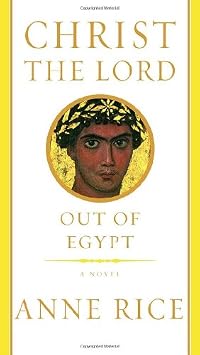
Anne Rice was born Howard Allen O'Brien on October 4, 1941 in New Orleans, Louisiana. She received a bachelor's degree in political science in 1964 and master's degree in English and creative writing in 1972 from San Francisco State University. She published her first short story in 1965 called October 4, 1948. Her first book, Interview with the show more Vampire, was published in 1976. It was made into a film starring Brad Pitt, Kirsten Dunst, and Tom Cruise in 1994. She wrote various series in the same genre including the rest of the Vampire Chronicles, the Mayfair Witches books, and The Wolf Gift Chronicles. Her novel, Feast of All Saints, became a Showtime mini-series in 2001. Her other works include Cry to Heaven, Servant of the Bones, and Violin. In 1998, Rice returned to the Catholic Church and for some time only wrote for Christ or about Christ. These works include Christ the Lord: Out of Egypt, Christ the Lord: The Road to Cana, and Called Out of Darkness. Anne Rice died on December 11, 2021 at the age of 80. (Bowker Author Biography) show less
Work Relationships
Is contained in
Common Knowledge
- Original publication date
- 2008
- Epigraph
- Out of the depths have I cried unto thee, O LORD.
Lord, hear my voice: let thine ears be attentive to the voice of my supplications.
If thou, LORD, shouldst mark iniquities, O Lord, who shall stand?
But there is forg... (show all)iveness with thee, that thou mayest be feared.
I wait for the LORD, my soul doth wait, and in his word do I hope.
My soul waiteth for the Lord more than they that watch for morning: I say, more than they that watch for the morning.
--From Psalm 130
The King James Version - Dedication
- For the boys of the Redemptorist Seminary of Kirkwood including my father Howard James O'Brien
- First words
- This book is about faith in God.
- Last words
- (Click to show. Warning: May contain spoilers.)I am broken, flawed, committed: a Christmas Christian searching for that Sigmata, for the imprint of those Wounds on my heart and my soul, and my daily life.
Classifications
Statistics
- Members
- 507
- Popularity
- 59,008
- Reviews
- 23
- Rating
- (3.41)
- Languages
- English
- Media
- Paper, Audiobook, Ebook
- ISBNs
- 15
- ASINs
- 7