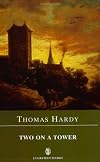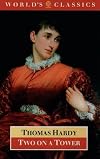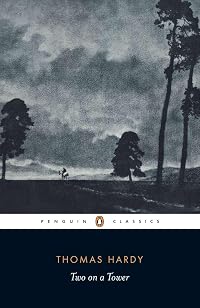
Two on a Tower
by Thomas Hardy
On This Page
Description
Best known for works such as Tess of the d'Urbervilles and Far From the Madding Crowd, British novelist Thomas Hardy also focused extensively on works of fantasy and speculative history. Two on a Tower is an imaginative work that spins the tale of a romance set in the Victorian era..
Tags
Recommendations
















Member Reviews
I am really enjoying some of the lesser know Hardy novels and this one has the added attraction of a healthy dose of astronomy and much of it seems quite accurate for the time. I was esp. tickled to have my place of work (when I am actually in the office) have a minor role in the plot. But the plot itself was also enjoyable, though it began to lag toward what I was sure would be a tragic ending, since it is Hardy after all. The tragic ending was a bit more tragic and melodramatic than I expected but I really did enjoy getting to know both Swithin and Vivette and thoroughly disliked the odious Louis. A very enjoyable read and more Hardy still on my list!
Most of the major Victorian novelists, as I am fond of pointing out, wrote one scientist novel: Dickens, Eliot, Gaskell, Collins, Kingsley, Trollope. Thomas Hardy, I am even fonder of pointing out, wrote three. Two on a Tower, his 1882 astronomer romance, was the middle one, following his 1872 geologist romance A Pair of Blue Eyes and preceding his 1887 amateur naturalist romance The Woodlanders. If we were to trace a trajectory of Hardy's opinions on science as way of seeing across them (a somewhat risky critical move, perhaps), we see that Hardy grows more pessimistic across the fifteen years (as Hardy seemingly did about everything).
While science is largely incidental in A Pair of Blue Eyes and while the scientist in The Woodlanders show more is a monster, Two on a Tower is somewhere in between in its depiction of a romance between Swithin St. Cleeve, the young astronomer, and Lady Viviette Constantine, an older married woman. Swithin finds beauty in the stars, but his elevated vision struggles to see Viviette's beauty on Earth-- even though she sees his quite clearly. Then, when he does shift his perception in order to see her, he loses sight of the stars that gave him so much wonder. And this being Hardy, nothing can ever work out correctly. This is my favorite of Hardy's three scientist novels: you really want this romance to work out, but know it never can, and there's beautiful imagery and some great ideas. The universe is unforgiving, and so is Thomas Hardy. show less
While science is largely incidental in A Pair of Blue Eyes and while the scientist in The Woodlanders show more is a monster, Two on a Tower is somewhere in between in its depiction of a romance between Swithin St. Cleeve, the young astronomer, and Lady Viviette Constantine, an older married woman. Swithin finds beauty in the stars, but his elevated vision struggles to see Viviette's beauty on Earth-- even though she sees his quite clearly. Then, when he does shift his perception in order to see her, he loses sight of the stars that gave him so much wonder. And this being Hardy, nothing can ever work out correctly. This is my favorite of Hardy's three scientist novels: you really want this romance to work out, but know it never can, and there's beautiful imagery and some great ideas. The universe is unforgiving, and so is Thomas Hardy. show less
Somebody defined comedy as tragedy plus time. Reading Thomas Hardy's 1882 novel "Two on a Tower" I was reminded that the difference between comedy and tragedy can be even finer than that. It can merely be a matter of perspective. If you step into a puddle of water, it's a tragedy. If someone else steps into that puddle of water, it's a comedy.
Have you ever listened to someone tell a story that could go either way? You had to closely watch the other person's face for clues as to whether you should be prepared to laugh heartily or express sympathy. That is a little what it's like reading this Hardy novel. The obstacles that pop up to interfere with the plans of his two lovers, Viviette Constantine and Swithin St. Cleve, are like those in show more a romantic comedy. But this is Thomas Hardy, and although he could write very funny scenes, especially early in his novels, you can usually expect a tragic ending. His modus operandi doesn't change much in Two on a Tower.
Viviette is an attractive woman of about 30 whose husband left two years before to explore Africa. He has not been heard from since. This lonely woman begins to take an unseemly interest in Swithin, an amateur astronomer who has been using a tower on her husband's property to observe the heavens. She may be married and he may be nearly 10 years younger than her and interested only in science, but she is drawn to him just the same and becomes his benefactor, purchasing costly equipment for his use.
When she learns her husband died in Africa, the romance becomes more two-sided, so much so that Swithin can no longer focus on his work. They decide to secretly marry, while continuing to live apart and secretly meeting at night (as if this will help him concentrate on astronomy). Then a bishop proposes marriage to Viviette, and her brother urges her to accept. And a girl in the village begins to take an interest in Swithin. The potential for comedy continues when Viviette learns her husband, while still very dead, did not die until much later than had been earlier reported. In fact, she did not become a widow until after she married Swithin. The complications go on from there.
Someone else might have made a great comedy out of this material, but not Hardy. He did not even make a great tragedy. "Two on a Tower" is a pleasure to read, but it is easy to see why it is not considered one of his greatest accomplishments. show less
Have you ever listened to someone tell a story that could go either way? You had to closely watch the other person's face for clues as to whether you should be prepared to laugh heartily or express sympathy. That is a little what it's like reading this Hardy novel. The obstacles that pop up to interfere with the plans of his two lovers, Viviette Constantine and Swithin St. Cleve, are like those in show more a romantic comedy. But this is Thomas Hardy, and although he could write very funny scenes, especially early in his novels, you can usually expect a tragic ending. His modus operandi doesn't change much in Two on a Tower.
Viviette is an attractive woman of about 30 whose husband left two years before to explore Africa. He has not been heard from since. This lonely woman begins to take an unseemly interest in Swithin, an amateur astronomer who has been using a tower on her husband's property to observe the heavens. She may be married and he may be nearly 10 years younger than her and interested only in science, but she is drawn to him just the same and becomes his benefactor, purchasing costly equipment for his use.
When she learns her husband died in Africa, the romance becomes more two-sided, so much so that Swithin can no longer focus on his work. They decide to secretly marry, while continuing to live apart and secretly meeting at night (as if this will help him concentrate on astronomy). Then a bishop proposes marriage to Viviette, and her brother urges her to accept. And a girl in the village begins to take an interest in Swithin. The potential for comedy continues when Viviette learns her husband, while still very dead, did not die until much later than had been earlier reported. In fact, she did not become a widow until after she married Swithin. The complications go on from there.
Someone else might have made a great comedy out of this material, but not Hardy. He did not even make a great tragedy. "Two on a Tower" is a pleasure to read, but it is easy to see why it is not considered one of his greatest accomplishments. show less
DESCRIPTION: In this novel, set in Wessex, the rich Lady Constantine lives a boring existence, also a chaste one, forced on her by an absent husband who may indeed be dead. But then she meets young Swithin, a naively ambitious astronomer, who shares with her his passion for the stars.
MY REVIEW: One of the reasons I love this story is that the characters were incredibly unique for their era. The main female lead (Lady Constantine) is ten years senior to the male lead (Swithin).
The other element I loved is how astronomy is a large part of the telling of the story: "This slightly-built romance was the outcome of a wish to set the emotional history of two infinitesimal lives against the stupendous background of the stellar universe, and show more to impart to readers the sentiment that of these contrasting magnitudes the smaller might be the greater to them as men."
Hardy was a fatalist who could sympathize with the plight of women in an era where their pursuit of pleasure cold render them ruined, either by unwanted pregnancy and/or societal disdain and disgrace.
He saw the yearning to be a sensual being, but all the many limitations that would prevent a woman from being able to thoroughly pursue her pleasure.
Classic angst. Yearning. Agony.
He played out a popular theme, an undying theme, in this story - the one told of two 'star-crossed' lovers.
It's time for a re-read... show less
MY REVIEW: One of the reasons I love this story is that the characters were incredibly unique for their era. The main female lead (Lady Constantine) is ten years senior to the male lead (Swithin).
The other element I loved is how astronomy is a large part of the telling of the story: "This slightly-built romance was the outcome of a wish to set the emotional history of two infinitesimal lives against the stupendous background of the stellar universe, and show more to impart to readers the sentiment that of these contrasting magnitudes the smaller might be the greater to them as men."
Hardy was a fatalist who could sympathize with the plight of women in an era where their pursuit of pleasure cold render them ruined, either by unwanted pregnancy and/or societal disdain and disgrace.
He saw the yearning to be a sensual being, but all the many limitations that would prevent a woman from being able to thoroughly pursue her pleasure.
Classic angst. Yearning. Agony.
He played out a popular theme, an undying theme, in this story - the one told of two 'star-crossed' lovers.
It's time for a re-read... show less
I read Two on a tower within two days and enjoyed it thoroughly. The story is simple: a love affair between an older woman and a handsome younger man. There is not too much of an age difference between them in today’s terms, the man Swithin St Cleve, just 20, Viviette Constantine, 28. What wonderful names Hardy selects for his characters. Other poles in the story are science, Swithin a budding young astronomer and Viviette, a woman full of emotion and experience. One is rich, Viviette, Swithin poor and from a different class. Viviette is married (to begin with anyway) and Swithin is not. A lot of the action takes place on top of a tower owned by Viviette. The footpaths and pathways under the trees to the tower are well and show more mysteriously trodden throughout the story. People just miss each other, deliberately or by chance; people disappear through doors unexpectedly or hide behind a curtain. Letters, life-changing, arrive at the last minute just after a different life-changing decision has been made. These last-minute twists and turns could not happen in the world of mobile phones. The complexities of marriage, Viviette’s marriage, and the death of her husband or rumour of it, are hard to believe. On top of all this is the claustrophobic pressure of village life and social etiquette. All eyes are on the couple and all around are whispers. The church plays a significant role from curate to Bishop. It is a real page turner and had me rushing towards the last page and the usual shocking denouement.
I have now moved on to The hand of Ethelberta. The preface by Hardy in this edition leads me to believe that there will be ‘a certain lightness of mood’ (page v). We shall see. show less
I have now moved on to The hand of Ethelberta. The preface by Hardy in this edition leads me to believe that there will be ‘a certain lightness of mood’ (page v). We shall see. show less
I enjoyed this lesser known work of Thomas Hardy but the ending was quite a shock. In this book Hardy is starting to get into the more tragic works he is better known for.
Lady Constantine has been abandoned by her husband who decided to go hunting in Africa a few years ago. He seems to be quite a bully as, before he left, he exacted a promise from his wife that she would not go into society during his absence. This promise has led Lady Constantine to a very circumscribed life. She meets Swithin St. Cleve who is using a tower on her husband's land to study astronomy. Swithin is only 20 years old and very good looking. "He had such a complexion as that with which Raffaelle enriches the countenance of the youthful son of Zacharias,-- a show more complexion which, though clear, is far enough removed from virgin delicacy, and suggests plenty of sun and wind as its accompaniment. His features were sufficiently straight in the contours to correct the beholder's firs impression that the head was the head of a girl." Lady Constantine (Viviette) thinks that the study of astronomy would be sufficiently interesting to her to take her out of her boring life. She is almost 10 years older than Swithin but finds herself quite attracted to him. When Swithin falls dangerously ill she flies to his bedside and kisses him with ardour. Swithin recovers and soon after Lady Constantine receives news that her husband has died of dysentery in Africa. Swithin realizes, after overhearing some locals, that Viviette is in love with him and he realizes that he loves her. This realization causes him to ignore his astronomy and he proposes to Viviette. They decide to marry in secret in Bath and then return to Wessex to live separately until Swithin achieves success. Viviette must be the one to establish residency in Bath because a storm has caused damage to Swithin's grandmother's house and he has to stay to repair it. On his way to Bath he meets the postman who gives him a letter informing him that a great-uncle has left him an annuity on the condition that he remain unmarried until he is 25 years old.
Thus the major themes of the book are set in place. If the marriage takes place then Swithin loses his best chance to become a famous astronomer since neither he nor Viviette have much money and the life of a scientist is expensive. He may think his love for Viviette will be sufficient but there is also the age difference. If the marriage doesn't take place then at least one of them and perhaps both will be miserable. Swithin is the rational scientist but he is also deeply in love. Viviette is a romantic but she would give up her own happiness for Swithin.
I'm a bit of an astronomy buff so I found lots of the details fascinating. In modern times the countryside has so much light pollution that it is difficult to see the Milky Way but Swithin and Viviette saw it as a bright ribbon across the sky. I envy that. One astronomy detail puzzles me though: at their first meeting Swithin is looking at the sun through his telescope. I've always heard that you should never look directly at the sun especially with lenses or you risk eye damage. How did Swithin (and later Viviette) manage to do this? show less
Lady Constantine has been abandoned by her husband who decided to go hunting in Africa a few years ago. He seems to be quite a bully as, before he left, he exacted a promise from his wife that she would not go into society during his absence. This promise has led Lady Constantine to a very circumscribed life. She meets Swithin St. Cleve who is using a tower on her husband's land to study astronomy. Swithin is only 20 years old and very good looking. "He had such a complexion as that with which Raffaelle enriches the countenance of the youthful son of Zacharias,-- a show more complexion which, though clear, is far enough removed from virgin delicacy, and suggests plenty of sun and wind as its accompaniment. His features were sufficiently straight in the contours to correct the beholder's firs impression that the head was the head of a girl." Lady Constantine (Viviette) thinks that the study of astronomy would be sufficiently interesting to her to take her out of her boring life. She is almost 10 years older than Swithin but finds herself quite attracted to him. When Swithin falls dangerously ill she flies to his bedside and kisses him with ardour. Swithin recovers and soon after Lady Constantine receives news that her husband has died of dysentery in Africa. Swithin realizes, after overhearing some locals, that Viviette is in love with him and he realizes that he loves her. This realization causes him to ignore his astronomy and he proposes to Viviette. They decide to marry in secret in Bath and then return to Wessex to live separately until Swithin achieves success. Viviette must be the one to establish residency in Bath because a storm has caused damage to Swithin's grandmother's house and he has to stay to repair it. On his way to Bath he meets the postman who gives him a letter informing him that a great-uncle has left him an annuity on the condition that he remain unmarried until he is 25 years old.
Thus the major themes of the book are set in place. If the marriage takes place then Swithin loses his best chance to become a famous astronomer since neither he nor Viviette have much money and the life of a scientist is expensive. He may think his love for Viviette will be sufficient but there is also the age difference. If the marriage doesn't take place then at least one of them and perhaps both will be miserable. Swithin is the rational scientist but he is also deeply in love. Viviette is a romantic but she would give up her own happiness for Swithin.
I'm a bit of an astronomy buff so I found lots of the details fascinating. In modern times the countryside has so much light pollution that it is difficult to see the Milky Way but Swithin and Viviette saw it as a bright ribbon across the sky. I envy that. One astronomy detail puzzles me though: at their first meeting Swithin is looking at the sun through his telescope. I've always heard that you should never look directly at the sun especially with lenses or you risk eye damage. How did Swithin (and later Viviette) manage to do this? show less
Two on a tower is the latest read for my on-going Thomas Hardy reading challenge. I had read it before and have an old copy of it knocking about –however I did treat myself to a lovely new Penguin English Library Edition in a moment of weakness. After such a long time since I first read it, I hadn’t remembered that much about ‘Two on a Tower’– I remembered it as a romance – but not much else. It is probably one of the slightly lesser known novels of Hardy.
“His parted lips were lips which spoke, not of love, but of millions of miles; those were eyes which habitually gazed, not into the depths of other eyes, but into other worlds. Within his temples dwelt thoughts, not of woman’s looks, but of stellar aspects and the show more configuration of constellations”
The story concerns Lady Viviette Constantine and Swithin St Cleeve. St Cleeve is a beautiful young man, barely twenty he is a keen astronomer who has made an observatory for himself in an old tower owned by Lady Constantine. The son of a deceased clergyman, St Cleeve lives humbly with his ageing grandmother. Raven haired Lady Constantine - with an absentee husband, and almost ten years his senior - falls in love with Swithin almost as soon as she meets him. Enthusiastically encouraging Swithin in his astronomical ambitions Lady Constantine funds the acquisition of some special equipment for his observations, becoming something of an apprentice in his scientific researches. When news reaches her that her husband is dead, Lady Constantine allows her feelings full reign. At the top of the ancient tower, Viviette and Swithin create their own private world, away from the eyes of the society whose rule they are breaking. Swithin St Cleeve is very much Viviette’s social inferior, but with the death of her husband she is left almost penniless. As their relationship deepens and moves forward, Viviette particularly is keen to keep the truth of their relationship secret despite the suspicions of a newly returned brother and the unwanted attentions of a middle aged Bishop.
The tone of this novel is in some ways quite different from many other Hardy novels. It marked something of an experiment in writing for Hardy – as did ‘The Trumpet Major’ – being an historical work, and ‘The Laodicean’ with its theme of modernity. It does strike me as I re-read more of my beloved Hardy – that he was a writer constantly evolving. ‘Two on a Tower’ is a gentle story – there is slightly less drama than in many other novels and for me quite a bit of subtlety in the story of these secret lovers. There is drama though; it will be no surprise to other Hardy readers that the path of true love does not run smooth; I will say no more than that. There is something slightly hackneyed about the story of these two literally star-crossed and socially mismatched lovers – but it is a charming and readable novel nonetheless. There is still plenty of Hardy’s recognisably lovely descriptive prose, although a little less of the pastoral than I like – it is not totally absent. Set against the background of the universe and the mysteries of the solar system, the characters of this novel are made smaller. Whether this was Hardy’s intention or not I don’t know, but I sort of assume it must have been and for me at least it is really quietly powerful. Overall – while it won’t be my favourite of Hardy’s novels - it lacks the raw tragedy and drama of other works for that, it is still a beautifully constructed novel and certainly well worth a read.
There is a size at which dignity begins," he exclaimed; "further on there is a size at which grandeur begins; further on there is a size at which solemnity begins; further on, a size at which awfulness begins; further on, a size at which ghastliness begins. That size faintly approaches the size of the stellar universe. So am I not right in saying that those minds who exert their imaginative powers to bury themselves in the depths of that universe merely strain their faculties to gain a new horror?” show less
“His parted lips were lips which spoke, not of love, but of millions of miles; those were eyes which habitually gazed, not into the depths of other eyes, but into other worlds. Within his temples dwelt thoughts, not of woman’s looks, but of stellar aspects and the show more configuration of constellations”
The story concerns Lady Viviette Constantine and Swithin St Cleeve. St Cleeve is a beautiful young man, barely twenty he is a keen astronomer who has made an observatory for himself in an old tower owned by Lady Constantine. The son of a deceased clergyman, St Cleeve lives humbly with his ageing grandmother. Raven haired Lady Constantine - with an absentee husband, and almost ten years his senior - falls in love with Swithin almost as soon as she meets him. Enthusiastically encouraging Swithin in his astronomical ambitions Lady Constantine funds the acquisition of some special equipment for his observations, becoming something of an apprentice in his scientific researches. When news reaches her that her husband is dead, Lady Constantine allows her feelings full reign. At the top of the ancient tower, Viviette and Swithin create their own private world, away from the eyes of the society whose rule they are breaking. Swithin St Cleeve is very much Viviette’s social inferior, but with the death of her husband she is left almost penniless. As their relationship deepens and moves forward, Viviette particularly is keen to keep the truth of their relationship secret despite the suspicions of a newly returned brother and the unwanted attentions of a middle aged Bishop.
The tone of this novel is in some ways quite different from many other Hardy novels. It marked something of an experiment in writing for Hardy – as did ‘The Trumpet Major’ – being an historical work, and ‘The Laodicean’ with its theme of modernity. It does strike me as I re-read more of my beloved Hardy – that he was a writer constantly evolving. ‘Two on a Tower’ is a gentle story – there is slightly less drama than in many other novels and for me quite a bit of subtlety in the story of these secret lovers. There is drama though; it will be no surprise to other Hardy readers that the path of true love does not run smooth; I will say no more than that. There is something slightly hackneyed about the story of these two literally star-crossed and socially mismatched lovers – but it is a charming and readable novel nonetheless. There is still plenty of Hardy’s recognisably lovely descriptive prose, although a little less of the pastoral than I like – it is not totally absent. Set against the background of the universe and the mysteries of the solar system, the characters of this novel are made smaller. Whether this was Hardy’s intention or not I don’t know, but I sort of assume it must have been and for me at least it is really quietly powerful. Overall – while it won’t be my favourite of Hardy’s novels - it lacks the raw tragedy and drama of other works for that, it is still a beautifully constructed novel and certainly well worth a read.
There is a size at which dignity begins," he exclaimed; "further on there is a size at which grandeur begins; further on there is a size at which solemnity begins; further on, a size at which awfulness begins; further on, a size at which ghastliness begins. That size faintly approaches the size of the stellar universe. So am I not right in saying that those minds who exert their imaginative powers to bury themselves in the depths of that universe merely strain their faculties to gain a new horror?” show less
Members
- Recently Added By
Author Information

476+ Works 85,026 Members
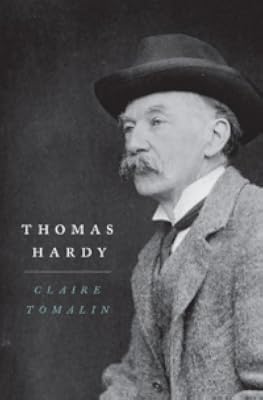
Thomas Hardy was born on June 2, 1840, in Higher Bockhampton, England. The eldest child of Thomas and Jemima, Hardy studied Latin, French, and architecture in school. He also became an avid reader. Upon graduation, Hardy traveled to London to work as an architect's assistant under the guidance of Arthur Bloomfield. He also began writing poetry. show more How I Built Myself a House, Hardy's first professional article, was published in 1865. Two years later, while still working in the architecture field, Hardy wrote the unpublished novel The Poor Man and the Lady. During the next five years, Hardy penned Desperate Remedies, Under the Greenwood Tree, and A Pair of Blue Eyes. In 1873, Hardy decided it was time to relinquish his architecture career and concentrate on writing full-time. In September 1874, his first book as a full-time author, Far from the Madding Crowd, appeared serially. After publishing more than two dozen novels, one of the last being Tess of the d'Urbervilles, Hardy returned to writing poetry--his first love. Hardy's volumes of poetry include Poems of the Past and Present, The Dynasts: Part One, Two, and Three, Time's Laughingstocks, and The Famous Tragedy of the Queen of Cornwall. From 1833 until his death, Hardy lived in Dorchester, England. His house, Max Gate, was designed by Hardy, who also supervised its construction. Hardy died on January 11, 1928. His ashes are buried in Poet's Corner at Westminster Abbey. (Bowker Author Biography) show less
Some Editions
Series
Belongs to Publisher Series
Work Relationships
Common Knowledge
- Canonical title
- Two on a Tower
- Original publication date
- 1882
- Epigraph
- 'Ah my heart! her eyes and she
have taught thee new astrology.
Howe'er Love's native hours were set
Whatever starry synod met,
'Tis in the mercy of her eye,
If poor Love shall live or die.'
Crashaw: 'Lov... (show all)e's Horoscope' - First words
- On an early winter afternoon, clear but not cold, when the vegetable world was a weird multitude of skeletons through whose ribs the sun shone freely, a gleaming landau came to pause on the crest of a hill in Wessex.
- Last words
- (Click to show. Warning: May contain spoilers.)The Bishop was avenged.
Classifications
Statistics
- Members
- 740
- Popularity
- 38,005
- Reviews
- 13
- Rating
- (3.57)
- Languages
- 6 — English, French, German, Italian, Romanian, Spanish
- Media
- Paper, Audiobook, Ebook
- ISBNs
- 111
- ASINs
- 34