On This Page
Description
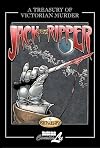
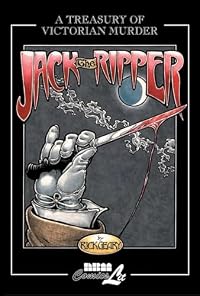
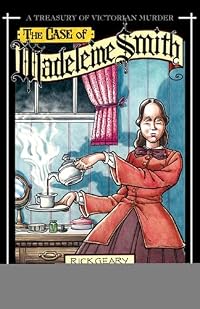
Geary's inimitable tongue-in-cheek take on last century's most infamous serial killer.Tags
Recommendations



Member Recommendations
by yeremenko
Member Reviews
At first glance, Rick Geary's volume on Jack the Ripper may seem sparse and nearly clinical. It is not padded with endless theories on the identity of Jack the Ripper, reasons for the targeting of the particular women or endless gossip about the lives of those investigating the murders. Comparing this against Alan Moore's 575-page epic, From Hell, one might well ask, "what's the point of a simple 62-page graphic on Jack?"
The point is that Rick Geary has presented us Jack the Ripper in the purest form possible - straight from the journals of an unknown British gentleman that lived in London during the murders. These were copious journals (the real ones are 24 volumes) from someone that clearly had access to insider information and a show more desire to play a bit of armchair detective. So this is Jack the Ripper in his heydey, before the conspiracies, before the movies, before the endless tell-alls and long before the massive rumors.
In this, you get a lot of fact, many fantastic maps and a lot of surprising commentary. Popular conspiracy theories today are readily dismissed by our journalist back then (An equally sinister theory concerns the...Free-Masons...but what motive the organisation could have in these cases is difficult to discern). The journalist actually backs no official theory on Jack's identity, but there are several long-forgotten suspects that briefly appear in Geary's volume.
This is worth the read simply to see the story from the perspective of someone as they were watching it unfold. show less
The point is that Rick Geary has presented us Jack the Ripper in the purest form possible - straight from the journals of an unknown British gentleman that lived in London during the murders. These were copious journals (the real ones are 24 volumes) from someone that clearly had access to insider information and a show more desire to play a bit of armchair detective. So this is Jack the Ripper in his heydey, before the conspiracies, before the movies, before the endless tell-alls and long before the massive rumors.
In this, you get a lot of fact, many fantastic maps and a lot of surprising commentary. Popular conspiracy theories today are readily dismissed by our journalist back then (An equally sinister theory concerns the...Free-Masons...but what motive the organisation could have in these cases is difficult to discern). The journalist actually backs no official theory on Jack's identity, but there are several long-forgotten suspects that briefly appear in Geary's volume.
This is worth the read simply to see the story from the perspective of someone as they were watching it unfold. show less
There's a certain "tour de force" quality about Rick Geary's take on Jack the Ripper. While Geary's entire Treasury of Victorian Murder series is worthwhile, there is something about this particular volume that takes the endeavor to a new level - there is a weight to Geary's line, and a coolness to his narrative approach that really bring "Saucy Jacky's" crimes to light without being melodramatic or overly sensational. Given the unique position of Jack the Ripper in western culture, it's a testament to Geary's skill that he can dive into these well-traveled waters and still deliver an examination of events that is original, dispassionate, and beautifully drawn.
Jack the Ripper: a journal of the Whitechapel murders 1888-1889 by Rick Geary is an entry in his series of true crime graphic novels. Mr. Geary's version is compiled from a set of journals (authenticated as being from the late Victorian era) by an anonymous Londoner who was following the case, and who evidently had contacts within among the police, both Metropolitan and City. The journals have been checked against 11 reference books in the bibliography. That is why this book is written in first person instead of third.
We are limited to what the anonymous gentleman wrote, which is why not all of the men suspected of being Jack the Ripper are mentioned, let alone discussed. Page 48 has 14 types of men (and 1 woman) who were suspected of show more being Jack the Ripper. The illustrations of the Indian thugee, German hill man, Chinese man, and the West-Indian sea-man are a bit racist, but in keeping with the way Londoners would have thought of such people at the time.
This is a good introduction to the Jack the Ripper murders. show less
We are limited to what the anonymous gentleman wrote, which is why not all of the men suspected of being Jack the Ripper are mentioned, let alone discussed. Page 48 has 14 types of men (and 1 woman) who were suspected of show more being Jack the Ripper. The illustrations of the Indian thugee, German hill man, Chinese man, and the West-Indian sea-man are a bit racist, but in keeping with the way Londoners would have thought of such people at the time.
This is a good introduction to the Jack the Ripper murders. show less
In this graphic novel, Rick Geary adapts a journal of an unknown person who was alive during Jack the Ripper's reign of terror and kept detailed records of the investigation, suggesting an intimacy with the police. While this was an interesting enough read for fans of true crime, I prefer when Geary does his own original research and presents various theories as to the mystery's resolution as opposed to his adapting another's observations. Given that this one is such a well-known case, there really isn't much here that isn't covered else.
*Book source ~ Library
From Goodreads:
Rick has researched this book extensively and presents, with his own inimitable tongue-in-cheek style, the jack The Ripper mystery as told through a journal of a fascinated Englishman of the day. Both factual and darkly funny, Geary's personal take on this story shines an ironic light on the repressive society that spawned such a monster. TOP TEN QUICK PICKS '96 American Library Association (YALSA)
Having never read any books about Jack the Ripper, I feel this graphic novel is a good starting point. It certainly whets the appetite to learn more details about what went down than the bare facts depicted here. Supposedly this is from an interested Englishman’s journals kept during the time of the show more attacks and I can say, this armchair detective uses a lot of !!!. The illustrations are quite detailed and I enjoyed them even if they are done in black and white. My 16-yr-old saw the book on my desk and was interested until he leafed through it and said, “Nope. There’s no color.” I said, “But it’s really good!” He said, “No.” So I said, “But it’s an historical book! They didn’t have color back then.” I got a “look”. You know the one, it says, “Really, mom? Just…really?” Well, I tried. lol Any fan of Jack the Ripper should pick this up. I think it would be a great addition to any collection. show less
From Goodreads:
Rick has researched this book extensively and presents, with his own inimitable tongue-in-cheek style, the jack The Ripper mystery as told through a journal of a fascinated Englishman of the day. Both factual and darkly funny, Geary's personal take on this story shines an ironic light on the repressive society that spawned such a monster. TOP TEN QUICK PICKS '96 American Library Association (YALSA)
Having never read any books about Jack the Ripper, I feel this graphic novel is a good starting point. It certainly whets the appetite to learn more details about what went down than the bare facts depicted here. Supposedly this is from an interested Englishman’s journals kept during the time of the show more attacks and I can say, this armchair detective uses a lot of !!!. The illustrations are quite detailed and I enjoyed them even if they are done in black and white. My 16-yr-old saw the book on my desk and was interested until he leafed through it and said, “Nope. There’s no color.” I said, “But it’s really good!” He said, “No.” So I said, “But it’s an historical book! They didn’t have color back then.” I got a “look”. You know the one, it says, “Really, mom? Just…really?” Well, I tried. lol Any fan of Jack the Ripper should pick this up. I think it would be a great addition to any collection. show less
Having known little about Jack the Ripper I found this short graphic novel informative about the basic information about the Ripper killings. It goes into detail about the murders, the clues and possible suspects. The artwork was also very well done and fit the victorian story nicely. If you are already very familiar with the cases I'm sure you wouldn't find much worth your time, but otherwise I recommend it.
So cool! Pictures following the written account of "an unknown British gentleman" who lived near the murders and followed them closely. Very engaging.
Members
- Recently Added By
Author Information

87+ Works 3,010 Members
Awards and Honors
Series

Work Relationships
Is contained in
Common Knowledge
- Canonical title
- Jack the Ripper
- Original publication date
- 1995-01
- People/Characters
- Jack the Ripper; Frederick Abberline (Inspector from Scotland Yard); Annie Chapman (victim 2 | also known as Annie Siffet or Sievey ); Catherine Eddowes (victim 4 | also called Kate Kelly); Mary Jane Kelly (victim 5); Mary Ann Nichols (victim 1, also called 'Polly') (show all 70); Sir Henry Smith (Assistant City Police Commissioner); Elizabeth Stride (victim 3 | called 'Long Liz' | maiden name Gustafdottir); John Neill (constable called to victim 1); Dr. Llewellyn (called to examine victim 1); Emma Smith (murdered and mutilated | found 3 April 1888, considered a Ripper victim by some); Martha Tabram (or Turner | stabbed 39 times | found 7 August 1988, possible Ripper victim); Wynn E. Baxter (coroner); Mr. Nichols (Mary Ann's widower); Mrs. Holland (Mrs. Nichols' friend); Mrs. Green (Polly Nichols inquest witness); Mrs. Furkiss (Polly Nichols inquest witness); Mr. Davis (discovered Annie Chaptman's body); Chandler (Inspector, Commercial Street Station); Dr. Bagster-Phillips (division surgeon); John Pizer (suspect); Amelia Palmer (Annie Chapman's friend | inquest witness); Donovan (Dorset Street [Doss] House Deputy | Annie Chapman inquest witness); Mrs. Long (Annie Chapman inquest witness); Piggot (suspect); Cadosh (Annie Chapman inquest witness); George Lusk (Whitechapel Vigilante Committee head); Louis Diemschutz (found Elizabeth Stride's body); Dr. Blackwell (local doctor | first to examine Elizabeth Stride); Watkins (constable who found Catherine Eddowes' body); Dr. Frederick Brown (City Police Surgeon); Dr. Sequira (from a nearby surgery | examined Eddowes with Dr. Brown); Alfred Long (constable who found the 'juwes' statement chalked on a wall); Thomas Arnold (Metropolitan Superintendant); Halse (London City Detective); Sir Charles Warren (Metropolitan Police Commissioner); William Marshall (Elizabeth Stride inquest witness); Brown (Elizabeth Stride inquest witness); William Smith (Constable | Elizabeth Stride inquest witness); Israel Schwartz (Elizabeth Stride inquest witness); Arthur Conan Doyle (Sherlock Holmes creator | giving his opinion); Inspector Nairn (Inspector Abberline's man); Sergeant Pearce (Inspector Abberline's man); Sergeant Thicke (Inspector Abberline's man); Sergeant Godley (Inspector Abberline's man); Inspector Moore (Inspector Abberline's man); Inspector Reid (Inspector Abberline's man); Sergeant McCarthy (Inspector Abberline's man); Mr. Langham (London city coroner); Mr. Lawrence (Catherine Eddowes inquest witness); Mr. Levy (Catherine Eddowes inquest witness); Prince Victor Albert (Duke of Clarence & Avondale | 2nd in line to the throne after his father); Edwin Brough (owner of champion bloodhounds Barnaby & Burgho); Dr. Openshaw (London Hospital | examined the piece of kidney sent to Mr. Lusk); Dr. Sutton (also examined the piece of kidney sent to Mr. Lusk); Dr. Saunders (City Police | also examined the piece of kidney sent to Mr. Lusk); Queen Victoria (Queen of the United Kingdom of Great Britain and Ireland, Empress of India); Mr. McCarthy (landlord of Miller's Court); Inspector Beck (Commercial Street Station); Superintendent Arnold (ordered the door at 13 Miller's Court forced open); Dr. MacDonald (Coroner at Mary Jane Kelly's inquest); Joseph Barnett (Mary Jane Kelly's latest lover | witness at Mary Jane Kelly's inquest); Mrs. Cox (resided at No. 5, Miller's Court | witness at Mary Jane Kelly's inquest); Miss Sarah Lewis (witness at Mary Jane Kelly's inquest); Mrs. Prater (resided at No. 20 above No. 13 Miller's Court | witness at Mary Jane Kelly's inquest); Mr. George Hutchinson (witness at Mary Jane Kelly's inquest); Annie Farmer (thought she survived an attack by Jack the Ripper); Montague John Druitt (former barrister | committed suicide | posthumous suspect); Alice McKenzie (murdered woman initially suspected to be a Jack the Ripper victim); Dr. Bond (helped Dr. Bagster-Phillips examine McKenzie & decide she wasn't a Ripper victim)
- Important places
- London, England, UK; Whitechapel, London, England, UK; Bucks Row, Whitechapel, London, England, UK; 29 Hanbury Street, Spitalfrields, London's East End, England, UK; Osborne Street, London, England, UK; George-Yard Buildings, London, England, UK (show all 15); Working Lad Institute, Whitechapel Road, London, England, UK; Dutsfield's Yard, Whitechapel, London, England, UK; Mitre Square, Aldgate, over the boundary of Whitechapel and the City of London, England, UK; Goulston Street, Whitechapel, London, England, UK; Victoria Park, London, England, UK; St. George's Mortuary, Aldgate, London, England, UK; Vestry Hall, Cable Street, London, England, UK; 13 Miller's Court, Whitechapel, London, England, UK; Shoreditch Town Hall, London, England, UK
- Important events
- Whitechapel Murders (1888 | 1891)
- Epigraph
- "Murder is stalking red-handed 'mid the homes of the weary poor."
From a poem published in Reynolds Newspaper, 1888
"Well, suppose I do get killed, it will be a good thing for me, for the winter is coming on, and the life is awful..."
A Whitechapel prostitute
"...The assassin, if not suffering from insanity, appears to be free from any fear of interruption while at his dreadful work."
The London Times
1 October 1888
[all capital letters in the original]
The police, for their part, questioned the members of the Working Men's Club... to the extent of searching their individual homes! The public opinion is aflame against foreigners! Wh... (show all)at is there about our national character that refuses to imagine an Englishman responsible for these outrages? (the journal writer, p. 25) - First words
- 1888
FRIDAY 31 AUGUST
A shocking murder on the East End: I'm told that the body of a woman was found this morning in a squalid alley-way of the Whitechapel District...mutilated in a most horrifying manner ~ - Last words
- (Click to show. Warning: May contain spoilers.)All human endeavor it seems, must crumble against the all-pervasive silence of the grave...
Which is why I believe that the mysteries surrounding these crimes will never be penetrated...
But nevertheless will reverberate forward through the centuries!
Classifications
Statistics
- Members
- 150
- Popularity
- 217,320
- Reviews
- 9
- Rating
- (4.15)
- Languages
- English, Italian, Spanish, Swedish
- Media
- Paper, Ebook
- ISBNs
- 7