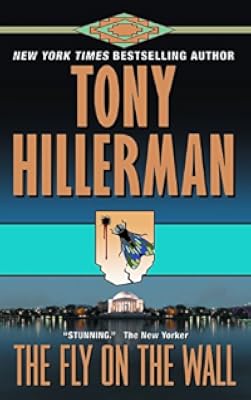
The Fly on the Wall
by Tony Hillerman
On This Page
Description
Ace reporter John Cotton is a fly on the wall -- seeing all, hearing all, and keeping out of sight. But the game changes when he finds his best friend's corpse sprawled on the marble floor of the central rotunda of the U.S. Capitol. Suddenly Cotton knows too much about a scandal centered around a senatorial candidate, a million-dollar scam, and a murder. And he hears the pursuing footsteps of powerful people who have something to hide ... and a willingness to kill to keep their secrets hidden.Tags
Recommendations

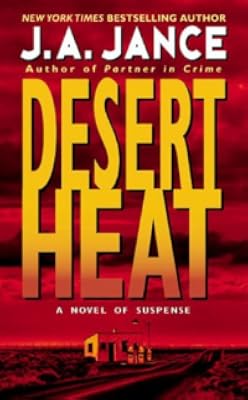

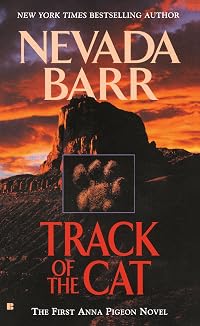

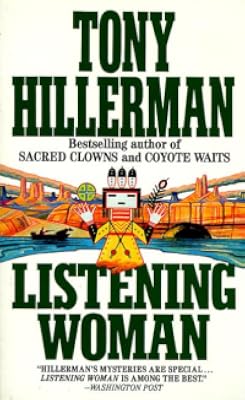
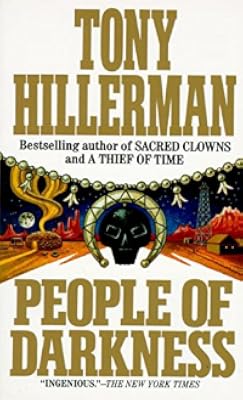




Member Reviews
This is not part of the Navajo series of books. It's a self contained journalism based mystery story.
Reading it was like unearthing a time capsule of Hillerman's impressions of being a journalist in the 60s. A lot of the mechanics of journalism in the book is wonderfully archaic, predating the ubiquity of computing only just. The corruption uncovered in the novel however reads exactly like something out of the current news cycle. The more things change, the more they stay the same. It's a surprisingly fresh novel despite being half a century old at this point and I'd place it closest in my pop culture lexicon with The Wire season 2.
Reading it was like unearthing a time capsule of Hillerman's impressions of being a journalist in the 60s. A lot of the mechanics of journalism in the book is wonderfully archaic, predating the ubiquity of computing only just. The corruption uncovered in the novel however reads exactly like something out of the current news cycle. The more things change, the more they stay the same. It's a surprisingly fresh novel despite being half a century old at this point and I'd place it closest in my pop culture lexicon with The Wire season 2.
Excellent political thriller revealing how journalists can dig through apparently trivial data to reveal corruption in high places. I particularly appreciated the philosophical discussions about what constitutes ethical journalism and reporting all the facts versus what should be kept confidential for the greater good in politics: can we trust the electorate to be wise enough to judge? At times the convoluted details of how the scam was achieved escaped me, but that didn't detract from the suspense. Very believable scenarios that are probably just as relevant today. Lost one star because [spoiler warning] during an airplane trip, the clever journalist was portrayed as a dummy when he started detailing exactly where he was headed for a show more fishing trip. The subsequent antics lacked realism after the gritty city detective work that came across as genuine. I would recommend this despite that shortcoming to any reader who enjoys political murder stories and suspenseful thrillers. show less
The ending of this book was underwhelming. Some political themes that have not gone stale in 40 (!) years. Good buildup of the situation, but unsatisfying resolution (or lack thereof) to several plot threads. The last chapter drags. I am assuming this is one of HIllerman's first works (c. 1971). I love the Leaphorn/Chee books and have read almost all of them. If you like those books, don't bother with this one. I'll have to go read a Leaphorn/Chee book now to remind myself how good Tony Hillerman can be.
This was a fun, fast read. It might be a bit dry for readers who are not interested in political thrillers and state-level politics, but it is well thought out and well paced. Mr. Cotton is a bit more naive than I would have expected, given his resume, but had he been quicker to figure out that his life was in danger, the story might have been quite a bit different.
For a guy who makes his living with words, John Cotton is pretty canny about staying alive. The most interesting thing about this novel is the tension between two idea: one, that the general public deserves the unbiased facts and two, that the ends justify the means - you can't rely on the public to make the right choice. In the current political climate, it certainly appears that the news media has chosen in favor of the second idea. And I find myself coming down in favor of the first. The ends don't justify the means for me.
This mystery is the second one published by Hillerman, after his first mystery set in Navajo country, The Blessing Way.
In the Fly on the Wall, John Cotton is a statehouse reporter and has just filed his story when a colleague comes into the pressroom. Merrill McDaniels, known as Mac, comes into file his story, but he’s a little drunk and Cotton offers to file something for him and tell his editor he went home sick. Cotton tries to get him on home but Mac says he’s celebrating breaking the story of a lifetime. Cotton doesn’t really believe him, but Mac heads on home. A few minutes later a man enters and rummages through Mac’s desk looking for his notebook, telling Cotton that Mac forgot it and sent his friend for it. A few show more minutes later Mac is found dead.
So begins Cotton’s at first desultory investigation into the big story Mac was working on. He finds Mac’s notebook, traces back the other man’s investigation, and wonders what Mac could have been excited about. When another reporter is killed driving Cotton’s car, Cotton at first thinks only it was an accident. He keeps digging, looking for the story while the other reporters are covering Governor Roark’s political future, Senator Clark’s plans, and small struggles over legislation. Then Cotton begins to have enough pieces to put together into a small puzzle, and he gets another warning, this one unmistakable in its meaning.
This is a masterfully plotted and steadily paced mystery that brings forward all the details of a major scam, how the players hide themselves and their cronies, and how easy it is to fool the tax payer, the reporters, and other politicians. Hillerman offers one surprise after another, and even the last two pages brings a stunning reversal. Hillerman was a journalist for many years, and his skill and experience show on every page. show less
In the Fly on the Wall, John Cotton is a statehouse reporter and has just filed his story when a colleague comes into the pressroom. Merrill McDaniels, known as Mac, comes into file his story, but he’s a little drunk and Cotton offers to file something for him and tell his editor he went home sick. Cotton tries to get him on home but Mac says he’s celebrating breaking the story of a lifetime. Cotton doesn’t really believe him, but Mac heads on home. A few minutes later a man enters and rummages through Mac’s desk looking for his notebook, telling Cotton that Mac forgot it and sent his friend for it. A few show more minutes later Mac is found dead.
So begins Cotton’s at first desultory investigation into the big story Mac was working on. He finds Mac’s notebook, traces back the other man’s investigation, and wonders what Mac could have been excited about. When another reporter is killed driving Cotton’s car, Cotton at first thinks only it was an accident. He keeps digging, looking for the story while the other reporters are covering Governor Roark’s political future, Senator Clark’s plans, and small struggles over legislation. Then Cotton begins to have enough pieces to put together into a small puzzle, and he gets another warning, this one unmistakable in its meaning.
This is a masterfully plotted and steadily paced mystery that brings forward all the details of a major scam, how the players hide themselves and their cronies, and how easy it is to fool the tax payer, the reporters, and other politicians. Hillerman offers one surprise after another, and even the last two pages brings a stunning reversal. Hillerman was a journalist for many years, and his skill and experience show on every page. show less
Anachronistic: Tony Hillerman's The Fly on the Wall has not aged particularly well. Written in 1971, early in his career, the book has been bypassed by technological advances as well as Hillerman's success with the Leaphorn/Chee series. Knowing that no future tales of John Cotton, newspaperman, have been written made getting into the book a little more difficult than I expected.
The characters and setting don't fit well with what one has come to think of as a "Tony Hillerman" book - that combination of Native Americans, their folklore, and the Southwest. To a man (and a woman), the characters are all extremely liberal in their political viewpoint. If you're convinced there's a liberal bias in the mainstream press, this novel will do show more nothing to disabuse you of that notion. Even if you do subscribe to the dominant point of view, you may be disappointed by some of the things liberalism's used to excuse in the final chapter. Perhaps the book's greatest weakness is the lack of alternate viewpoints explored: there are no real Republican characters either as foils or villains and this makes for some uninspired conflict and ultimately an unsatisfying resolution.
Part way through the book I found myself wishing Cotton would get himself out of a jam by making a cellphone call, or fax or e-mail his stories in to his editor, then I remembered - 1971! None of those things existed. Teletype machines and direct-dial long distance were the high tech of the day; even though photocopiers existed, Cotton still uses carbon paper throughout the story to make duplicates of his stories written on a manual typewriter. If you're nostalgic for these things, then you'll probably get more out of the story than I did.
The Southwest makes a brief appearance in the middle of the book when Cotton tries to find sanctuary there. While not quite as picturesque as in the Leaphorn/Chee books, this brief respite in New Mexico marks the point where the novel really picks up steam. Here and in Cotton's escape from the vacant Capitol building near the end of the novel are the two parts where Hillerman's pacing and plotting really shine. Compared to these fast-paced action scenes, the talky final chapter and the lengthy set-up in the first half of the book are big disappointments.
The Fly on the Wall isn't a terrible book, but it's clearly not Hillerman's best. If you're caught up on the latest Navajo novels, go ahead and tackle this one, but there's really no reason to go out of your way for it. show less
The characters and setting don't fit well with what one has come to think of as a "Tony Hillerman" book - that combination of Native Americans, their folklore, and the Southwest. To a man (and a woman), the characters are all extremely liberal in their political viewpoint. If you're convinced there's a liberal bias in the mainstream press, this novel will do show more nothing to disabuse you of that notion. Even if you do subscribe to the dominant point of view, you may be disappointed by some of the things liberalism's used to excuse in the final chapter. Perhaps the book's greatest weakness is the lack of alternate viewpoints explored: there are no real Republican characters either as foils or villains and this makes for some uninspired conflict and ultimately an unsatisfying resolution.
Part way through the book I found myself wishing Cotton would get himself out of a jam by making a cellphone call, or fax or e-mail his stories in to his editor, then I remembered - 1971! None of those things existed. Teletype machines and direct-dial long distance were the high tech of the day; even though photocopiers existed, Cotton still uses carbon paper throughout the story to make duplicates of his stories written on a manual typewriter. If you're nostalgic for these things, then you'll probably get more out of the story than I did.
The Southwest makes a brief appearance in the middle of the book when Cotton tries to find sanctuary there. While not quite as picturesque as in the Leaphorn/Chee books, this brief respite in New Mexico marks the point where the novel really picks up steam. Here and in Cotton's escape from the vacant Capitol building near the end of the novel are the two parts where Hillerman's pacing and plotting really shine. Compared to these fast-paced action scenes, the talky final chapter and the lengthy set-up in the first half of the book are big disappointments.
The Fly on the Wall isn't a terrible book, but it's clearly not Hillerman's best. If you're caught up on the latest Navajo novels, go ahead and tackle this one, but there's really no reason to go out of your way for it. show less
Members
- Recently Added By
Lists

Barzun and Taylor's Classics of Crime
93 works; 3 members

Crime and Mysteries to Read
746 works; 31 members

#JustTheFacts2019Silver
60 works; 1 member
#MysteryBingo2019Silver(Original)
36 works; 1 member
#MysteryBingo2019Silver(Revised)
36 works; 1 member
Author Information

122+ Works 45,340 Members
Tony Hillerman was born in Sacred Heart, Oklahoma on May 27, 1925. During World War II, he enlisted in the Army and was awarded the Silver Star, the Bronze Star and the Purple Heart after being severely injured during a raid behind German lines. He received a bachelor's degree from the University of Oklahoma in 1948. From 1948 to 1962, he covered show more crime and politics for newspapers in Texas, Oklahoma, and New Mexico, eventually working his way up to the position of editor of the Santa Fe New Mexican. He taught at the University of Mexico and went on to chair the journalism department for more than 20 years. He retired in 1985. His first novel, The Blessing Way, was published in 1971. During his lifetime, he wrote 29 books, including the popular 18-book mystery series featuring Navajo police officers Jim Chee and Joe Leaphorn, two non-series novels, two children's books, and nonfiction works. He received numerous awards during his lifetime including the Edgar Allan Poe Award for Best Mystery Novel for Dance Hall of the Dead in 1974, the Western Writers of America's Golden Spur Award for Skinwalkers in 1987, the Mystery Writers of America's Grand Master Award in 1991, the Navajo tribe's Special Friend Award, France 's Grand Prix de Litterature Policiere, the 2002 Malice Domestic Lifetime Achievement Award, the Agatha Award for Best Nonfiction Book for Seldom Disappointed, and the Wister Award for Lifetime achievement in 2008. He died from pulmonary failure on October 26, 2008 at the age of 83. (Bowker Author Biography) show less
Awards and Honors
Awards
Distinctions
Series
Belongs to Publisher Series
Work Relationships
Is contained in
Is abridged in
Common Knowledge
- Canonical title
- The Fly on the Wall
- Original title
- The Fly on the Wall
- Original publication date
- 1971
- People/Characters
- John Cotton
- Important places
- Santa Fe, New Mexico, USA
- First words
- John Cotton had been in the pressroom almost an hour when Merrill McDaniels came in.
- Last words
- (Click to show. Warning: May contain spoilers.)Korolenko would need help.
- Original language*
- Amerikanisch
*Some information comes from Common Knowledge in other languages. Click "Edit" for more information.
Classifications
Statistics
- Members
- 1,087
- Popularity
- 23,545
- Reviews
- 18
- Rating
- (3.33)
- Languages
- English, French, German
- Media
- Paper, Audiobook, Ebook
- ISBNs
- 25
- UPCs
- 1
- ASINs
- 12