
On This Page
Description
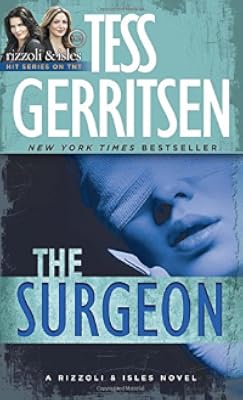
NEW YORK TIMES BESTSELLER * "A briskly paced, terrifically suspenseful work that steadily builds toward a tense and terrifying climax."--People (Page-turner of the week) He slips into homes at night and walks silently into bedrooms where women lie sleeping, about to awaken to a living nightmare. The precision of his methods suggests that he is a deranged man of medicine, prompting the Boston newspapers to dub him "The Surgeon." Led by Detectives Thomas Moore and Jane Rizzoli, the cops show more must consult the victim of a nearly identical crime: Two years ago, Dr. Catherine Cordell fought back and filled an attacker before he could complete his assault. Now this new killer is re-creating, with chilling accuracy, the details of Cordell's ordeal. With every new murder he seems to be taunting her, cutting ever closer, from her hospital to her home. And neither Moore nor Rizzoli can protect Cordell from a ruthless hunter who somehow understands--and savors--the secret fears of every woman he kills. "[A] top-grade thriller . . . Sharp characters stitch your eye to the page. An all-nighter."--Kirkus Reviews (starred review) "Creepy . . . will exert a powerful grip on readers."--Chicago Tribune show lessTags
Recommendations








Member Reviews
I've been putting off reading this series due to the Rizzoli & Isles television series, but it wasn't necessary. Like Longmire, the producers use the authors' works as springboards to new storylines, so both books and television series can be enjoyed.
I think the detail that threw me the most was the absence of Dr. Maura Isles, who isn't introduced until the next entry, The Apprentice. I had already been informed of the differences between literary Rizzoli and her TV counterpart-- and that's enough comparisons between the two mediums!
I have to admit that the serial killer part of The Surgeon was a tad old hat, but this was written in 2001 when he would've been much fresher. Watching the investigation unfold was fascinating; it took a lot show more of basic police work, dotting the i's and crossing the t's. Going back over the same ground until some small detail stood out and begged to be followed up on.
Due to Gerritsen's medical background, readers get an excellent feel for the protocol in hospitals and the split-second decisions that must be made in the emergency room. But the overarching theme of The Surgeon is women competing in what has always been considered a "man's world." Jane Rizzoli and Catherine Cordell both have cores of steel; they have to because of their occupations. Too many times women have been treated as victims, as a sex not worthy of being heard, only of being ignored, protected as something "lesser," or... of being disposed of. Tess Gerritsen makes readers feel every second, every ounce, of this injustice. It's this passion of hers, along with her fast-paced story, her fascinating characters, and her eye for detail that will keep me reading her books. show less
I think the detail that threw me the most was the absence of Dr. Maura Isles, who isn't introduced until the next entry, The Apprentice. I had already been informed of the differences between literary Rizzoli and her TV counterpart-- and that's enough comparisons between the two mediums!
I have to admit that the serial killer part of The Surgeon was a tad old hat, but this was written in 2001 when he would've been much fresher. Watching the investigation unfold was fascinating; it took a lot show more of basic police work, dotting the i's and crossing the t's. Going back over the same ground until some small detail stood out and begged to be followed up on.
Due to Gerritsen's medical background, readers get an excellent feel for the protocol in hospitals and the split-second decisions that must be made in the emergency room. But the overarching theme of The Surgeon is women competing in what has always been considered a "man's world." Jane Rizzoli and Catherine Cordell both have cores of steel; they have to because of their occupations. Too many times women have been treated as victims, as a sex not worthy of being heard, only of being ignored, protected as something "lesser," or... of being disposed of. Tess Gerritsen makes readers feel every second, every ounce, of this injustice. It's this passion of hers, along with her fast-paced story, her fascinating characters, and her eye for detail that will keep me reading her books. show less
I rarely read mysteries, so this was a bit of a departure for me. The books I prefer are character-driven and move at a nice, comfortable pace. I knew this was going to be plot-driven and quick, and I was kind of looking forward to the change. I read the first 150 pages in one chunk; I was totally sucked in. I was up past midnight reading and thinking, "How can I possibly put this book down?"
But the knowledge that my son would be up at 6am demanding oatmeal whether I'd been to bed yet or not got me to close the book. By the time I woke up, the adrenaline had worn off and all of the things I didn't like so much in those first 150 pages started bubbling up. When I went back to the book, I still felt compelled to finish it, but now it was show more more to have it done with.
First, what I didn't like:
1) Too many twists and turns. We're headed in one direction and just as I feel like we're getting up a head of steam, we do a 180 (well, maybe not always a 180...more a 90). At the beginning, this drew me in. As it went on, it just became repetitive. I suspect this is just a characteristic of the genre, but it kind of wore on me.
2) Too many generalizations about sexual assault and survivors of sexual assault. It would be one thing if just one character expressed these generalizations, but throughout the book, anyone who has been sexually assaulted is "broken," "damaged," perpetually a "victim." If a character has been sexually assaulted, there is no other way for her to be, according to this book. I just don't buy it. Sure, there are going to be commonalities between the ways different women deal with a similar trauma (VERY similar in this book, because apparently rape only happens if there's GHB or Rohypnol involved), but it's like there was just one "victim" portrayed by a half-dozen different women. In addition, the vulnerability and victim-ness they exhibit is attractive not only to "predators," but also to people who want to date them. And that's just kind of creepy. It's even more creepy because it's not called out as being creepy in the book.
3) Too much "stuff." Okay, so how many "calling cards" is this murderer going to leave, anyway? I won't list them because that might be considered a spoiler, but I can think of about a half-dozen right off the top of my head. And they're pretty much all red herrings. The book felt padded; it could easily have been half as long as it is.
4) Restrictive (and kind of insulting) definitions of gender.The killer removes the uterus of each of his victims, an organ described as "the one thing that makes them women." Really? That's the one thing that makes me a woman? And if I have a hysterectomy I'm...what? "By taking the womb," the criminal psychologist explains, "he defeminizes his victim." I have a little bit of trouble with such a narrow definition of womanhood. And with the word "womb" used interchangeably with "uterus." One is a concept and one is an organ; they're not really interchangeable.
Aside from the initial adrenaline rush, there was one other thing I particularly liked about this book, and it's not even clear to me that Gerritsen did it intentionally. This was the similar way in which she described both surgery and assault. In both, you have a person lying naked and vulnerable in a room with one or more strangers. In both, you have brute force ("...they tore into the chest with almost brutal force," a phrase that's used in chapter seven to describe a surgical maneuver). In both, one person relinquishes control and bodily integrity---unwillingly and/or unknowingly---to another person. In both, the victim/patient is drugged and unable not only to give consent but also to form coherent memories of the act. But the similarity in the moment of surgery/assault is where it stops. Gerritsen leaves out entirely the psychological effect of surgery, instead focusing only on the psychological effect of assault.
I think the book may have held my interest more had Gerritsen played up this connection more. It's an interesting idea, and would have brought the whole "good" vs "evil" thing into a whole new realm of gray. She was trying to do this with Detective Thomas Moore and his personal battles with right and wrong, but that subplot just kind of fell flat for me. (That name, incidentally, was almost too much for me. I know it's supposed to be all cutesy that his nickname is "the saint" and all, but seriously.) Had Gerritsen played up the surgery/assault connection, she could also have done more with the "victim" vs "perpetrator" divide, which would have been especially interesting given that the main character is both a victim of assault and a surgeon. But then, she might not have had a medical suspense/murder mystery anymore if she'd gone that route.
Basically, this book wasn't awful and as a novel of suspense and mystery, I think it accomplished what it was supposed to accomplish. It's just not really my thing. But I'm looking forward to discussing it in book club. show less
But the knowledge that my son would be up at 6am demanding oatmeal whether I'd been to bed yet or not got me to close the book. By the time I woke up, the adrenaline had worn off and all of the things I didn't like so much in those first 150 pages started bubbling up. When I went back to the book, I still felt compelled to finish it, but now it was show more more to have it done with.
First, what I didn't like:
1) Too many twists and turns. We're headed in one direction and just as I feel like we're getting up a head of steam, we do a 180 (well, maybe not always a 180...more a 90). At the beginning, this drew me in. As it went on, it just became repetitive. I suspect this is just a characteristic of the genre, but it kind of wore on me.
2) Too many generalizations about sexual assault and survivors of sexual assault. It would be one thing if just one character expressed these generalizations, but throughout the book, anyone who has been sexually assaulted is "broken," "damaged," perpetually a "victim." If a character has been sexually assaulted, there is no other way for her to be, according to this book. I just don't buy it. Sure, there are going to be commonalities between the ways different women deal with a similar trauma (VERY similar in this book, because apparently rape only happens if there's GHB or Rohypnol involved), but it's like there was just one "victim" portrayed by a half-dozen different women. In addition, the vulnerability and victim-ness they exhibit is attractive not only to "predators," but also to people who want to date them. And that's just kind of creepy. It's even more creepy because it's not called out as being creepy in the book.
3) Too much "stuff." Okay, so how many "calling cards" is this murderer going to leave, anyway? I won't list them because that might be considered a spoiler, but I can think of about a half-dozen right off the top of my head. And they're pretty much all red herrings. The book felt padded; it could easily have been half as long as it is.
4) Restrictive (and kind of insulting) definitions of gender.The killer removes the uterus of each of his victims, an organ described as "the one thing that makes them women." Really? That's the one thing that makes me a woman? And if I have a hysterectomy I'm...what? "By taking the womb," the criminal psychologist explains, "he defeminizes his victim." I have a little bit of trouble with such a narrow definition of womanhood. And with the word "womb" used interchangeably with "uterus." One is a concept and one is an organ; they're not really interchangeable.
Aside from the initial adrenaline rush, there was one other thing I particularly liked about this book, and it's not even clear to me that Gerritsen did it intentionally. This was the similar way in which she described both surgery and assault. In both, you have a person lying naked and vulnerable in a room with one or more strangers. In both, you have brute force ("...they tore into the chest with almost brutal force," a phrase that's used in chapter seven to describe a surgical maneuver). In both, one person relinquishes control and bodily integrity---unwillingly and/or unknowingly---to another person. In both, the victim/patient is drugged and unable not only to give consent but also to form coherent memories of the act. But the similarity in the moment of surgery/assault is where it stops. Gerritsen leaves out entirely the psychological effect of surgery, instead focusing only on the psychological effect of assault.
I think the book may have held my interest more had Gerritsen played up this connection more. It's an interesting idea, and would have brought the whole "good" vs "evil" thing into a whole new realm of gray. She was trying to do this with Detective Thomas Moore and his personal battles with right and wrong, but that subplot just kind of fell flat for me. (That name, incidentally, was almost too much for me. I know it's supposed to be all cutesy that his nickname is "the saint" and all, but seriously.) Had Gerritsen played up the surgery/assault connection, she could also have done more with the "victim" vs "perpetrator" divide, which would have been especially interesting given that the main character is both a victim of assault and a surgeon. But then, she might not have had a medical suspense/murder mystery anymore if she'd gone that route.
Basically, this book wasn't awful and as a novel of suspense and mystery, I think it accomplished what it was supposed to accomplish. It's just not really my thing. But I'm looking forward to discussing it in book club. show less
Tess Gerritsen’s “The Surgeon” was a good, fast-paced read. I’d read one of her books, “Gravity,” years ago and remembered it being quite good. My wife enjoys watching “Rizzoli and Isles” on TV—which is based on some of Gerritsen’s novels. And since my wife loves James Patterson, I thought she might enjoy the Rizzoli and Isles books. She flew through them, so I decided to give the first, “The Surgeon” a try.
Having read many of John Sandford’s early “Prey” novels years ago, I’d become quite burned out on the serial killer novel. But “The Surgeon” is different. I think this is mostly because, coming from the point of view of a female author, she is better able than a male to convey the pain, horror, and show more sense of vulnerability a woman feels when she has suffered sexual abuse.
How the antagonist finds his victims is quite unique—kudos to Gerritsen on that. And I thought characters Jane Rizzoli and Thomas Moore, homicide detectives with the Boston PD, and ER physician Catherine Cordell were well developed. Sure, you had the typical sexist cop and typical associated tension you’d expect when there’s only one female detective, but it’s handled pretty well. Seeing that same kind of tension in Rizzoli’s family—although not as pronounced—was a little more uncomfortable. The pacing was good, the suspense taut, and the ending rather satisfying. I will continue to read the series, although I may not do so back to back for fear of getting burned out again. show less
Having read many of John Sandford’s early “Prey” novels years ago, I’d become quite burned out on the serial killer novel. But “The Surgeon” is different. I think this is mostly because, coming from the point of view of a female author, she is better able than a male to convey the pain, horror, and show more sense of vulnerability a woman feels when she has suffered sexual abuse.
How the antagonist finds his victims is quite unique—kudos to Gerritsen on that. And I thought characters Jane Rizzoli and Thomas Moore, homicide detectives with the Boston PD, and ER physician Catherine Cordell were well developed. Sure, you had the typical sexist cop and typical associated tension you’d expect when there’s only one female detective, but it’s handled pretty well. Seeing that same kind of tension in Rizzoli’s family—although not as pronounced—was a little more uncomfortable. The pacing was good, the suspense taut, and the ending rather satisfying. I will continue to read the series, although I may not do so back to back for fear of getting burned out again. show less
I went back and forth between three and four stars.
On one hand, the book was highly engaging. It was easy to read and drove me to keep going because I just needed to know what would happen next. The book shifts perspective from a third person narration following the detective side of the case to first person from the view of the murderer himself which created an interesting dynamic. I also thought Gerritsen did a nice job of weaving in a bit of mythology--I love that kind of thing.
Now the bad. Something was making me uncomfortable, and it took me about half the book to put my finger on it. Men are portrayed in an extremely unflattering light in this book. They all fall into one of three categories: douchebags who look down on women, show more "nice guys" who find vulnerability attractive, or murderers and rapists. In the whole book, there is only one man who might be an exception to this rule.
I ended up going with four stars to give Gerritsen the benefit of the doubt. A lot of the book is told from the perspective of a female cop having a tough time in a male world (Rizzoli), so it kind of makes sense. I'd have to read another work of hers to see if this is a theme.
One more note: this book is not for the faint of heart. There's murder and rape and grisly details. Gerritsen is an M.D., and it shows. The book is littered with medical details which I found added a certain authentic feel. show less
On one hand, the book was highly engaging. It was easy to read and drove me to keep going because I just needed to know what would happen next. The book shifts perspective from a third person narration following the detective side of the case to first person from the view of the murderer himself which created an interesting dynamic. I also thought Gerritsen did a nice job of weaving in a bit of mythology--I love that kind of thing.
Now the bad. Something was making me uncomfortable, and it took me about half the book to put my finger on it. Men are portrayed in an extremely unflattering light in this book. They all fall into one of three categories: douchebags who look down on women, show more "nice guys" who find vulnerability attractive, or murderers and rapists. In the whole book, there is only one man who might be an exception to this rule.
I ended up going with four stars to give Gerritsen the benefit of the doubt. A lot of the book is told from the perspective of a female cop having a tough time in a male world (Rizzoli), so it kind of makes sense. I'd have to read another work of hers to see if this is a theme.
One more note: this book is not for the faint of heart. There's murder and rape and grisly details. Gerritsen is an M.D., and it shows. The book is littered with medical details which I found added a certain authentic feel. show less
I enjoy the Rizzoli and Isles TV show, so I picked up this book thinking it would have a similar feel to the showI’ve been watching. It didn’t. Not at all! Rizzoli and Isles (the show) is light and a little fluffy… I call each episode a mini forensic chick flick, and I suppose I was expecting forensic chick lit from the novel. Instead I got a serious, intense crime thriller. Which was fabulous, but not at all what I expected. I was also very surprised to see there was no mention of Dr. Isles at all. She wasn’t a character in this novel, and for a series called “Rizzoli and Isles”, it really surprised me that she doesn’t even warrant a mention. Those are minor quibbles, though. I really enjoyed Gerritsen’s writing style, show more and the book hooked me from the beginning and kept me engaged until the last page. I’ll definitely be reading the next in this series. show less
The Surgeon is billed, on the cover, as the first book in Tess Gerritsen’s “Rizzoli and Isles” series, and it is . . . sort of. Jane Rizzoli is present and accounted for, but as a supporting character in the story of Boston trauma surgeon Catherine Cordell: the would-be victim, and killer, of a notorious serial murderer known as The Surgeon.
Gerritsen keeps multiple subplots in play throughout the novel: a series of crimes in Boston that mirror those The Surgeon committed in Georgia years before, the efforts of Rizzoli and her partner Thomas Moore to solve them, Cordell’s traumatic flashbacks to her ordeal, threats against her that may be coming from the copycat killer, and the tangled personal lives of all three. Gerritsen show more balances them well, but the sheer number means that most of them are developed, most of the time, in fairly schematic ways. The police work is satisfying but streamlined, Rizzoli’s fight against marginalization (as the “new guy” and only woman among the detectives) is believable but over-familiar, and the identity of the killer feels—for lack of alternate suspects—almost inevitable. The story is consistently engrossing, but rarely gripping.
A consistent exception—not surprisingly, given Gerritsen’s medical background—are the hospital scenes of Cordell at work. They work both as medical drama and as characterization, establishing her as a tough, competent, resourceful woman, and rendering her actions (past and present alike) plausible. They make Cordell the one fully-realized character in the novel—though Moore comes close—and that, in turn, works to the book’s immeasurable benefit, since she takes center stage more and more often as the multi-threaded plot spins toward its climax. Reading The Surgeon with no real sense of where the series is going, I found myself looking forward to watching Gerritsen do similar things with Jane Rizzoli and Maura Isles. show less
Gerritsen keeps multiple subplots in play throughout the novel: a series of crimes in Boston that mirror those The Surgeon committed in Georgia years before, the efforts of Rizzoli and her partner Thomas Moore to solve them, Cordell’s traumatic flashbacks to her ordeal, threats against her that may be coming from the copycat killer, and the tangled personal lives of all three. Gerritsen show more balances them well, but the sheer number means that most of them are developed, most of the time, in fairly schematic ways. The police work is satisfying but streamlined, Rizzoli’s fight against marginalization (as the “new guy” and only woman among the detectives) is believable but over-familiar, and the identity of the killer feels—for lack of alternate suspects—almost inevitable. The story is consistently engrossing, but rarely gripping.
A consistent exception—not surprisingly, given Gerritsen’s medical background—are the hospital scenes of Cordell at work. They work both as medical drama and as characterization, establishing her as a tough, competent, resourceful woman, and rendering her actions (past and present alike) plausible. They make Cordell the one fully-realized character in the novel—though Moore comes close—and that, in turn, works to the book’s immeasurable benefit, since she takes center stage more and more often as the multi-threaded plot spins toward its climax. Reading The Surgeon with no real sense of where the series is going, I found myself looking forward to watching Gerritsen do similar things with Jane Rizzoli and Maura Isles. show less
I've just started watching the television adaptation `Rizzoli and Isles' on Alibi and wanted to see if the books were as gripping as the series, starting with book one of the set. Though there are some vague similarities, I think this book explored the characters with greater depth and much less humour than the show and it was a really absorbing story. This is also the first time I've read a Tess Gerritsen novel and now I'm looking forward to trying the rest. Her writing is brilliant and had me hooked from the first sentence.
The theme of the novel itself is actually very dark- a serial killer is on the loose in Boston, one who takes pleasure in torturing women and then finishing them off in a very gruesome way. Homicide Detectives show more Thomas Moore and Jane Rizzoli begin work on the case and realise it mirrors a very similar attack on a woman in Savannah, Georgia, two years previously, only in that case the woman survived, shooting her attacker dead. The similarities in the two cases cannot merely be coincidence, can they?
With excellent character development and a fast-paced plot, I would recommend this if you like quick moving thrillers that lean just a little bit towards the dark side. I would caution however that this book is certainly not for the feint-hearted. It is not shy in holding back on particularly grim details of both sexual assaults and aspects of surgery, which did leave me feeling a bit queasy in places. However, it does make the story all the more believable and really pulled me into the plot. Because I have also been to Boston before it was all too easy to imagine someone sinister lurking in the city- and I was of course envisioning settings from the TV show as well.
Though this is indeed different from the TV show (Rizzoli isn't the most likeable of characters here and Isles has yet to make an appearance), I certainly wasn't disappointed in any way and Rizzoli really intrigues me- so I will be curious to read `the book' version of Isles. I think this is definitely a book you can read in one setting and then hurry onto the rest!
*This review also appears on Amazon.co.uk* show less
The theme of the novel itself is actually very dark- a serial killer is on the loose in Boston, one who takes pleasure in torturing women and then finishing them off in a very gruesome way. Homicide Detectives show more Thomas Moore and Jane Rizzoli begin work on the case and realise it mirrors a very similar attack on a woman in Savannah, Georgia, two years previously, only in that case the woman survived, shooting her attacker dead. The similarities in the two cases cannot merely be coincidence, can they?
With excellent character development and a fast-paced plot, I would recommend this if you like quick moving thrillers that lean just a little bit towards the dark side. I would caution however that this book is certainly not for the feint-hearted. It is not shy in holding back on particularly grim details of both sexual assaults and aspects of surgery, which did leave me feeling a bit queasy in places. However, it does make the story all the more believable and really pulled me into the plot. Because I have also been to Boston before it was all too easy to imagine someone sinister lurking in the city- and I was of course envisioning settings from the TV show as well.
Though this is indeed different from the TV show (Rizzoli isn't the most likeable of characters here and Isles has yet to make an appearance), I certainly wasn't disappointed in any way and Rizzoli really intrigues me- so I will be curious to read `the book' version of Isles. I think this is definitely a book you can read in one setting and then hurry onto the rest!
*This review also appears on Amazon.co.uk* show less
Members
- Recently Added By
Lists

Favorite Series
238 works; 94 members

100 Mysteries and Thrillers to Read in a Lifetime
99 works; 22 members

Crime and Mysteries to Read
746 works; 31 members

Books About Murder
313 works; 7 members

Page Turners
185 works; 11 members

Detective Stories
343 works; 5 members

Best books made into television
66 works; 4 members

Books Read in 2012
816 works; 31 members

Books Read in 2010
631 works; 11 members

Books Read in 2014
2,343 works; 86 members

SantaThing 2014 Gifts
299 works; 17 members

Books on my Kindle
162 works; 3 members

Books Read in 2019
4,052 works; 108 members

Books Read in 2024
4,623 works; 126 members
Author Information

142+ Works 54,305 Members
Tess Gerritsen was born on June 12, 1953 in San Diego, California. She received a bachelor's degree from Stanford University and a M.D. from the University of California, San Francisco. While on maternity leave from her work as a physician, she began to write fiction. Her first novel, Call After Midnight was published in 1987. It was followed by show more eight more romantic suspense novels. She also wrote the screenplay, Adrift, which aired as a 1993 CBS Movie of the Week starring Kate Jackson. Her first medical thriller, Harvest, was published in 1996. She is the author of the Rizzoli and Isles series, which was adapted into a television show. She has won several awards including the Nero Wolfe Award for Vanish and the Rita Award for The Surgeon. She retired from the medical field and writes full-time. Her other novels include Presumed Guilty, Harvest, Gravity, The Bone Garden, and Playing with Fire. (Bowker Author Biography) show less
Some Editions
Awards and Honors
Awards
Distinctions
Series

Belongs to Publisher Series
blanvalet (36067)
Work Relationships
Is contained in
Is abridged in
Common Knowledge
- Canonical title*
- De Chirurg
- Original title
- The Surgeon
- Alternate titles
- De Chirurg
- Original publication date
- 2001
- People/Characters
- Jane Rizzoli; Thomas Moore; Catherine Cordell; Andrew Capra; The Surgeon; Peter Falco (show all 14); Warren Hoyt; Lawrence Zucker; Barry Frost; Darren Crowe; Nina Peyton; Angela Robbins; Karl Pacheco; Mark Singer
- Important places
- Boston, Massachusetts, USA; Savannah, Georgia, USA; Lithia, Massachusetts, USA
- Related movies
- Rizzoli & Isles (2010 | IMDb)
- First words
- Today they will find her body.
- Quotations
- No matter how much you try to maintain order in your life, no matter how careful you are to guard against mistakes, against imperfections, there is always some smudge, some flaw, lurking out of sight. Waiting to surprise you.
Rape is a subject too intimate, too shameful, to talk about. Even with someone who cares about you. - Last words
- (Click to show. Warning: May contain spoilers.)So is the hunter.
- Publisher's editor
- Marrow, Linda
- Blurbers
- Johansen, Iris; Hoag, Tami; Palmer, Michael
- Original language
- English
- Disambiguation notice
- ISBNs 0553714570, 0739312405 and 0553528769 are abridged (condensed/shortened) audiobooks. Do not combine with the full length book since they are not the same work.
*Some information comes from Common Knowledge in other languages. Click "Edit" for more information.
Classifications
Statistics
- Members
- 4,835
- Popularity
- 2,924
- Reviews
- 153
- Rating
- (3.85)
- Languages
- 22 — Chinese, Czech, Danish, Dutch, English, Estonian, Finnish, French, German, Greek, Icelandic, Italian, Korean, Lithuanian, Polish, Portuguese, Russian, Croatian, Spanish, Swedish, Turkish, Ukrainian
- Media
- Paper, Audiobook, Ebook
- ISBNs
- 105
- ASINs
- 32