On This Page
Description
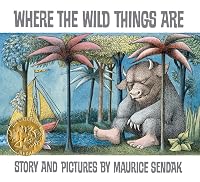
A naughty little boy, sent to bed without his supper, sails to the land of the wild things where he becomes their king.Tags
Recommendations




Member Recommendations
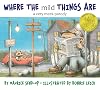
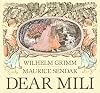
Sandydog1 Both deal with fantasy and imagination and both are from the genius of Sendack
31

sweetandsyko where the wild things are is such a good childrens picture book. I recommend the wild things for adults to read! certain copies even have furry covers like the monsters from the story!
11
by Hibou8

Member Reviews
It is hard to review a book that was and still is one of my favorite all-time picture books. I love everything about this book, from the text to the illustrations. I also love the message Maurice Sendak promotes here, a message of unconditional love, a message that even if one misbehaves, there will be supper waiting on the table (Max does get sent to his room, but no matter how much he has misbehaved, his mother will always love him and cherish him). Of course, that particular message is only one of many. As essential as the concept of universal love is the fact that children's emotions and tantrums are taken seriously and not dismissed here. Max might be seen and chastised as a "wild thing" by his mother, but his emotions, his actions show more are seen as an integral part of his being, maybe not quite appropriate, but also not completely inappropriate, but rather as a living, breathing part of Max's soul. And it is these emotions, these feelings that are the impetus to Max's adventures in the realm of the Wild Thing. However, once Max's emotions have been allowed and have flourished to the maximum, he retreats from the realm of the Wild Things and is happy to return home to his room, his waiting supper and his mother's love.
One thing I must mention concerning my recent reading of [b:Where the Wild Things Are|19543|Where the Wild Things Are|Maurice Sendak|http://ecx.images-amazon.com/images/I/61mzRB7PCmL._SL75_.jpg|3020535] (for the Picture Book Club in the Children's Literature Group) is that it was the first time I have ever read this book in English. I had only ever read the book in German translation, and I have to say that I actually like the translated German text better than the original English text. For those who know me, this is quite a different attitude, as I am usually very much in favour of original texts and keeping any translated texts as close to the original as possible. In this particular case, I think that I like the German text better because it is the text that I had read to me when I was a child and that I later read for myself (and a few years ago read to my nieces). It has a nostalgic hold on me that the original text, no matter how ingenious, will never have (for me, the ultimate version of [b:Where the Wild Things Are|19543|Where the Wild Things Are|Maurice Sendak|http://ecx.images-amazon.com/images/I/61mzRB7PCmL._SL75_.jpg|3020535] will always, always be the German translation, [b:Wo Die Wilden Kerle Wohnen|1846198|Wo Die Wilden Kerle Wohnen|Maurice Sendak|http://photo.goodreads.com/books/1189125614s/1846198.jpg|3020535]). show less
One thing I must mention concerning my recent reading of [b:Where the Wild Things Are|19543|Where the Wild Things Are|Maurice Sendak|http://ecx.images-amazon.com/images/I/61mzRB7PCmL._SL75_.jpg|3020535] (for the Picture Book Club in the Children's Literature Group) is that it was the first time I have ever read this book in English. I had only ever read the book in German translation, and I have to say that I actually like the translated German text better than the original English text. For those who know me, this is quite a different attitude, as I am usually very much in favour of original texts and keeping any translated texts as close to the original as possible. In this particular case, I think that I like the German text better because it is the text that I had read to me when I was a child and that I later read for myself (and a few years ago read to my nieces). It has a nostalgic hold on me that the original text, no matter how ingenious, will never have (for me, the ultimate version of [b:Where the Wild Things Are|19543|Where the Wild Things Are|Maurice Sendak|http://ecx.images-amazon.com/images/I/61mzRB7PCmL._SL75_.jpg|3020535] will always, always be the German translation, [b:Wo Die Wilden Kerle Wohnen|1846198|Wo Die Wilden Kerle Wohnen|Maurice Sendak|http://photo.goodreads.com/books/1189125614s/1846198.jpg|3020535]). show less
Where the Wild Things Are is one of those stories - like much of the work of Dr. Seuss - that is a treasured memento of my own early reading childhood, and as a result, excruciatingly difficult to subject to any kind of meaningful analysis (would "it's genius!" suffice?). So deeply embedded is it, in my memories of childhood, that it seems almost perfect to me, and utterly impervious to criticism.
With a rather free-form text - Sendak's sentences tend to tumble along, in a rushing accretion of thoughts that, despite their seeming disorganization, build flawlessly toward the final page - and brilliant engraving-style artwork, this book perfectly captures a child's willful obstinacy, when being punished (something with which I was show more intimately acquainted, as a girl), and the healing balm provided by the imagination, during such turbulent incidents. Childhood, despite the sincere desire of many that it should be otherwise, is not all sweetness and light. Rather, it is often a time of terror, as the young person contends with a world that is on a different, and far larger scale than herself; and sometimes also of rage, at the discovery that life, and the people in it, will not always (in fact, will rarely) be governed by our will. This isn't to say that this is all that childhood is, but I think it is certainly a significant part, and a necessary one, in the maturing process. And Sendak, a true picture-book pioneer, captured that to perfection here!
I do not know, despite my love for it, to whom I would recommend Where the Wild Things Are. To young children who love imaginary (or not) voyages? To kids who resent being punished, and want a way to express their frustration, all while being assured that at the end, they will still be loved? To fans of fine engravings in general, and Sendak's work in particular? To anyone interested in the genre of picture-books? Yes. To all of these, I think. show less
With a rather free-form text - Sendak's sentences tend to tumble along, in a rushing accretion of thoughts that, despite their seeming disorganization, build flawlessly toward the final page - and brilliant engraving-style artwork, this book perfectly captures a child's willful obstinacy, when being punished (something with which I was show more intimately acquainted, as a girl), and the healing balm provided by the imagination, during such turbulent incidents. Childhood, despite the sincere desire of many that it should be otherwise, is not all sweetness and light. Rather, it is often a time of terror, as the young person contends with a world that is on a different, and far larger scale than herself; and sometimes also of rage, at the discovery that life, and the people in it, will not always (in fact, will rarely) be governed by our will. This isn't to say that this is all that childhood is, but I think it is certainly a significant part, and a necessary one, in the maturing process. And Sendak, a true picture-book pioneer, captured that to perfection here!
I do not know, despite my love for it, to whom I would recommend Where the Wild Things Are. To young children who love imaginary (or not) voyages? To kids who resent being punished, and want a way to express their frustration, all while being assured that at the end, they will still be loved? To fans of fine engravings in general, and Sendak's work in particular? To anyone interested in the genre of picture-books? Yes. To all of these, I think. show less
The perennial classic of children's literature, I don't know where modern American childhood would be without Maurice Sendak's "Where the Wild Things Are." The terrain of growing up would be decidedly different and far less wild without Max's adventurous journey and terrible beasts to guide and comfort.
In more ways than one, I think most people look upon Sendak's masterpiece as almost an allegory for their own childhoods - savage in many ways, but still possessing at the core the kind heart and noble ways of Max. Max's emotional journey to the land of the wild things is a bumpy one, but in the end he manages to sail the turbulent seas back to the safety of his own home – and his dinner, waiting for him on the night stand, still hot.
In more ways than one, I think most people look upon Sendak's masterpiece as almost an allegory for their own childhoods - savage in many ways, but still possessing at the core the kind heart and noble ways of Max. Max's emotional journey to the land of the wild things is a bumpy one, but in the end he manages to sail the turbulent seas back to the safety of his own home – and his dinner, waiting for him on the night stand, still hot.
I wondered after the movie if I'd come back to this and find it a bit too precious, too Spike Jonezy, too obscurely new world order, one of those things you don't have a choice about liking or risk being somehow anti-childhood, shunnable, howling alone to yourself that they don't know that Steve Jobs is monetizing their nostalgia or their whimsy somehow if only you could prove it, you crazy. But nope! This is the best, and Emmett loves it, and I may be a crazy, but you know who else is a crazy? My son is, and Max is too, and all the monsters on Monster Island. Let's rumpus!
I read this book at an unofficial story time at Barnes and Noble today, to my daughter and six My Little Ponies that she set up to flatter me with a larger audience. My daughter is well aquatinted with little boys' penchant for being wild and obstreperous, so Max's behavior and punishment did not come as a shock. What did capture her attention, however, was the transformation of Max's bedroom into a forest, an ocean, and an island inhabited by wild things--she said, "My room doesn't do that." (According to my daughter, these wild things freaked Pink Pie out!) What caught my attention was the clever bridging of Max's imaginative world and reality, with the smell of his hitherto forbidden dinner as an isthmus between worlds. In the end, show more my daughter pronounced the book to be "more for boys" and Rainbow Dash called it "Fashionable!" show less
This is one of those books that really shouldn't be as good as it is.... it's rather simple, random, and ambiguous..... but, it's also cute, lovable and endearing. What can I say... I love it as much as my children do. Maybe it's the wonderful illustrations....maybe it's pity for poor Max, who's Mother unfairly sends him to bed with no food.... maybe Maurice Sendak is just a genius. Whatever the reason, it just works beautifully.
The children's picture book Where the Wild Things Are by Maurice Sendak displays the theme of growth within imagination and emotion. The book follows a young boy who misbehaves and is sent to his room, where his imagination takes him to a faraway place where the wild things live. On this journey, his character changes as he realizes the love of his mother and his longing for home. Sendak depicts Max's emotions through well-illustrated facial expressions that highlight the feelings of anger, loneliness, rebellion, and love. Another striking feature of the illustrations within this book is how some pages contain small images while other pages include full pages. I feel that the contrast between the full pages and single picture show more illustrations mirrors Max's journey from the chaotic land where the wild things are to the peaceful life back at home. Personally, I feel that this book holds great value in the lesson that no matter how much our emotions may take control, there are always people in our lives that we can always turn to. show less
Members
- Recently Added By
Lists

Favorite Childhood Books
1,651 works; 519 members

Best children's picture books
377 works; 85 members
1001 Children's Books You Must Read Before You Grow Up
774 works; 101 members

Best Children's Books You've Read
197 works; 75 members

Caldecott Medal Books
91 works; 15 members

Top-Rated Children's Books
87 works; 16 members

Top-Rated Books on LibraryThing
272 works; 117 members

501 Must-Read Books
529 works; 72 members

Classics you know you should have read but probably haven't
421 works; 409 members

100 books to read in a lifetime
102 works; 37 members

Childhood Favorites
427 works; 24 members

New York Public Library's Books of the Century
120 works; 20 members

Read the book and saw the movie
1,170 works; 195 members

Mensa for Kids Excellence in Reading Award Program (Grades K-3)
64 works; 6 members
Five books to read aloud to your kids
35 works; 17 members

Favorite Animal Fiction
359 works; 156 members
Honey For a Child's Heart
1,152 works; 25 members
27 Books Parents Should Read to Their Kids Before They Grow Up
27 works; 7 members

Picture Book Library
49 works; 7 members
my children books reading list-from 100 great books
101 works; 7 members

Books recommended by Barack Obama
295 works; 28 members

Blue Pyramid 1,276 Best Books of All Time
1,248 works; 32 members

CCE 1000 Good Books List
1,033 works; 12 members

75 Books for Literacy Block: Fall 2016
17 works; 2 members
Ambleside Books
459 works; 18 members

Sonlight Books
1,487 works; 25 members

Geek Dad Read to Your Kids List
79 works; 4 members

New York Public Library's Books of the Century - All
170 works; 14 members

Literacy Block 18
2 works; 1 member

Bennett's 30 Great Books Every Preschooler Should Meet
30 works; 3 members

Northern Exposure's Chris in the Morning Reading List
31 works; 1 member
Movie Adaptations
111 works; 4 members

End of Your Life Book Club
134 works; 4 members

Romalda Spalding's Writing Road To Reading
213 works; 3 members
Reading Rainbow
193 works; 10 members
Puffin Books 70th anniversary handbook recommendations
537 works; 10 members

ELED 460 Book List
61 works; 1 member

75 Books for Fall Literacy Block - Dr. Reed
67 works; 2 members

Youth: Personal Values
252 works; 1 member

Early Picture Books
467 works; 9 members
BitLife
212 works; 4 members
Favorite Picture Books
479 works; 160 members

Leídos en 2024 por primera vez: Excelentes (R. D.)
12 works; 1 member
Written and Illustrated By
805 works; 1 member

Five star books
1,767 works; 110 members

Mustich's 1000 Books to Read Before You Die: A Life Changing List
1,001 works; 19 members

Books We Loved As Children
603 works; 252 members
Favorite Picture and Board Books
480 works; 1 member

NPR Books You Love: 100 Favorite Books For Young Readers
100 works; 1 member

GREAT 1960s BOOKS
37 works; 1 member

.
396 works; 1 member

Books referenced in the Astral Library
60 works; 1 member

.
194 works; 2 members

Books Read in 2022
5,226 works; 115 members

Before Austen Comes Aesop
318 works; 9 members

SYES Library Wishlist
1,080 works; 4 members
Favourite Books
1,819 works; 316 members

Books tagged favorites
390 works; 30 members

Books by Jewish Authors
68 works; 5 members

Books Read in 2019
4,052 works; 110 members

Tablet Magazine's List of 101 Great Jewish Books
103 works; 9 members

Books Read in 2013
1,630 works; 51 members

Books Set on Islands
190 works; 24 members

Authors from the United States
245 works; 3 members
1960s, Best books published therein
254 works; 22 members
KayStJ's to-read list
1,616 works; 11 members
Books About Boys
175 works; 15 members

Books Featured on Readers' Review of the Diane Rehm Show
161 works; 8 members
Stream of Consciousness
87 works; 8 members

Books Read in 1992
8 works; 1 member
Author Information

96+ Works 68,084 Members
Maurice Sendak was born on June 10, 1928 in Brooklyn, New York. While in high school, he worked part time as an illustrator for All-American Comics adapting the Mutt and Jeff newspaper comic strip to a comic book format. His first professional illustrations were for a physics textbook, Atomics for the Millions, published in 1947. He later worked show more as a window-display director for F.A.O. Schwartz while attending night school at the Art Students League. In 1950, he illustrated his first children's book The Wonderful Farm by Marcel Aymé. He wrote his first children's book Kenny's Window in 1956 and went on to become a prolific author-illustrator. His works include Chicken Soup with Rice; In the Night Kitchen; Outside Over There; Higglety Pigglety Pop; The Sign on Rosie's Door; We Are All in the Dumps with Jack and Guy; Brundibar; Bumble Ardy; and My Brother's Book. He received numerous awards including the Caldecott medal for Where The Wild Things Are in 1964, the Hans Christian Andersen International Medal in 1970, the Laura Ingalls Wilder Award, and the National Medal of Arts in 1996. Characters from two of his books were the basis of an animated television special, Really Rosie, which first aired in 1975. He was also the set designer and lyricist for a subsequent off-Broadway musical of the same title. He was the lyricist, as well as the set and costume designer, for the original production of an opera based on Where The Wild Things Are in 1980. In addition, he has designed sets and costumes for performances of operas by Mozart, Prokofiev, and other classical composers. He died due to complications from a recent stroke on May 8, 2012 at the age of 83. (Bowker Author Biography) show less
Some Editions
Awards and Honors
Awards
Distinctions
Notable Lists
Series

Work Relationships
Is contained in
Has the adaptation
Is parodied in
Common Knowledge
- Canonical title
- Where the Wild Things Are
- Original title
- Where the Wild Things Are
- Alternate titles*
- Where the Wild Things Are
- Original publication date
- 1963
- People/Characters
- Max; Max’s mother; wild things
- Related movies
- Where the Wild Things Are (2009 | IMDb); Where the Wild Things Are (1973 | IMDb)
- First words
- The night Max wore his wolf suit and made mischief of one kind and another his mother called him “WILD THING!” and Max said “I’LL EAT YOU UP!” so he was sent to bed without eating anything.
- Quotations
- ... and an ocean tumbled by with a private boat for Max and he sailed off through night and day and in and out of weeks and almost over a year to where the wild things are.
And when he came to the place where the wild things are they roared their terrible roars and gnashed their terrible teeth and rolled their terrible eyes and showed their terrible claws ...
... till Max said, “BE STILL!” and tamed them with the magic trick of staring into all their yellow eyes without blinking once and they were frightened and called him the most wild thing of all and made him king of all wi... (show all)ld things.
“And now,” cried Max, “let the wild rumpus start!” - Last words
- (Click to show. Warning: May contain spoilers.)... and it was still hot.
- Publisher's editor
- Ursula Nordstrom
- Original language
- English
- Canonical DDC/MDS
- 813
- Disambiguation notice
- This book uses the same ISBN as a Disney Counting book.
*Some information comes from Common Knowledge in other languages. Click "Edit" for more information.
Classifications
Statistics
- Members
- 31,133
- Popularity
- 106
- Reviews
- 1,522
- Rating
- (4.34)
- Languages
- 32 — Afrikaans, Arabic, Basque, Catalan, Czech, Danish, Dutch, English, Estonian, Finnish, French, German, Galician, Hebrew, Hungarian, Italian, Japanese, Korean, Latin, Maori, Norwegian (Bokmål), Norwegian, Polish, Russian, Spanish, Swedish, Turkish, Ukrainian, Vietnamese, Welsh, Portuguese (Portugal), Chinese, traditional
- Media
- Paper, Audiobook, Ebook
- ISBNs
- 169
- UPCs
- 9
- ASINs
- 84