
The Wild Things
by Dave Eggers
On This Page
Description
During a fight at home, young Max flees and runs away into the woods. He finds a boat there, jumps in, and ends up on the open sea, destination unknown. He lands on the island of the Wild Things, and soon he becomes their king. But things get complicated when Max realizes that the Wild Things want as much from him as he wants from them.Tags
Recommendations
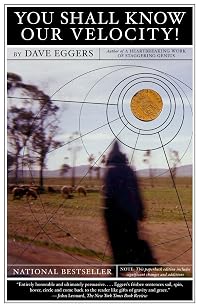






Member Recommendations
Member Reviews
Man, re-reading this book was a trip. Maurice Sendak undoubtedly created one of the strangest and most intriguing children’s stories of his generation, but this novel (and the film which accompanied it) took Sendak’s weirdness and multiplied it. Delving far into Max’s young psyche, the novel explores the motivation that drives his rebellious behaviour as we participate in the Wild Rumpus in the most intimate way possible. This book was definitely a lot of fun to read originally, but this re-read hit a lot harder than expected. Max is acting out because he sees his world spinning out of control and he doesn’t understand why. After running away from home, he throws in with a bunch of actually rather frightening characters, who at show more first glance seem like funny, rambunctious characters - just like Max in his wolf suit. As Max begins to see the ramifications of living a destructive lifestyle as shown by the Wild Things he begins to question his ability to lead them, to control his own life, and ultimately to feel safe. It is time to return home, and maybe time to grow up a little bit. show less
Quickly paced tome offers an incredible first-person view of the devastating aftermath of Hurricane Katrina in New Orleans through the life of its titular character, Abdulrahman Zeitoun. The explorations Zeitoun embarks on in the flooded New Orleans as described are a surreal experience and his daily missions to aid those in need make for interesting reading. The book takes a disturbing turn once Zeitoun is wrongfully arrested and what follows is a dark Kafkaesque story that I dare anyone to read and not simmer with anger after having finished. Much like the story in City on Fire by Bill Minutaglio, author Dave Eggers recounts a story where common human decency gives way to a methodical system of dehumanization. Both stories feature a show more cataclysmic event on US soil where government systems and bureaucracies set up to help people instead commit miserable failures, and worse still, refuse to take responsibility for them. This book is an eyeopening read. show less
It probably doesn’t happen very often. A novel, based on a beloved children’s picture book as modulated by the screenplay for an indie film, commissioned by said beloved children’s book author, the novelist to be none other than the enfant terrible novelist and publisher, Dave Eggers. Actually, it sounds rather the plot of a Spike Jonze film.
Eggers does yeoman work with this adaptation (he co-wrote the screenplay for the film as well). His short declarative sentences match the performative bursts of his young protagonist. In the first third of the novel especially, when Max is at home with his sister, Claire, their mother and her boyfriend, Gary, the frustration and anger boiling beneath the surface is palpable, erupting show more periodically and detrimentally for Max and everyone else. Here Eggers does indeed get inside his protagonist, not unlike the wolf suit that Max will later don. The action and the anger and the irreconcilable muddle of their lives is thoroughly believable.
Where the novel starts to go astray is precisely where the Sendak picture book takes off. Max, now in his wolf suit, runs away from home. There is an awkward transition as Eggers sails him to the unknown isle of the wild things. And then Max is forced to confront a host of monsters in the strange setting in which he is declared to be the king. Children, I understand, are completely entranced by this part of Sendak’s story. Here, not so much. Eggers seems to be labouring, the actions and emotions of the monsters as lumbering and outsized as they are themselves. Whereas in the first third of the novel, the reader feels like anything could happen with the vivid characters that have been presented, here everything feels like stagecraft blocking for a thumping good moral that must surely be just around the corner. That deflates the tension and the narrative drive and eventually the interest of the reader.
Since this rendering of Maurice Sendak’s classic comes across as an exercise, I couldn’t help wondering what would have arisen if it had been commissioned from other writers, perhaps Daniel Handler, or Magnus Mills, or George Saunders, or whomever you like. Perhaps it could be an iterative series. Now that would be something worth reading. show less
Eggers does yeoman work with this adaptation (he co-wrote the screenplay for the film as well). His short declarative sentences match the performative bursts of his young protagonist. In the first third of the novel especially, when Max is at home with his sister, Claire, their mother and her boyfriend, Gary, the frustration and anger boiling beneath the surface is palpable, erupting show more periodically and detrimentally for Max and everyone else. Here Eggers does indeed get inside his protagonist, not unlike the wolf suit that Max will later don. The action and the anger and the irreconcilable muddle of their lives is thoroughly believable.
Where the novel starts to go astray is precisely where the Sendak picture book takes off. Max, now in his wolf suit, runs away from home. There is an awkward transition as Eggers sails him to the unknown isle of the wild things. And then Max is forced to confront a host of monsters in the strange setting in which he is declared to be the king. Children, I understand, are completely entranced by this part of Sendak’s story. Here, not so much. Eggers seems to be labouring, the actions and emotions of the monsters as lumbering and outsized as they are themselves. Whereas in the first third of the novel, the reader feels like anything could happen with the vivid characters that have been presented, here everything feels like stagecraft blocking for a thumping good moral that must surely be just around the corner. That deflates the tension and the narrative drive and eventually the interest of the reader.
Since this rendering of Maurice Sendak’s classic comes across as an exercise, I couldn’t help wondering what would have arisen if it had been commissioned from other writers, perhaps Daniel Handler, or Magnus Mills, or George Saunders, or whomever you like. Perhaps it could be an iterative series. Now that would be something worth reading. show less
This was a fun quick read and probably would have ranked higher except that as an adult, I found the story less enjoyable than I had when I was a child. First, Max was not a likable character and I wanted to reach through the book and smack him. Second, there was no real resolution to anything at the end of the book. While this is true to Where the Wild Things Are, it really nagged me.
However, there were some subtle things in the story that I really did like. Carol was essentially Max, something which I missed until right at the very end, and which added an extra layer of depth to the entire book. I only hope that Eggers' Max learned something from watching Carol in action.
However, there were some subtle things in the story that I really did like. Carol was essentially Max, something which I missed until right at the very end, and which added an extra layer of depth to the entire book. I only hope that Eggers' Max learned something from watching Carol in action.
I actually really don't like Dave Eggers - I found his "A Heartbreaking Work of Staggering Genius" boastful and boring. But a friend of mine lent me this book, and I do like both the original book and the movie, so I thought I'd give it a shot. And, yeah, it was okay. It does a good job of combining the original and the movie, letting you get into Max's head. It's clear that Eggers is still part child (not really a compliment, but it does work for him here). I dunno - if you liked the original and movie and Eggers doesn't drive you totally mad, may as well.
As an expanded edition of the children's book, this is an interesting installment of the Where the Wild Things Are vision. More in tune with the recent film adaptation than the original story, there's no doubt this is a dark journey, but it's also a surprisingly engaging and heartening work of art. I'd take a break from the vision, and wouldn't read this immediately after seeing the movie, but if either of the other versions engages you, this might well be worth your while. The voice of Max is utterly perfect, and the journey is priceless in its unique variety of characters and images. For what it is, it's worth the while as a quick adventure.
From the cover: "Max is a rambunctious eight-year-old whose world is changing around him: His father is absent, his mother is increasingly distracted, and his teenage sister has outgrown him."
This sets up a situation in which eight-year-old Max is angry, sad, and ready to misbehave to the best of his ability for just a little bit of attention and love. As frequently happens, this backfires and he is left believing his family doesn't love or want him anymore. So Max puts on his wolf suit and sets off on his own to sail to a new land where he finds a land of giant creatures who behave in all of the ways that Max feels on the inside. They destroy things and they are loud and they rage! Soon Max is appointed their king, complete with show more scepter and crown, and he leads them on adventures and does everything fun and wild, acting out all of his pain and sadness.
I adored this book. Dave Eggers nailed the pain of childhood, when the interactions with those we love and trust most are hurtful and we make them our demons within, which follow us into our adulthood. show less
This sets up a situation in which eight-year-old Max is angry, sad, and ready to misbehave to the best of his ability for just a little bit of attention and love. As frequently happens, this backfires and he is left believing his family doesn't love or want him anymore. So Max puts on his wolf suit and sets off on his own to sail to a new land where he finds a land of giant creatures who behave in all of the ways that Max feels on the inside. They destroy things and they are loud and they rage! Soon Max is appointed their king, complete with show more scepter and crown, and he leads them on adventures and does everything fun and wild, acting out all of his pain and sadness.
I adored this book. Dave Eggers nailed the pain of childhood, when the interactions with those we love and trust most are hurtful and we make them our demons within, which follow us into our adulthood. show less
Members
- Recently Added By
Published Reviews
ThingScore 33
Het grote probleem van dit boek is tweeslachtigheid. Dat manifesteert zich al in de titel: zo'n half–Nederlandse, half–Engelse en half tussen haakjes gestelde titel doet vreemd aan. Ook de inhoud heeft de air van besluiteloosheid: is dit een roman of een kinderboek? Niemand die het weet. De metaforiek – monsters die allerlei minder prettige menselijke eigenschappen in zich herbergen – show more is die van een volwassen roman, de ongeloofwaardige opbouw van het verhaal doet aan een belegen kinderboek denken.
In feite is Max (en de Wild Things) een moderne versie van Godfried Bomans' klassieker Erik of het klein insectenboek, vol dieren met menselijke trekjes, een intelligent jongetje dat hen iets bij tracht te brengen en een onduidelijke mengvorm tussen kinderboek en roman voor volwassenen. Maar waar Bomans' boek een afgerond verhaal is, vol van humor, daar is Max (en de Wild Things) vooral leuk voor zover het zich afspeelt in de gewone mensenwereld.
De hype rond Eggers mag dan verdiend zijn, niet alles wat hij aanraakt verandert in goud. Zelfs niet in januari. show less
In feite is Max (en de Wild Things) een moderne versie van Godfried Bomans' klassieker Erik of het klein insectenboek, vol dieren met menselijke trekjes, een intelligent jongetje dat hen iets bij tracht te brengen en een onduidelijke mengvorm tussen kinderboek en roman voor volwassenen. Maar waar Bomans' boek een afgerond verhaal is, vol van humor, daar is Max (en de Wild Things) vooral leuk voor zover het zich afspeelt in de gewone mensenwereld.
De hype rond Eggers mag dan verdiend zijn, niet alles wat hij aanraakt verandert in goud. Zelfs niet in januari. show less
added by PGCM
There are seven Wild Things all told, and getting to know them all within a 2-hour film is made easy by the fact that they are so broadly drawn. They have the lively, well-traveled banter of a family, making fun of each other’s quirks and accommodating them at the same time. It helps a lot that they’re cute. But they crowd the story in Eggers’ novel. Their family bickering, which is show more quick and witty in the film, makes for pages of dialogue in the novel, during which I frequently lost track and who was who. Max’s personal journey starts out as a basic hero’s quest from home to unknown, at which point it breaks down into seven different quests as Max works out his personal issues with each of the Wild Things. If this sounds like pop-psych jargon, it’s because that’s what the weakest parts of the novel remind you of. show less
added by Shortride
My resistance began from the very first sentence. Max is chasing his little white dog down the stairs. In Where The Wild Things Are, the dog is a nameless, terrier-shaped blob rushing anxiously out of frame. In The Wild Things, he's called "Stumpy". Worse than just the name – it's obviously wrong, isn't it? – is that something ethereal and elusive has become so distressingly concrete.
added by PGCM
Lists

Powell's Indiespensable
79 works; 6 members

Stories Inspired by Other Fiction
127 works; 24 members
Author Information

168+ Works 73,434 Members
Dave Eggers was born on March 12th, 1970, in Boston, Massachusetts. His family moved to Lake Forest, Illinois when he was a child. Eggers attended the University of Illinois at Urbana-Champaign, until his parents' deaths in 1991 and 1992. The loss left him responsible for his eight-year-old brother and later became the inspiration for his highly show more acclaimed memoir "A Heartbreaking Work of Staggering Genius". Published in 2000, the memoir was nominated for a nonfiction Pulitzer the following year. Eggers edits the popular "The Best American Nonrequired Reading" published annually. In 1998, he founded the independent publishing house, McSweeney's which publishes a variety of magazines and literary journals. Eggers has also opened several nonprofit writing centers for high school students across the United States. Eggers has written several novels and his title, A Hologram for the King, was a finalist for the 2012 National Book Award. His most recent work of fiction, entitled The Circle, was published in 2013. His recent nonfiction books are The Monk of Mokha (January 2018) and What Can a Citizen Do? (Illustrated by Shawn Harris)(September 2018). (Bowker Author Biography) show less
Some Editions
Awards and Honors
Awards
Work Relationships
Has the adaptation
Common Knowledge
- Canonical title*
- Max (en de Wild Things) (en de Wild Things)
- Original title
- The Wild Things
- Original publication date
- 2009-10-13
- People/Characters
- Max; Judith; The Bull; Katherine; Alexander; Claire (show all 9); Carol; Douglas; Ira
- Related movies
- Where the Wild Things Are (2009 | IMDb)
- Dedication
- For Maurice Sendak, an unspeakably brave and beautiful man
- First words
- Matching Stumpy pant for pant, Max chased his cloud-white dog through the upstairs hallway, down the wooden stairs, and into the cold open foyer.
- Quotations
- 'I made a surprise for you. Your first royal meal.'
Max could smell something put under his nose. His body shook involuntarily. It was the most potent and wretched smell he had ever encountered. It was like a thousand ... (show all)long-dead fish soaked in gasoline and eggs.
If he were about to bite into, say, a strawberry, and it told him to stop, he too would want a good explanation. - Last words
- (Click to show. Warning: May contain spoilers.)He stood above his mother for some time, knowing her now, really almost knowing her now, happy to watch her rest.
- Original language*
- Engels
- Disambiguation notice*
- original title: The Wild Things
*Some information comes from Common Knowledge in other languages. Click "Edit" for more information.
Classifications
Statistics
- Members
- 1,549
- Popularity
- 14,834
- Reviews
- 61
- Rating
- (3.48)
- Languages
- 13 — Chinese, Dutch, English, French, German, Hebrew, Hungarian, Italian, Japanese, Polish, Portuguese, Spanish, Swedish
- Media
- Paper, Audiobook, Ebook
- ISBNs
- 39
- ASINs
- 18