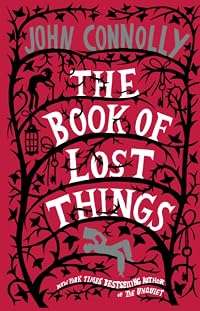
On This Page
Description
High in his attic bedroom, twelve-year-old David mourns the loss of his mother. He is angry and he is alone, with only the books on his shelf for company. But those books have begun to whisper to him in the darkness, and as he takes refuge in the myths and fairytales so beloved of his dead mother he finds that the real world and the fantasy world have begun to meld. The Crooked Man has come, with his mocking smile and his enigmatic words: "Welcome, your majesty. All hail the new king." With show more echoes of Gregory Maguire's Wicked and C.S. Lewis' Chronicles of Narnia, author John Connolly introduces us to a cast of not-quite-familiar characters. Like the seven socialist dwarfs who poison an uninvited (and unpleasant) princess and try to peg the crime on her stepmother. Or the Loups, the evil human-canine hybrids spawned long ago by the union of a wolf and a seductive girl in a red cloak. As war rages across Europe, David is violently propelled into a land that is both a construct of his imagination yet frighteningly real, a strange reflection of his own world composed of myths and stories, populated by wolves and worse-than-wolves, and ruled over by a faded king who keeps his secrets in a legendary book. The Book of Lost Things. show lessTags
Recommendations


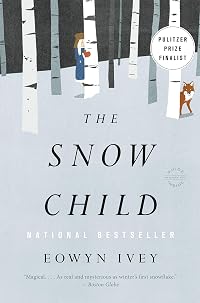
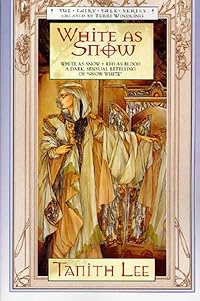
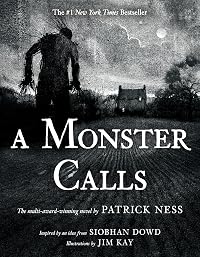
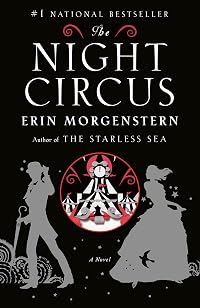
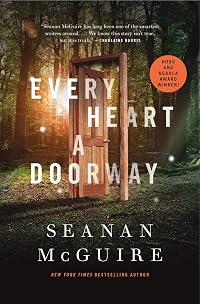
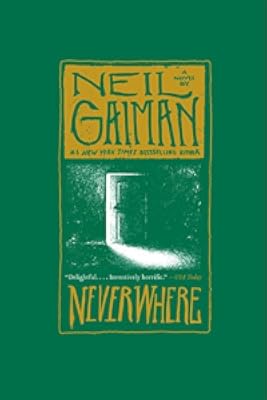
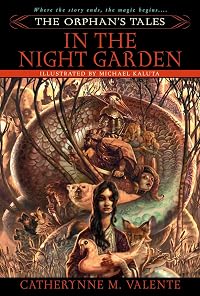
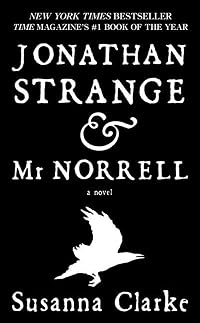


Member Recommendations
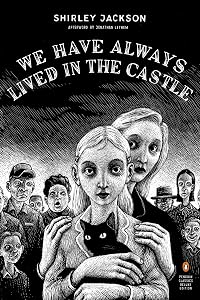
foggidawn Though Coraline was written for a younger audience, both books capture the dark side of fantasy very well.
110
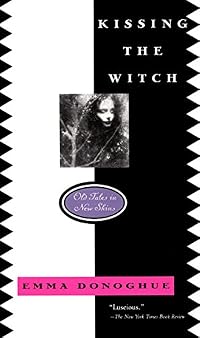
LizzieG Dark reworkings of classic fairy tales
110
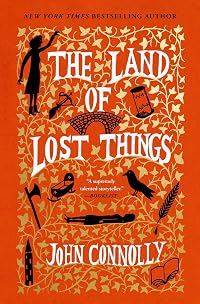
BookshelfMonstrosity These fantasy novels featuring boys who get caught up in mystical, mysterious adventures both have dark undercurrents that create a strong atmosphere of suspense. Their vividly imagined fairy tale-like worlds make the stories both wondrous and compelling.
Also recommended by bluenotebookonline
71
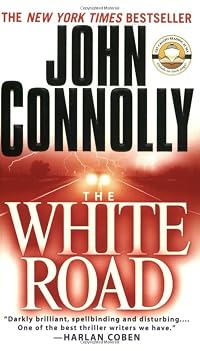
shurikt Continuing the family in peril theme...

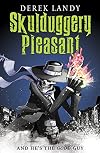
Beorn_se_Bacaire Both comic fantasy with darker overtones
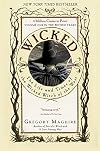
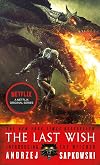
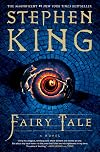
by Cecrow
Member Reviews
First off, I would like to thank Lee for mailing me this book and telling me that I MUST read it. I appreciate it, man; just added an all-time-favorite to the list.
For me, The Book of Lost Things is one of those books that embody why I read in the first place. I completely lost myself in this story, the characters, and David's journey.
David is a 12 year old boy living in England during the onset of the Second World War. The Nazis are on bombing raids of London and his life is in turmoil not only from the War but from the recent loss of his mother and his father's remarriage and the arrival of a new child into the household. He is a child that is ripe for the type of voyage on which he is about to embark.
David is, like most of us I show more think, called by books. However, those of us that are schizophrenic notwithstanding, he can actually HEAR their whispers. And sometimes they demand his attention. He realizes that what is happening is not normal, and more than a little scary. Especially when he begins to be visited by "the crooked man," a character that David knows can't exist, but who clearly has a plan that involves him.
I don't want to give away any of the plot, but I will say that The Book of Lost Things takes us on a ride through the darkest of fairy tales, some re-imagined, some simply fleshed out in their original gory and horrifying detail, toward that most cherished of destinations---home. Along the way David learns about the nature and inevitability of loss, about loyalty and belonging, and how life is really about things lost and, sometimes, if we live it right, it is about finding our way again.
You will choke up at points, experience chills at how dark some of these fair tales really are, laugh out loud, thrill to the adventure, and in the end experience a beautiful and bitter-sweet tale. But isn't that how a fairy tale, and life itself, really turns out? show less
For me, The Book of Lost Things is one of those books that embody why I read in the first place. I completely lost myself in this story, the characters, and David's journey.
David is a 12 year old boy living in England during the onset of the Second World War. The Nazis are on bombing raids of London and his life is in turmoil not only from the War but from the recent loss of his mother and his father's remarriage and the arrival of a new child into the household. He is a child that is ripe for the type of voyage on which he is about to embark.
David is, like most of us I show more think, called by books. However, those of us that are schizophrenic notwithstanding, he can actually HEAR their whispers. And sometimes they demand his attention. He realizes that what is happening is not normal, and more than a little scary. Especially when he begins to be visited by "the crooked man," a character that David knows can't exist, but who clearly has a plan that involves him.
I don't want to give away any of the plot, but I will say that The Book of Lost Things takes us on a ride through the darkest of fairy tales, some re-imagined, some simply fleshed out in their original gory and horrifying detail, toward that most cherished of destinations---home. Along the way David learns about the nature and inevitability of loss, about loyalty and belonging, and how life is really about things lost and, sometimes, if we live it right, it is about finding our way again.
You will choke up at points, experience chills at how dark some of these fair tales really are, laugh out loud, thrill to the adventure, and in the end experience a beautiful and bitter-sweet tale. But isn't that how a fairy tale, and life itself, really turns out? show less
This was a re-read for me in preparation for the recently published sequel (of sorts), The Land of Lost Things. Because I devoured the book last time, I couldn't remember many of the particulars, so this time round I was able to pay the story a great deal more attention, and pick up subtleties that had escaped me last time. Before I would likely have given the book five stars; because I picked up more nuances this time, my overall opinion is a bit more mixed.
The narrative in The Book of Lost Things very much emulates the voice in which these fairy tales were told, which is both one of the book's strengths and its ultimate weakness. Where we follow the main character David on his journey to adolescence, particularly where he struggles to show more come to terms with the death of his mother and the subsequent arrival of his stepmother and half-brother, the narration is engaging and heartfelt, and rings very true; on the other hand, the voice that depicts events in Elsewhere largely appears rather detached, so that I struggled at times to engage with what was happening on the page, even while I was able to appreciate David's character development and admire the author's inventiveness and ability to add a different spin on well-known tales.
The author has appended a number of fairy tales and myths that influenced the story, along with his thoughts, which makes for very intriguing and illuminating reading.
It'll be interesting to see how the follow-up compares to the original. show less
The narrative in The Book of Lost Things very much emulates the voice in which these fairy tales were told, which is both one of the book's strengths and its ultimate weakness. Where we follow the main character David on his journey to adolescence, particularly where he struggles to show more come to terms with the death of his mother and the subsequent arrival of his stepmother and half-brother, the narration is engaging and heartfelt, and rings very true; on the other hand, the voice that depicts events in Elsewhere largely appears rather detached, so that I struggled at times to engage with what was happening on the page, even while I was able to appreciate David's character development and admire the author's inventiveness and ability to add a different spin on well-known tales.
The author has appended a number of fairy tales and myths that influenced the story, along with his thoughts, which makes for very intriguing and illuminating reading.
It'll be interesting to see how the follow-up compares to the original. show less
I noticed something odd about this story about halfway through, when every single true villain (except for the crooked man) turns out to be female. Then I realized that this was yet another coming of age tale in which the male protagonist must fight and kill every representation of a (pregnant, strong, opinionated) woman until he works out his rage and hatred of the real woman in his life. Terrific! How necessary!
Reading Rainbow Readers, if you love fairy tales, and want to see them re-formed into interesting, original pieces of work, my advice to you is to put down this book as soon as you pick it up, and then go out and find "The Bloody Chamber" by Angela Carter.
Props for the disgusting description, though. One star for good use of show more teeth and gore. show less
Reading Rainbow Readers, if you love fairy tales, and want to see them re-formed into interesting, original pieces of work, my advice to you is to put down this book as soon as you pick it up, and then go out and find "The Bloody Chamber" by Angela Carter.
Props for the disgusting description, though. One star for good use of show more teeth and gore. show less
Gruesome and dark, John Connolly's The Book of Lost Things surpasses horror and delves deep into the psychological pitfalls of youth with the help of traditional fairy tales. Connolly's David is a blackly resilient boy, a deeply bitter but ultimately triumphant hero. At first pathetic and then sympathetic, David's forthright grief at the loss of his mother speaks to all of us, and his childish resentment of his new family situation is easily understandable. As the book progresses into Connolly's dark fairy tale, however, it is not David but Connolly himself we try to understand. The author spins out a tale filled with metaphors and familiar precautionary stories, injected with bits of wry humor (communist dwarves resentful of show more oppression), and laid with moral traps (a homosexual knight banished from his home). David becomes a man and faces his fears and character defaults while avoiding an ugly death. While this book is one of the best I've read all year and of incredible literary merit, I would not recommend it to a young adult, excepting an extremely mature senior who was looking for something along the lines of Stephen King and was patient enough for Victor Hugo or Dickens. show less
Stories _want_ to be read, to be told. They need the telling to exist. Turns out we need them as well.
While I was pretty sure I'd enjoy this book, I was unprepared for how much I fell in love with it. The main character is a great Everykid: he wants to be good, to be loved, he imagines what he wishes could be, and he fears exclusion and replacement. I might have been him, and I think I've raised a son much like him. As for the story, this is much like Neil Gaiman's work BUT alloyed with something more like Tad Williams' "Otherland"... a fraught, malleable alternate world that may or may not be of one's own creation. Many reviews focus on the bleaker, more violent parts of "The Book of Lost Things," and those are present as surely as show more they are in the original version of most fairy tales, but this book also has deep pathos, understanding of human emotion, and no small amount of whimsy or even absurd humor. For instance:
“He had quite liked the dwarfs. He often had no idea what they were talking about, but for a group of homicidal, class-obsessed small people, they were really rather good fun.”
Where else will you find the Seven Dwarfs are Marxist revolutionaries with hearts of gold?
My recommendation: buy it, read it, and pass it to someone who needs it. It wants to be read, after all. show less
While I was pretty sure I'd enjoy this book, I was unprepared for how much I fell in love with it. The main character is a great Everykid: he wants to be good, to be loved, he imagines what he wishes could be, and he fears exclusion and replacement. I might have been him, and I think I've raised a son much like him. As for the story, this is much like Neil Gaiman's work BUT alloyed with something more like Tad Williams' "Otherland"... a fraught, malleable alternate world that may or may not be of one's own creation. Many reviews focus on the bleaker, more violent parts of "The Book of Lost Things," and those are present as surely as show more they are in the original version of most fairy tales, but this book also has deep pathos, understanding of human emotion, and no small amount of whimsy or even absurd humor. For instance:
“He had quite liked the dwarfs. He often had no idea what they were talking about, but for a group of homicidal, class-obsessed small people, they were really rather good fun.”
Where else will you find the Seven Dwarfs are Marxist revolutionaries with hearts of gold?
My recommendation: buy it, read it, and pass it to someone who needs it. It wants to be read, after all. show less
David has always loved stories and even during his mother's long illness, stories were the thing that made life tolerable. But now David's mother has died, he and his father have moved out of London to live with the new woman in his father's life, and David is left feeling as though only the stories in his life are reliable anymore. But when the books in his room begin to whisper to him and David finds a portal into a strange land where the stories he knows are alive and living, he finds himself on a quest to find the king and facing the question of whether he ever wants to go home.
I really loved this book and the love for stories that breathes from almost every page. David is a fascinating central character and while he is a child, I show more wouldn't classify the novel as children's or even YA fiction. Fairy tales are the foundation of the other world that David travels to and it is wonderful to see how Connolly builds around them and alters them to make them more resonant for David's own situation. My personal favouritewere the communist dwarfs who made me giggle endlessly with their lamenting over their botched assassination attempt of Snow White . A beautiful exploration of the power of stories to help us find our identities as we grow into adulthood, I highly recommend this book. show less
I really loved this book and the love for stories that breathes from almost every page. David is a fascinating central character and while he is a child, I show more wouldn't classify the novel as children's or even YA fiction. Fairy tales are the foundation of the other world that David travels to and it is wonderful to see how Connolly builds around them and alters them to make them more resonant for David's own situation. My personal favourite
This is definitely not a young adult book. If you should try, with best intentions, after reading numerous glowing reviews and having heard Connolly's name bandied about the bookish world, to gift this one to a ten-year-old, expect stern words and doubts of judgement. And for pity's sakes, don't give it to any girls, because it's even less friendly to the female person than Grimms' Fairytales. In fact, it does bear a strong resemblance to the writing of the dear Brothers, which is not a been a bad thing if one enjoys the flagrant telling and the elaborate language of fairy tales. That all generally works beautifully here, except that it's oh-so-very dark and misanthropic a tale that I'd reserve it for grown boys who used to be good and show more are having trouble figuring the path ahead. Which, as you might have guessed, is also not altogether abhorrent. But, let us speak logically, and dissect this.
"One bottle was filled almost to the top with eyeballs. They seemed alive to David, as though being wrenched from their sockets had not deprived them of the capacity to see. Another contained a woman's hand, a gold ring upon its wedding finger, red varnish flaking slowly from its nails."
It begins with narrative we can all get behind, a long tradition in English country houses and cracks in the garden walls, and a young man--almost adolescent--embarking on an adventure. Except this adventure is framed by three salient grimnesses; the death of his mother, the father remarried/subsequent baby brother, and World War II. This is the adult world with danger, his perceptions of it seeped in negative emotions of loss, jealousy, fear, and sometimes even boredom. He is being stalked by a Crooked Man, who seems evil, though he cannot say exactly why. The young man, David, journeys through the crack and falls into a land that is fairy-tale twisted. Rescued by a Woodsman, he embarks on a journey to see the king, gain insight from The Book of Lost Things and hopefully return to his own world. As the story progresses, he meets different people and occasionally they will tell him stories that echo fairy tales he has read.
"And, in truth, I prefer to hunt children. They make better sport, and better trophies for my wall, for they are beautiful."
A wonderful, traditional format; journey to Oz and to home, but Connolly lets it unwind more than a bit toward the end, as he indulges in descriptions of The Crooked Man's evil deeds, in a way that really doesn't matter to the story, and just serves to point out the horrors of the world. Incest, torture, murder, draining away life; in some ways, I too felt my life drained away by this tale, by the cataloguing of misuse of power, the isolationism of a village, the careless mutilation and torture. Instead of uplifted, I felt ground away, like I had been watching a war montage. Connolly is not celebrating childhood or impending adulthood as much as outlining it as a horrible, dastardly trap where the right choices will mean honor and loss, and the wrong choices mean torture and loss.
And, after all, I have days I feel that way. Where the world has pounded me down. Where humanity seems too full of itself. Where individual kindness feels scarce. Which is why I pick up other books. This is why Catherynne Valente had to write [b:The Girl Who Circumnavigated Fairyland in a Ship of Her Own Making|9591398|The Girl Who Circumnavigated Fairyland in a Ship of Her Own Making (Fairyland, #1)|Catherynne M. Valente|https://images.gr-assets.com/books/1388179691s/9591398.jpg|6749837] and [b:In the Night Garden|202769|In the Night Garden (The Orphan's Tales, #1)|Catherynne M. Valente|https://images.gr-assets.com/books/1320548374s/202769.jpg|196179], which are almost the exact opposite of this book. This book is indeed about Lost Things, the most lostest being childhood itself, except in this version of childhood, what David leaves behind is fantasies of his mother and his first family, not idle days exploring wardrobes, or playing at sword-fighting, or looking for moon-paths. In this book of childhood, the most halcyon of times were pre-war and pre-illness and so distant as to be barely present.
"Most of the children David knew had by now left the city, thronging train stations with little brown luggage labels tied to their coats on their way to farms and strange towns. Their absence made the city appear emptier and increased the sense of nervous expectancy that seemed to govern the lives of all who remained. Soon, the bombers would come, and the city was shrouded in darkness at night to make their task harder."
Atmosphere is well done, if dark and grim. Characterization is interesting. David is very real, as layered as one can possibly be at that age, struggling with pride, isolation, independence, and a great deal of loss. Most of the rest of the characters exist as they do in fairy tales, that is to say, as archetypes. There is an off-note encounter with the Seven Dwarves, who have become communists; an anomaly in that they are supposed to be humorous. It's also worth nothing that the Gallant Knight is in love with a man, and while a man of honor, is also a doomed, tragic figure.
"David had an opportunity to examine its face as it hovered: it resembled a woman's but was longer and thinner, with a lipless mouth that left its sharp teeth permanently exposed. Now those teeth tore into its prey, ripping great chunks of bloody fur from its body as it fed."
As a final note, to myself and those who follow the humanist footpath: I do not think Connolly loves females overmuch. Because, wow. Aside from the idolized but dead mother, the doomed deer-girl, and a friendly female horse, there is absolutely nothing to love here about females. I'm going to list it here, because I'm not going to ever re-read this book, and someday, someone will ask why: the dead mother.The Loups born from Red Riding Hood's sex. The harpies. The grossly fat, selfish Snow White. The Evil Huntress obsessed with finding the perfect prey. The Evil Enchantress asleep behind the wall of thorns. The girl in a jar, about as close as one comes to a refrigerator in a non-refrigerator world.
One of the most beautiful, happiest passages in the book:
"Stories were different, though: they came alive in the telling. Without a human voice to read them aloud, or a pair of wide-eyes following them by flashlight beneath a blanket, they had no real existence in our world. They were like seeds in the beak of a bird, waiting to fall to earth, or the notes of a song laid out on a sheet, yearning for an instrument to bring their music into being. They lay dormant, hoping for the chance to emerge. Once someone started to read them, they could begin to change. They could take root in the imagination, and transform the reader."
Absolutely beautiful, and absolutely true. It came alive to me, but not in a pleasant way, more in the way of being lost in a forest and arriving at a town where nobody speaks your language and everyone looks at you askance, and you feel you may not be safe after all, which is why on my own personal scale, it's about an 'okay.' On the technical side, I'd say it's a four star, meaning generally well written, lovely use of language, recognizable themes, consistent story. All that said, it's not a book I'd ever give and would recommend to only a few. show less
"One bottle was filled almost to the top with eyeballs. They seemed alive to David, as though being wrenched from their sockets had not deprived them of the capacity to see. Another contained a woman's hand, a gold ring upon its wedding finger, red varnish flaking slowly from its nails."
It begins with narrative we can all get behind, a long tradition in English country houses and cracks in the garden walls, and a young man--almost adolescent--embarking on an adventure. Except this adventure is framed by three salient grimnesses; the death of his mother, the father remarried/subsequent baby brother, and World War II. This is the adult world with danger, his perceptions of it seeped in negative emotions of loss, jealousy, fear, and sometimes even boredom. He is being stalked by a Crooked Man, who seems evil, though he cannot say exactly why. The young man, David, journeys through the crack and falls into a land that is fairy-tale twisted. Rescued by a Woodsman, he embarks on a journey to see the king, gain insight from The Book of Lost Things and hopefully return to his own world. As the story progresses, he meets different people and occasionally they will tell him stories that echo fairy tales he has read.
"And, in truth, I prefer to hunt children. They make better sport, and better trophies for my wall, for they are beautiful."
A wonderful, traditional format; journey to Oz and to home, but Connolly lets it unwind more than a bit toward the end, as he indulges in descriptions of The Crooked Man's evil deeds, in a way that really doesn't matter to the story, and just serves to point out the horrors of the world. Incest, torture, murder, draining away life; in some ways, I too felt my life drained away by this tale, by the cataloguing of misuse of power, the isolationism of a village, the careless mutilation and torture. Instead of uplifted, I felt ground away, like I had been watching a war montage. Connolly is not celebrating childhood or impending adulthood as much as outlining it as a horrible, dastardly trap where the right choices will mean honor and loss, and the wrong choices mean torture and loss.
And, after all, I have days I feel that way. Where the world has pounded me down. Where humanity seems too full of itself. Where individual kindness feels scarce. Which is why I pick up other books. This is why Catherynne Valente had to write [b:The Girl Who Circumnavigated Fairyland in a Ship of Her Own Making|9591398|The Girl Who Circumnavigated Fairyland in a Ship of Her Own Making (Fairyland, #1)|Catherynne M. Valente|https://images.gr-assets.com/books/1388179691s/9591398.jpg|6749837] and [b:In the Night Garden|202769|In the Night Garden (The Orphan's Tales, #1)|Catherynne M. Valente|https://images.gr-assets.com/books/1320548374s/202769.jpg|196179], which are almost the exact opposite of this book. This book is indeed about Lost Things, the most lostest being childhood itself, except in this version of childhood, what David leaves behind is fantasies of his mother and his first family, not idle days exploring wardrobes, or playing at sword-fighting, or looking for moon-paths. In this book of childhood, the most halcyon of times were pre-war and pre-illness and so distant as to be barely present.
"Most of the children David knew had by now left the city, thronging train stations with little brown luggage labels tied to their coats on their way to farms and strange towns. Their absence made the city appear emptier and increased the sense of nervous expectancy that seemed to govern the lives of all who remained. Soon, the bombers would come, and the city was shrouded in darkness at night to make their task harder."
Atmosphere is well done, if dark and grim. Characterization is interesting. David is very real, as layered as one can possibly be at that age, struggling with pride, isolation, independence, and a great deal of loss. Most of the rest of the characters exist as they do in fairy tales, that is to say, as archetypes. There is an off-note encounter with the Seven Dwarves, who have become communists; an anomaly in that they are supposed to be humorous. It's also worth nothing that the Gallant Knight is in love with a man, and while a man of honor, is also a doomed, tragic figure.
"David had an opportunity to examine its face as it hovered: it resembled a woman's but was longer and thinner, with a lipless mouth that left its sharp teeth permanently exposed. Now those teeth tore into its prey, ripping great chunks of bloody fur from its body as it fed."
As a final note, to myself and those who follow the humanist footpath: I do not think Connolly loves females overmuch. Because, wow. Aside from the idolized but dead mother, the doomed deer-girl, and a friendly female horse, there is absolutely nothing to love here about females. I'm going to list it here, because I'm not going to ever re-read this book, and someday, someone will ask why: the dead mother.
One of the most beautiful, happiest passages in the book:
"Stories were different, though: they came alive in the telling. Without a human voice to read them aloud, or a pair of wide-eyes following them by flashlight beneath a blanket, they had no real existence in our world. They were like seeds in the beak of a bird, waiting to fall to earth, or the notes of a song laid out on a sheet, yearning for an instrument to bring their music into being. They lay dormant, hoping for the chance to emerge. Once someone started to read them, they could begin to change. They could take root in the imagination, and transform the reader."
Absolutely beautiful, and absolutely true. It came alive to me, but not in a pleasant way, more in the way of being lost in a forest and arriving at a town where nobody speaks your language and everyone looks at you askance, and you feel you may not be safe after all, which is why on my own personal scale, it's about an 'okay.' On the technical side, I'd say it's a four star, meaning generally well written, lovely use of language, recognizable themes, consistent story. All that said, it's not a book I'd ever give and would recommend to only a few. show less
Members
- Recently Added By
Published Reviews
ThingScore 75
This is an adult novel steeped in children's literature that cannily makes its 1940s junior protagonist credibly ignorant of aspects which the grown-up reader, or any modern kid, will catch at once.
Written in the clear, evocative manner of the best British fairy tales from JM Barrie to CS Lewis, The Book of Lost Things is an engaging, magical, thoughtful read.
Written in the clear, evocative manner of the best British fairy tales from JM Barrie to CS Lewis, The Book of Lost Things is an engaging, magical, thoughtful read.
added by Stir
Good ideas, these afterthoughts, every one; but rather than go back and write them in, he sticks them down in the pluperfect and hurries on. The result is less a novel in any genre than a catalogue, a dispiritingly detailed outline for something Connolly might like to write, if he only had the time, or the talent, or a decent editor.
added by Stir
Lists

Best Fantasy Novels
821 works; 357 members

Favorite Fairy Tale Retellings
210 works; 62 members

Best books about books
209 works; 105 members

Magic Realism
371 works; 52 members

Best Young Adult
399 works; 101 members

Scary ghost stories - no zombies, vampires or werewolves, please
53 works; 20 members

Top Five Books of 2013
1,562 works; 721 members

Slipstream or Interstitial Fiction
160 works; 19 members

SantaThing 2014 Gifts
299 works; 17 members

Books about World War II
241 works; 22 members
Favorite Fairy Tales
269 works; 103 members
Book Worlds We'd Like To Visit
322 works; 158 members

Books Read in 2012
59 works; 1 member
Books We Love to Reread
688 works; 296 members

Kate & Cheyanne's Horror Extravaganza
144 works; 6 members

Horror: Creature Features
70 works; 9 members

Books discovered on LibraryThing
256 works; 36 members

Genre Benders: Dark Fantasy
52 works; 4 members

Books Read in 2008
335 works; 7 members

Lit Lattes Ep 003
22 works; 1 member

Books Read in 2019
4,052 works; 110 members

Unread books
1,063 works; 87 members

To Read - Horror
137 works; 14 members

Books Read in 2014
2,343 works; 86 members

BBC World Book Club
265 works; 5 members
Talk Discussions
Past Discussions
The Book of Lost Things book discussion in Hogwarts Express (May 2024)
WWII, boy, alternate world? in Name that Book (February 2009)
Author Information

96+ Works 32,207 Members
John Connolly is the author of "Every Dead Thing" which was a bestseller in Britain and Ireland. He is a regular contributor to "The Irish Times," and has traveled extensively in the United States. He lives in Dublin, Ireland. (Publisher Provided) John Connolly was born May 31, 1968 in Dublin. He is an Irish writer who is best known for his series show more of novels starring private detective Charlie Parker. His first novel, Every Dead Thing was nominated for the Bram Stoker Award for Best First Novel and went on to win the 2000 Shamus Award for Best First Private Eye Novel (he is the first author outside of the US to have won the award). Connolly's debut introduced readers to the anti-hero Charlie Parker, a former police officer hunting the killer of his wife and daughter. Connolly has since written a further 5 books in the popular Parker series and a non-Parker thriller, as well as venturing outside of the crime genre with the publication of first, an anthology of ghost stories and later, a novel about a young boy's coming-of-age journey during World War II England. Before becoming a full-time novelist, Connolly worked as a journalist, a barman, and a local government official. After graduating with a B.A. in English from Trinity College, Dublin and a M.A. in Journalism from Dublin City University, he spent five years working as a freelance journalist for The Irish Times newspaper. He quickly became frustrated with the profession, and began to write Every Dead Thing in his spare time. Connolly continues to contribute articles to the paper. His eighth book in the Charlie Parker series, The Reapers, was published in 2008. The tenth Parker novel, titled The Whisperers, was published in 2010. His current bestseller is A Time of Torment, the fourteenth in the Charlie Parker series.. (Bowker Author Biography) show less
Some Editions
Awards and Honors
Awards
Notable Lists
Series

Belongs to Publisher Series
Common Knowledge
- Canonical title
- The Book of Lost Things
- Original title
- The Book of Lost Things
- Original publication date
- 2006-09-07
- People/Characters
- David; David's mother; David's father; Rose; Georgie; Dr. Moberley (show all 34); Mrs. Howard (the housekeeper); Mr. Briggs (the gardener); Mrs. Briggs (the housekeeper); Jonathan Tulvey; Crooked Man; Woodsman; Leroi (the Loup); Red Riding Hood; Comrade Brother Number One (a dwarf); Comrade Brother Number Two (a dwarf); Comrade Brother Number Three (a dwarf); Comrade Brother Number Four (a dwarf); Comrade Brother Number Five (a dwarf); Comrade Brother Number Six (a dwarf); Comrade Brother Number Eight (a dwarf); Former Comrade Brother Number Seven (a dwarf); Snow White; Hunter (The); deer-girl (The (The); Roland (a soldier); Scylla (a horse); Fletcher; Beast (The); Raphael (a soldier); Duncan (Captain of the King's Guard); King; Anna; Rumpelstiltskin
- Important places
- London, England, UK
- Important events
- World War II
- Epigraph
- Deeper meaning resides in the fairy tales told to me in my childhood than in the truth that is taught by life. - Friedrich Schiller (1759-1805)
Everything you can imagine is real. - Pablo Picasso (1881-1973) - Dedication
- This book is dedicated to an adult, Jennifer Ridyard, and to Cameron and Alistair Ridyard, who will be adults too soon. For in every adult dwells the child that was, and in every child lies the adult that will be.
- First words
- Once upon a time—for that is how all stories should begin—there was a boy who lost his mother.
- Quotations
- He would talk to them of stories and books, and explain to them how stories wanted to be told and books wanted to be read, and how everything that they ever needed to know about life and the land of which he wrote, or about a... (show all)ny land or realm that they could imagine, was contained in books. And some of the children understood, and some did not.
- Last words
- (Click to show. Warning: May contain spoilers.)And in the darkness David closed his eyes, as all that was lost was found again.
- Blurbers
- Connelly, Michael
- Canonical DDC/MDS
- 823.914
- Canonical LCC
- PR6053.O48645
Classifications
Statistics
- Members
- 7,585
- Popularity
- 1,509
- Reviews
- 343
- Rating
- (3.94)
- Languages
- 14 — Bulgarian, Chinese, Czech, English, French, German, Greek, Indonesian, Italian, Japanese, Portuguese, Serbian, Croatian, Spanish
- Media
- Paper, Audiobook, Ebook
- ISBNs
- 58
- ASINs
- 21