The Girl with Glass Feet
by Ali Shaw
On This Page
Description
Young lovers Ida Maclaird and Midas Crook seek a cure for a magical ailment on the remote and snowbound archipelago of St. Hauda's Land.Tags
Recommendations






































Member Recommendations

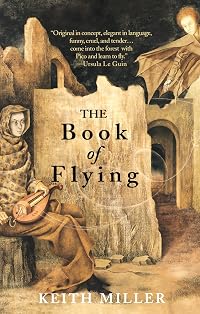
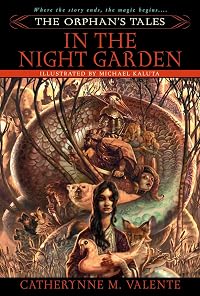
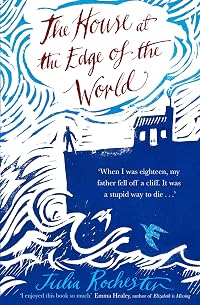
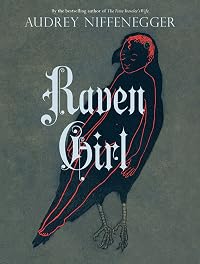
Becchanalia Same delicate language and imagery, a similar sense of wistful beauty and elements of magical realism.
20
Member Reviews
This novel had some lovely lyrical writing, but I agree with other reviewers that it's much better suited to a short story than a full length novel. As a novel, I expect several things from the work: a coherent plot that progresses, dimensional characters, and an overarching theme/philosophy/statement I can glean from the pages. This novel had none of those.
Point the first: There were so many random plot bits that didn't go anywhere. Anywhere at all! No matter how long you read, no matter how hard you looked for connections, these little bits were set up as major plot points and then just disappeared into the ether.
Point the second: The male characters felt dimensional, but -- and this is a very large but -- the female character show more existed solely to be loved by men, and to be loved poorly. They had desires but no agency, no plan, no action. They were purely set dressing to lend color while the men gazed at their navels and waxed philosophical in their thoughts.
Point the third: The only overarching theme I can see is that men are so interesting that we should be entranced by their every thought, but we should never expect them to grow up or become functional adults.
This was a pick for my offline book club, and several of us found it difficult to get through, mostly pointless, and rather uninteresting. If it hadn't been a book club pick, I'd have chucked it when I reached the necrophilia bit. (Oh, did I fail to mention that? We get to look on as a male character fantasizes about how he'd like to "defile" a woman's corpse; out of love, of course, because he misses her so much.) And really, that does an effective job of summing up the book as a whole. show less
Point the first: There were so many random plot bits that didn't go anywhere. Anywhere at all! No matter how long you read, no matter how hard you looked for connections, these little bits were set up as major plot points and then just disappeared into the ether.
Point the second: The male characters felt dimensional, but -- and this is a very large but -- the female character show more existed solely to be loved by men, and to be loved poorly. They had desires but no agency, no plan, no action. They were purely set dressing to lend color while the men gazed at their navels and waxed philosophical in their thoughts.
Point the third: The only overarching theme I can see is that men are so interesting that we should be entranced by their every thought, but we should never expect them to grow up or become functional adults.
This was a pick for my offline book club, and several of us found it difficult to get through, mostly pointless, and rather uninteresting. If it hadn't been a book club pick, I'd have chucked it when I reached the necrophilia bit. (Oh, did I fail to mention that? We get to look on as a male character fantasizes about how he'd like to "defile" a woman's corpse; out of love, of course, because he misses her so much.) And really, that does an effective job of summing up the book as a whole. show less
The Girl With Glass Feet by Ali Shaw is that rare thing - a thoroughly grown-up modern fairy tale that works. It's also a beautifully designed book with an evocative cover and silver page edging.
It is set in a remote cluster of islands around an archipelago called St Hauda's land which feels as if it's somewhere like the Faroes, or Newfoundland - definitely northern and slightly Nordic. A land where "strange winged creatures flit around icy bogland; albino animals hide themselves in the snow-glazed woods; jellyfish glow in the ocean's depths."
Midas is a local, estranged from his mother and still reeling from the death of his father. He's in not in a hurry to start anything new, instead he diverts his emotions into his photography. Ida, show more meanwhile, visited St Hauda's Land six months ago on holiday, but since then something strange is happening to her - her feet are starting to turn to glass. She's returned to see if she can find a cure, for the glass which started at her toes is creeping further, she is already hobbling on her crystallising feet.
Midas bumps into Ida out on the hills and they strike up a rather awkward friendship. For both of them, it is really love at first sight, but neither realises this yet. Ida has to take the initiative:
"The simplest thing you could do to help ...Like I said before ... I am frightened. I can't feel my toes, for God's sake. I don't know where I end and my socks and boots begin. You could, if it's not too much trouble, just hang around."
He stood up. He supposed in a movie this would be the moment where he put his arm around her waist and said something manly. At the very least he'd place a firm hand on her shoulder. But his arms were dead.
'Okay,' he said, 'that shouldn't be a problem.'
Sometimes you just want to knock their heads together! Midas has buried his emotions so deeply, and they're both too quick to take umbrage with each other - love is hard work for this pair. You just have to hope that they work it out - their romance, and what's happening to Ida. There are no easy answers for them in their journey.
I won't spoil the story, but you'll need a hanky before the end of this wonderful other-worldly tale. I loved it. show less
It is set in a remote cluster of islands around an archipelago called St Hauda's land which feels as if it's somewhere like the Faroes, or Newfoundland - definitely northern and slightly Nordic. A land where "strange winged creatures flit around icy bogland; albino animals hide themselves in the snow-glazed woods; jellyfish glow in the ocean's depths."
Midas is a local, estranged from his mother and still reeling from the death of his father. He's in not in a hurry to start anything new, instead he diverts his emotions into his photography. Ida, show more meanwhile, visited St Hauda's Land six months ago on holiday, but since then something strange is happening to her - her feet are starting to turn to glass. She's returned to see if she can find a cure, for the glass which started at her toes is creeping further, she is already hobbling on her crystallising feet.
Midas bumps into Ida out on the hills and they strike up a rather awkward friendship. For both of them, it is really love at first sight, but neither realises this yet. Ida has to take the initiative:
"The simplest thing you could do to help ...Like I said before ... I am frightened. I can't feel my toes, for God's sake. I don't know where I end and my socks and boots begin. You could, if it's not too much trouble, just hang around."
He stood up. He supposed in a movie this would be the moment where he put his arm around her waist and said something manly. At the very least he'd place a firm hand on her shoulder. But his arms were dead.
'Okay,' he said, 'that shouldn't be a problem.'
Sometimes you just want to knock their heads together! Midas has buried his emotions so deeply, and they're both too quick to take umbrage with each other - love is hard work for this pair. You just have to hope that they work it out - their romance, and what's happening to Ida. There are no easy answers for them in their journey.
I won't spoil the story, but you'll need a hanky before the end of this wonderful other-worldly tale. I loved it. show less
Following a short summer visit to St Hauda’s Land, a Northern archipelago, Ida Maclaird’s feet gradually turned into glass and now this mysterious “glassification” is slowly spreading to the rest of her body. Convinced that a reclusive character she had met on that holiday holds the clue to the frightening process which is taking place in her body. So, hoping for a cure, she returns to St Hauda’s the following winter to try to track him down. There she meets keen photographer Midas Crook, an emotionally-repressed young man whose relationship with his now-deceased father has left him afraid of making either physical or emotional connections with people; instead he uses the lens of his camera to control how he interacts with the show more world. Midas becomes attracted to Ida, partly because of her “titanium-grey eyes” and his desire to photograph her, but also because her glass feet intrigue and enthral him. However, the power of his reluctance to enter into any sort of emotional relationship with her is matched only by her equally determined efforts to break down the barriers of his defences. The story traces their slowly-evolving relationship as they fall in love. As Midas slowly unthaws, Ida faces the physical and emotional agony of the inexorable “freezing-up” of her body.
This debut novel uses many elements of magical realism to shape its haunting story-line and, once I felt fully engaged with the main characters, I felt able to lose myself in its allegorical, “other-worldliness” and its fairy-tale qualities. There were times when I found its haunting sadness almost unbearably moving and, although I wanted so much for there to be a happy ending for the main characters, I admired the fact that the author wasn’t afraid to confront the reality that life isn’t always fair, and that it seldom has fairy-tale endings. There are several key characters, whose complex inter-connectedness to each other, and to Ida and Midas, influence the story’s development and create an ever-increasing tension which adds layers of depth and darkness.
I loved the mythical creatures (including tiny, moth-winged, flying cattle, a Medusa-like creature capable of turning living things white, luminescent jellyfish) and found the author’s descriptions of the monochromatic, wintery landscape of the archipelago powerfully evocative. However, although for the most part I enjoyed his lyrical prose, there were moments when I found myself feeling slightly irritated by what felt like an over-use of similes in his descriptions!
I did think that after the well-paced tempo of the rest of the story the ending, although movingly described, felt rather rushed. Nevertheless, I’m pleased to have had the opportunity to read this thought-provoking, unusual and imaginative love story which, had it not been the choice of a member of my book group, I might not have come across. show less
This debut novel uses many elements of magical realism to shape its haunting story-line and, once I felt fully engaged with the main characters, I felt able to lose myself in its allegorical, “other-worldliness” and its fairy-tale qualities. There were times when I found its haunting sadness almost unbearably moving and, although I wanted so much for there to be a happy ending for the main characters, I admired the fact that the author wasn’t afraid to confront the reality that life isn’t always fair, and that it seldom has fairy-tale endings. There are several key characters, whose complex inter-connectedness to each other, and to Ida and Midas, influence the story’s development and create an ever-increasing tension which adds layers of depth and darkness.
I loved the mythical creatures (including tiny, moth-winged, flying cattle, a Medusa-like creature capable of turning living things white, luminescent jellyfish) and found the author’s descriptions of the monochromatic, wintery landscape of the archipelago powerfully evocative. However, although for the most part I enjoyed his lyrical prose, there were moments when I found myself feeling slightly irritated by what felt like an over-use of similes in his descriptions!
I did think that after the well-paced tempo of the rest of the story the ending, although movingly described, felt rather rushed. Nevertheless, I’m pleased to have had the opportunity to read this thought-provoking, unusual and imaginative love story which, had it not been the choice of a member of my book group, I might not have come across. show less
I picked up this book purely by chance at the library, attracted by the cover and the title. The book describes the island of Sint Hauda, and the illness of Ida, who is slowly turning into glass. The story has a certain mood that really attracted me to it, and I couldn't put it down. This was a good book to read on a rainy Sunday afternoon.
The island is weird, with fantasy creatures and people who all have their own problems. The story is an allegory (I presume, also from the book club questions in the back) but I just liked it for the story. It took a bit getting used to the flashbacks and character changes which sometimes happen unannounced. I am having a hard time describing just what it is I liked so much, and also a hard time show more agreeing with the more negative reviews on LT. I guess I just like it for what it is, and for me it was a great tragic story. show less
The island is weird, with fantasy creatures and people who all have their own problems. The story is an allegory (I presume, also from the book club questions in the back) but I just liked it for the story. It took a bit getting used to the flashbacks and character changes which sometimes happen unannounced. I am having a hard time describing just what it is I liked so much, and also a hard time show more agreeing with the more negative reviews on LT. I guess I just like it for what it is, and for me it was a great tragic story. show less
Ida Maclaird is a woman turning to glass. A transformation, which begins with no hint, no warning, and has no known cause. She has nothing to go by except a long ago mention of glass bodies in the bog of the islands. It is all that Ida has, this mention of glass bodies, and keeping that mention as a hope Ida travels to the strange St. Hauda’s Land where she seeks a cure but finds instead Midas Cook, who stumbles upon her himself while trying to capture light.
A recluse, Midas knows the whole of the islands but speaks willing and regularly to only two people. Other than that, Midas hides away in his home venturing out only to capture the light with his camera. His meeting with Ida, however, jars him. He remembers their first meeting show more continuously afterwards – his awkwardness, and her thin frame paired with odd large, bulky boots, that he feels he knows she is hiding. But Midas too is hiding, and it is not until Ida, until his learns her condition, until they accompany each other in finding a cure, through which his past is slowly revealed, that Midas realizes what Ida is, what she becomes to him, and that even he was hiding.
We learn of Midas sometimes through his childhood memories and sometimes through his deceased father’s memories. And this way, through memories, does the book reveal the pasts that have shaped all the odd-ball characters it presents: Henry Fawa, Midas’s mother, Evaline, Midas’s father,Carl Maulsen,and Enghem Stead. Each is odd, having lived as they have within themselves so long, but through Ida’s unlikely draw towards Midas, each one of their lives are reveled and they draw us, the readers, eerily to them. We begin to understand them, for they are very human, these characters, with lives lived and regretful pasts that haunt them. The description of these lives, the manner in which they intertwine is the art that Shaw seems to have captured brilliantly.
Reading The Girl with Glass Feet was an externally clam, serene experience, but internally it incites within you a slightly shimming feeling of chocked up panic that is carried all throughout the book. But once done, it calms you again. show less
A recluse, Midas knows the whole of the islands but speaks willing and regularly to only two people. Other than that, Midas hides away in his home venturing out only to capture the light with his camera. His meeting with Ida, however, jars him. He remembers their first meeting show more continuously afterwards – his awkwardness, and her thin frame paired with odd large, bulky boots, that he feels he knows she is hiding. But Midas too is hiding, and it is not until Ida, until his learns her condition, until they accompany each other in finding a cure, through which his past is slowly revealed, that Midas realizes what Ida is, what she becomes to him, and that even he was hiding.
We learn of Midas sometimes through his childhood memories and sometimes through his deceased father’s memories. And this way, through memories, does the book reveal the pasts that have shaped all the odd-ball characters it presents: Henry Fawa, Midas’s mother, Evaline, Midas’s father,Carl Maulsen,and Enghem Stead. Each is odd, having lived as they have within themselves so long, but through Ida’s unlikely draw towards Midas, each one of their lives are reveled and they draw us, the readers, eerily to them. We begin to understand them, for they are very human, these characters, with lives lived and regretful pasts that haunt them. The description of these lives, the manner in which they intertwine is the art that Shaw seems to have captured brilliantly.
Reading The Girl with Glass Feet was an externally clam, serene experience, but internally it incites within you a slightly shimming feeling of chocked up panic that is carried all throughout the book. But once done, it calms you again. show less
This book is an ARC received through the LibraryThing Early Reviewer program.
Ida Mclaird has returned to the isle St. Hauda's Land, the place she visited on holiday only months before. However, this visit is not a vacation. Her feet are turning to glass, and a mumbled sentence from an eccentric islander leads her to believe she may not be the only one to suffer this disorder. As she searches for a cure, she encounters Midas Crook. Midas is a photographer and a loner, emotionally stunted by the torturous relationship of his parents and his father's suicide. As the glass spreads upward, Ida doesn't give up on herself - or on Midas - as they stumble across a landscape where small moth-winged bulls flitter about and jelly fish glow in the show more bay by night.
This is a beautiful, eloquent novel of magical realism. St. Hauda's Land is as real a character as the people who inhabit it, maybe more so. Some of Shaw's gorgeous descriptions made me gasp out loud. The theme of the novel is fairly straightforward: Ida, the girl with glass feet has lived vibrantly, and won't go down without a fight, while other characters such as Midas live as though they have glass feet and don't really live at all. This book really grew on me as I read, and I think it will linger with me for some time. show less
Ida Mclaird has returned to the isle St. Hauda's Land, the place she visited on holiday only months before. However, this visit is not a vacation. Her feet are turning to glass, and a mumbled sentence from an eccentric islander leads her to believe she may not be the only one to suffer this disorder. As she searches for a cure, she encounters Midas Crook. Midas is a photographer and a loner, emotionally stunted by the torturous relationship of his parents and his father's suicide. As the glass spreads upward, Ida doesn't give up on herself - or on Midas - as they stumble across a landscape where small moth-winged bulls flitter about and jelly fish glow in the show more bay by night.
This is a beautiful, eloquent novel of magical realism. St. Hauda's Land is as real a character as the people who inhabit it, maybe more so. Some of Shaw's gorgeous descriptions made me gasp out loud. The theme of the novel is fairly straightforward: Ida, the girl with glass feet has lived vibrantly, and won't go down without a fight, while other characters such as Midas live as though they have glass feet and don't really live at all. This book really grew on me as I read, and I think it will linger with me for some time. show less
 This review was written for LibraryThing Early Reviewers.
This has been described as a modern fable or fairytale for adults, but it is much more than that. There are certainly elements of fantasy in this novel, and perhaps what is called magical realism, but it is more than anything a sort of love story, well several love stories - most failures, and a bunch of damaged individuals who get pushed a little. Throughout the book there is vivid imagery of this imagined place and at times I found myself pausing and going 'wow". There are richly drawn characters here and it is one of the best novels I have read in recent times. A very satisfying end to the story as well.
Members
- Recently Added By
Published Reviews
ThingScore 95
The British novelist Ali Shaw has created a memorable addition to this fabulist pantheon in his gorgeous first novel, "The Girl With Glass Feet," a book reminiscent of such classic fantasies as Hope Mirrlees's "Lud-in-the-Mist" and Mervyn Peake's Gormenghast sequence.
added by orend
While the challenges facing Ida and Midas are real and affecting, it’s the look, the sound, and the scent of St. Hauda’s Land that stay with you after turning the last page of this beautiful novel.
added by tmspinks
In myths and fairy tales, characters frequently shapeshift. Arachne becomes a spider. Midas’ daughter turns to gold. A frog winds up a prince. These stories speak to a persistent human concern: Our lives as we know them are temporary, subjected to merciless change. Merciless change is on full display in “The Girl With Glass Feet,” Ali Shaw’s fantastically imagined first novel. The show more story is as straightforward as the title suggests: Ida Maclaird, the book’s protagonist, has feet that are turning to glass. show less
added by jlelliott
Lists

BingoDOG - Genre Benders
74 works; 13 members

Metamorphoses
35 works; 4 members
Author Information

5 Works 1,279 Members
Some Editions
Awards and Honors
Awards
Distinctions
Common Knowledge
- Canonical title
- The Girl with Glass Feet
- Original publication date
- 2009-05-01
- People/Characters
- Midas Crook; Ida Maclaird; Henry Fuwa
- Important places
- St Hauda's Land
- First words
- That winter there were reports in the newspaper of an iceberg the shape of a galleon floating in creaking majesty past St. Hauda's Land's cliffs, of a snuffling hog leading lost hill walkers out of the crags beneath Lomdendol... (show all) Tor, of a dumbfounded ornithologist counting five albino crows in a flock of two hundred.
- Last words
- (Click to show. Warning: May contain spoilers.)Until he could dive in foggier oceans. In paler, stiller corners of the world.
- Blurbers
- Ness, Patrick; Dunn, Katherine
Classifications
Statistics
- Members
- 917
- Popularity
- 29,378
- Reviews
- 64
- Rating
- (3.55)
- Languages
- 11 — Dutch, English, Finnish, French, German, Italian, Korean, Portuguese, Romanian, Spanish, Swedish
- Media
- Paper, Audiobook, Ebook
- ISBNs
- 25
- ASINs
- 8