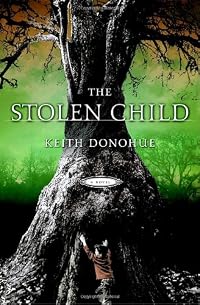
The Stolen Child
by Keith Donohue
On This Page
Description
Stolen from his family by changelings, Henry Day is given the name "Aniday" by the ageless and magical beings, who replace him with another child who takes his place with his parents, a young boy who possesses an extraordinary gift of music.Tags
Recommendations


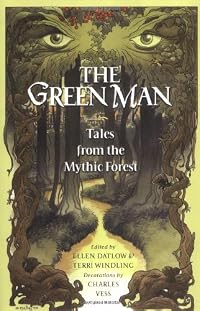
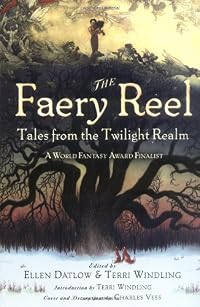
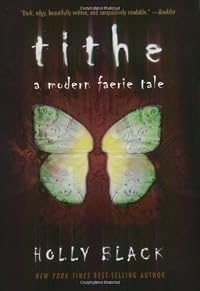
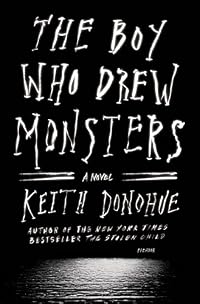

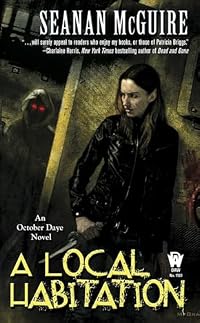

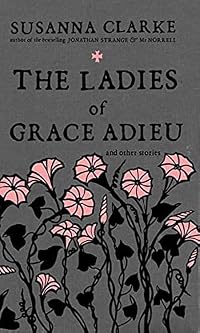

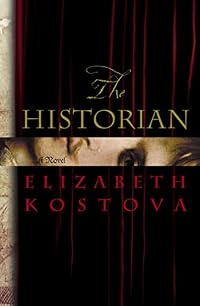
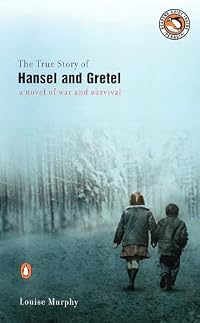


Member Recommendations

Tithe by Holly Black
by kittycatpurr
Member Reviews
Recommended, but not for everyone. The Stolen Child is made up of alternating first-person narrations from both a changeling who has replaced Henry Day and the original Henry Day, trapped as an eternal child. This is a fine fantasy story idea, and the adventures that both have as they try to "find themselves", or grow up, is often poignant and enjoyable... interspersed with stark, tragic and lonely moments. What the author is doing under-the-covers is exploring the way in which growing up steals all of our childhoods... there are several distinct hints that the entire fantasy element may be occurring within the mind of Henry Day, and it reminds any reader of how we believe we have secrets, sins committed in childhood, that we can never show more tell anyone, even our deepest loves. As the changeling shapes himself, we shaped ourselves in order to grow up. We did not fit in, but we pretended we did so we would be accepted. Some part of us has resisted this, deep inside, all the way through. The lesson is something about confronting and reconciling the adult you with the child that still rages and wanders inside of you... or, in this case, the multiple children, each representing aspects of a soul that never grows up and gets a job and pays taxes. Our soul still wanders the woods, watching every sunset and sunrise. The riskiest thing Donoghue does is leave it vague for the reader... he leaves just enough hints that our subconscious might begin to suspect that Henry Day is just one, slightly insane person. But he tells the story in a straightforward means, from both Henry Days' point of view. It almost doesn't occur to us that the narrators may be unreliable, even when they come out and state that they've gotten plenty of facts and details wrong as they took down their story. Plenty of readers will never suspect, but part of them, under the skin, will know. show less
"One doesn't go through the time and effort to be the only reader of your own book. Even the diarist expects the lock to be picked."
I've been tricked. This book is the changeling. I expected a fantasy and instead got a well-disguised melancholy contemporary less about myth and creepiness, and more about...angst. And getting married. And...moms?
It wasn't exactly in a league of its own, but I still found it almost hauntingly lovely. The writing is a memoir style, and I find those easy to race through - things you don't care about go by briefly, and the things you love are just as brief but written with such succinct power that they still resonate for how minor they are. In any other writer's hands, the plot and characters wouldn't be show more able to disguise their lack of colour or true appeal, but hey, hidden under all those gorgeous metaphors and beautiful tangents? I was happily distracted. Took me up to 60% to realize that Aniday was a dead-eyed observer and that Henry was actually totally insufferable (but he did things, so he wins).
Yeah...eerie, and weird, and admittedly once we really got into it, I liked the way the changelings were characters but still very obviously unfolding as just One Big Symbol. This is a lament on childhood and mediocrity but with lots of loathing and goblins that are barely creepy.
The annoying things about it are more interesting, honestly, than the things I did like about it, but it's worth noting that it did all come together as something cozy and beautiful to read. This drowsy, toothless memoir. show less
At times, this was a truly moving narrative. I found the alternation of narrative between Henry Day and the changeling Aniday one of the most compelling portions of the book. Henry and Aniday made great foils, speaking to what makes the human experience truly important and how social relationships, creativity and introspection each have integral roles. On the other hand, the book feels underdeveloped. Plot threads, characters, even themes are dropped completely, without a backward glance. At times the plot overwhelms any thematic development and inversely, especially at the end of the book, the reader is asked to endure some extremely contrived plots in servitude to hammered imagery.
Or better yet, I am a changeling - a word that describes within its own name what we are bound and intended to do. We kidnap a human child and replace him or her with one of our own. The hobgoblin becomes the child, and the child becomes a hobgoblin... The changelings select carefully, for such opportunities come along only once a decade or so. A child who becomes part of our society might have to wait a century before his turn in the cycle arrives, when he can become a changeling and reenter the human world.
The Stolen Child opens on the day that the changelings steal 7-year-old Henry Day. Frustrated with his mother and his twin little sisters, Henry runs away to the forest. Someone returns to fill Henry's place, but it is not Henry. show more Henry, meanwhile, is abducted by the rest of the changelings and made into one of them, condemned to endless childhood until the opportunity arises to steal the life of some other unfortunate child. The changelings christen him Aniday, and as he becomes a part of their tribe, his former life and even his name slip away from his memory. Meanwhile, the changeling who became Henry Day struggles at once to embrace his new identity and discover the truth of his first life while vehemently trying to forget his many decades as a changeling.
Both Aniday and the new Henry Day make uneasy homes within their unexpected lives. Donohue reveals the lives of the twelve changelings who make their home in the forest growing, scavenging, and stealing enough provisions to get by and preparing for the time when the next in line will reenter the human world. In alternating chapters, Donohue follows the fake Henry Day as he executes a believable imitation of Henry at the same time as he rediscovers his great talent from his first life. Both strive against the forgetting to know again what their lives once were and these desperate strivings will inevitably cause their two paths to cross once more.
The Stolen Child is a fascinating book. It's beautifully executed literary fantasy that grapples intriguingly with ideas of art, memory, and humanity while at the same time causing us to think, "What if?" Donohue works the angles of this story with ease never allowing us for a second to lose our sympathies for each and every one of the characters despite the fact that their mere existence and their potential to steal away children is the stuff of parents' worst nightmares. Donohue makes it easy to comprehend the desperation to regain a human life that drives the changelings to steal a child after decades of ageless boredom in the forest, but then he doesn't let us forget the real Henry Day, unwittingly robbed of his life, either. I was totally caught up in Donohue's tale. Each and every character is totally fleshed out and so engrossing that readers will desperately want to know them even more. Donohue's prose is stunning, bringing to surreal life the ultimately ordinary forest dwelling of the changelings in all seasons and bringing to the surface the clouded memories of the changelings.
Despite their less than human existence, this story about faeries is ultimately about being human. It's about how music and the written word and the act of creation in itself are what preserve and renew our lives in our memory. It's about the wonders of an endless childhood but also about the need to grow old. It's a story with so many characters and layers that I can't hope to enumerate them all here. It's book that will intrigue you and leave you thinking about it long after you've turned the last page.
Memory, which so confounds our waking life with anticipation and regret, may well be our one earthly consolation when time slips out of joint. show less
The Stolen Child opens on the day that the changelings steal 7-year-old Henry Day. Frustrated with his mother and his twin little sisters, Henry runs away to the forest. Someone returns to fill Henry's place, but it is not Henry. show more Henry, meanwhile, is abducted by the rest of the changelings and made into one of them, condemned to endless childhood until the opportunity arises to steal the life of some other unfortunate child. The changelings christen him Aniday, and as he becomes a part of their tribe, his former life and even his name slip away from his memory. Meanwhile, the changeling who became Henry Day struggles at once to embrace his new identity and discover the truth of his first life while vehemently trying to forget his many decades as a changeling.
Both Aniday and the new Henry Day make uneasy homes within their unexpected lives. Donohue reveals the lives of the twelve changelings who make their home in the forest growing, scavenging, and stealing enough provisions to get by and preparing for the time when the next in line will reenter the human world. In alternating chapters, Donohue follows the fake Henry Day as he executes a believable imitation of Henry at the same time as he rediscovers his great talent from his first life. Both strive against the forgetting to know again what their lives once were and these desperate strivings will inevitably cause their two paths to cross once more.
The Stolen Child is a fascinating book. It's beautifully executed literary fantasy that grapples intriguingly with ideas of art, memory, and humanity while at the same time causing us to think, "What if?" Donohue works the angles of this story with ease never allowing us for a second to lose our sympathies for each and every one of the characters despite the fact that their mere existence and their potential to steal away children is the stuff of parents' worst nightmares. Donohue makes it easy to comprehend the desperation to regain a human life that drives the changelings to steal a child after decades of ageless boredom in the forest, but then he doesn't let us forget the real Henry Day, unwittingly robbed of his life, either. I was totally caught up in Donohue's tale. Each and every character is totally fleshed out and so engrossing that readers will desperately want to know them even more. Donohue's prose is stunning, bringing to surreal life the ultimately ordinary forest dwelling of the changelings in all seasons and bringing to the surface the clouded memories of the changelings.
Despite their less than human existence, this story about faeries is ultimately about being human. It's about how music and the written word and the act of creation in itself are what preserve and renew our lives in our memory. It's about the wonders of an endless childhood but also about the need to grow old. It's a story with so many characters and layers that I can't hope to enumerate them all here. It's book that will intrigue you and leave you thinking about it long after you've turned the last page.
Memory, which so confounds our waking life with anticipation and regret, may well be our one earthly consolation when time slips out of joint. show less
Anything with the title of my favorite Yeats poem will grab my attention, especially if it is indeed a novel about changelings. And I did indeed love the way Donohue wove phrases from the poem into the novel. Hell, I loved the whole novel. Let me say first off I understand how the changeling theme can be seen as a metaphor for growing up, etc., but I don't care at all about that part. That's not what held me spellbound. What grabbed me was the updating of the changeling myth. The story of Henry Day and Aniday. The wild children in the woods, never growing, never aging until they replace a child as they were replaced. Is it the fact that Aniday was taken so recently that he is the only changeling who wants to return to his family? Or show more were the others from worse families? They said they tended to take children who were neglected, abused, sad, bratty--the ones who weren't so noticed in case the change wasn't perfect. Sure, the changelings are able to contort and change themselves to look exactly like the stolen child, but sometimes behaviors aren't exactly right.
Another thing this caused me to ponder is the feral child. Like the changeling, the feral child is a phenomenon that's always intrigued me. I probably have The Jungle Book to blame for that, though I can't say where I first heard about the changeling legend. One of those things I feel I've always known--part of those Irish myths and legends that nobody in my family ever told me but I've always known. Anyway, the way changelings were described in this book were very feral and they couldn't speak English unless they really concentrated. How many instances of changelings in the wild were feral children? Perhaps even children deemed changelings by parents and left out in the wild to die, but who managed to survive? It's a fascinating parallel. Wish I thought of it back in college.
This is simply a beautiful book on many levels and it touched me deeply. The current me and the child me who thought she was indeed a changeling. show less
Another thing this caused me to ponder is the feral child. Like the changeling, the feral child is a phenomenon that's always intrigued me. I probably have The Jungle Book to blame for that, though I can't say where I first heard about the changeling legend. One of those things I feel I've always known--part of those Irish myths and legends that nobody in my family ever told me but I've always known. Anyway, the way changelings were described in this book were very feral and they couldn't speak English unless they really concentrated. How many instances of changelings in the wild were feral children? Perhaps even children deemed changelings by parents and left out in the wild to die, but who managed to survive? It's a fascinating parallel. Wish I thought of it back in college.
This is simply a beautiful book on many levels and it touched me deeply. The current me and the child me who thought she was indeed a changeling. show less
Come away, O human child!
To the waters and the wild
With a faery, hand in hand,
For the world's more full of weeping than you can understand. - W. B. Yeats, The Stolen Child
I wanted to read this novel originally because I saw it described as a "fairy tale for grownups", because I love Yeats and the poem that inspired it is one of my favorites, and then finally because I was swayed by the extreme advertising that Amazon.com mounted back in May.
This book is a fairy tale in the most literal sense of the word (although they prefer the term "changelings"), but it's not really so much a fantasy book; rather, it's a story of personality and history, and how those factors intertwine to create identity. Right at the beginning of the book, the show more changelings steal seven-year-old Henry Day, sending one of their own to take his place in his family. The stolen child is named and so becomes Aniday, and remains in the forest, unaging and waiting his turn to make the change back to a human life, while the changling who is now Henry Day lives his life and grows up as a human.
The story then drifts around for a while, losing momentum after the initial shock as both characters are plunged into their new lives. For the middle half of the book, at least, I would have been hard-pressed to point to a noticeable "plot" - stuff happened, typical coming-of-age story elements, but neither the stuff that happened to Aniday nor to Henry seemed to be leading anywhere. Only towards the end do events pick up momentum and direction again, eventually leading the characters towards some semblance of... if not closure, at least resolution.
Apart from the aimlessness of the middle, my main problem with this book was how incredibly... not stupid, but... willfully disingenuous both Aniday and Henry seemed for most of the book. For example, all of the other fairies seem to understand that time passes for humans differently than it does for fairies, yet Aniday takes chapters (and several interventions) to figure out that the 37-year-old man he's seeing 30 years after he was taken is not his father. Also disappointing was the lack of explanation of how and why Aniday (the original Henry Day) was chosen for the change... Donohue brings up that they only take children who are disaffected, lonely, isolated, etc., yet from the reader's perspective, young Henry's world is not particularly "more full of weeping" than any other.
Nevertheless, there are several interesting questions of morals and identity raised by this book. At first, we feel sorry for Aniday, snatched from his life and forced into the rather squalid lives of the fairies. But, at the same time, the changeling who took his place had the same thing done to him when he was young... doesn't he deserve a chance to lead a mortal life? Despite the horrifying prospect of being stolen away yourself, or having a child or loved one stolen, it's not clear that the fairies are really in the wrong. Then there's also the question of identity that lays at the heart of the book. The changeling who becomes Henry Day has three lives: his own mortal childhood, his life with the fairies, and his life as Henry Day. None of the names he is given in these permutations seem quite right... we hesitate to even fully name him as Henry Day, because we're always aware he's not the "real" Henry. Or is he? After three decades living as a fairy, does Aniday have any claim to that title, that life anymore? The characters come to their own conclusions on that score, but the reader (at least me) is left pondering. Which, for all of the book's weaknesses, makes it worth a read. show less
To the waters and the wild
With a faery, hand in hand,
For the world's more full of weeping than you can understand. - W. B. Yeats, The Stolen Child
I wanted to read this novel originally because I saw it described as a "fairy tale for grownups", because I love Yeats and the poem that inspired it is one of my favorites, and then finally because I was swayed by the extreme advertising that Amazon.com mounted back in May.
This book is a fairy tale in the most literal sense of the word (although they prefer the term "changelings"), but it's not really so much a fantasy book; rather, it's a story of personality and history, and how those factors intertwine to create identity. Right at the beginning of the book, the show more changelings steal seven-year-old Henry Day, sending one of their own to take his place in his family. The stolen child is named and so becomes Aniday, and remains in the forest, unaging and waiting his turn to make the change back to a human life, while the changling who is now Henry Day lives his life and grows up as a human.
The story then drifts around for a while, losing momentum after the initial shock as both characters are plunged into their new lives. For the middle half of the book, at least, I would have been hard-pressed to point to a noticeable "plot" - stuff happened, typical coming-of-age story elements, but neither the stuff that happened to Aniday nor to Henry seemed to be leading anywhere. Only towards the end do events pick up momentum and direction again, eventually leading the characters towards some semblance of... if not closure, at least resolution.
Apart from the aimlessness of the middle, my main problem with this book was how incredibly... not stupid, but... willfully disingenuous both Aniday and Henry seemed for most of the book. For example, all of the other fairies seem to understand that time passes for humans differently than it does for fairies, yet Aniday takes chapters (and several interventions) to figure out that the 37-year-old man he's seeing 30 years after he was taken is not his father. Also disappointing was the lack of explanation of how and why Aniday (the original Henry Day) was chosen for the change... Donohue brings up that they only take children who are disaffected, lonely, isolated, etc., yet from the reader's perspective, young Henry's world is not particularly "more full of weeping" than any other.
Nevertheless, there are several interesting questions of morals and identity raised by this book. At first, we feel sorry for Aniday, snatched from his life and forced into the rather squalid lives of the fairies. But, at the same time, the changeling who took his place had the same thing done to him when he was young... doesn't he deserve a chance to lead a mortal life? Despite the horrifying prospect of being stolen away yourself, or having a child or loved one stolen, it's not clear that the fairies are really in the wrong. Then there's also the question of identity that lays at the heart of the book. The changeling who becomes Henry Day has three lives: his own mortal childhood, his life with the fairies, and his life as Henry Day. None of the names he is given in these permutations seem quite right... we hesitate to even fully name him as Henry Day, because we're always aware he's not the "real" Henry. Or is he? After three decades living as a fairy, does Aniday have any claim to that title, that life anymore? The characters come to their own conclusions on that score, but the reader (at least me) is left pondering. Which, for all of the book's weaknesses, makes it worth a read. show less
This book started a bit slow for me, with what is basically an infodump, but it didn't take long for the narrative to snare me in its web. There are two, alternating povs, a hobgoblin who has become a changeling by taking the life of a child stolen away, and the child, Henry Day, now named Aniday, who has been turned into a never-aging hobgoblin living in hiding in the forest. The book moves from 1949 through the '70s, following the life of the new Henry who struggles with emerging memories of his own human life a century ago while trying to maintain his new identity, shifting his body as Henry would naturally age, wondering if the hobgoblins will come to snatch him back as he rediscovers the humanity that once had been his. Meanwhile, show more Aniday must adjust to his new life, maturing mentally while stuck in a misshapen, unaging body while his memories of his past life slowly fade.
Over the years, "Henry" and Aniday form relationships in their new lives. Henry falls in love. Aniday grows fond of spec, a female hobgoblin. But lurking in the background is the feeling that something is wrong, and they aren't truly comfortable with what they are. Aniday longs to return to his old life even as he forgets it. Henry seeks his humanity in music, a talent he had in his old, first human life. A chance encounter sets the two of them on a collision path.
I won't say more about the story. I wouldn't want to take the wonder away. This is a truly magical book, filled with all manner of emotion from joy to despair, exploring what it means to be human along with the goals we set for ourselves, our hopes and dreams for ourselves and our loved ones. This simple, beautifully told story and its vivid characters will stay with me a long time. show less
Over the years, "Henry" and Aniday form relationships in their new lives. Henry falls in love. Aniday grows fond of spec, a female hobgoblin. But lurking in the background is the feeling that something is wrong, and they aren't truly comfortable with what they are. Aniday longs to return to his old life even as he forgets it. Henry seeks his humanity in music, a talent he had in his old, first human life. A chance encounter sets the two of them on a collision path.
I won't say more about the story. I wouldn't want to take the wonder away. This is a truly magical book, filled with all manner of emotion from joy to despair, exploring what it means to be human along with the goals we set for ourselves, our hopes and dreams for ourselves and our loved ones. This simple, beautifully told story and its vivid characters will stay with me a long time. show less
Members
- Recently Added By
Lists

Best Gothic Fiction
110 works; 31 members

Magic Realism
371 works; 52 members

Faerie Mythology
87 works; 13 members

Myth (Reuse and Retelling)
188 works; 24 members

Books Read in 2006
418 works; 8 members

to get
244 works; 2 members

Same Title
115 works; 3 members
Author Information

12+ Works 3,766 Members
Some Editions
Awards and Honors
Awards
Distinctions
Notable Lists
Work Relationships
Was inspired by
Common Knowledge
- Canonical title
- The Stolen Child
- Original title
- The Stolen Child
- Alternate titles
- The Stolen Child
- Original publication date
- 2006
- People/Characters
- Henry Day; Aniday; Beka; Onions; Igel; Billy Day (show all 10); Speck; Luchog; Chavisory; Smaolach
- Epigraph
- We look at the world once, in childhood. The rest is memory. -"Nostos" by Louise Gluck
- Dedication
- For Dorothy and Thomas, wish you were here
- First words
- Don't call me a fairy.
- Last words
- (Click to show. Warning: May contain spoilers.)I am gone and am not coming back, but I remember everything.
- Blurbers
- Niffenegger, Audrey; Beagle, Peter S.; O'Doherty, Brian
Classifications
Statistics
- Members
- 2,576
- Popularity
- 7,331
- Reviews
- 132
- Rating
- (3.75)
- Languages
- 13 — Danish, Dutch, English, German, Italian, Korean, Norwegian, Polish, Spanish, Swedish, Turkish, Portuguese (Portugal), Chinese, traditional
- Media
- Paper, Audiobook, Ebook
- ISBNs
- 29
- ASINs
- 8